Ghent

A university town upon a canal, Ghent has the charm of Bruges and the city perks of Antwerp. Founded in the Late Middle Ages, this once wealthy city boasts architecture preserved from the 12th century.
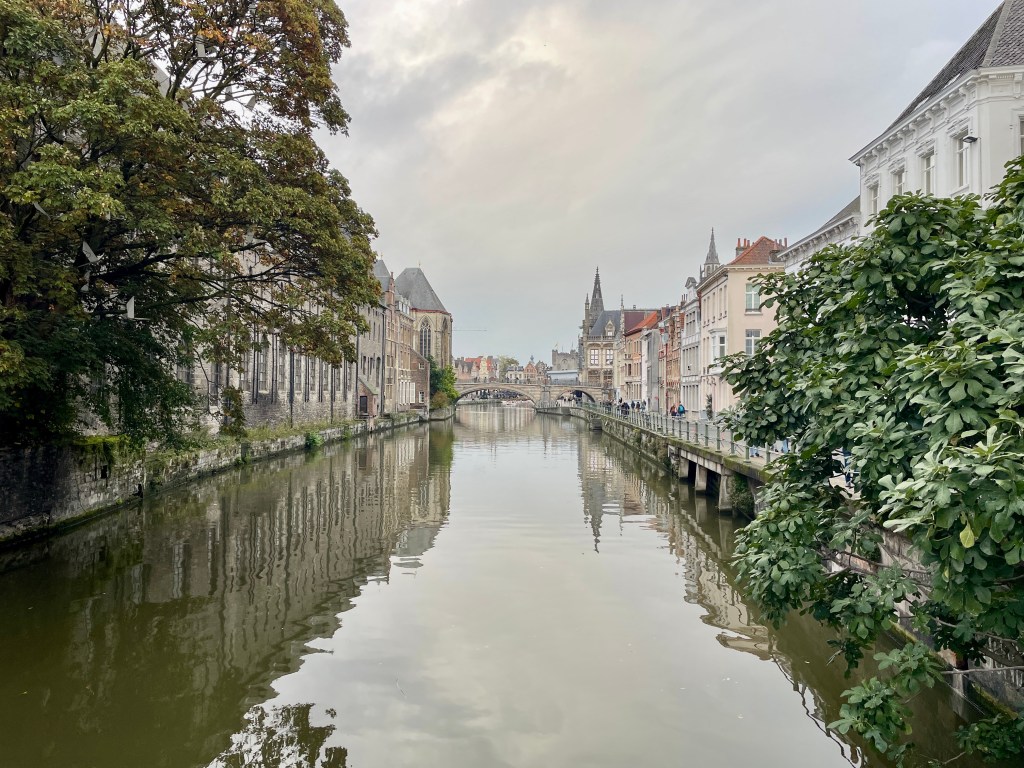
Arriving by train, we took the tram to the city center. Walking around downtown, we were greeted by painting-worthy landscapes at every turn. With the autumn chill in the air and a light rain falling, we took a look around.
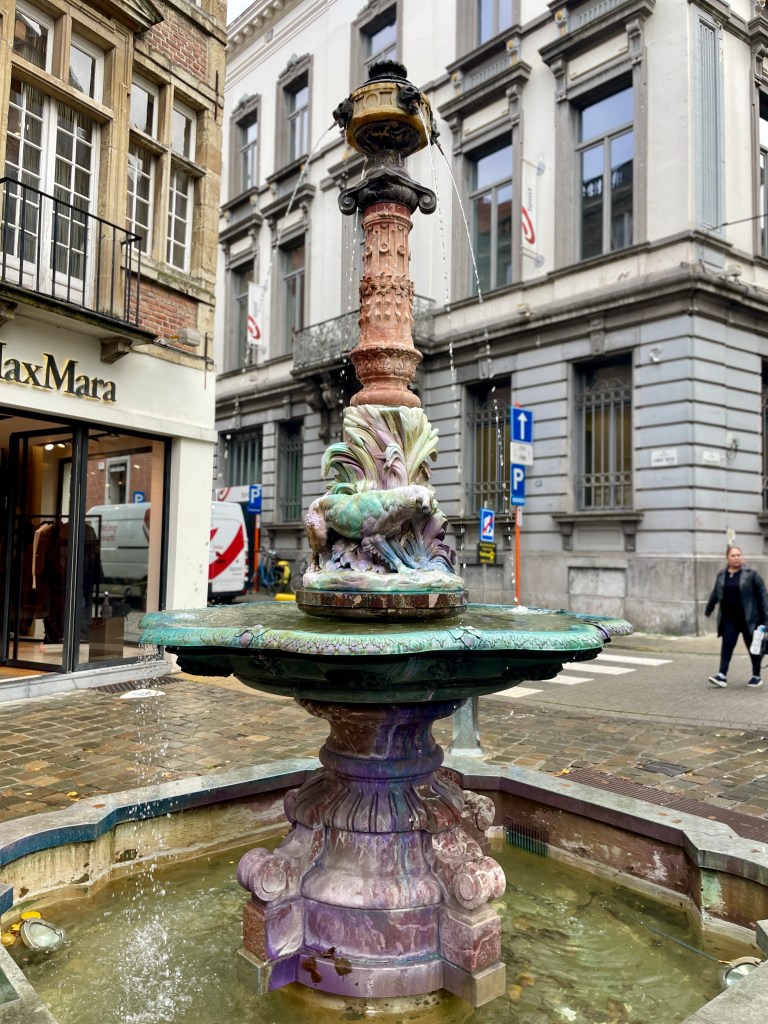
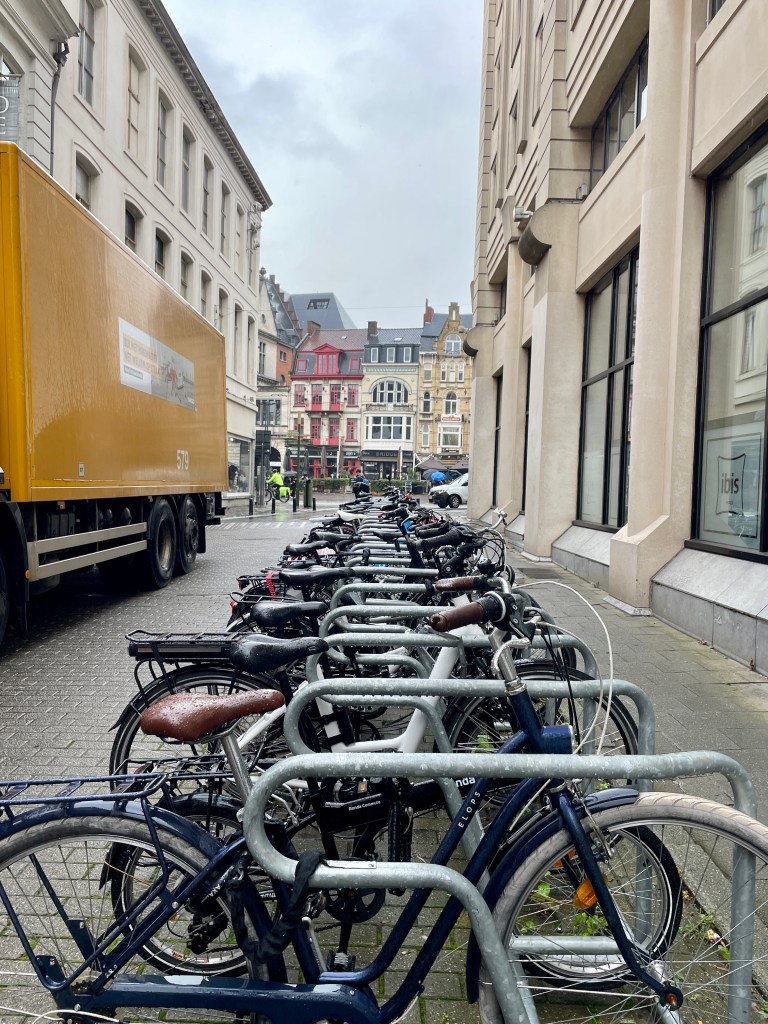
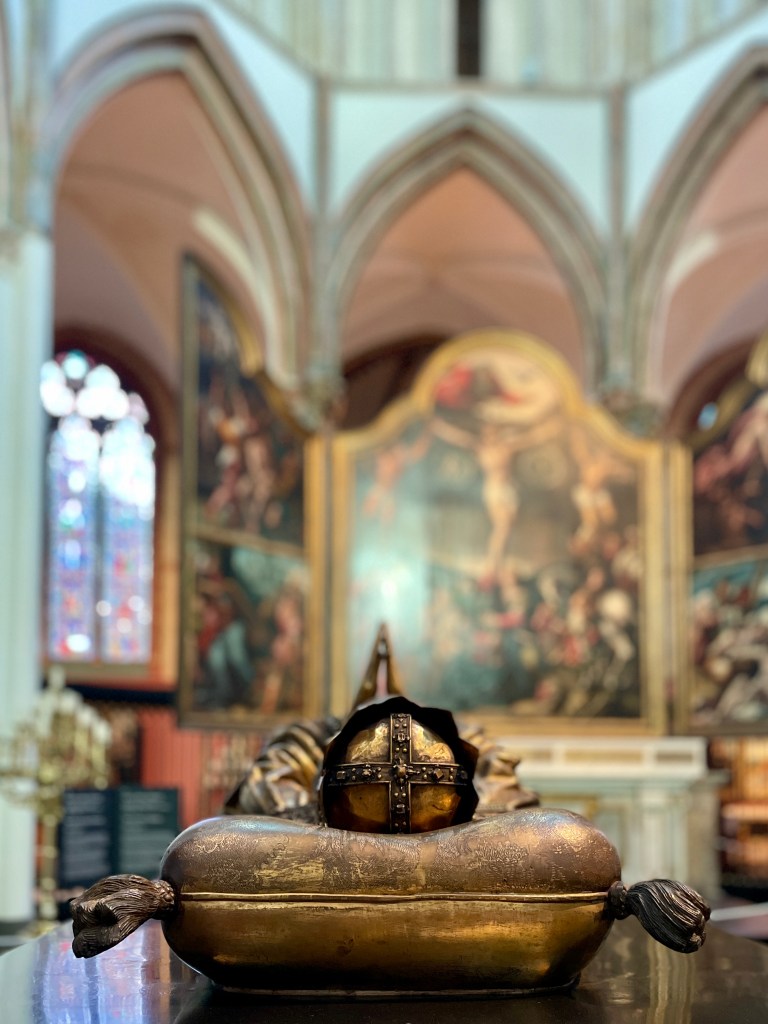
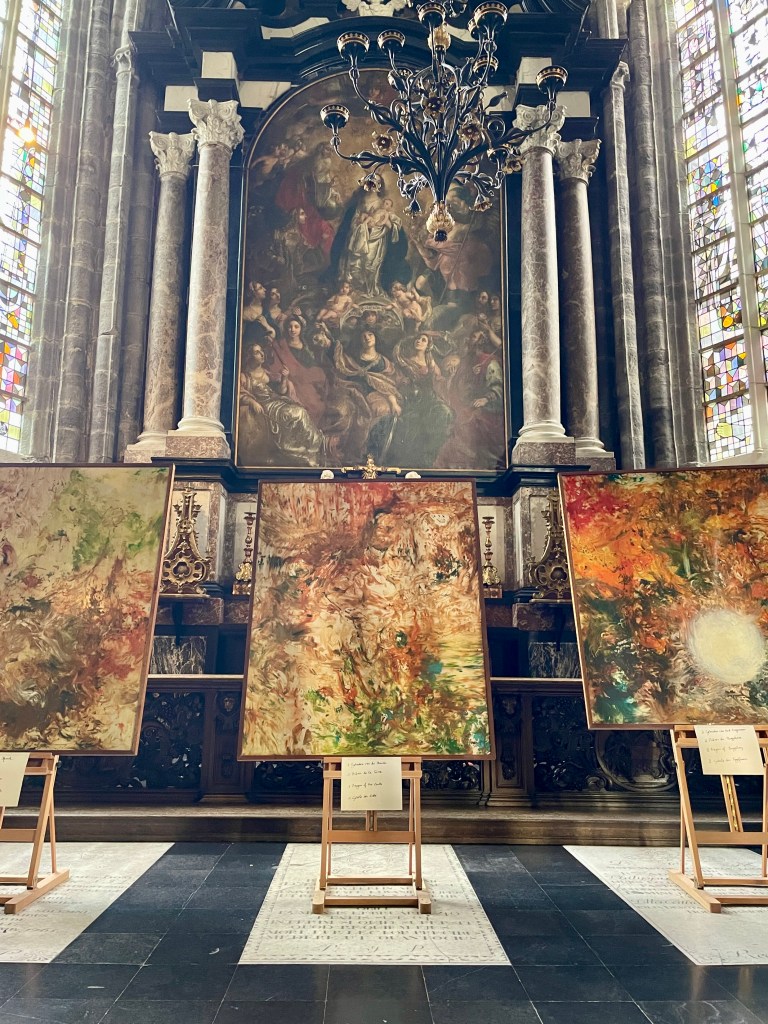
We had purposefully booked a hotel close to St. Bavo’s Cathedral, a Gothic stone giant which looms over central Ghent. Inside, we discovered gorgeous stained glass and works by Peter Paul Rubens juxtaposed against works by contemporary artists.

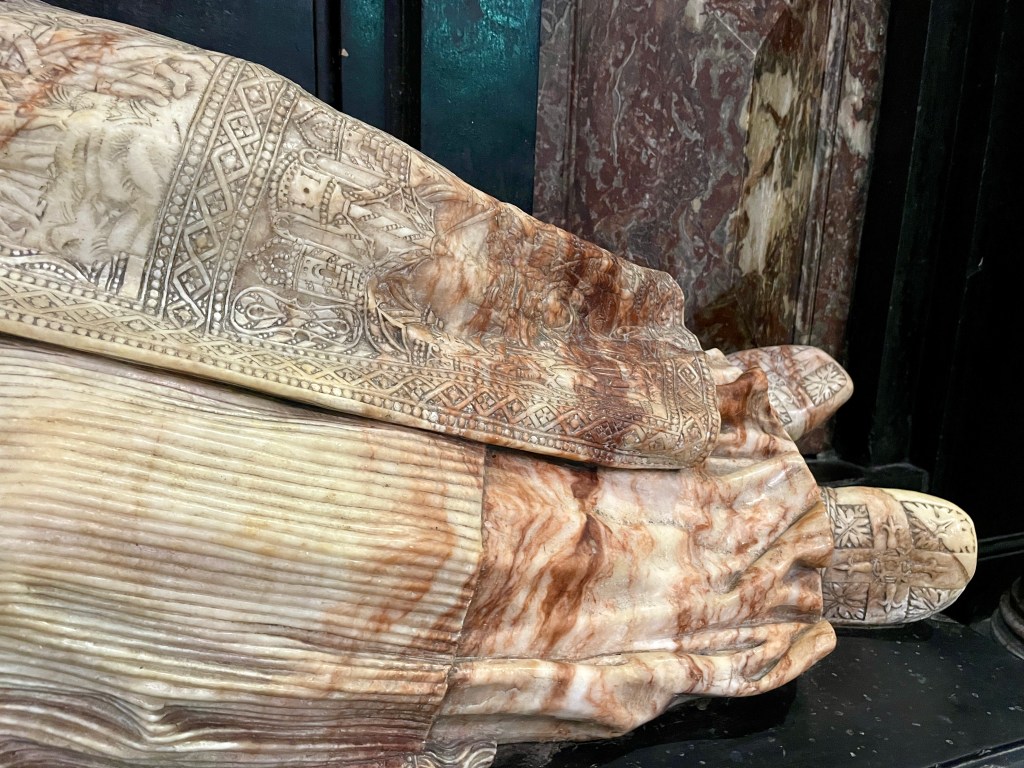
The reposed bishop was a surprising sight, but the marble carving was exquisite.

The highlight of St. Bavo’s and the raison d’etre for this stop on our trip was the Ghent Altarpiece. The masterpiece (below) was painted by brothers Hubert and Jan van Eyck. Completed in 1492, the artwork represents the transition from the art of the Middle Ages (religious iconography) to the Renaissance (human form and representation of nature). The top row is a veritable Who’s Who of Christianity – Adam, the Virgin Mary, “The Almighty”, John the Baptist, and Eve. The bottom register displays a crowd of pilgrims worshipping the Lamb of God in a natural setting.
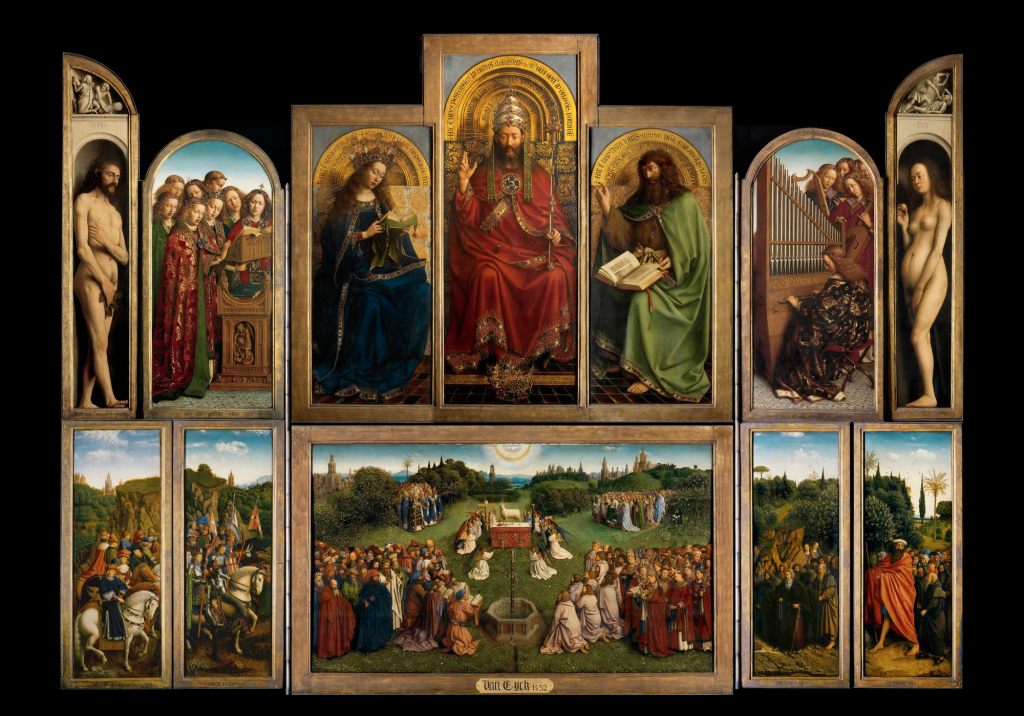
This artwork was also stolen by the Nazi’s and recovered in the Altaussee salt mine (Austria). Since 2012, the altarpiece has been in a constant state of restoration. Panel by panel, conservationists remove layers of dirt and grime which have naturally built up over the centuries.
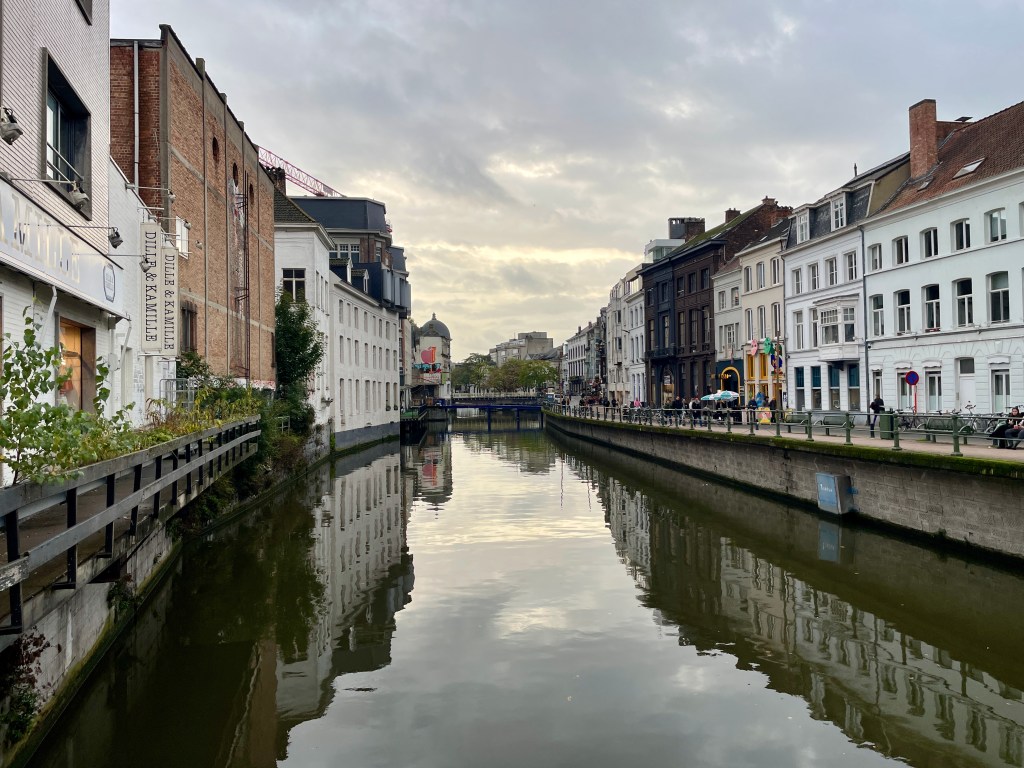
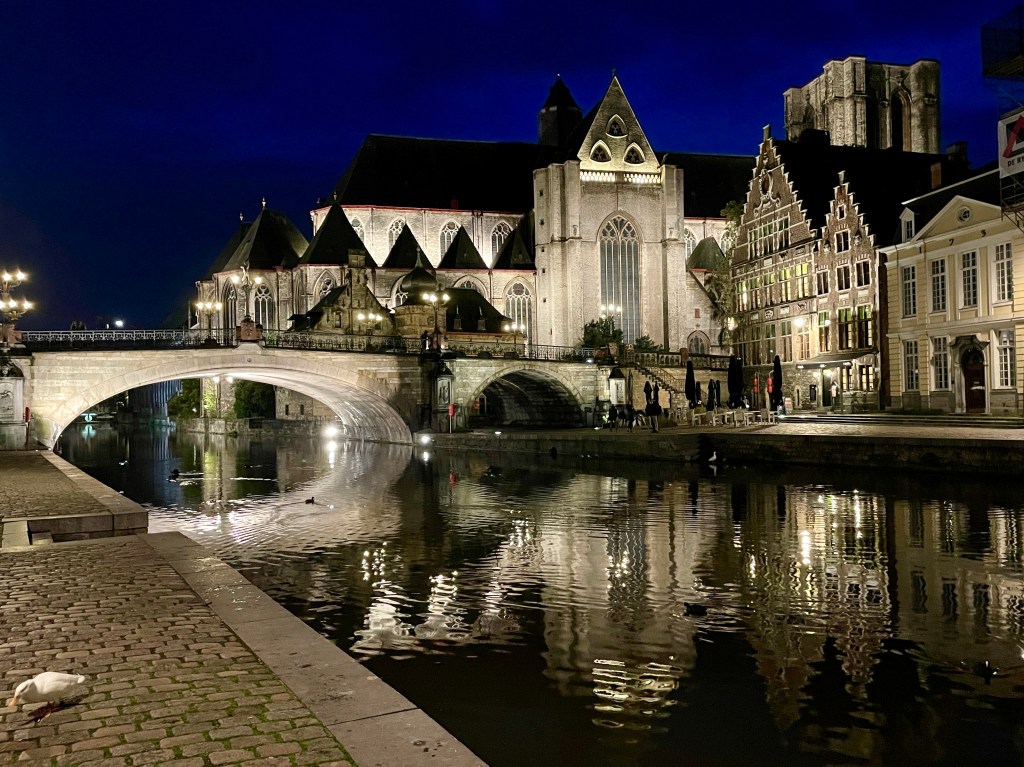
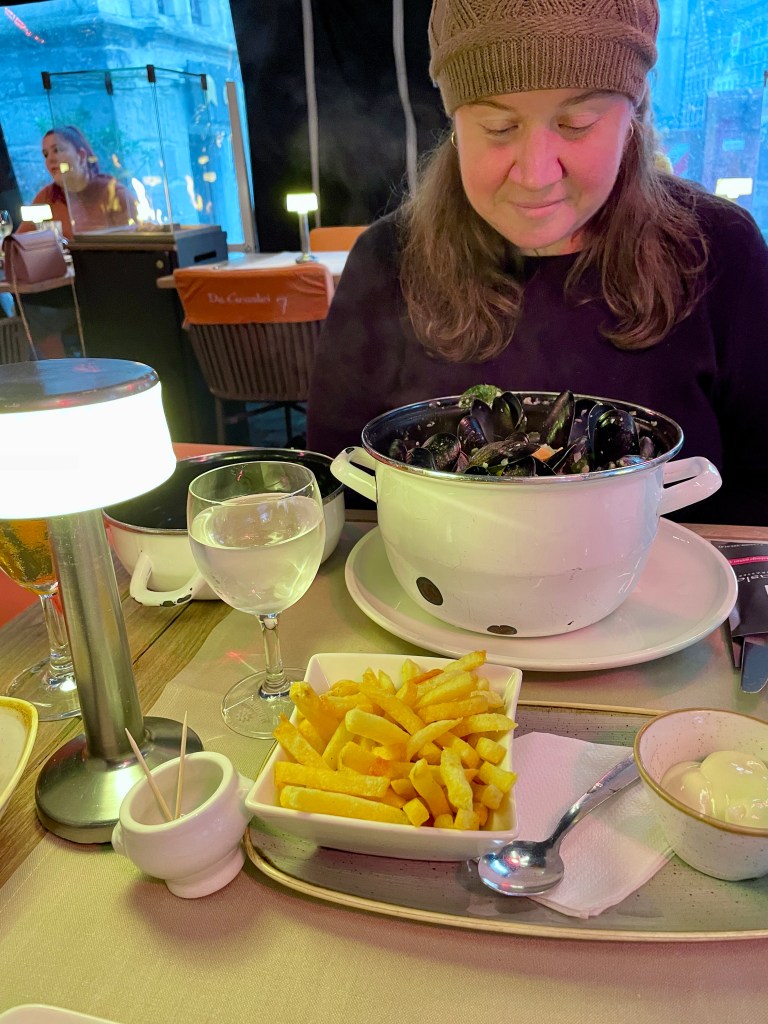
Ghent is a port city and, as such, offers deliciously indulgent seafood dishes such as moules frites. Mom and I found a suitable Belgian brasserie situated along the canal and tucked in to enjoy. A beautiful canopy of velvety blue adorned our walk home.
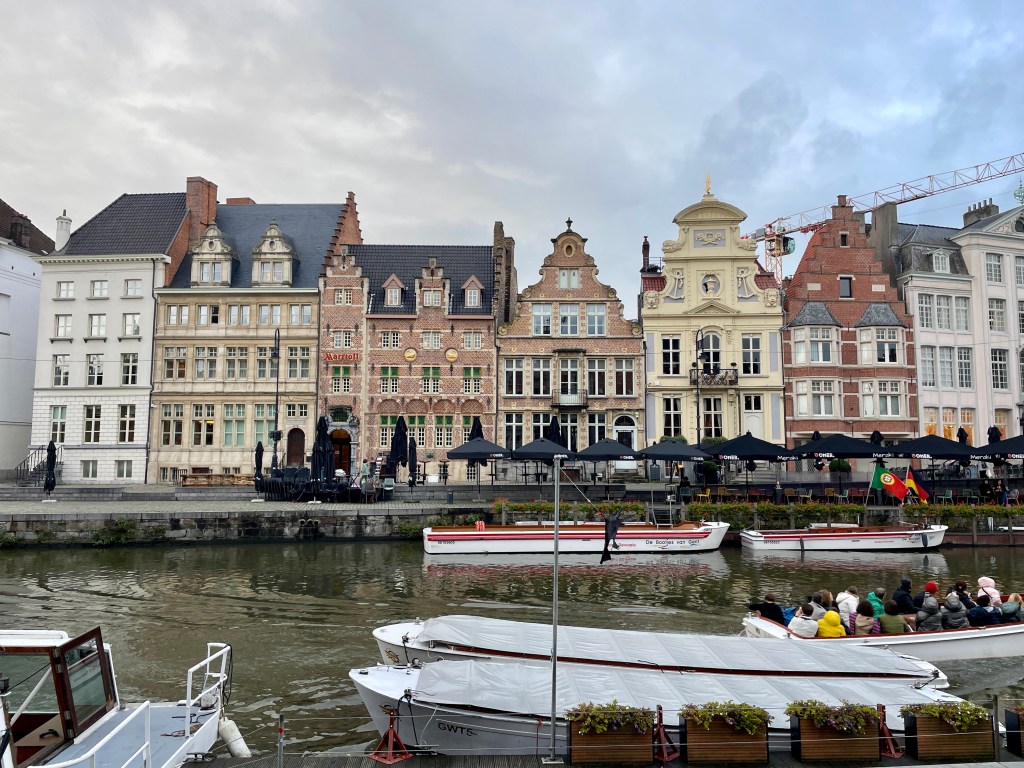
All too soon it was time to say goodbye. Mom and I spent a forgettable night in Rotterdam before heading back to Schiphol Airport to meet her flight. As she headed back over the Atlantic, I prepared for one final destination on this art history tour… a little town called Delft.
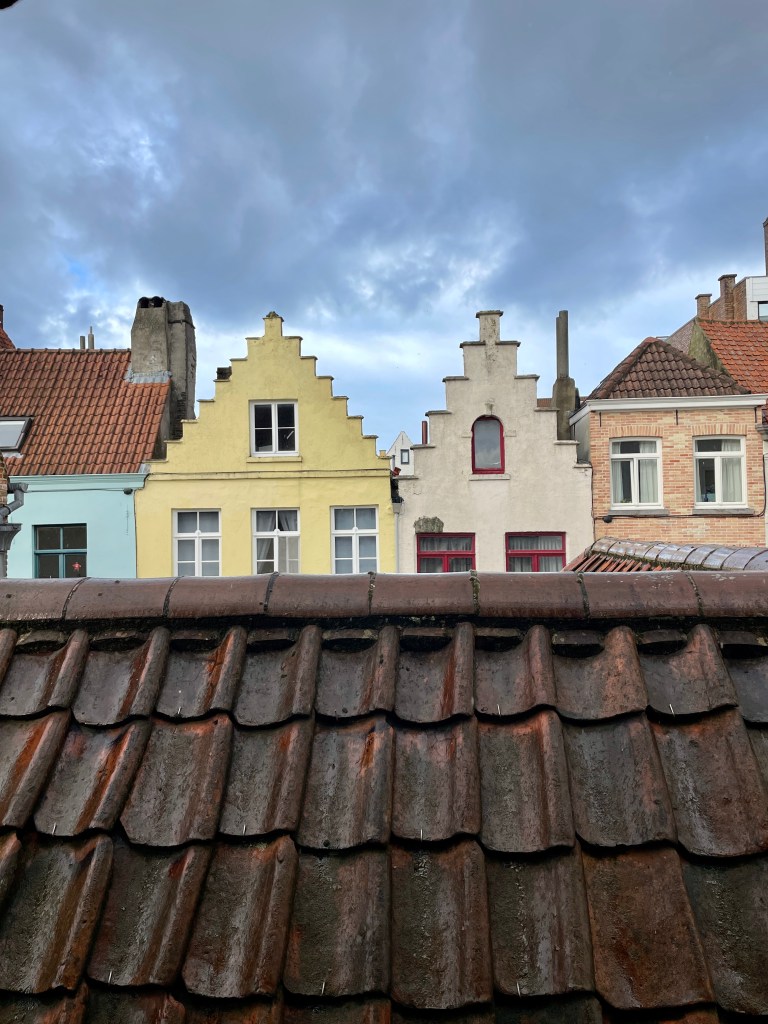
Bruges

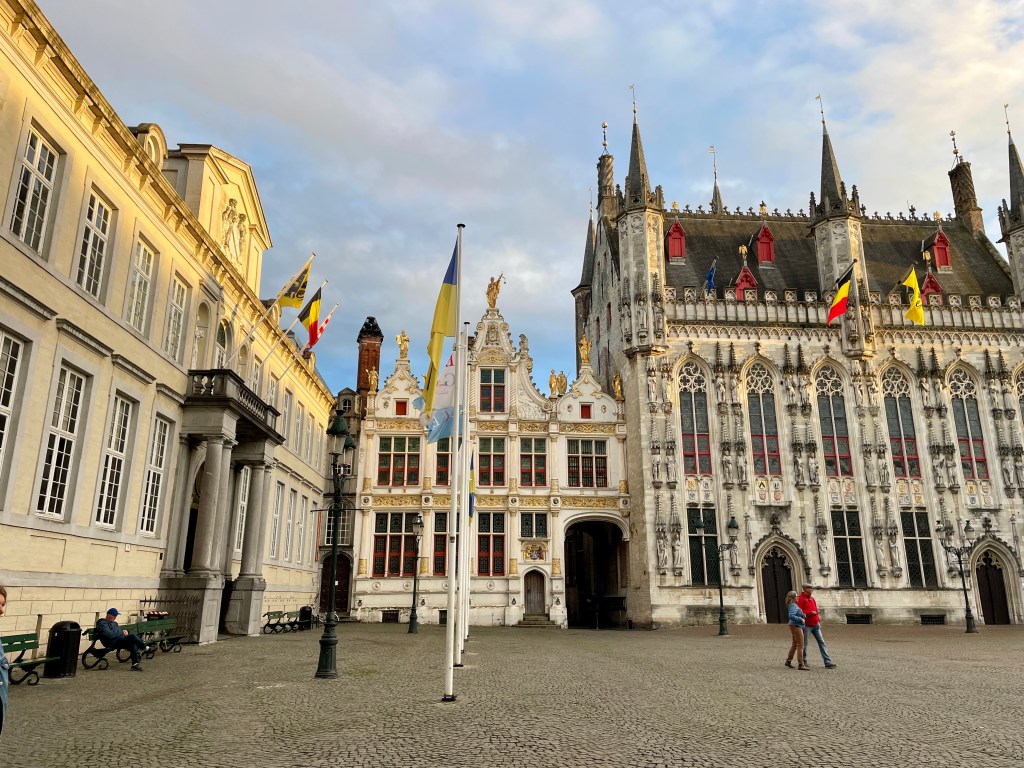
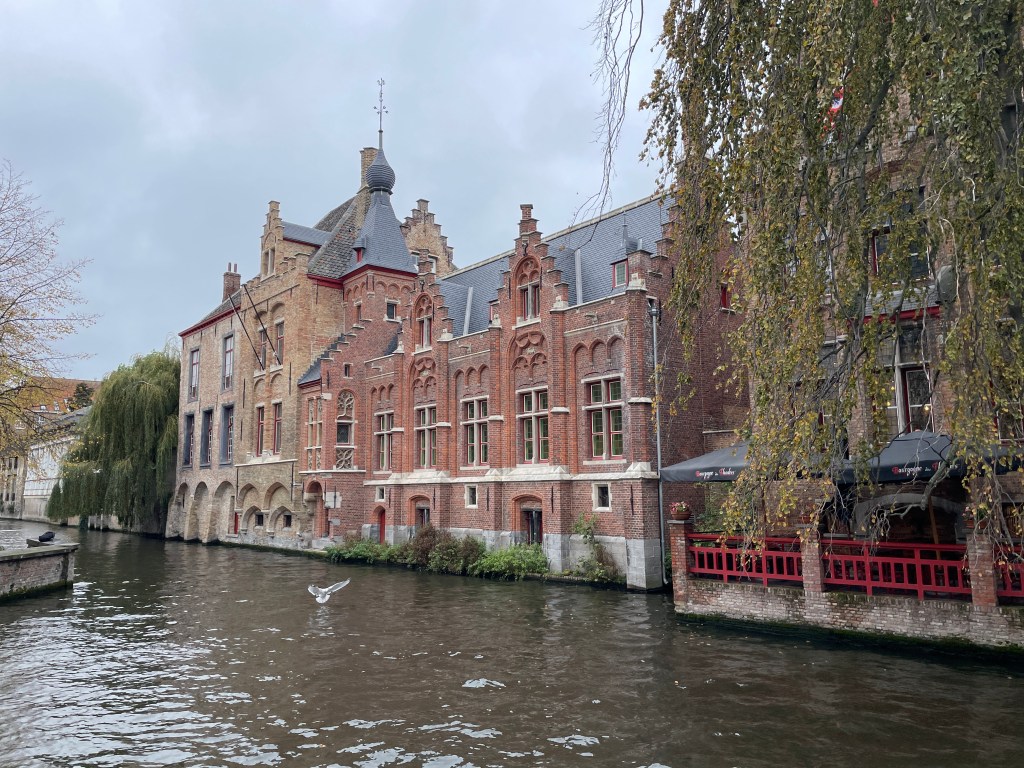
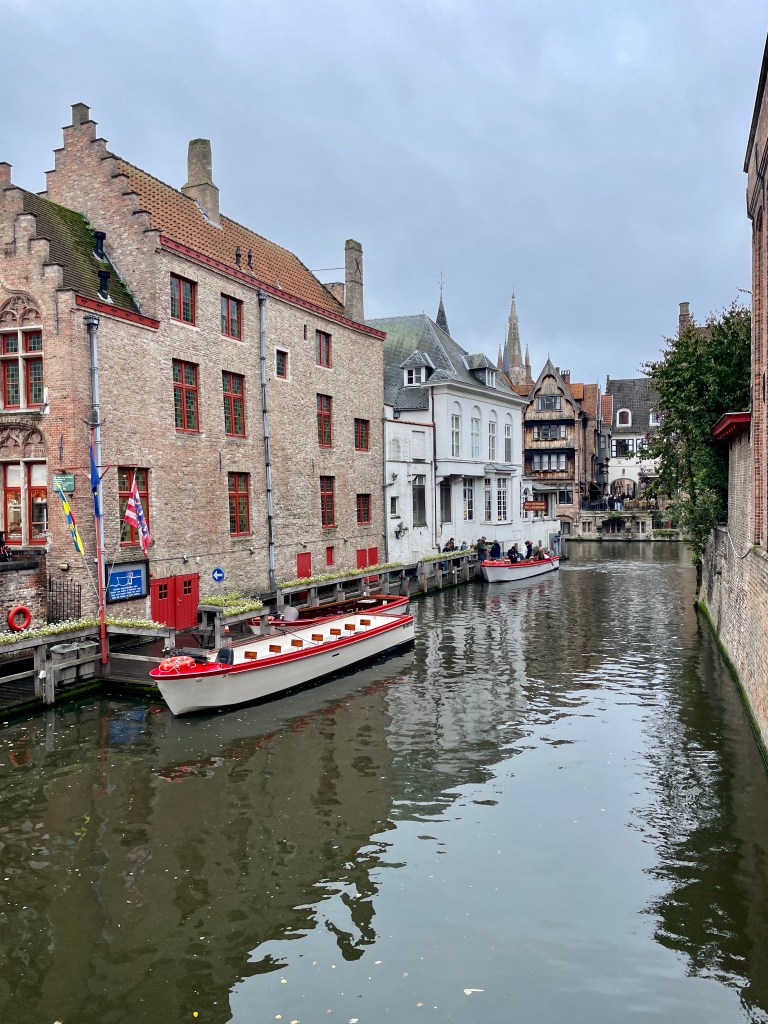
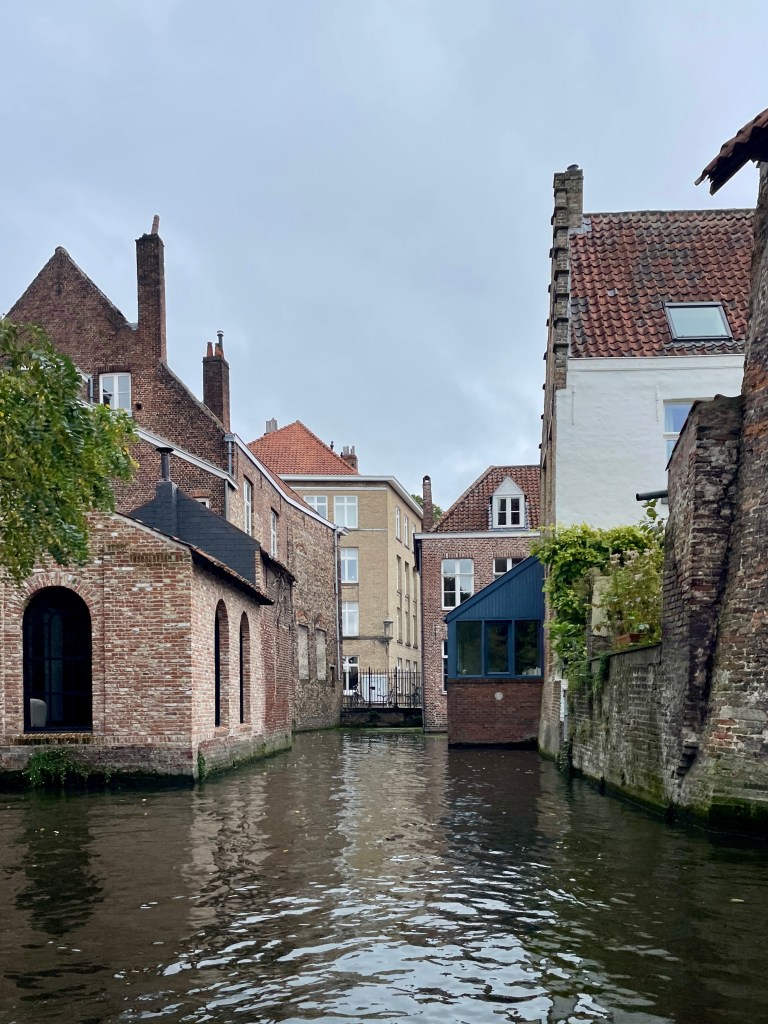
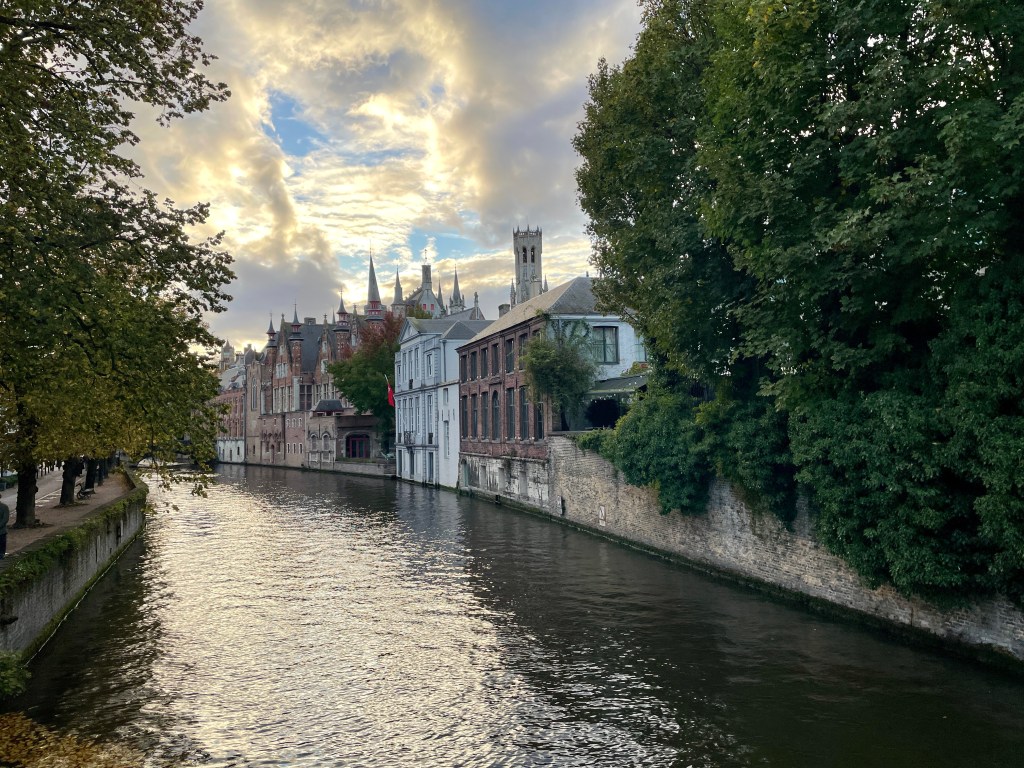
Quaint streets, Gothic architecture, and tranquil canals awaited us in Bruges, the second stop on our tour of Belgium.

The train ride from Antwerp to Bruges (pronounced BROO-GUH by locals) was direct and we arrived to our cozy Airbnb on a beautiful afternoon. The autumn weather, once again, remained in our favor. Immediate priorities included Belgian waffles and the Madonna of Bruges.

Continuing my unofficial art history tour of the Belgium, the Madonna of Bruges was not to be missed. Michelangelo’s statue of the mother and child, the first to leave Italy in his lifetime, stands just over four feet tall (below, right).

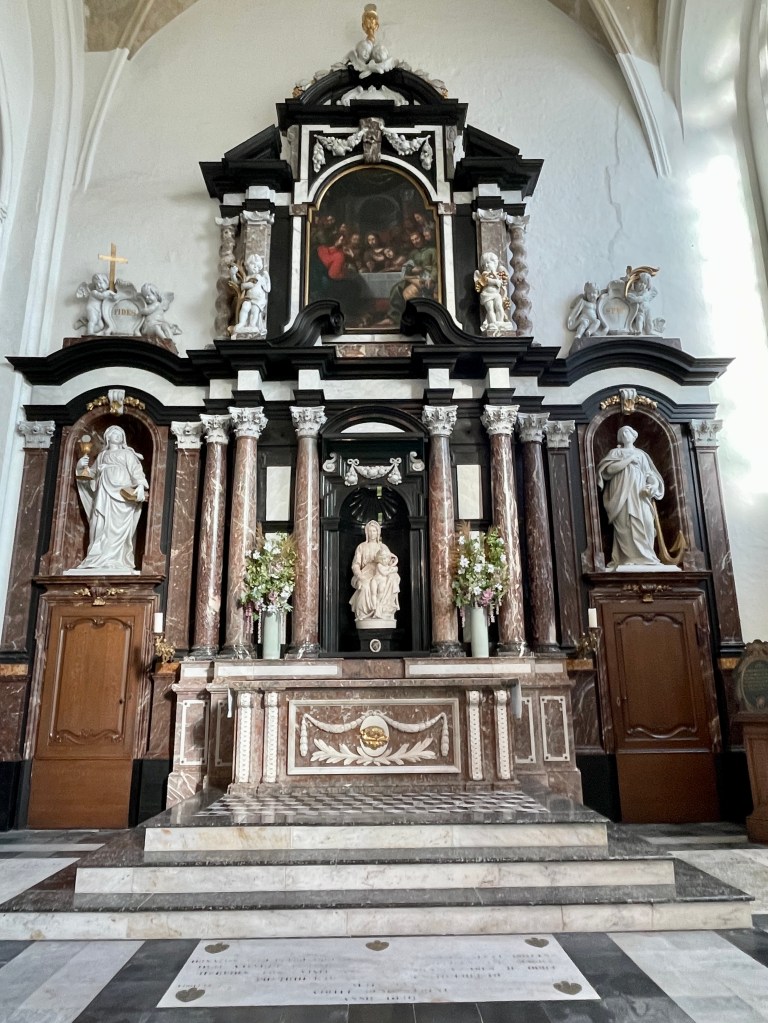
Stolen by the Nazis in WWII, she was recovered from a salt mine in Altaussee, Austria, by the famed Monuments Men, a group of British and American art historians, architects, museum curators and professors who saved countless works of art during the final days of WWII. Returned to Bruges, today the Madonna sits upon a throne worthy of her fame in the Church of Our Lady.

Despite the late October date, the narrow cobblestone streets of Bruges were still very busy with tour groups. Owing to Bruges’ proximity to the sea – only 11km from the coast – I cannot imagine navigating the town during peak cruise season.

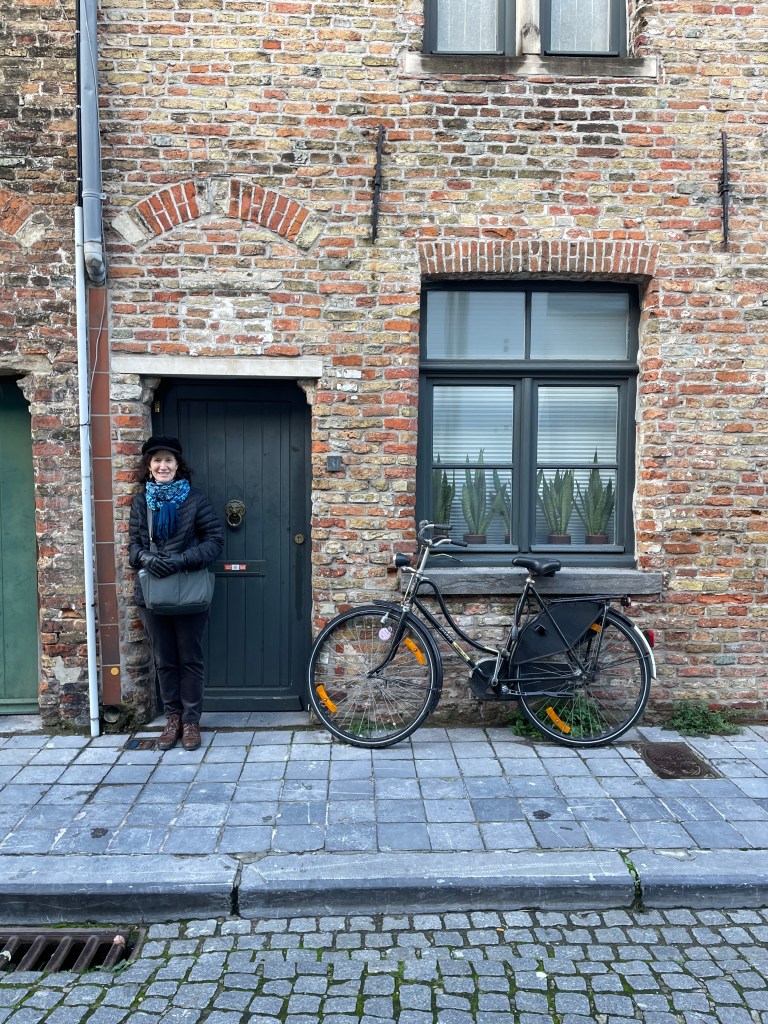
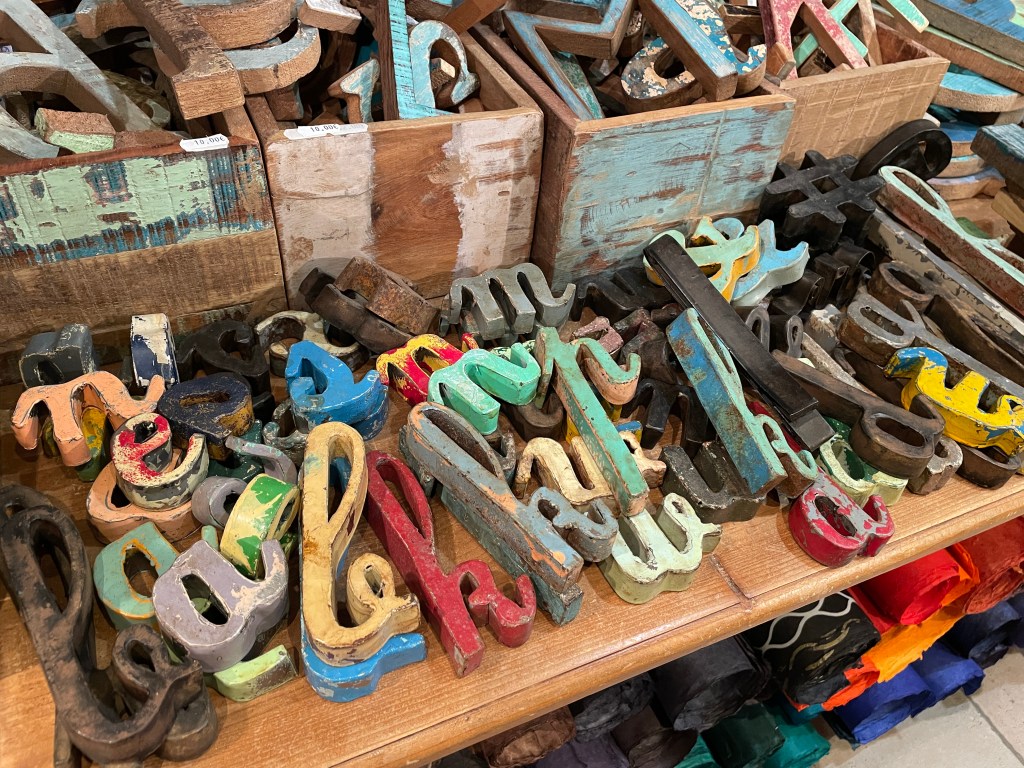
Happy to avoid the crowds, Mom and I wandered the quiet back streets, taking in the architecture and stumbling upon an adorable paper shop, Alfa Papyrus. We got lost among the handprinted cards and notebooks, talking at length with the shopkeeper and artist-in-residence.

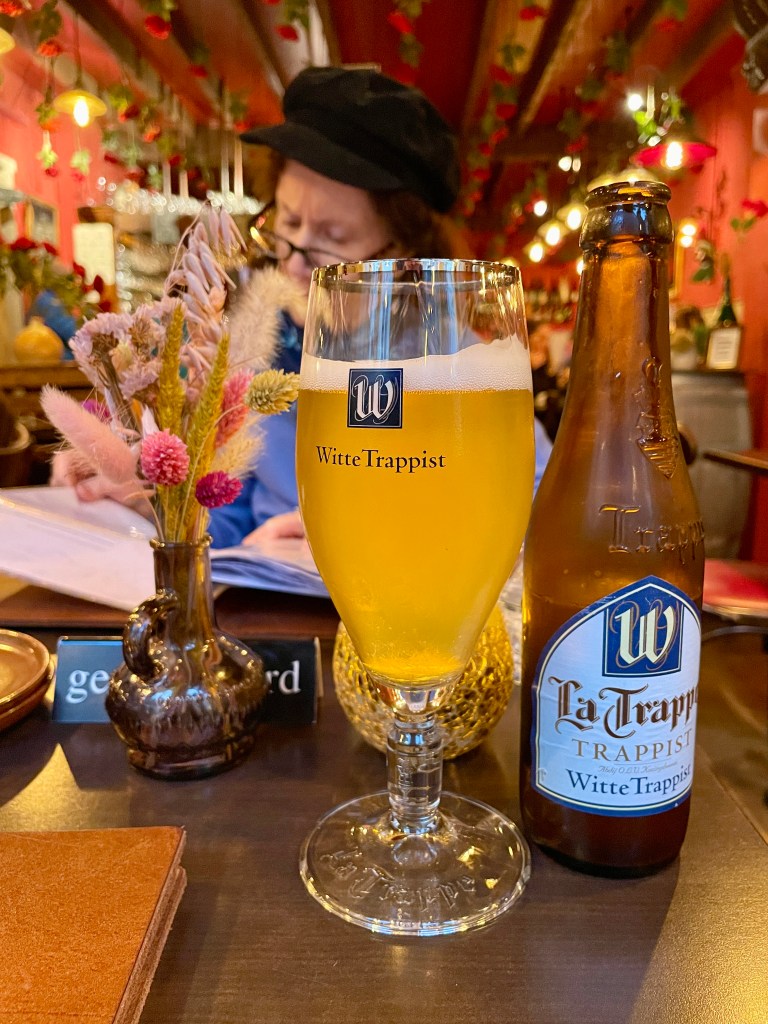
Upon exiting, I determined it was time to find a Belgian beer. We reached Cafe Rose Red just as dusk was falling. Every bit as warm and inviting as its name, the cafe is situated at street level within the Hotel Cordoeanier.

As we were early birds, kind waiter let us take a table for a few hours and we tucked into frites (another Belgian classic) and Trappist beers. As the menu states, Trappist beer must be brewed within the walls of an abbey under the supervision of a monastic community. A word to the wise – Bruges is mad about dinner reservations and shops close at 7pm!

The next day, we took walking and boating tour of the city which met in the main market square. The square is notably helmed by the Bruges Belfry (of In Bruges fame). No better way to see a city than by water.

Our local guide, Jacques, began by answering one of our burning questions – what is the difference between Flemish and Belgian? Short answer: Flemings (as they’re known) are a regional subculture within Belgium. They have their own language (the southern variant of Dutch) and customs. This also helped answer our second question – what language is spoken in Belgium?

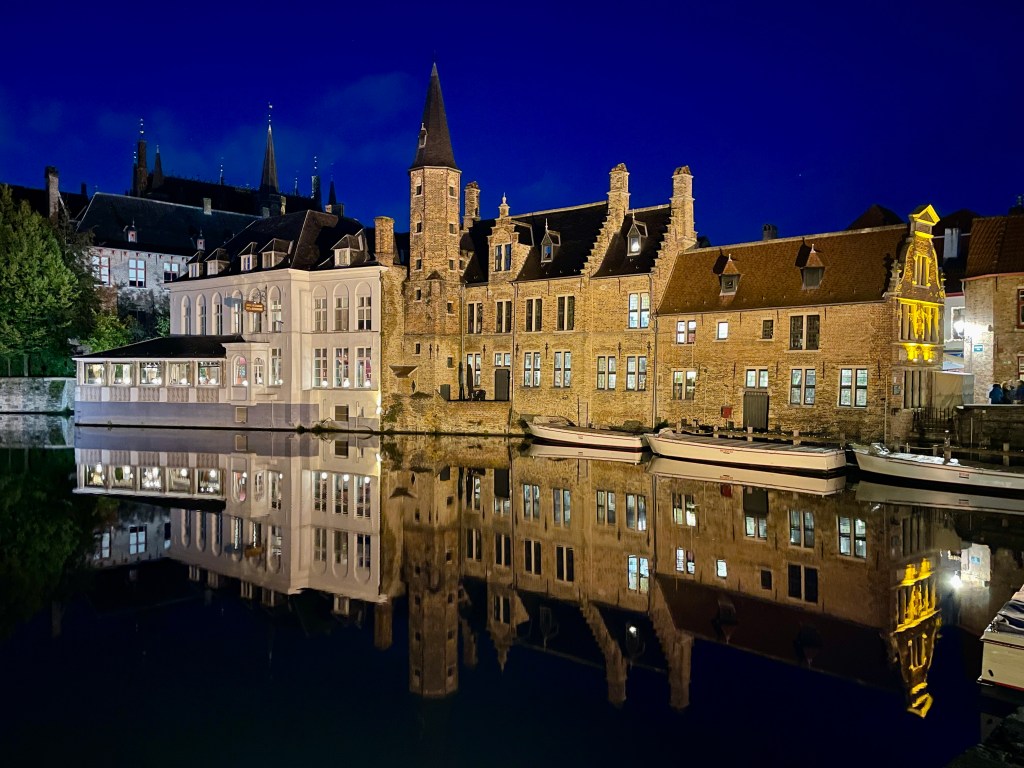
Turns out 3/5 of Belgium speaks Dutch. A third of the country speaks French and 1% of the country speaks German. Silly me, I had expected to rely on my high school French to get us by. With the language question put to rest, we settled in to enjoyed the rest of our time in Bruges. An evening stroll under a velvety blue sky capped off our stay.

All too soon it was time to say goodbye to lovely Bruges. The next stop on our art history tour – The Ghent Altarpiece – beckoned and we were all too happy to answer the call.

Belgium

Hard to believe but October has come and gone. Istanbul hinted at fall temperatures but we have weather in the 70s once again. With a week off for fall break, I wanted to take advantage of the shoulder season for European travel. Less crowds! Back in January of 2020, I designed a little tour of Belgium. While that trip never came to be, I never stopped thinking about the adorable country in northern Europe, an art historian’s dream. So, when Belgium beckoned once again, I invited my mother to join the fun.

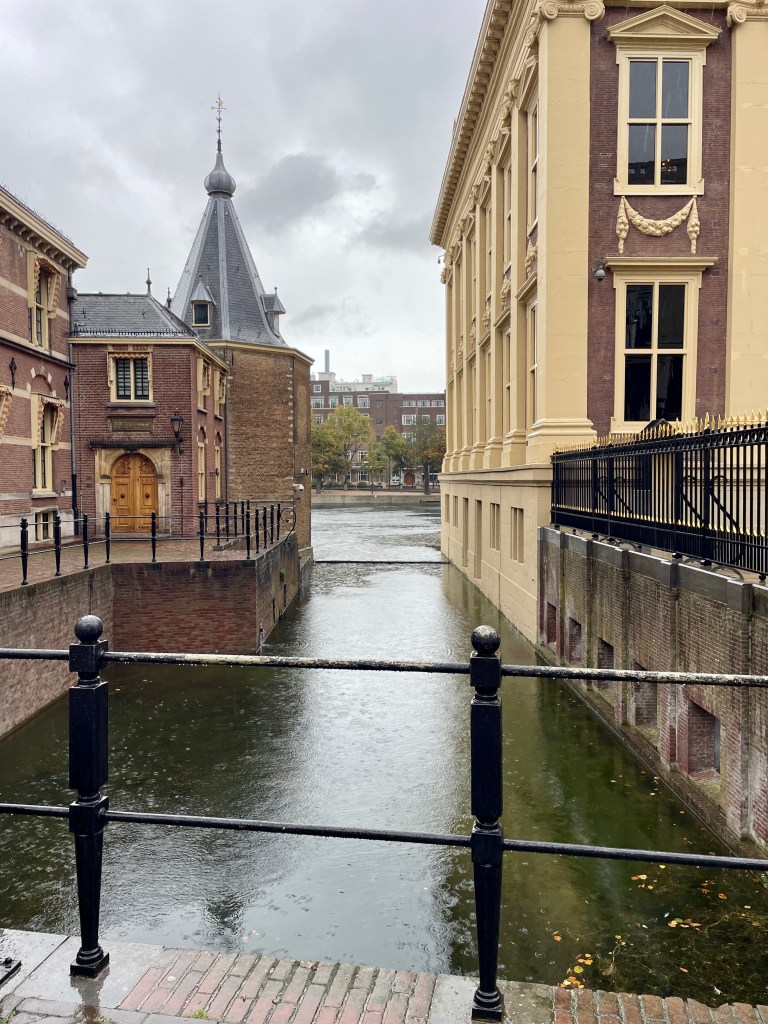
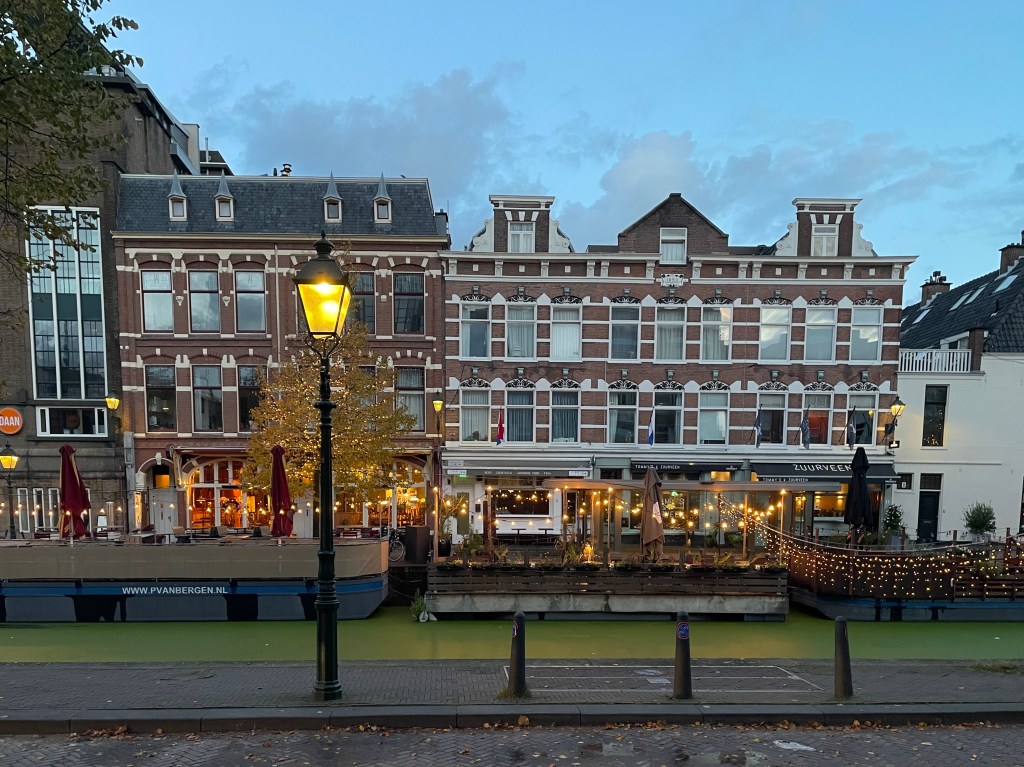
I flew to Amsterdam, arriving among the midday drizzle at Schiphol. One of my favorite airports, Schiphol is also a train station. There’s nothing more convenient then exiting baggage claim and hopping on an intercity train only moments later. The Hague was my first stop.

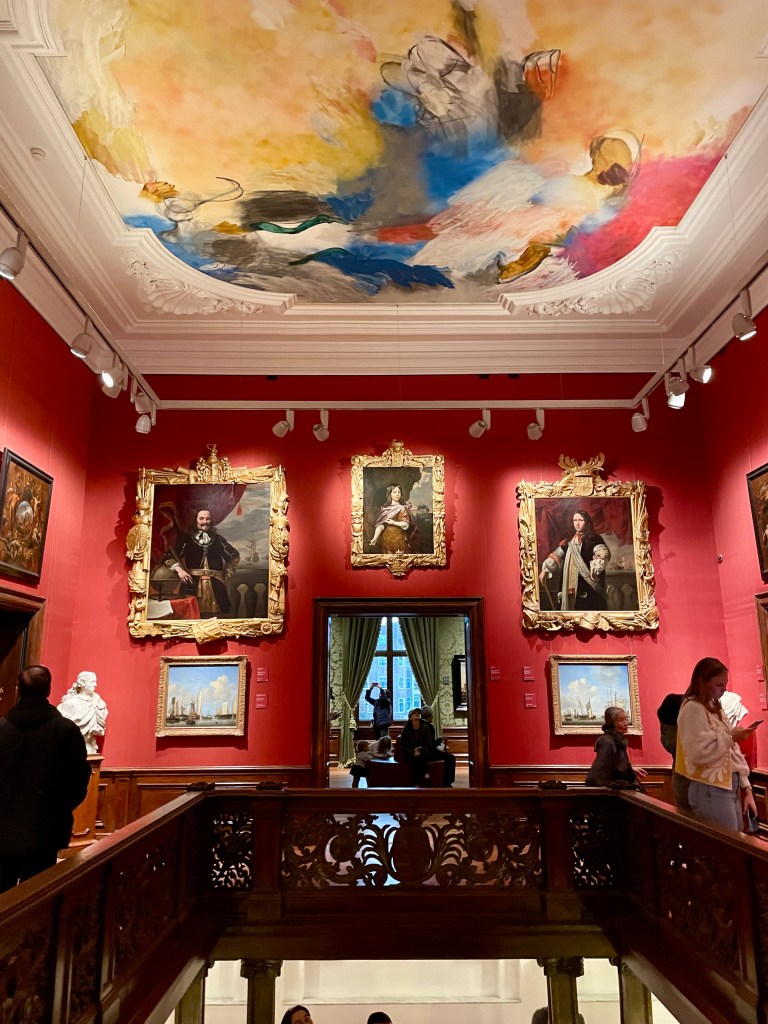
I came for the art. A few years ago, I read The Goldfinch by Donna Tartt. Took me two tries to get through the first 50 pages but it became a COVID highlight. A modern day Catcher in the Rye mixed with some Dutch art history – it had my attention. The painting which inspired the tale hangs in the Mauritshuis, a museum in Den Haag.

Painted in 1654 by Carel Fabritius, The Goldfinch (above, right) was a bit ahead of its time. Shapes of color blocked in by loose brushstrokes, this technique was not common before the Impressionists employed it centuries later. It is both unassuming and powerful, no larger than the size of a book. Vermeer’s Girl with a Pearl Earring hangs nearby, also remarkable in its allure.

After a night at the adorable Park Centraal Den Haag, I took the train back to Schiphol to greet my mother’s flight. Flying the new JetBlue route direct from Boston, Mom arrived with impressive energy despite the overnight flight. We bought train tickets and headed for Belgium.

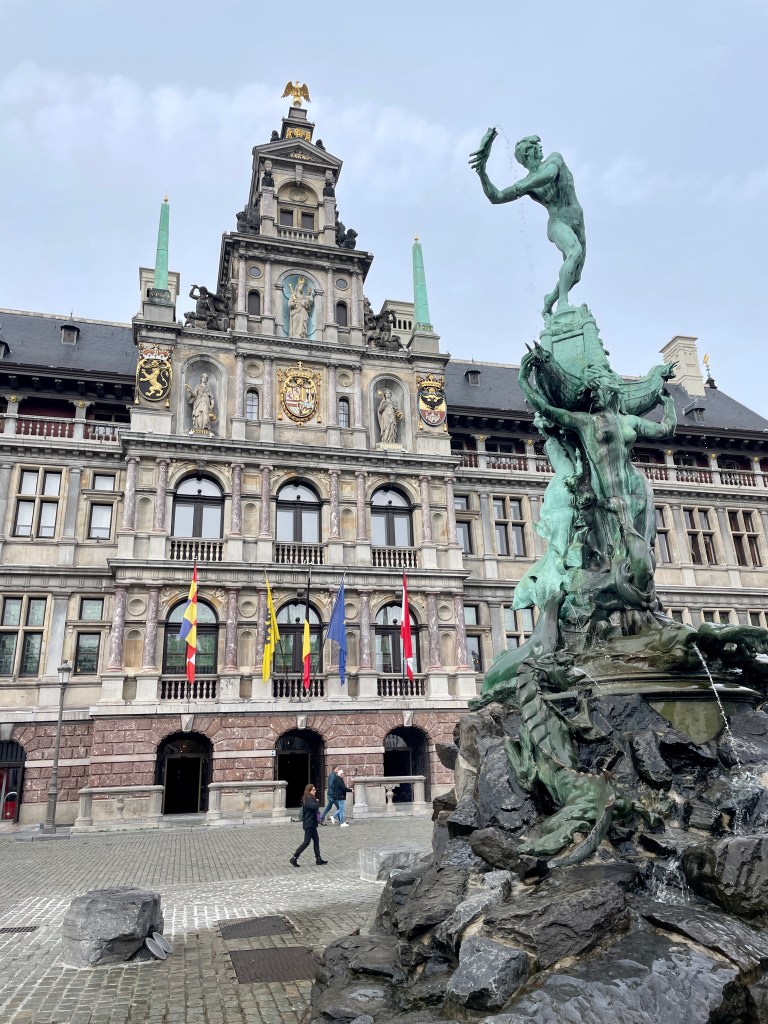
No customs, no waiting across borders in the EU – we rolled across the Netherlands and into Antwerp with no issue. Uber from the train station got us to our Airbnb and we found ourselves well-situated to the nearby Cathedral of Our Lady and Grote Market Square.

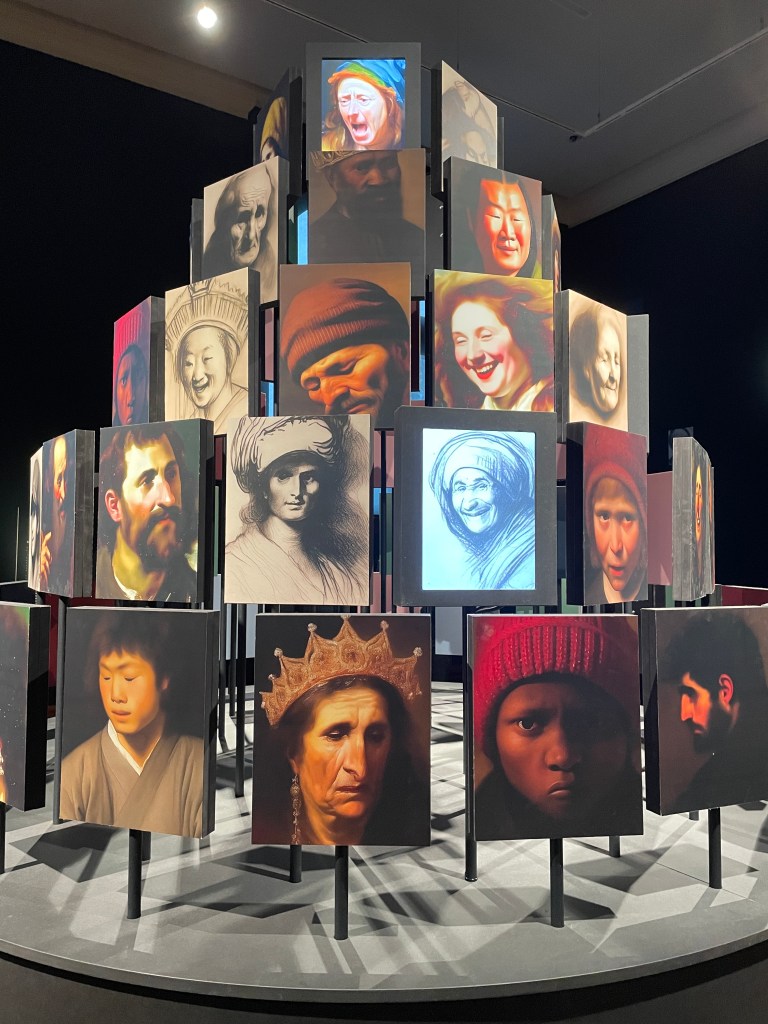
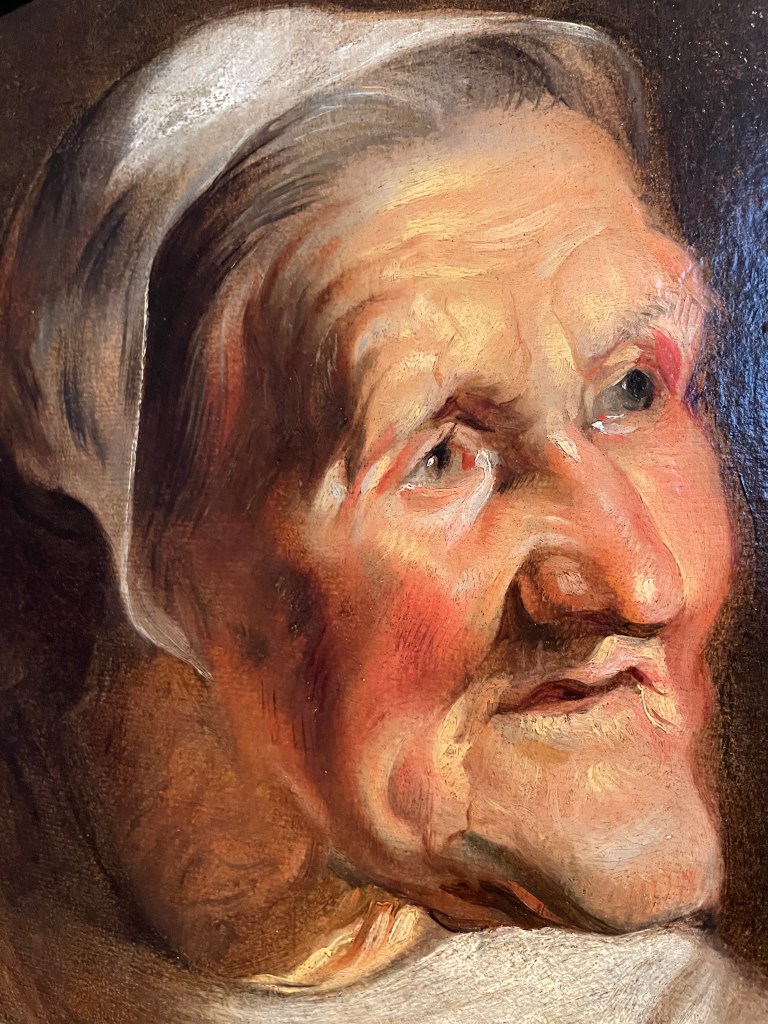
The second largest port in Europe, Antwerp was the home of revered Dutch artist Peter Paul Rubens. We were lucky enough to see his work in the newly renovated Royal Museum of Fine Arts (KMSKA). There we caught the work of Rembrandt and Bruegel in a face-focused exhibition.

Ever since I was introduced to the Dutch and Flemish Masters back at the Peabody Essex Museum, I’ve been in awe of the warm light emanating from the canvas during this time period, earning the name “The Golden Age”.

Antwerp proved the perfect starting point for our trip to Belgium – a walkable mid-sized city with all of the amenities. Questions as yet unanswered… what is Flemish culture and which languages are spoken in Belgium? More to come. Next up – Bruges!