Staycation

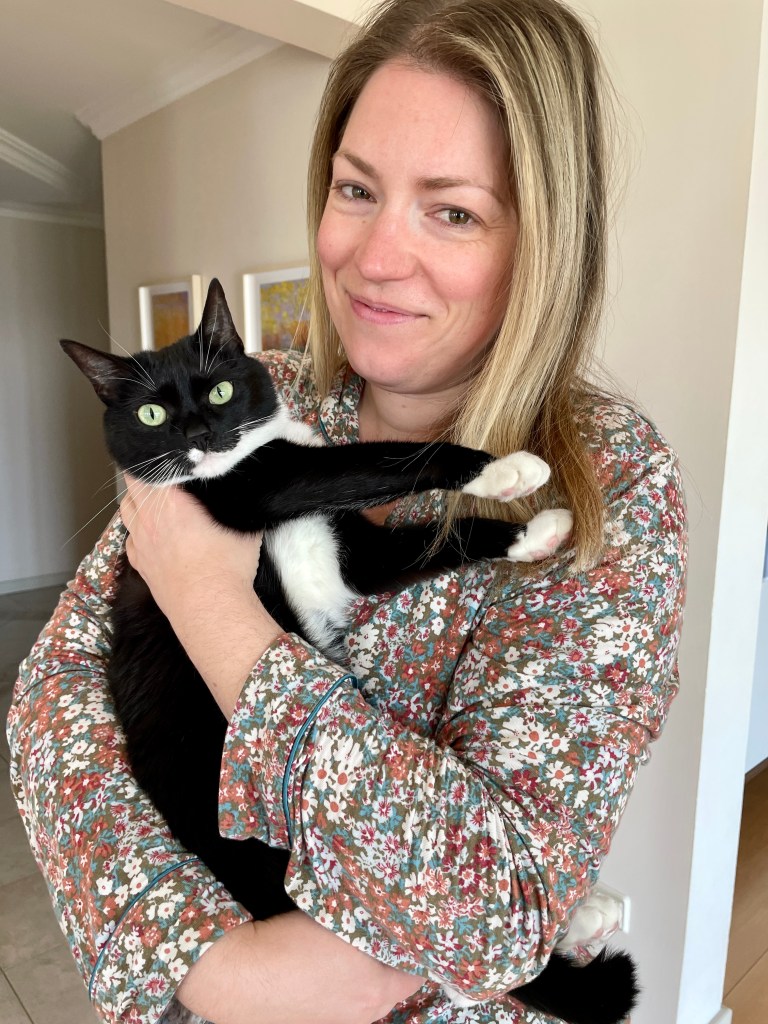
As April turned to May, I was lucky enough to have my friend Tori come to visit from Vermont. I had a long weekend which turned out to be the first of many thanks to the election situation. More on that another time. I was thrilled when Tori could find the time for a week’s trip to Turkey and the direct flight from Boston made the trip fairly simple (Anne’s diner and Don’s airport shuttle included).

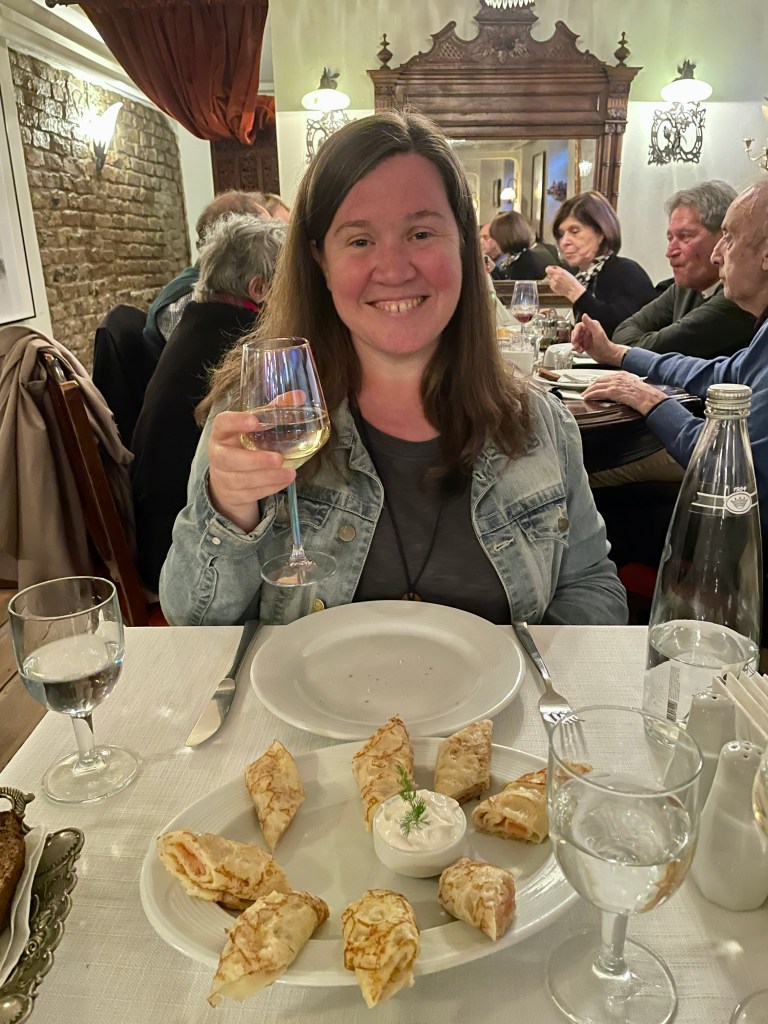
Leaving Moloko with yet another set of wonderful cat sitters, Tori and I headed downtown to dinner at Ayaspaşa Rus Lokantası. The most authentic Russian fare in Istanbul, we did our best to sample the trip Tori did not get to take due to COVID in May of 2020. The plate in front of me contains salmon blini with sour cream (yum). We were even treated to singing and dancing in the restaurant.
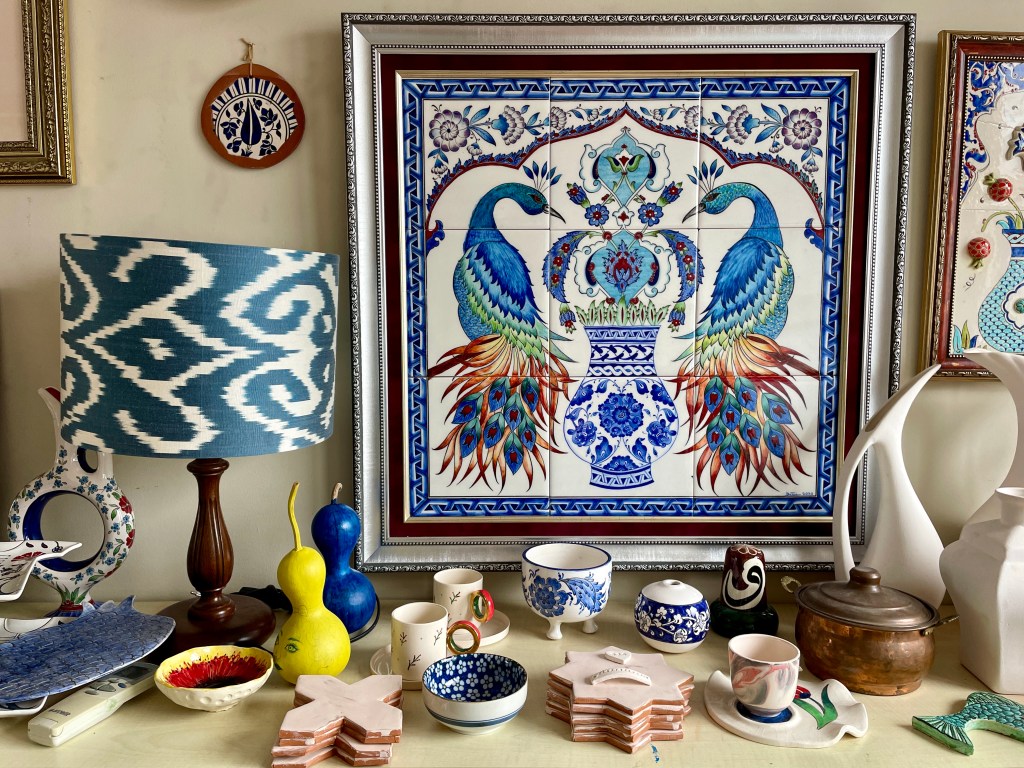
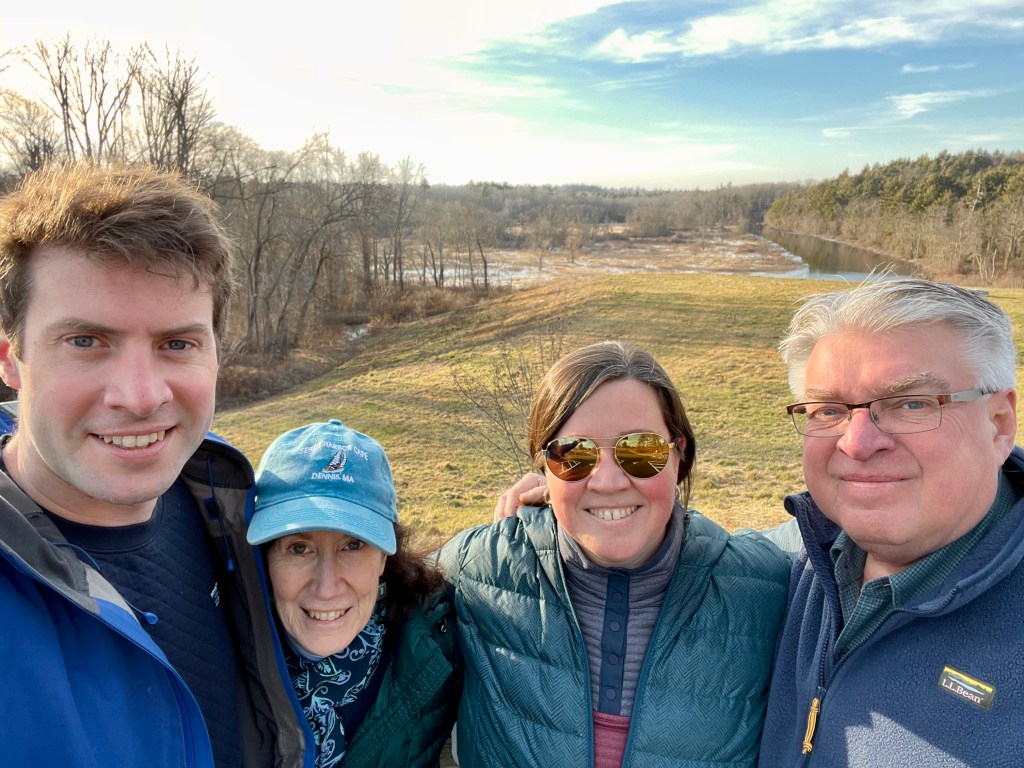
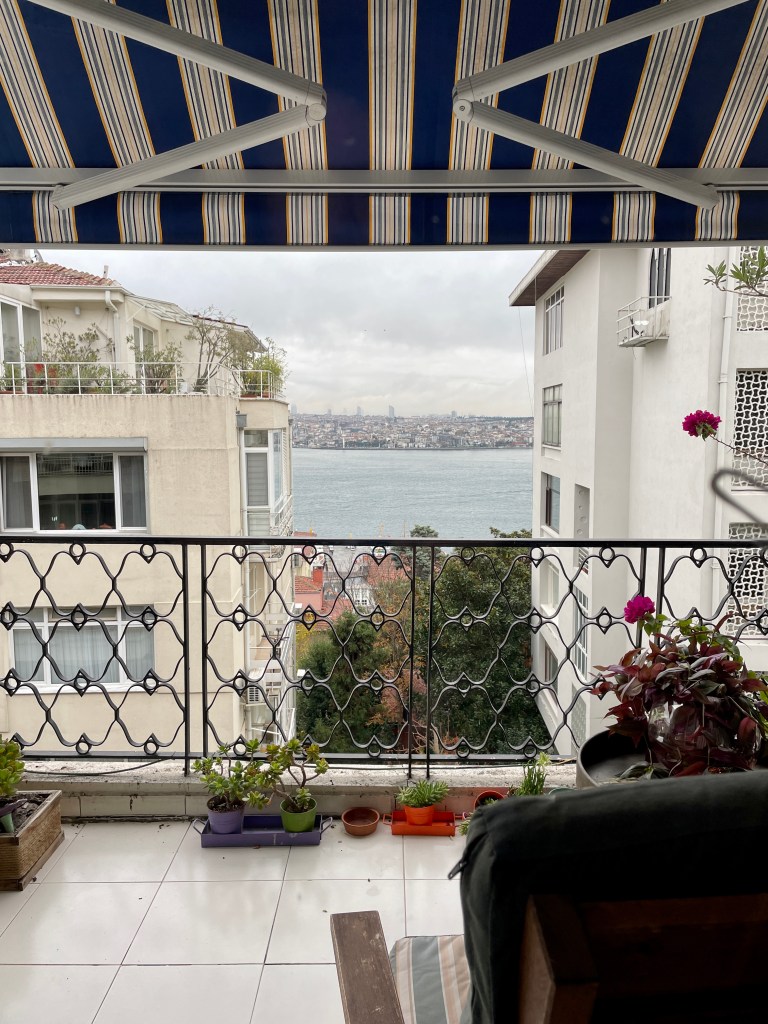
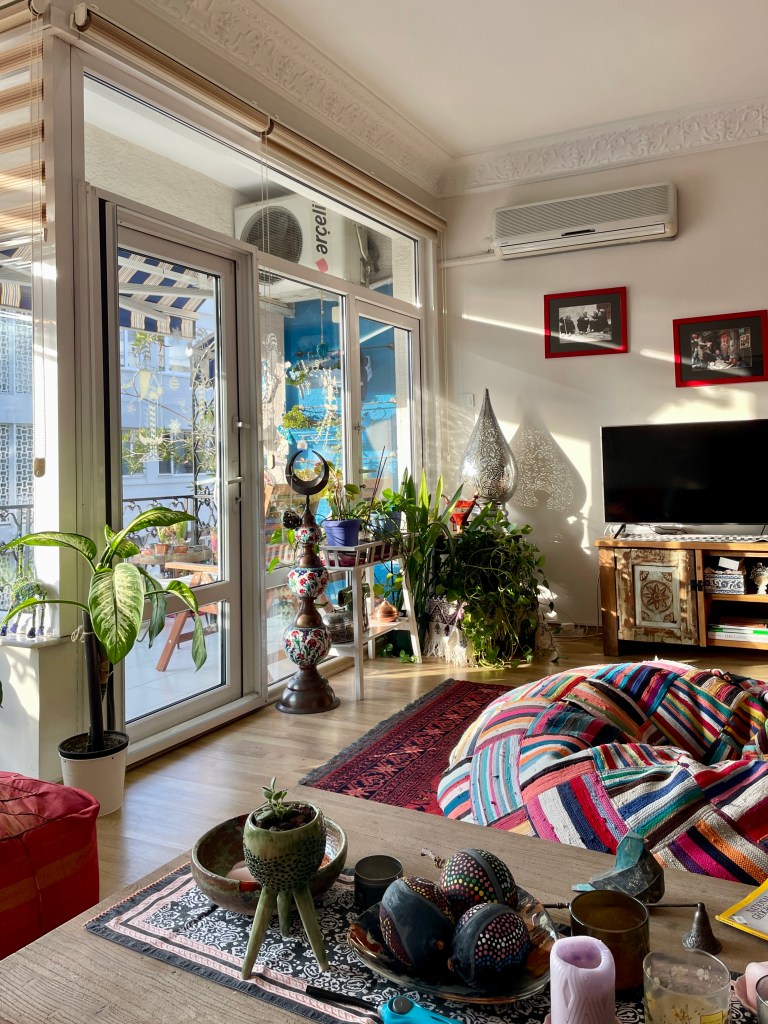
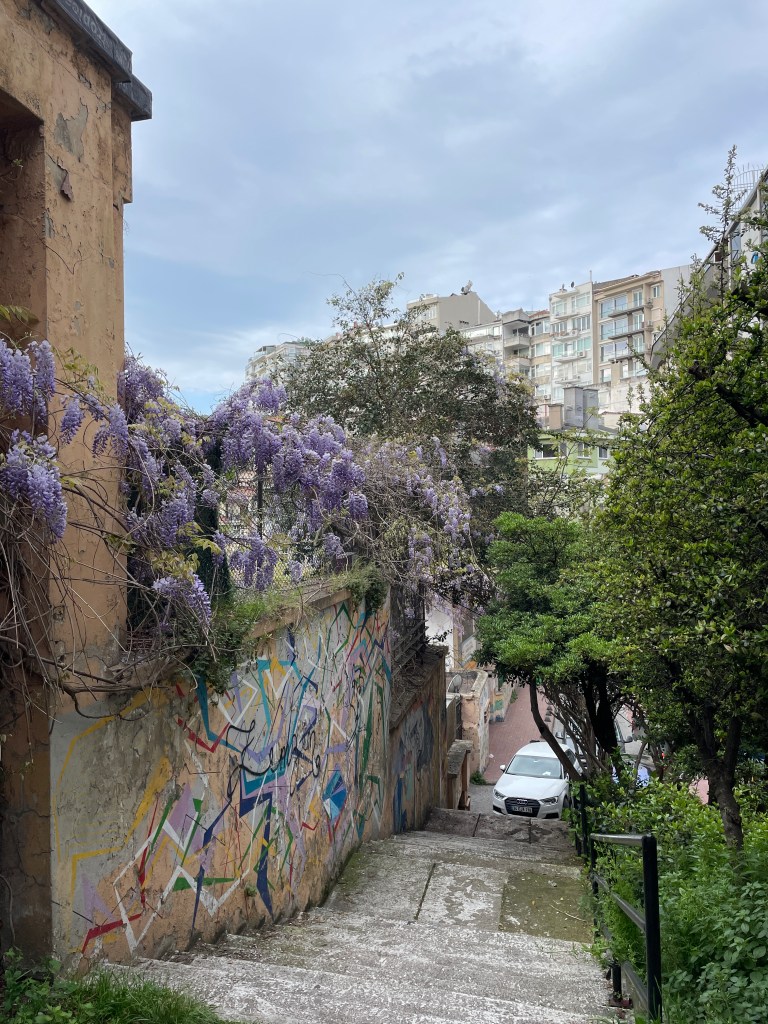
My friend Michele graciously welcomed us to stay at her downtown apartment just behind Taksim Square. Thanks to her gorgeous art collection from all over the world, it reads as a boutique hotel, replete with a view of the Bosphorus off her balcony. As walked down the steps to catch the tram, we passed the beautiful wisteria in full bloom.
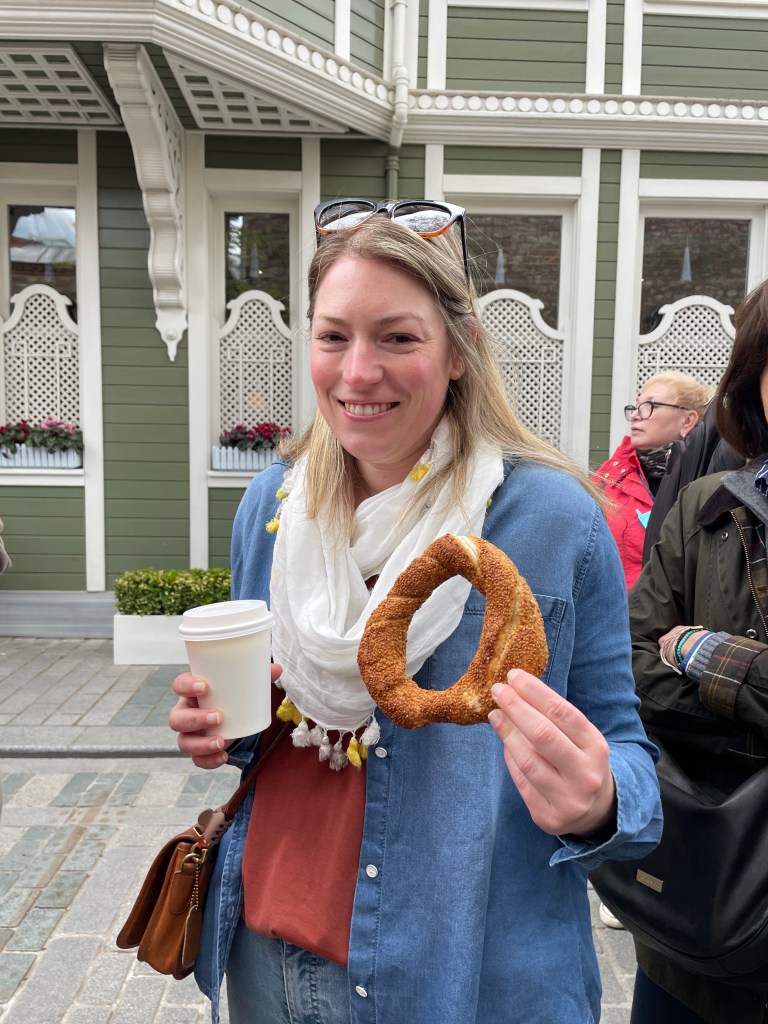
Fresh off my first set of visitors, I had a lot of fun to playing tourist in Istanbul. Thanks to the first go round, I learned you must get to the Hagia Sophia as the line forms at 9am. See us here in line, my second weekend in a row! Managed to grab a simit and coffee on the way. The Hagia Sophia really is as beautifully stunning and peaceful as it seems in pictures.
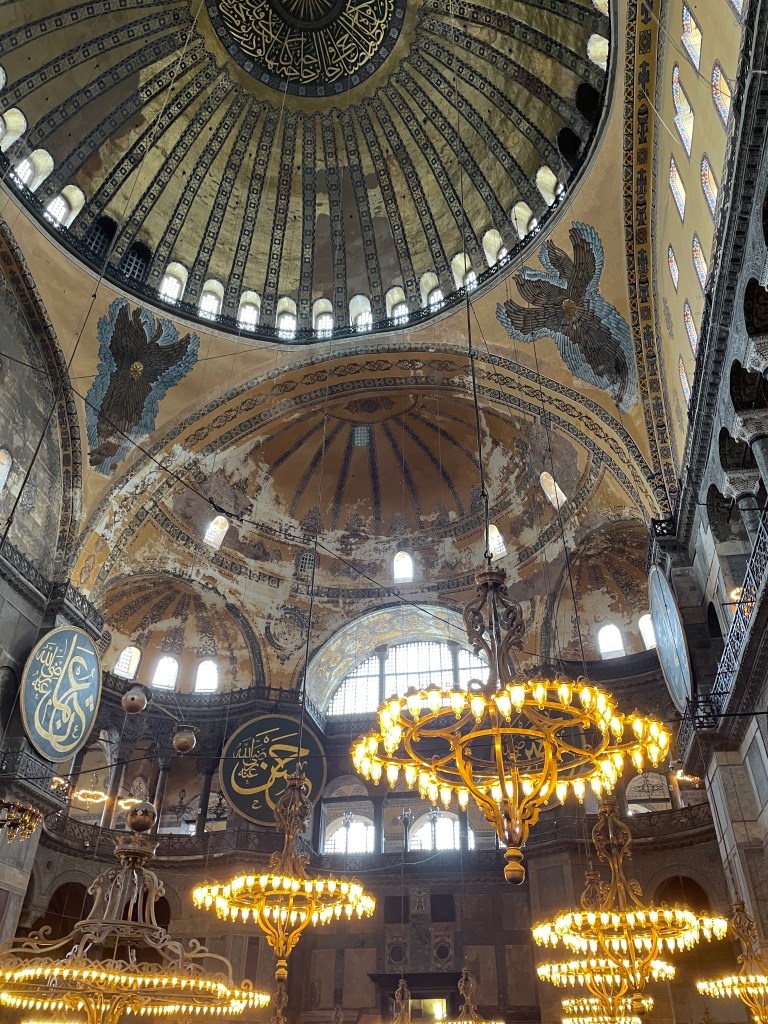
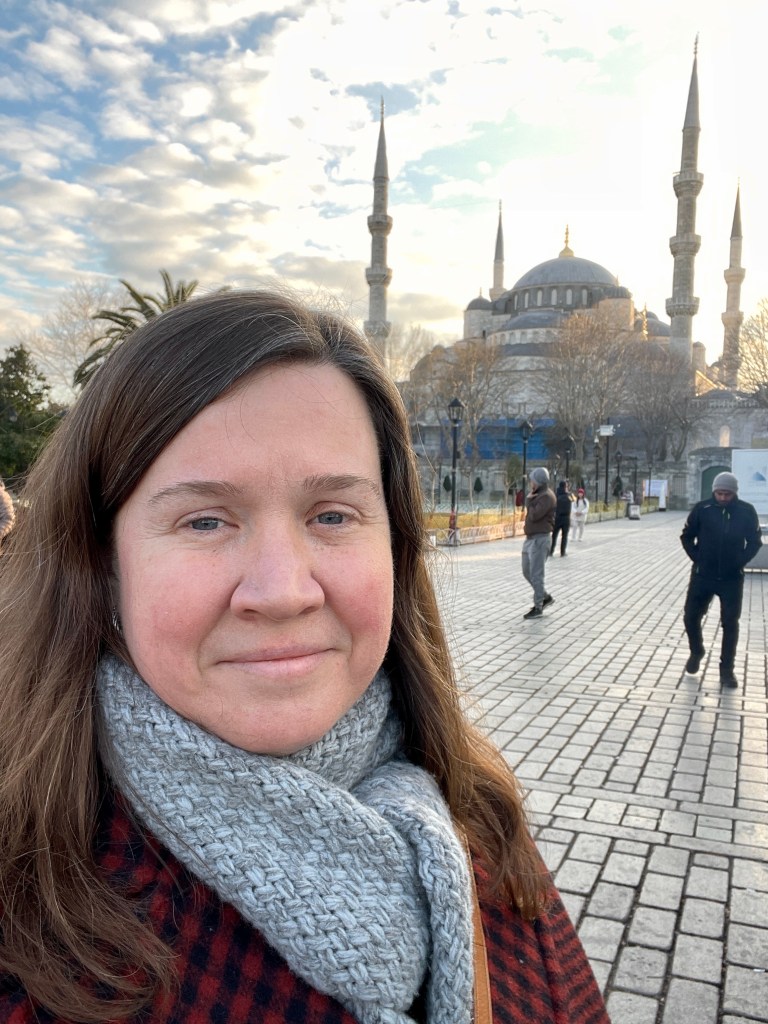
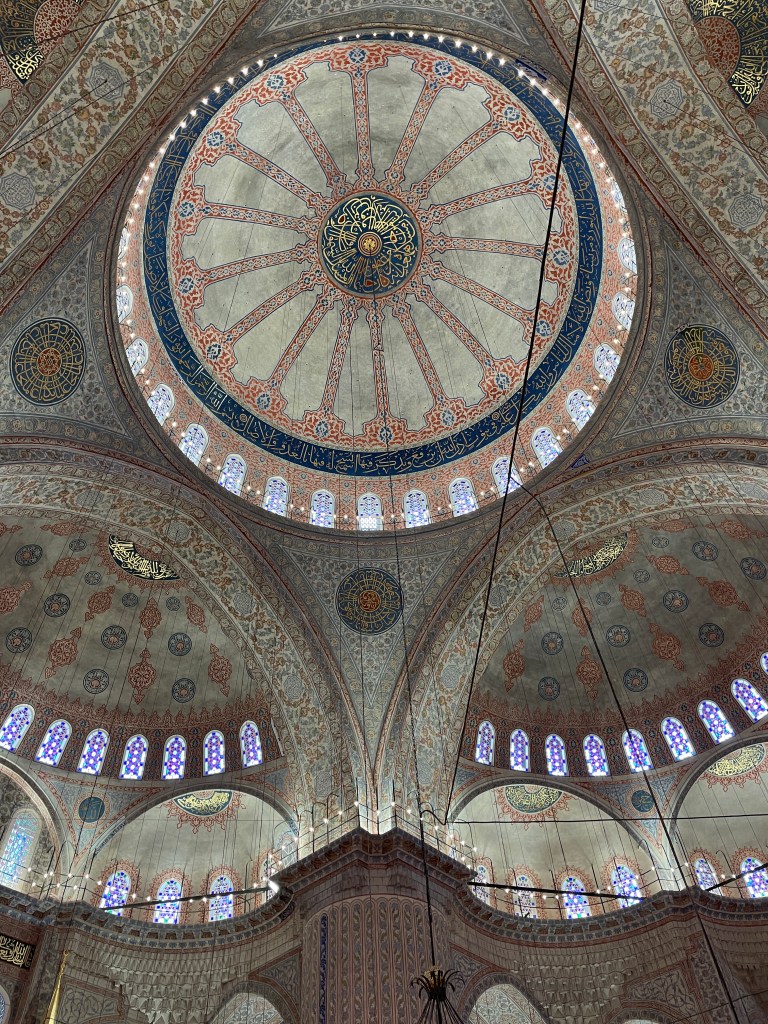
After our time inside, we took pictures out front and walked across Sultanahmet to the Blue Mosque in which 20,000 blue Iznik ceiling tiles truly baffle the mind.

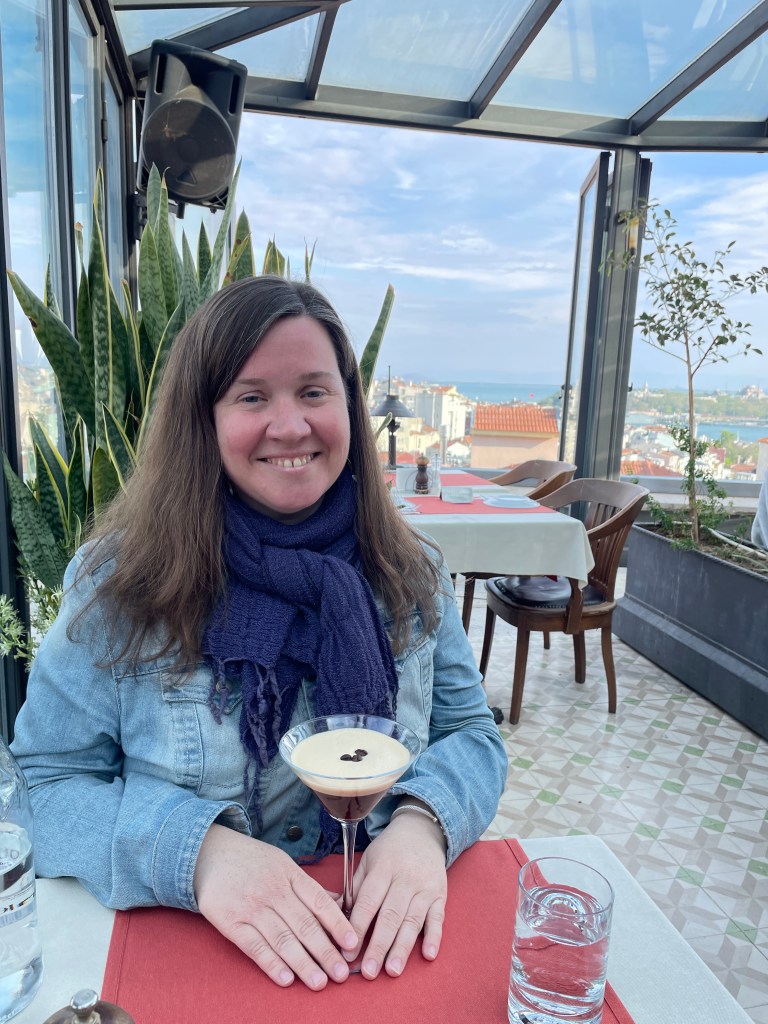
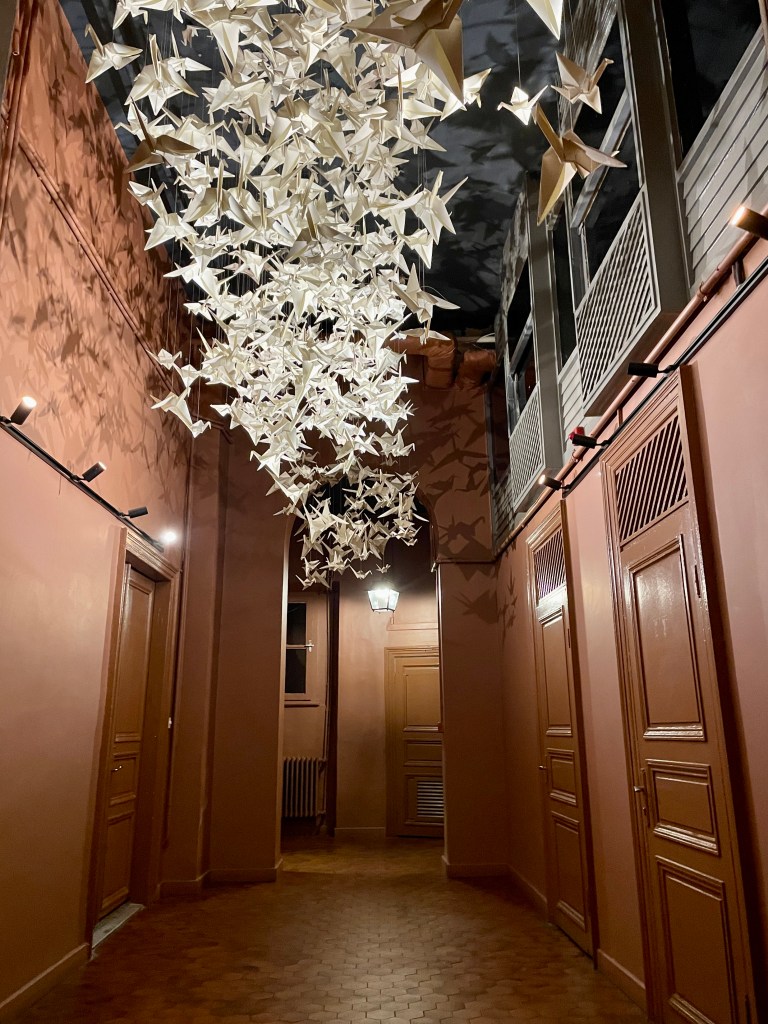
Rooftops are surely the best way to experience the stunning landscape of Istanbul. We opted for good views and good taste – drinks at Corinne Hotel‘s rooftop bar and dinner at Hodan‘s beautiful garden restaurant. Love the origami installation in the entryway.
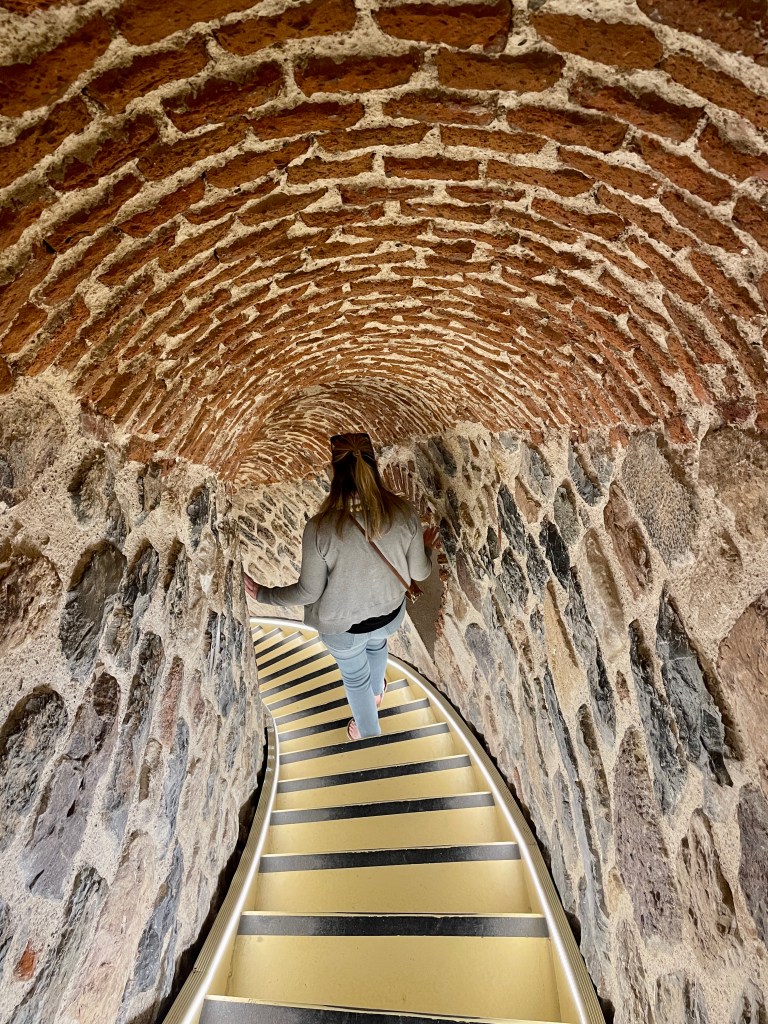
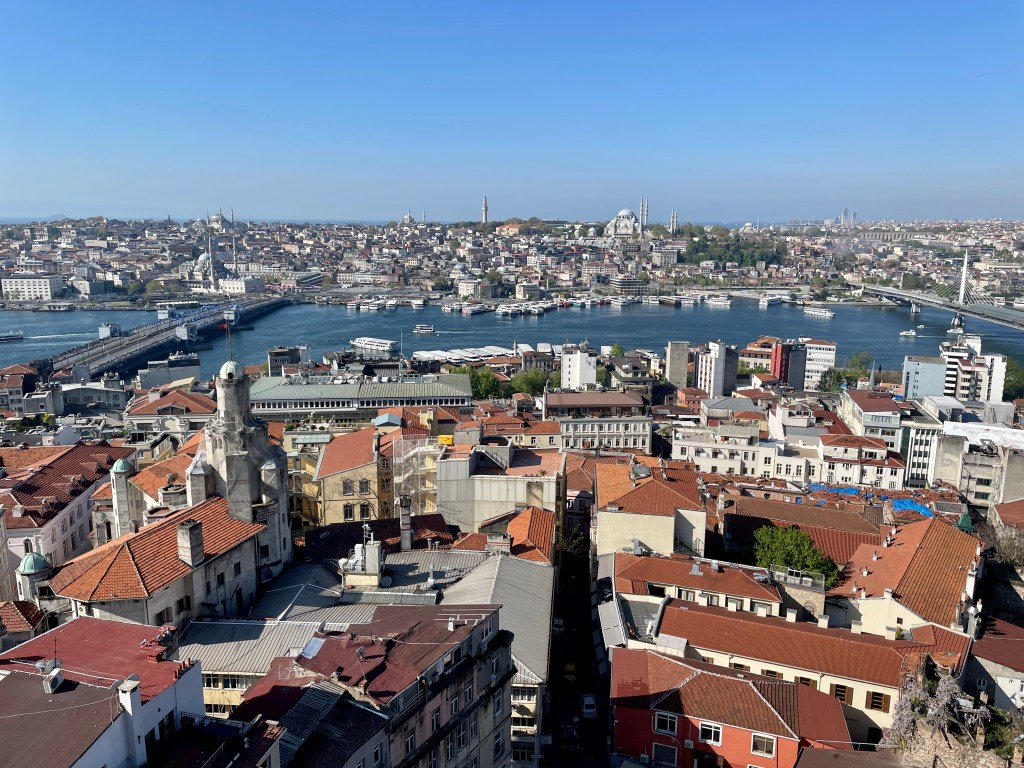
Checking off a number of Istanbul bucket list items, I had pre-ordered tickets to Galata Tower. Newly reopened after renovations, the tower was built in the 1300s by the Genoese colony. The Pera neighborhood was once divided into quadrants, respectively housing merchants from Genoa, Venice, Tuscany, and Ragusa (today the Croatian coastline).

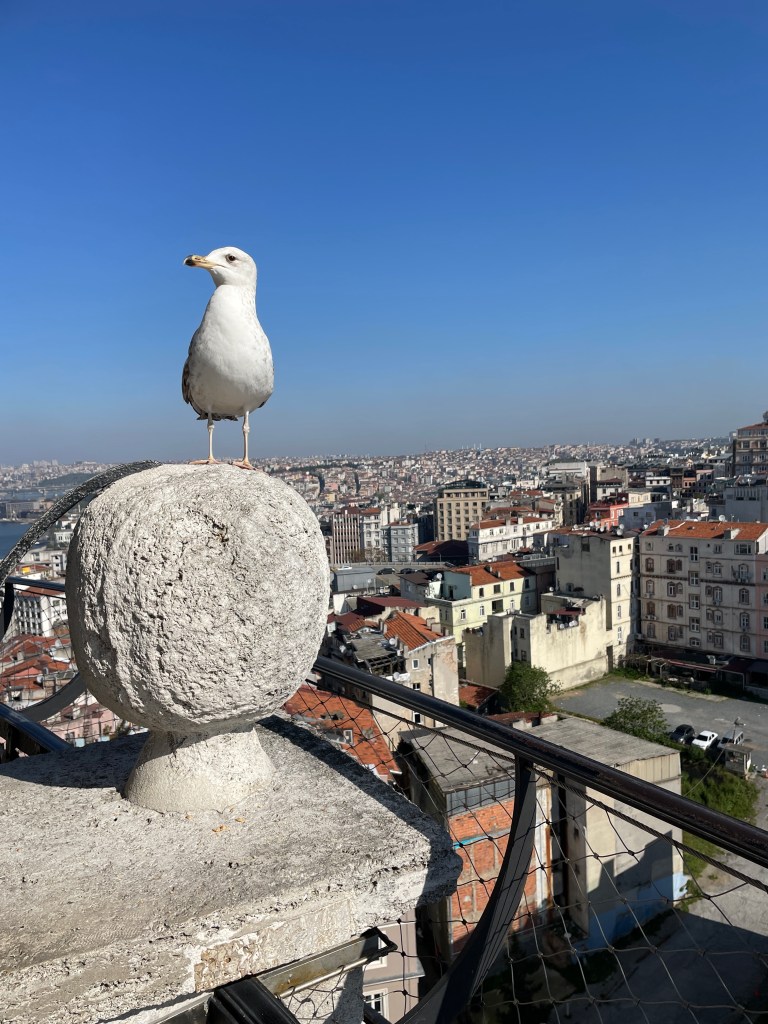
The view from Galata Tower did not disappoint on such a bluebird day. And, in fact, we were joined by a cheeky gull on the observation deck.
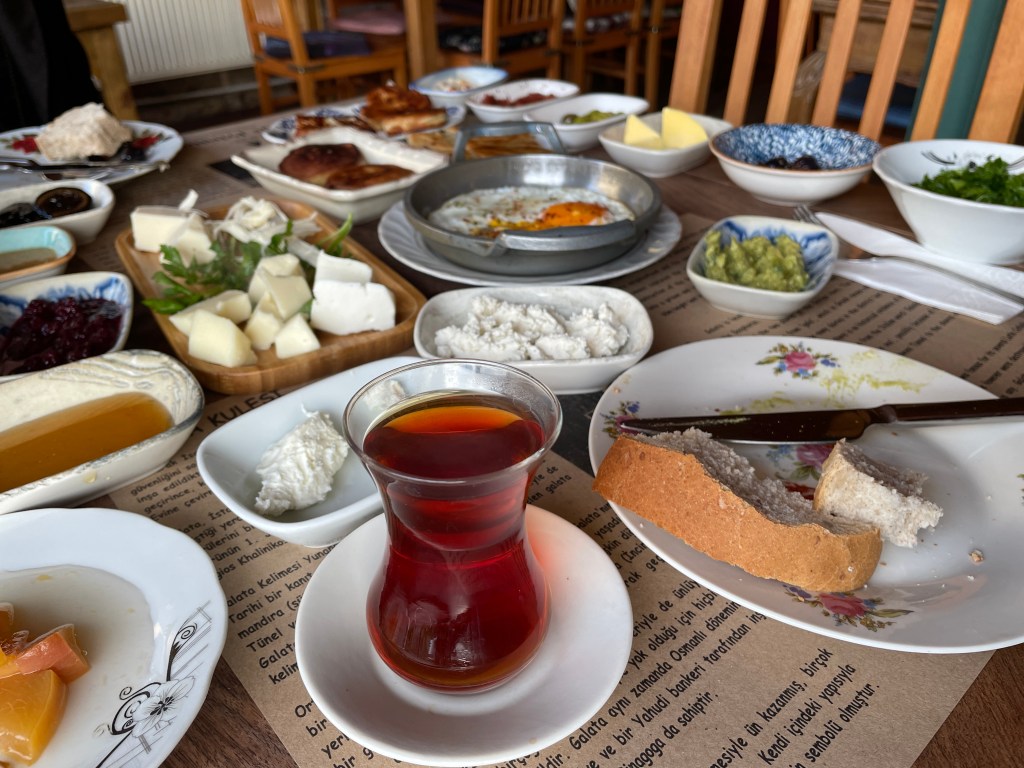
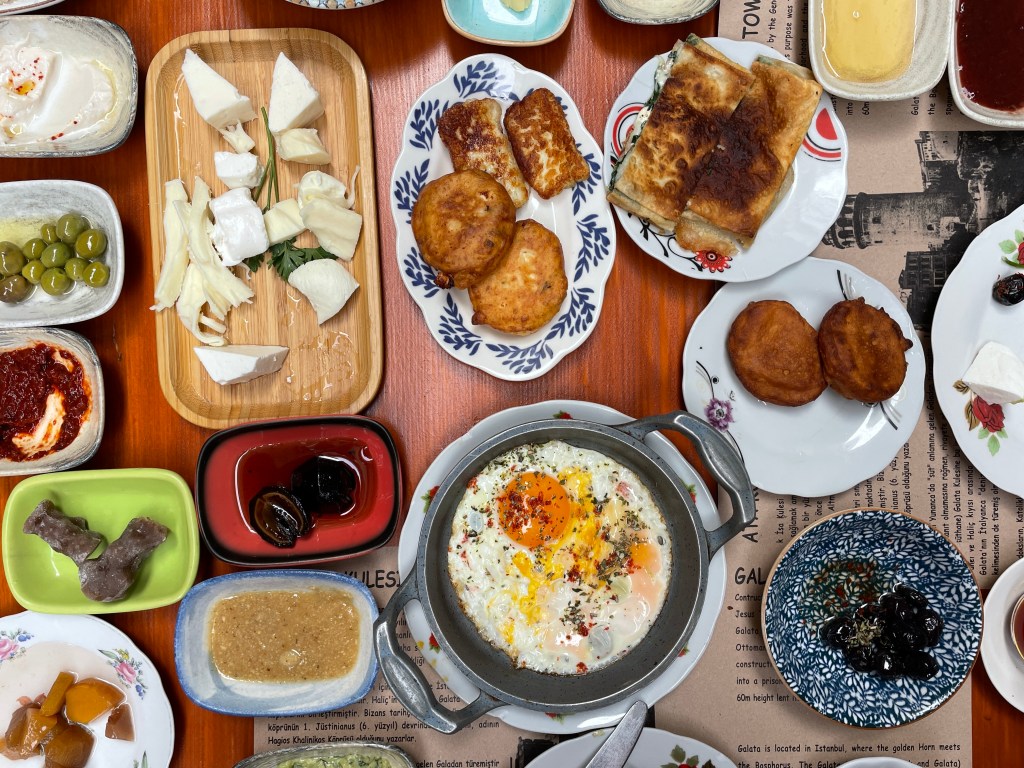
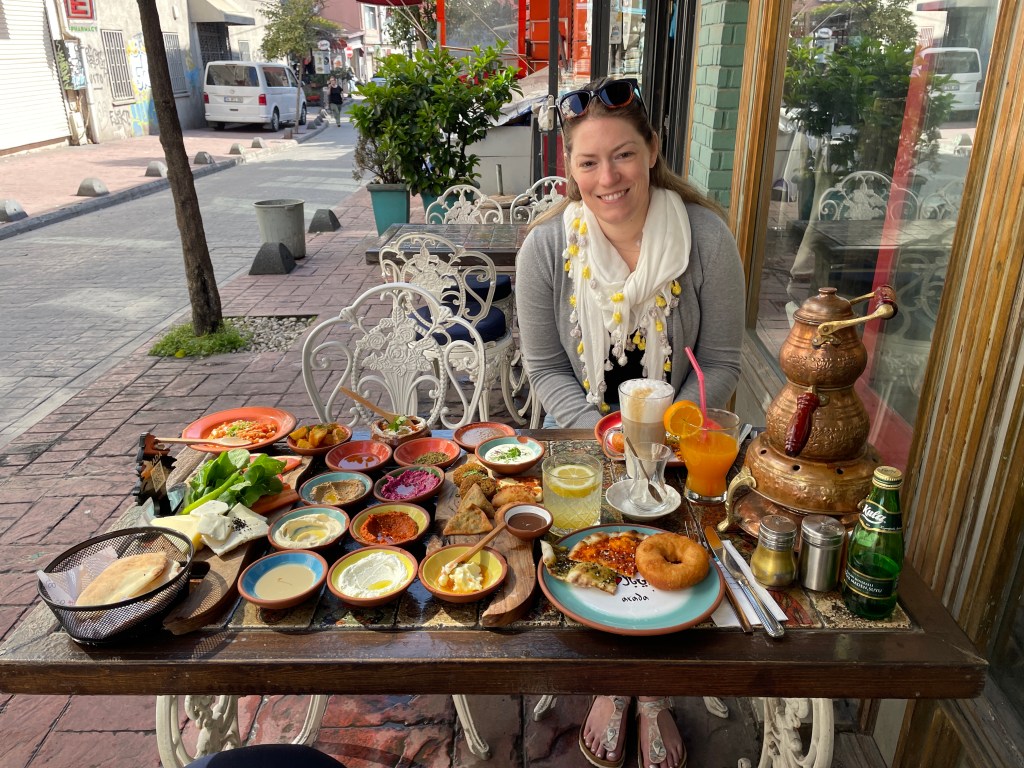
After, we enjoyed a decadent breakfast at Arada Cafe (a cross between Lebanese and Turkish breakfast). We were quickly very full and enjoyed visits from a number of my coworkers who live in the neighborhood.
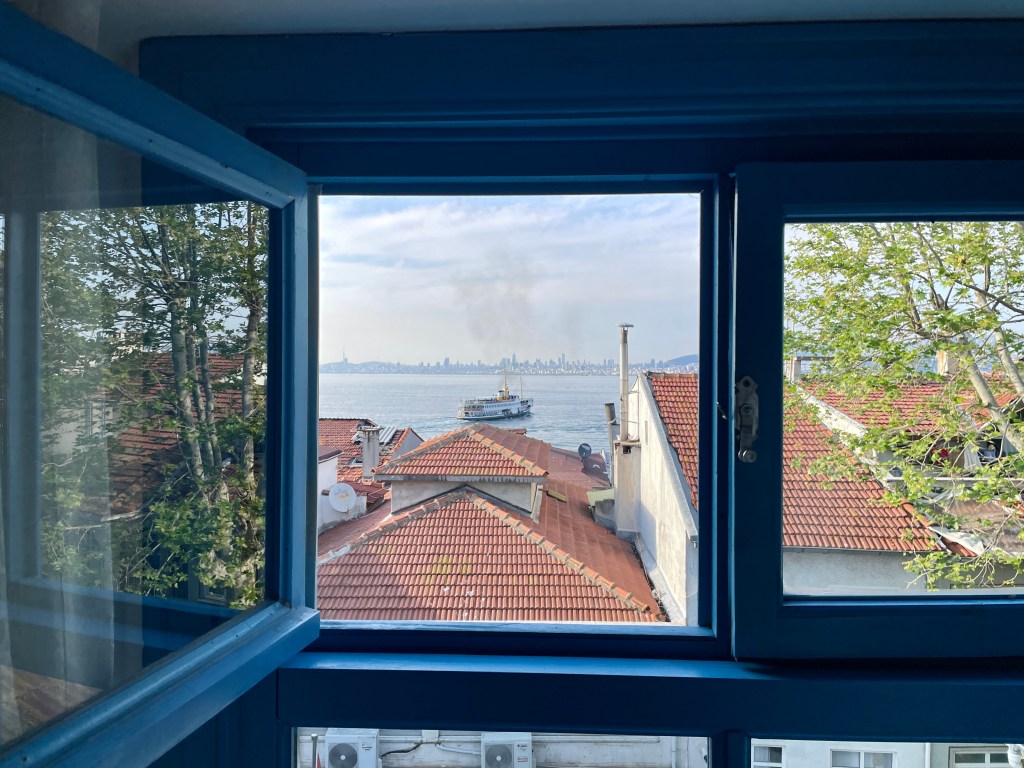
I wanted Tori to experience a different side of Turkey but we didn’t want to board another plane. We opted for a night on Büyükada, one of the Prince’s Islands in the Sea of Marmara. An easy ferry ride away, Büyükada proved the perfect little island getaway. Since the ferries are run by the municipality, you can tap your Istanbulkart at the ferry terminal. It cost us a mere $2 each to reach the island.

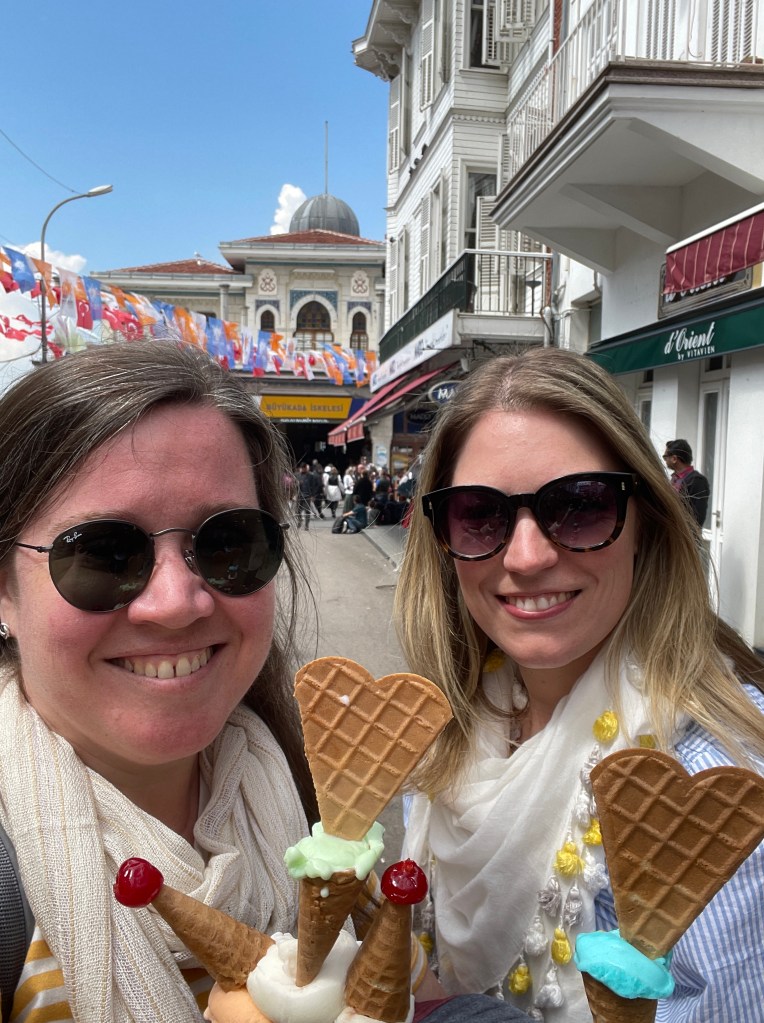
Büyükada could not have been more different from downtown Istanbul. Bicycles and electric golf carts are the main mode of transportation. We walked around, taking in the old Victorian homes once occupied by wealthy Jewish vacationers. We caught a pop up of Emma’s Baked Goods recommended by a friend. After the tourists left for the night, it was fun to have the place to ourselves.
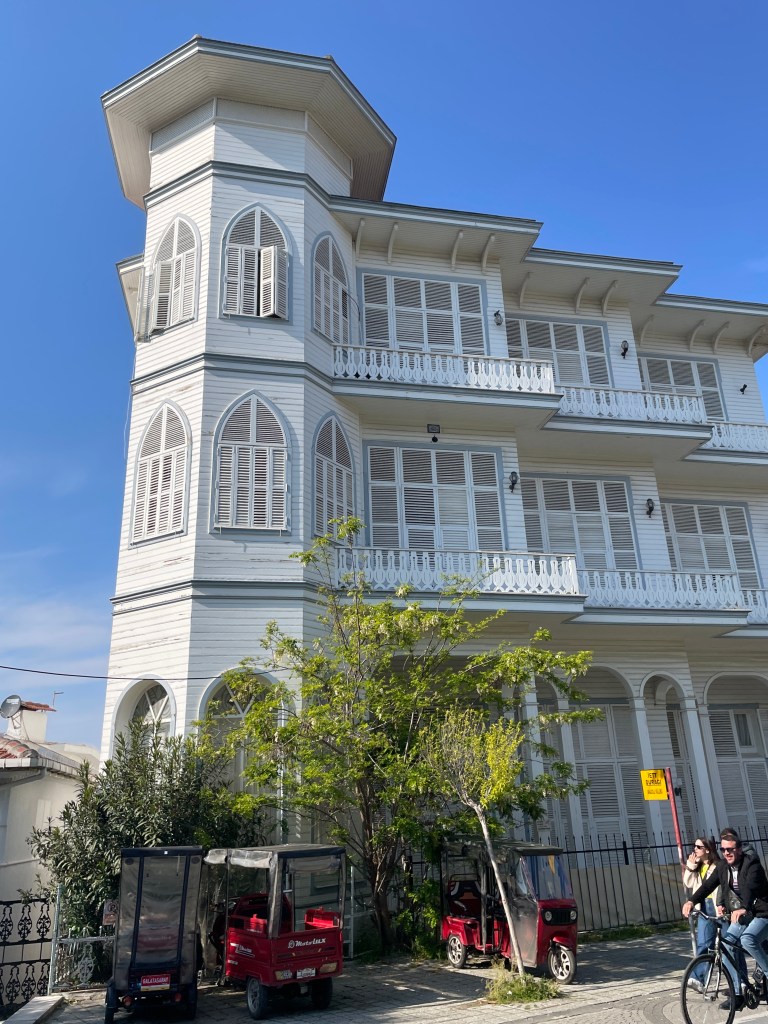
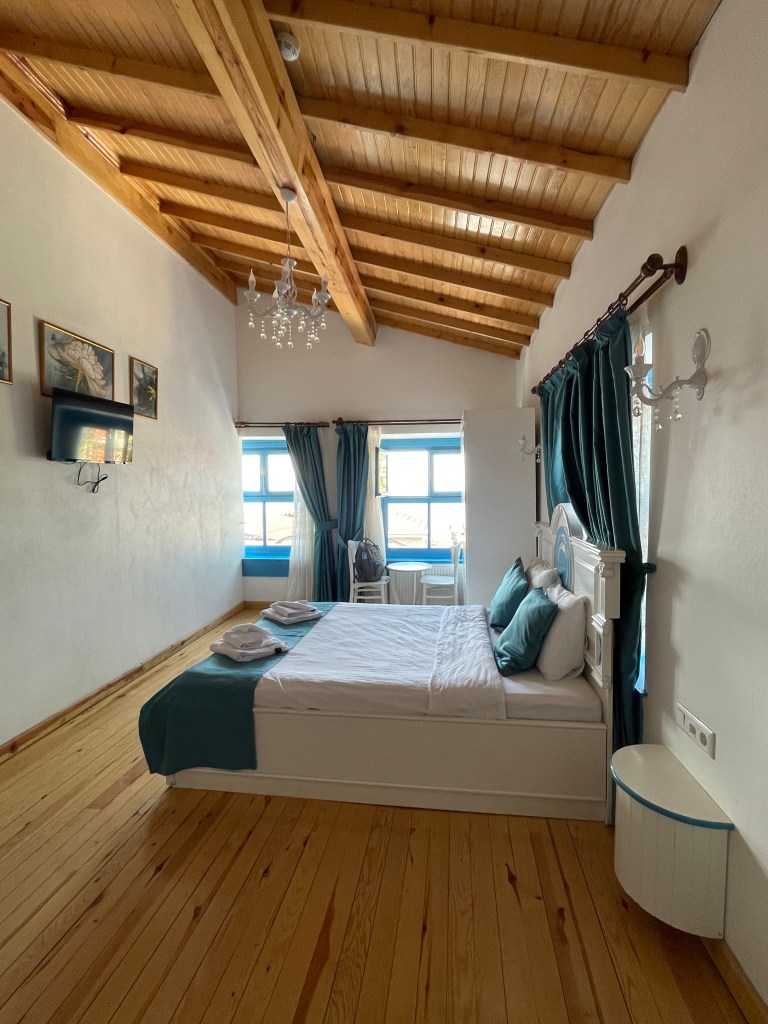
The next morning, we rented bikes and spent a lot of walking those bikes up and down the steep hills of the island. It was nice to get outside the downtown and escape the packed crowds disembarking from the ferries. As it was a public holiday in Turkey and the economy is not great, many people have chosen to stay local for holidays this year, bringing intense crowds to the city and the islands.

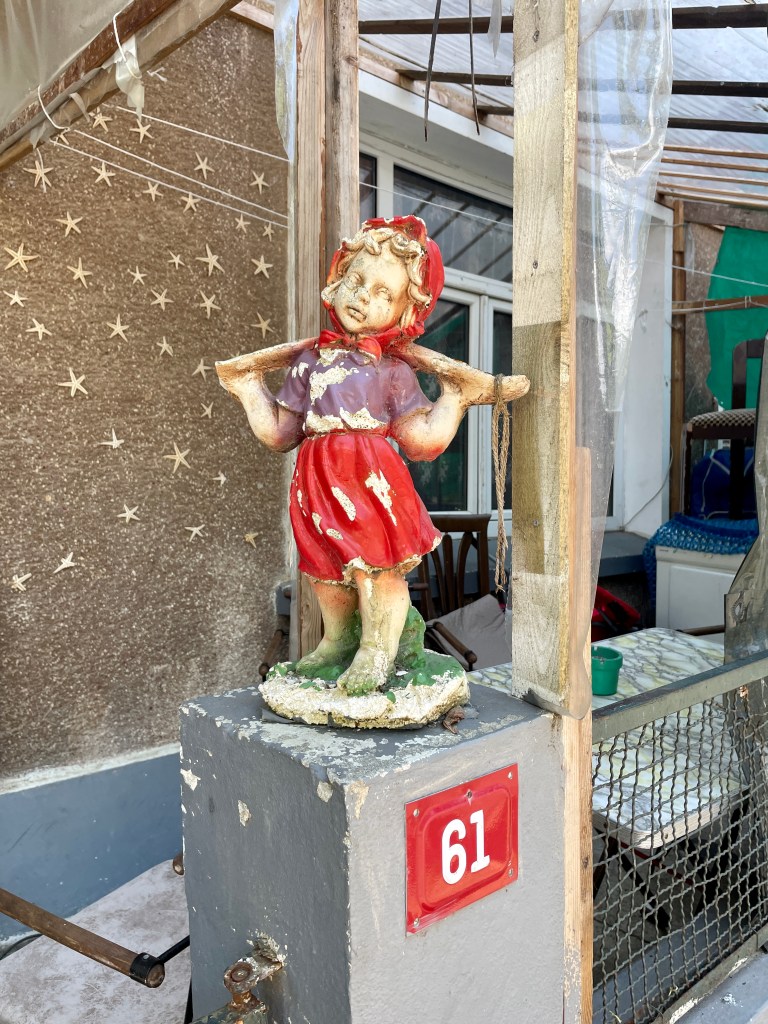
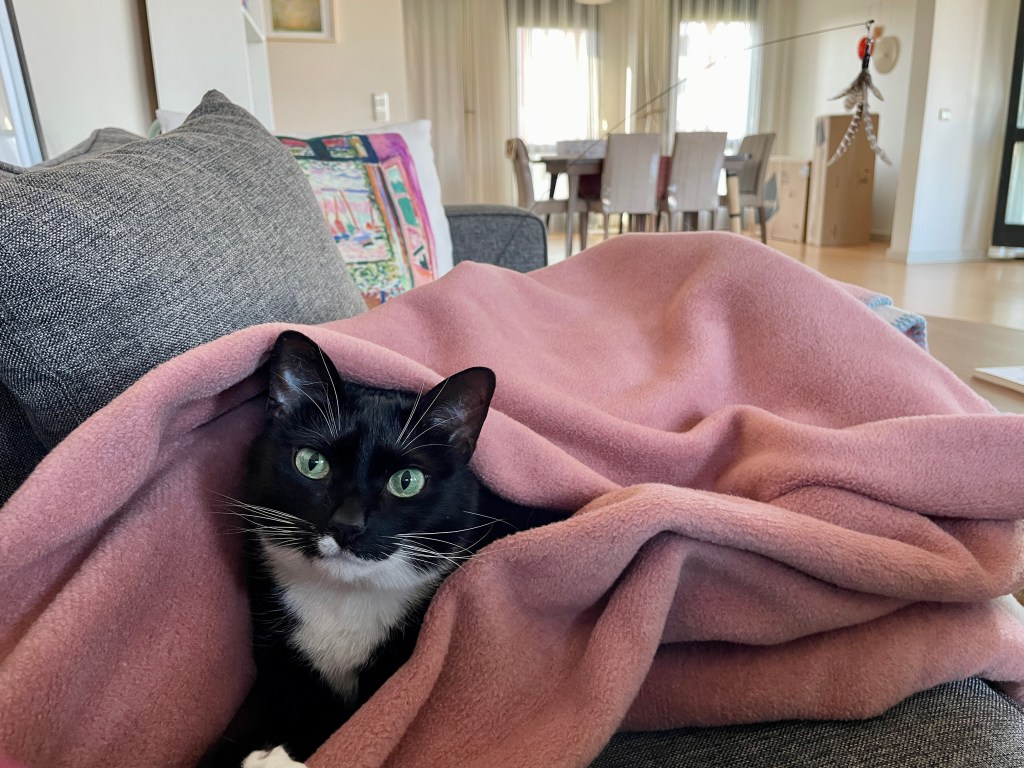
All too soon it was time to leave island life behind and return to normal life. Tori headed back to Boston and home to her own furry companions. Moloko and I were sad to see her go but really enjoyed her visit. I will be taking that same flight back to Boston in just about a month. Summer is coming fast! Hope you’re all doing well and taking care. More adventures to come…
Tulips

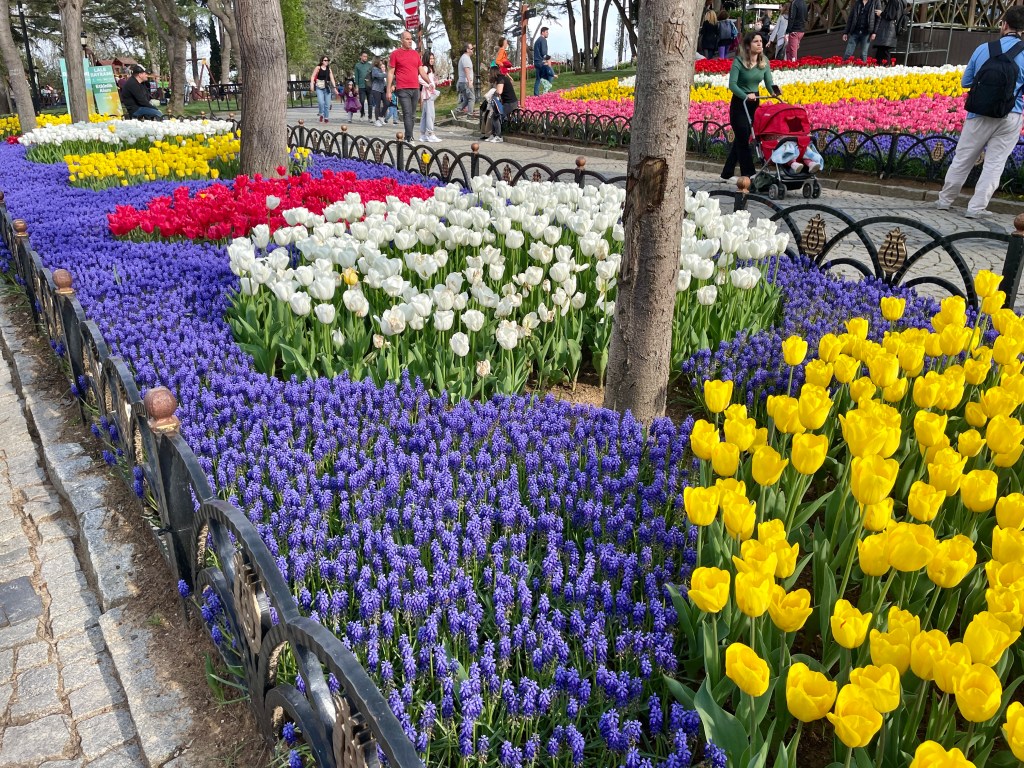
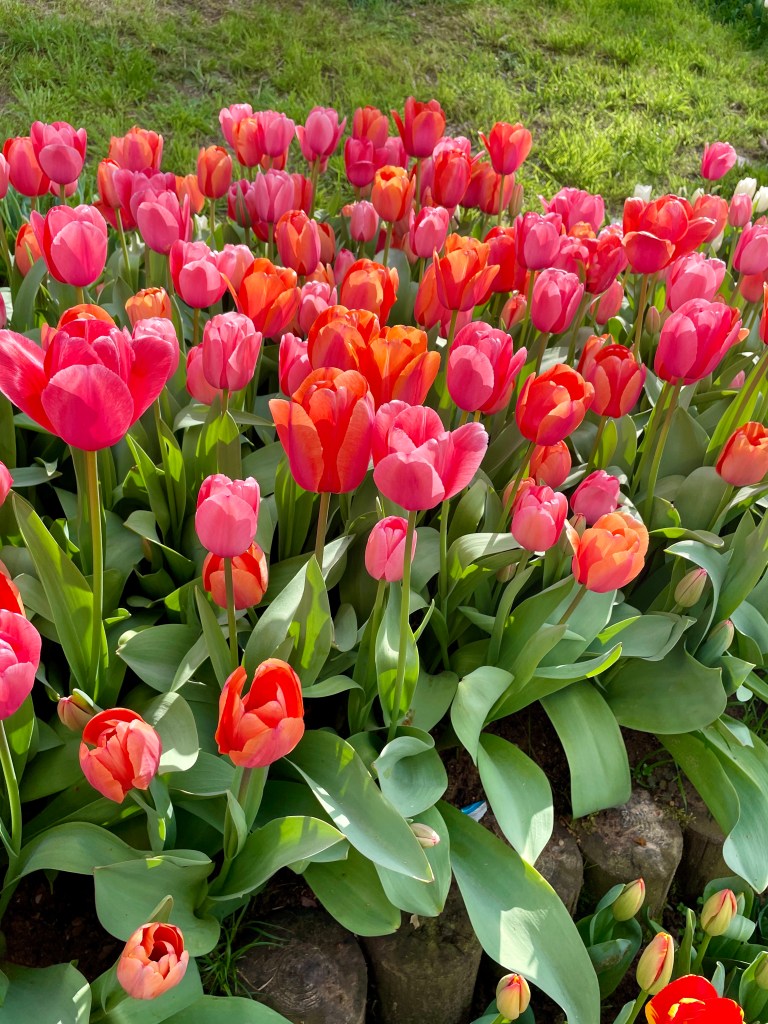
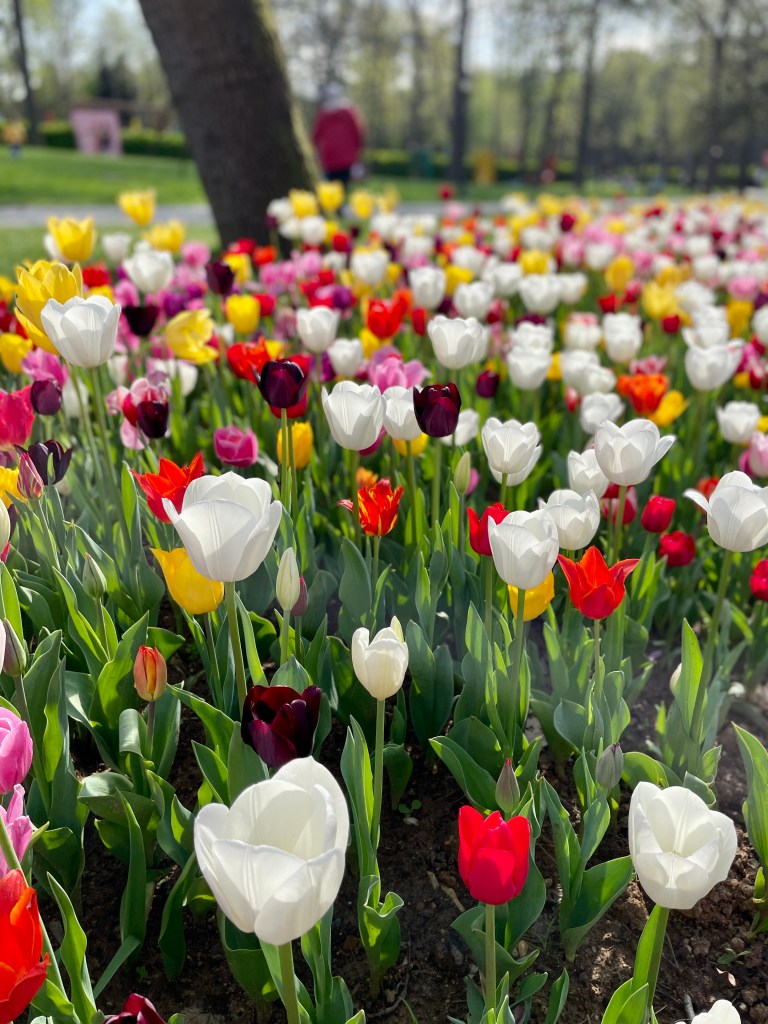
Spring has come to Istanbul and it has brought many visitors from the States. Over the past few weeks, I’ve had the chance to welcome my parents, close family friends, and good friend Tori from Vermont. It’s the perfect time of year to tour Turkey, with cool temps a decent chance of sunshine, and tulips in bloom!

Tulips are a big deal here. They are displayed in mosaics on sidewalks (see the icon of this blog), embroidered on textiles, and – as I’ve come to find – blanket Istanbul parks and medians from April through May.

Tulips were brought from Turkey to Holland in the 1500s. It is suspected that bulbs were first transported from Turkey to Austria by an ambassador of the Hapsburg Empire (Marie Antoinette’s fam). In Vienna, botanist Carolus Clusius worked to develop the tulip. Clusius then brought the tulip to the Netherlands after he was named director of the botanic gardens at Leiden University.

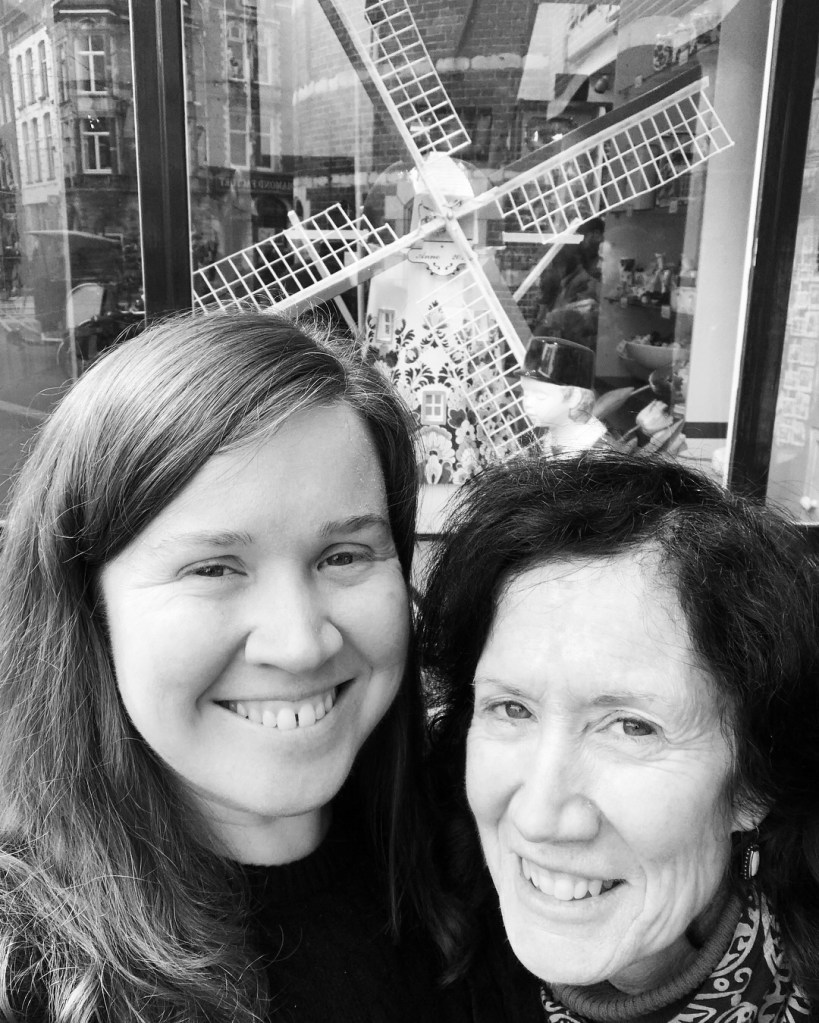
I’ve known of the tulip’s origin since my mom and I visited the Tulip Museum in Amsterdam back in 2018. There, the Dutch acknowledged that tulips have their origins in Turkey. In fact, the botanical name for tulips is derived from the Turkish word “tulbend” or “turban”, which the flower resembles.

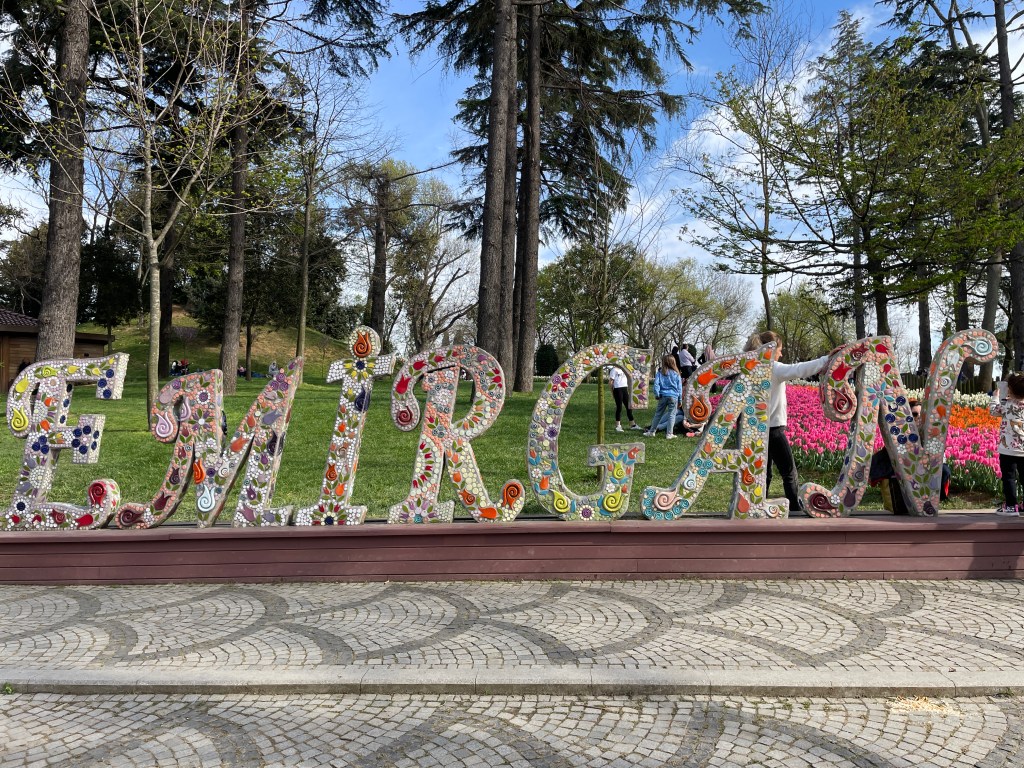
After arriving in Istanbul, I had heard rumor of a must-see tulip garden called Emirgan Park. When my parents confirmed their visit for April, I knew I would take my mom to see it.

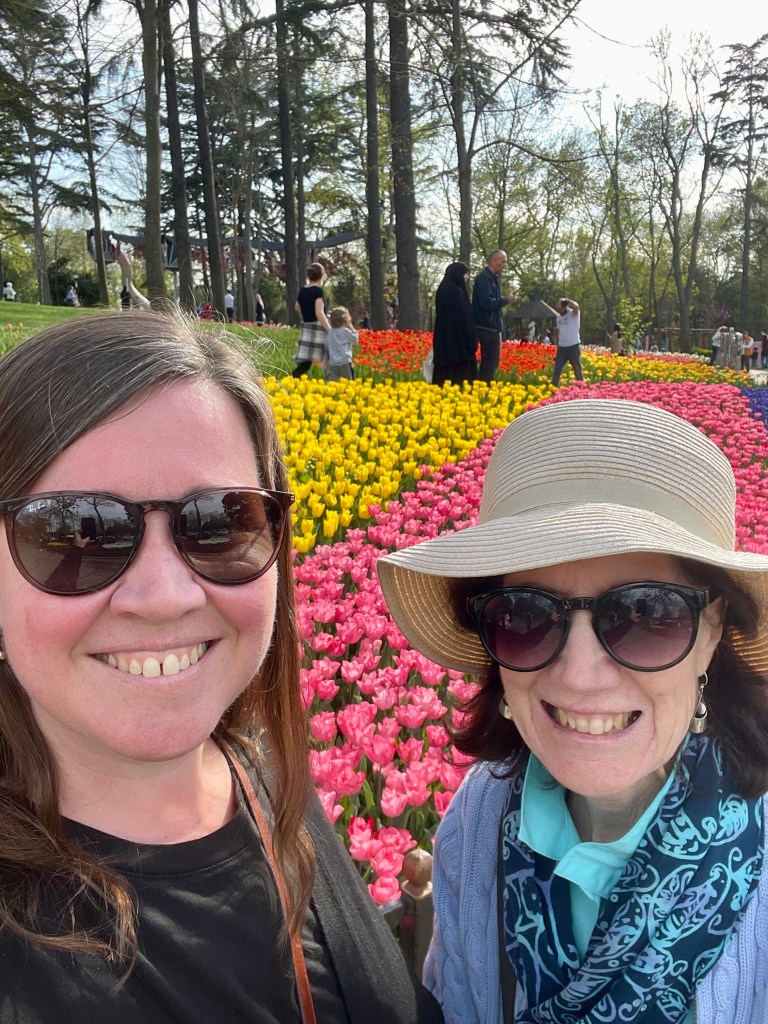
Once we entered the park, the gorgeous tulips surrounded us. Given the limited time that the tulips are in bloom, all of Istanbul turned out to take advantage of the beautiful weather. Families set up picnics and photo shoots to enjoy the good vibes.

The garden visit was a nice bookend to our trip to Amsterdam back in 2018. Really special to host family here in Istanbul and thankful to those willing to make the trip.

Touring around Istanbul was loads of fun but we also had other plans just across the Aegean. To be continued…

Syrian Food Tour

In seeking cool experiences in foreign cities, I often turn to AirBnb Experiences. There I find entrepreneurial guides who are passionate about sharing their cities, their art forms, and their cultures. It’s also a great way to meet other travelers, which can be a real joy when traveling solo.

Living in Istanbul, there is are cultural experiences everywhere I turn. I’m only too aware of all there is to explore and I’m always looking for access points into the many neighborhoods and pockets of the downtown area. Spotting a Syrian food tour on AirBnb Experiences, I was immediately intrigued. There is a huge Syrian population in Istanbul but I knew little about their cultural traditions. After inviting a few friends along, we booked a Saturday night slot in Istanbul’s Fatih neighborhood.

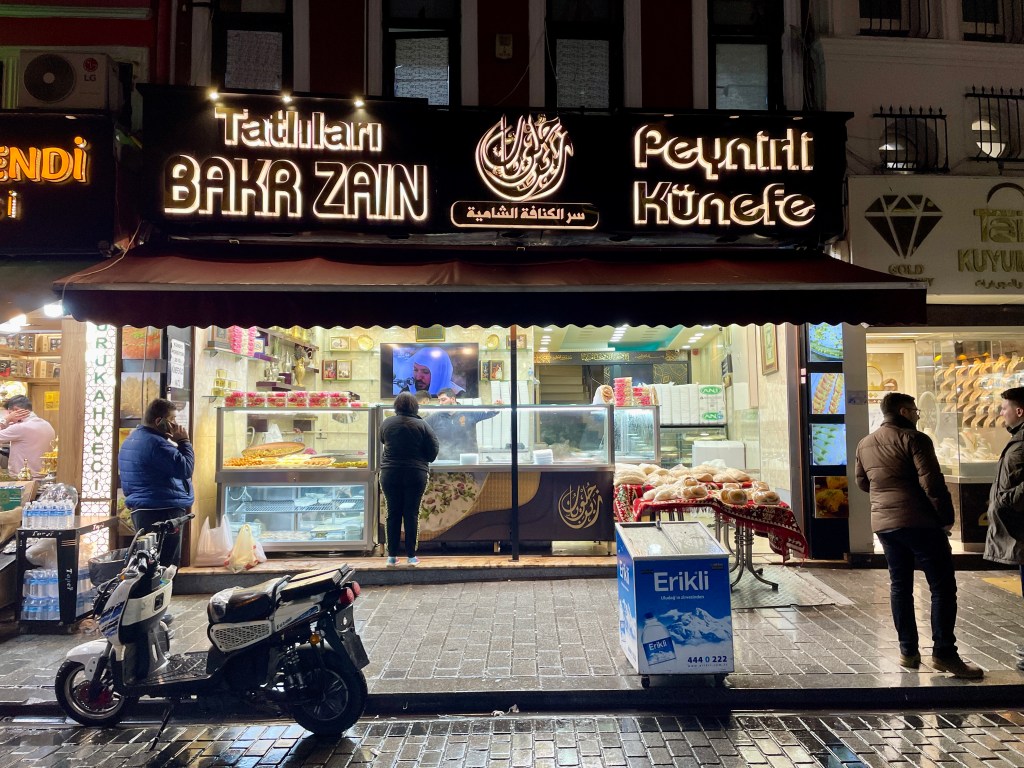
Growing up, I really had little knowledge of Syria, it’s rich history dating back to the 3rd millennium BC. It’s capital, Damascus, is one the oldest inhabited cities in the world. Our tour guide, Yaman, hails from Damascus, having moved to Istanbul in 2013 seeking safety and security as a result of the Syrian Civil War, a result of the Arab Spring in March of 2011. We quickly learned that there are 600,000 Syrians registered in Istanbul, 3 million registered in Turkey on the whole. Please note that I say registered as the number is likely much higher than recorded. Syrian storefronts were once identifiable by their Arabic script (see pic above). Unfortunately, times have forced a change.

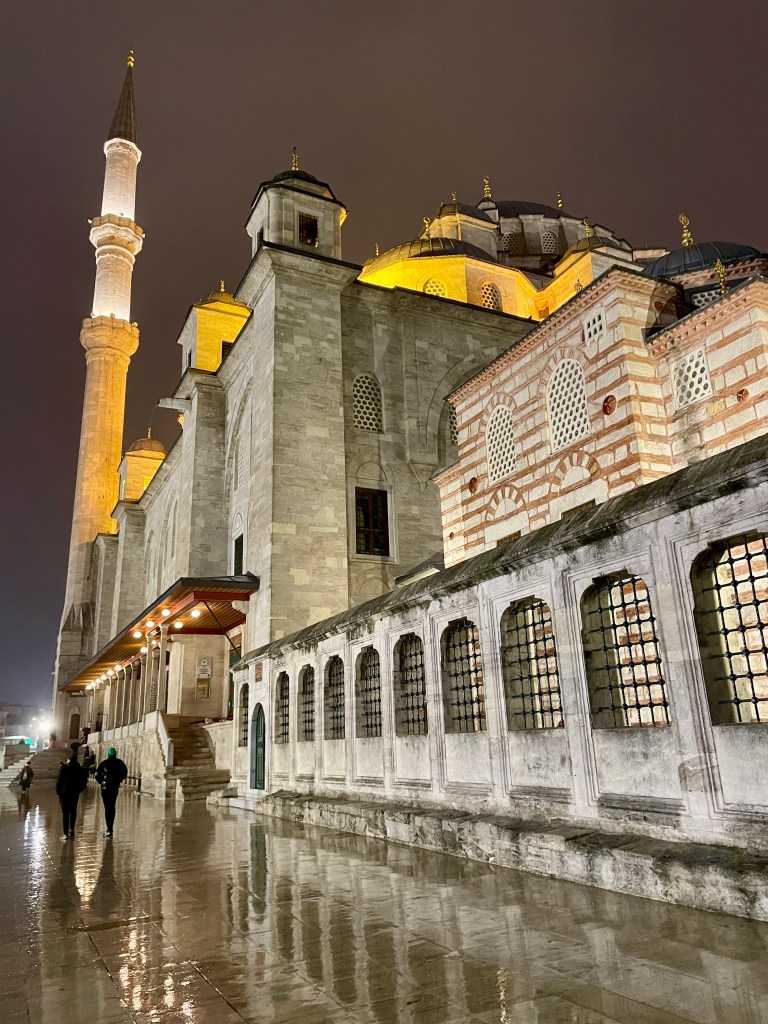
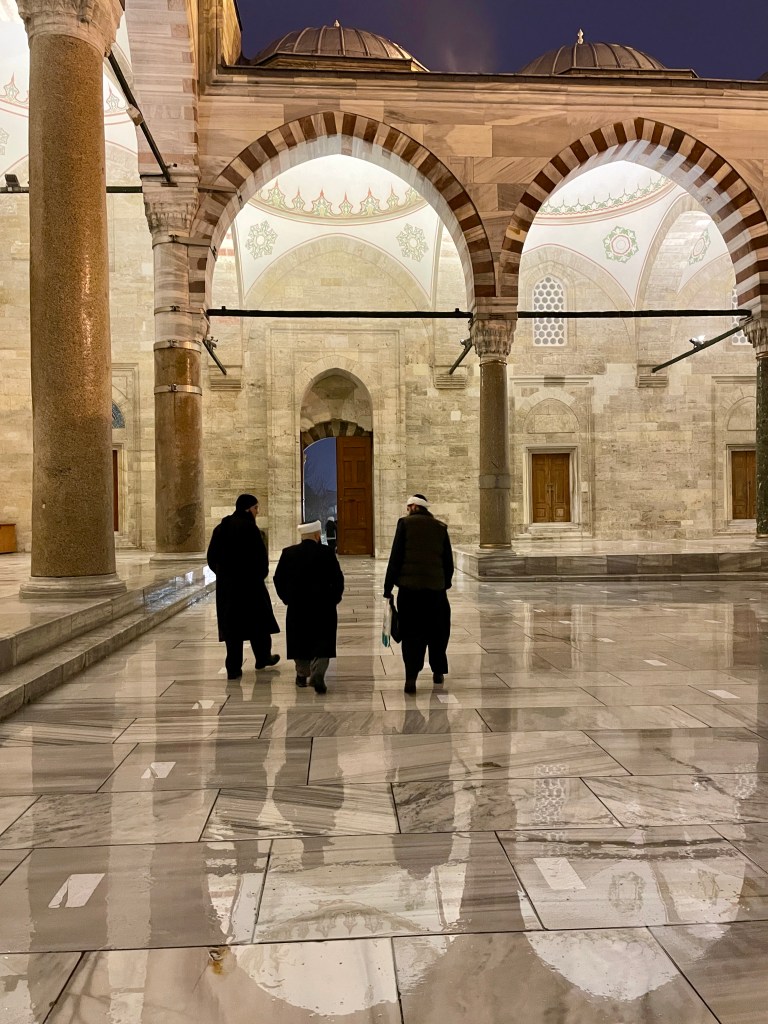
Our little group met in a park in Fatih – the four of us, two guys from Berlin, and Yaman, our tour guide. Fatih is a sprawling neighborhood perched upon one of the seven hills of Istanbul. It is home to a huge Syrian population, delicious restaurants and cafes, and the Fatih Camii (pronouced jaa-me), or the Fatih Mosque. A glorious structure rebuilt in 1771 after a devastating earthquake, it is known as the Conquerer’s Mosque (Fatih means conquerer). It is named for Mehmed the Conquerer, the Ottoman sultan who brought an end to the Byzantine Empire by conquering Constantinople in 1451 at the ripe old age of 21. We were welcomed inside the mosque and marveled at it’s gorgeous architecture. Out of respect, I did not take any photos inside.

By happenstance, our Syrian food tour was scheduled just prior to the start of Ramadan, or Ramazan, as it is called locally. During this month-long observation, practicing Muslims will head to the mosque for sundown prayers each evening. After, the grounds of the mosque will be flooded with people ending their fast by sharing food, known as iftar. Children run and play in the yard of the mosque and adults socialize, often for hours. This celebration can last into the wee hours of the morning, often until 4am when observers will eat their second meal of the day suhur before the call to prayer begins their fast once again. Many observant people of faith abstain from water during the day as well. These daytime hours are meant for reflection, prayer, and study of the Quran, the religious text of Islam.

As this is my first Ramadan in a country of predominantly Islamic faith, I’m observing new customs everyday. My dry cleaner closes unpredictably early to prepare to for evening prayers and breaking fast. Traffic jams up around 7:30pm each night as people make their way to the mosque. The nights are much more lively in my park as people are out socializing after evening prayers at the mosque. Many of my students have begun fasting, too. I’ve always had a few students do observe in international schools but, as Islam is more common in this area, it is lovely that they have more support here. It’s really lovely to see them wish each other the best in their fast.

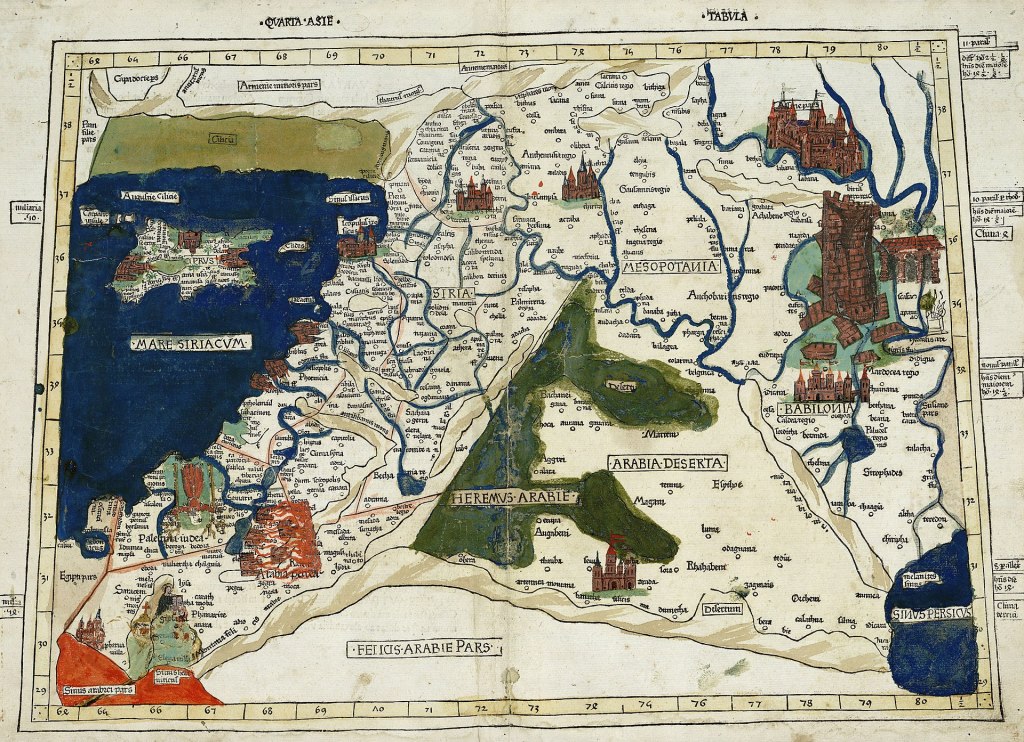
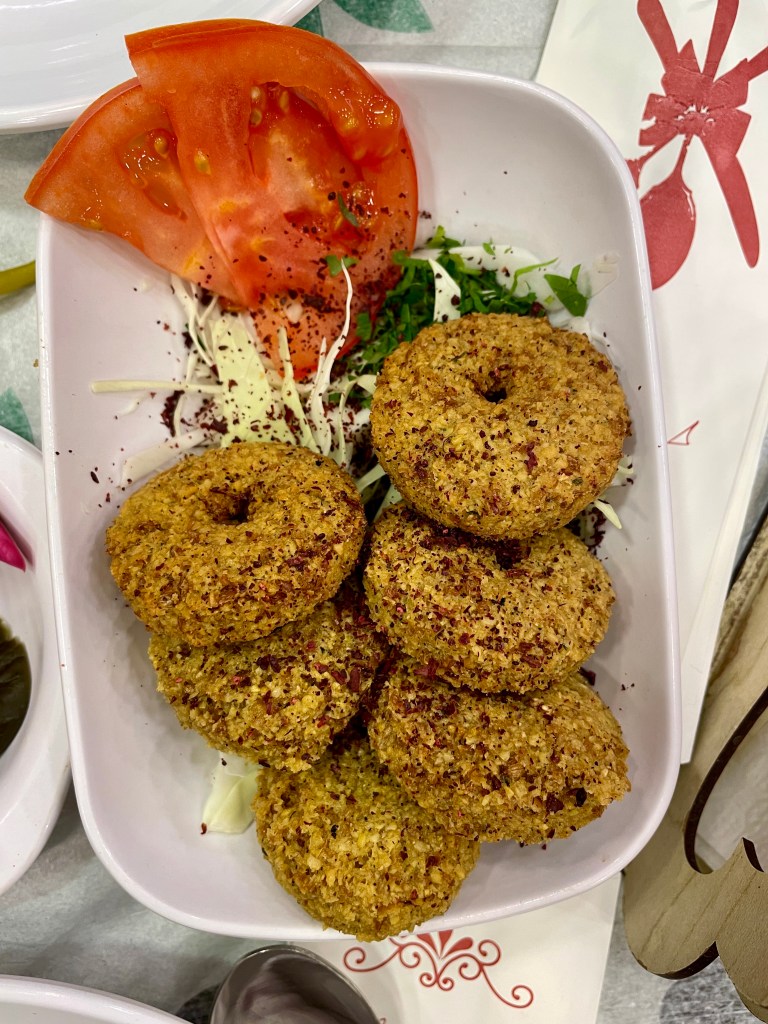
But back to the food tour. Born of the agricultural traditions of The Fertile Crescent, Syrian food is hailed as some of the best fare in the entire world. I’m talking hummus, pita, yogurt, pickled vegetables, and falafel for starters. The people of ancient Mesopotamia were not messing around. The spices cultivated between the Tigris and Euphrates create the rich flavors of Syrian food we enjoy today. Find a 15th century map of the region below.

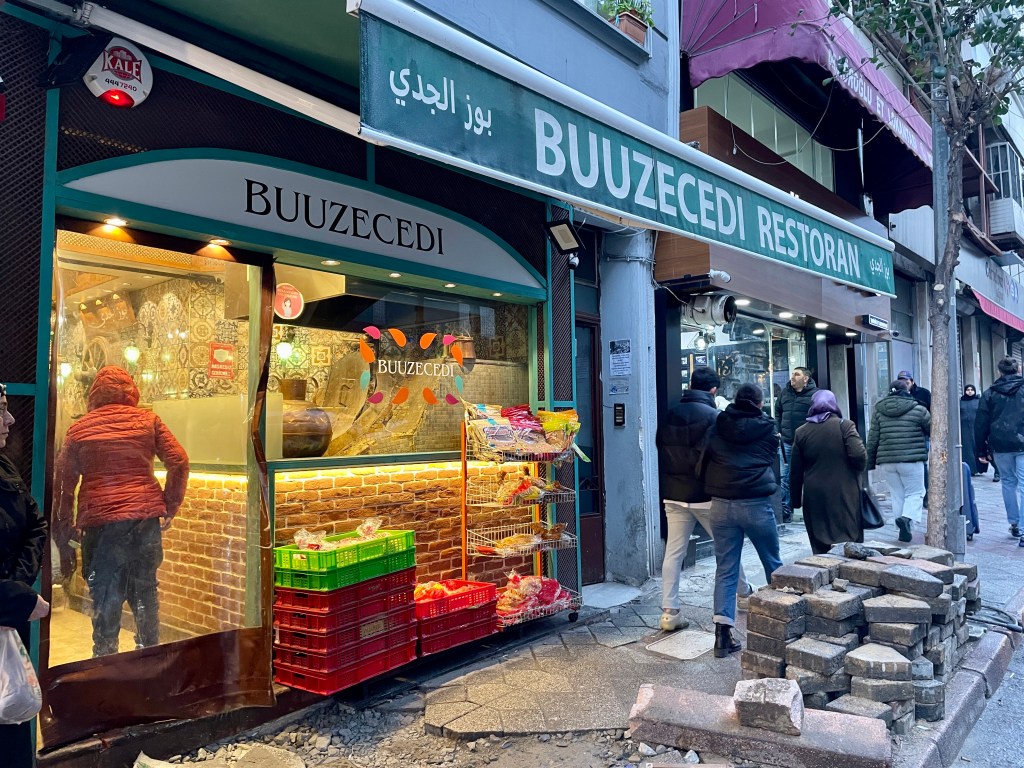
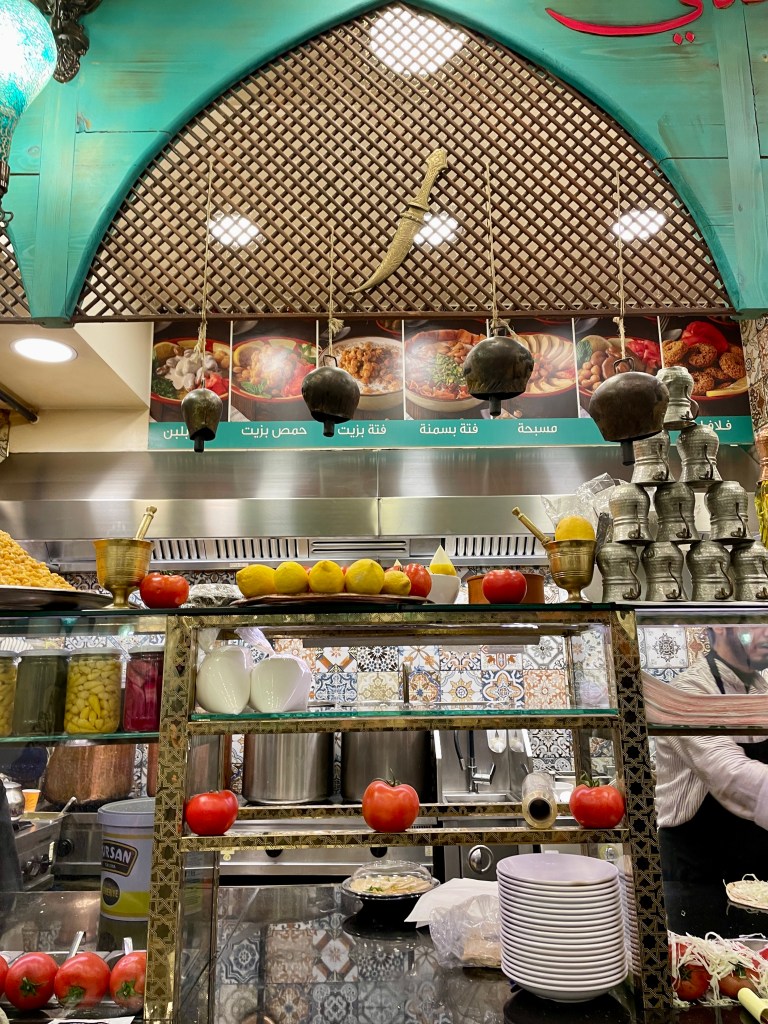
The first stop on our food tour was Buuzecedi Restoran. A well-known spot in Damascus, this restaurant has been opened by the owner’s son here in Istanbul. Yaman tells us this is common practice and you have to check to make sure there is a legitimate link to the original, not just a cousin cashing in on the name. This one definitely checks out.

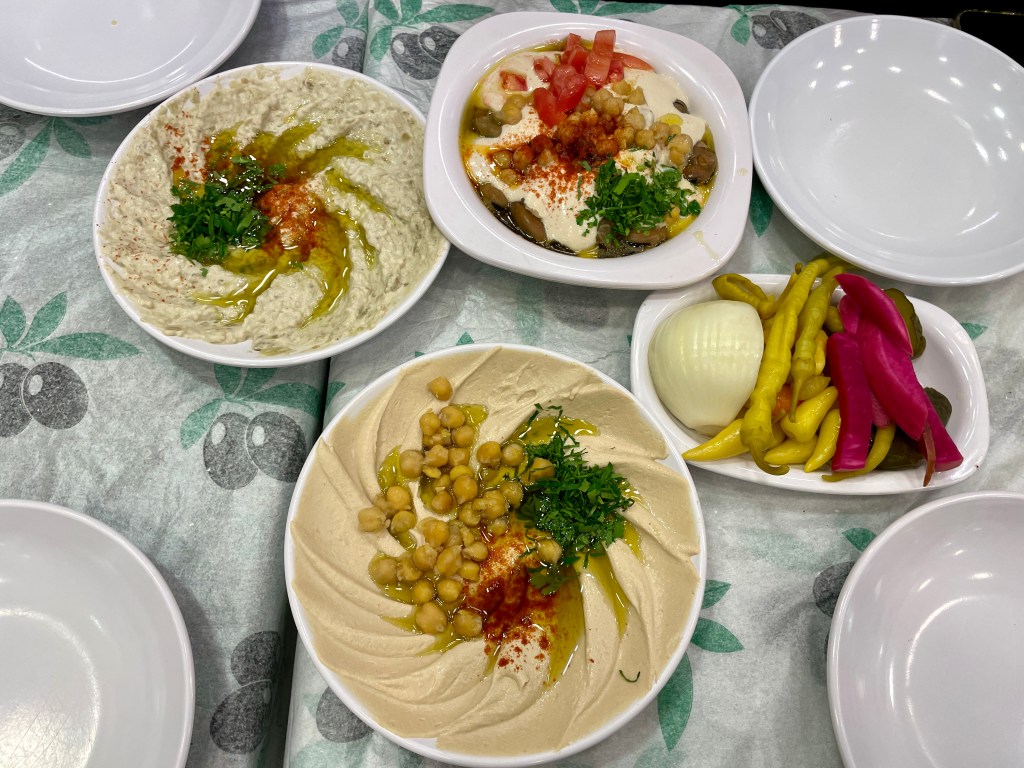
The restaurant was bustling with pick up orders, families enjoying their evening meal, and a Syrian soap opera on the TV. Our hosts were extremely welcoming and inviting, plying us with a continuous stream of dishes. Peep that chickpea pile on the bottom left.

We sampled dishes containing olive oil, tahini, fava beans, and eggplant. We learned that Syrians typically do not make their own hummus, they purchase it locally. This is due to the need for the chickpea mixture to be cooked through the night, requiring a huge output of energy. It’s simply more cost and energy effective to purchase. I brought a container of this hummus home, truly the best I’ve ever tasted.

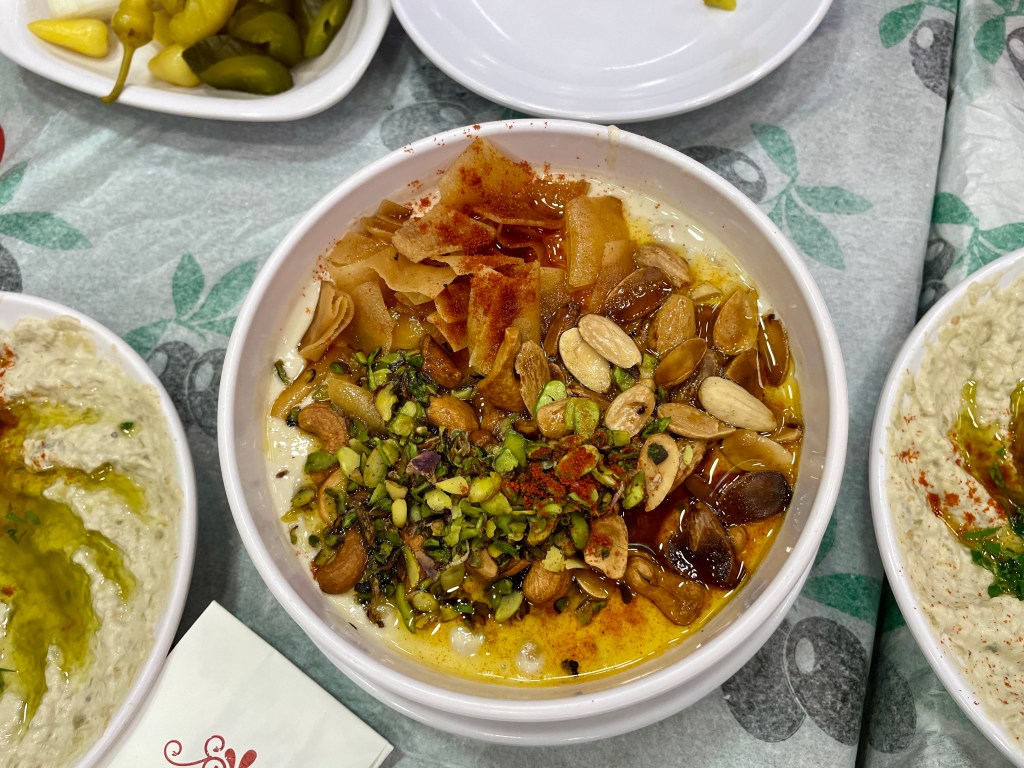
Below is my favorite dish by far – it’s called fatteh. Made from yogurt, toasted pine nuts, chickpeas, with bits of toasted pita mixed in, it was super hearty. As Syrians don’t generally drink liquid with their meals, we Westerners were already finding ourselves quite full.

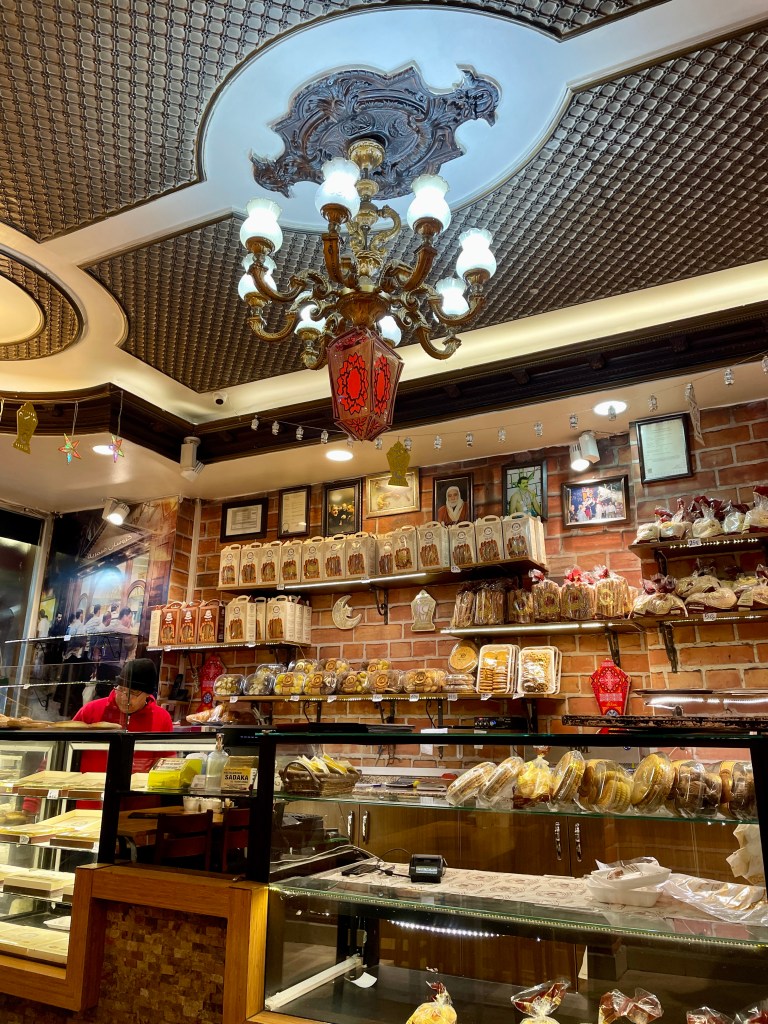
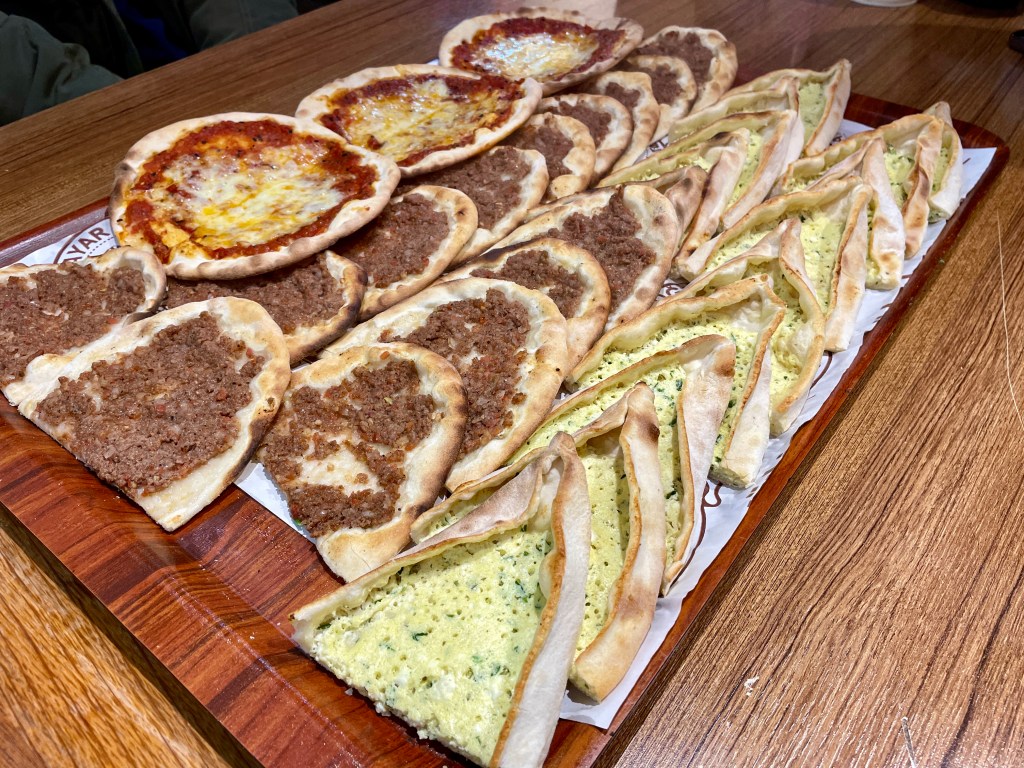
We next visited a bakery called ZayarOglu. There we enjoyed more pita covered with delicious spices. My favorite topping was below right – a mixture called za’atar made up of herbs, sumac, sesame, and salt.

Finding room in our second stomachs for dessert, we wrapped up our tour with knafeh. A pastry soaked in syrup and layered with cheese, knafeh is both savory and sweet. Thanks to the shared international border, there are Turkish and Syrian versions of this dessert. Both were delicious.

As I write this, the food tour is on pause in observance of Ramazan. The opportunity to learn about culture from people as warm and welcoming as Yaman is truly invaluable. I’m so thankful to be able to explore these cultures (new to me) in my own city. Hope you enjoyed this visual feast. Up next, a different kind of feast for the eyes – the Grade 12 IB Exhibition 🙂 Take care and have a good week, everyone.

Ebru

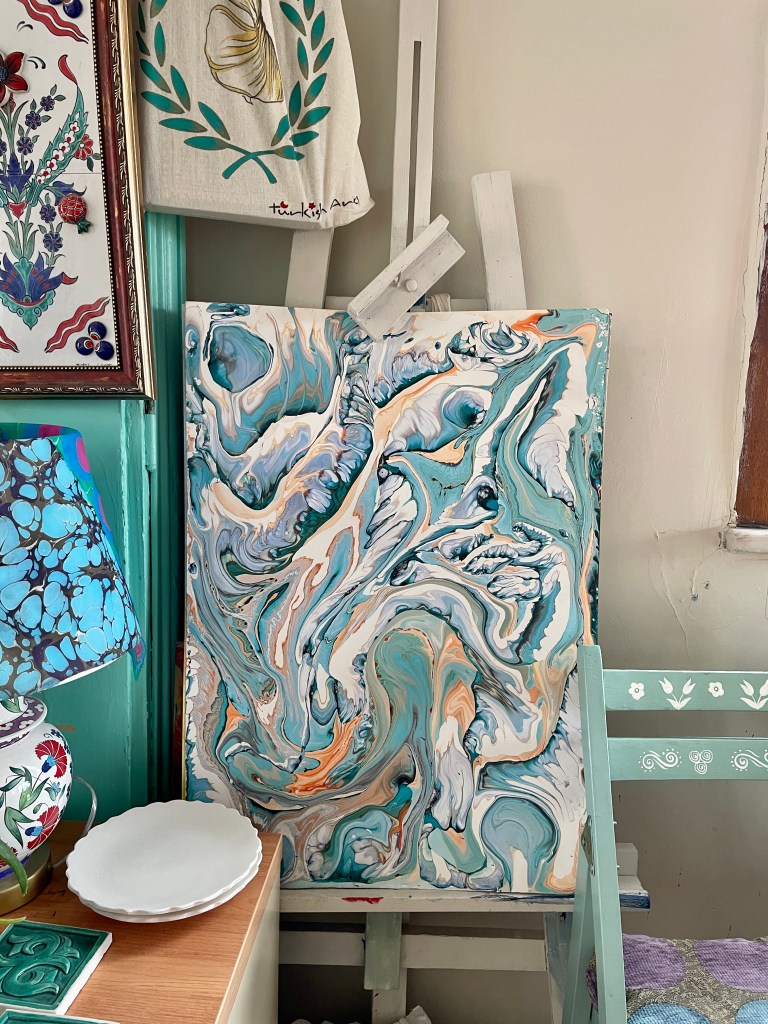
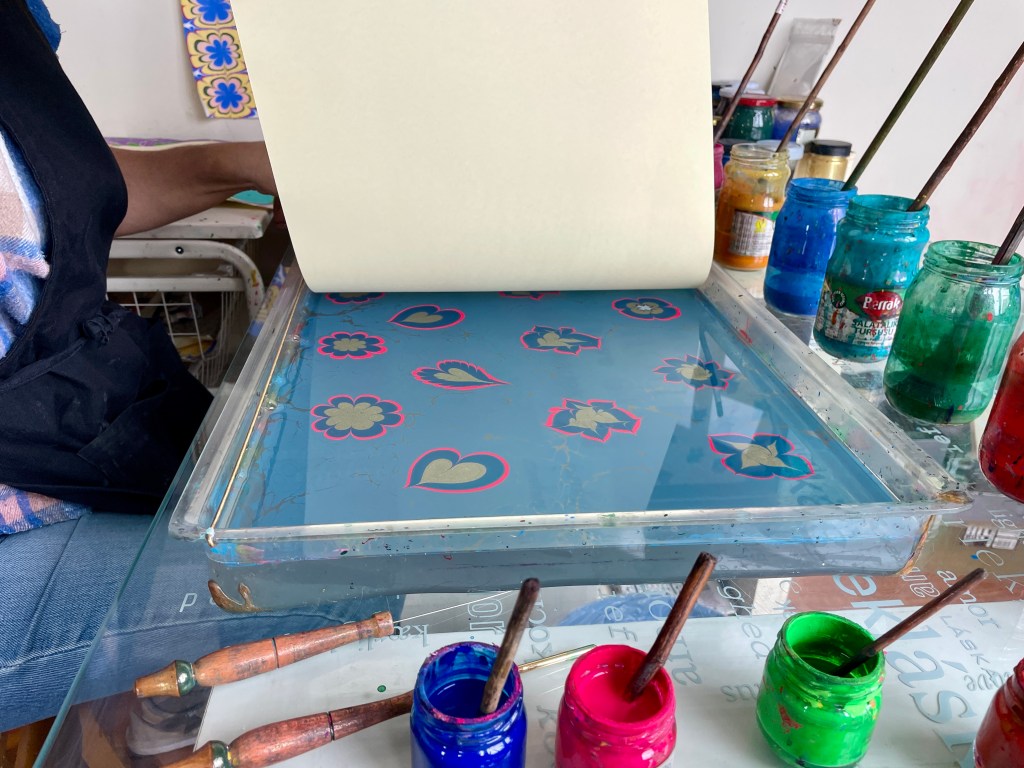
On a bit of a creative streak, I sought out a traditional Turkish paper marbling class this past weekend. Ebru (ay-brew) as it’s called, translates to marbling in Turkish. Popular during the Ottoman reign, ebru was born at the same time that paper was invented.

The technique of paper marbling dates back to the 9th and 10th centuries. As with so many artistic techniques found along the Silk Road, it’s country of origin is a bit murky. Geotags include Iran, Turkestan (a region of Central Asia, not a country), Japan, and China.

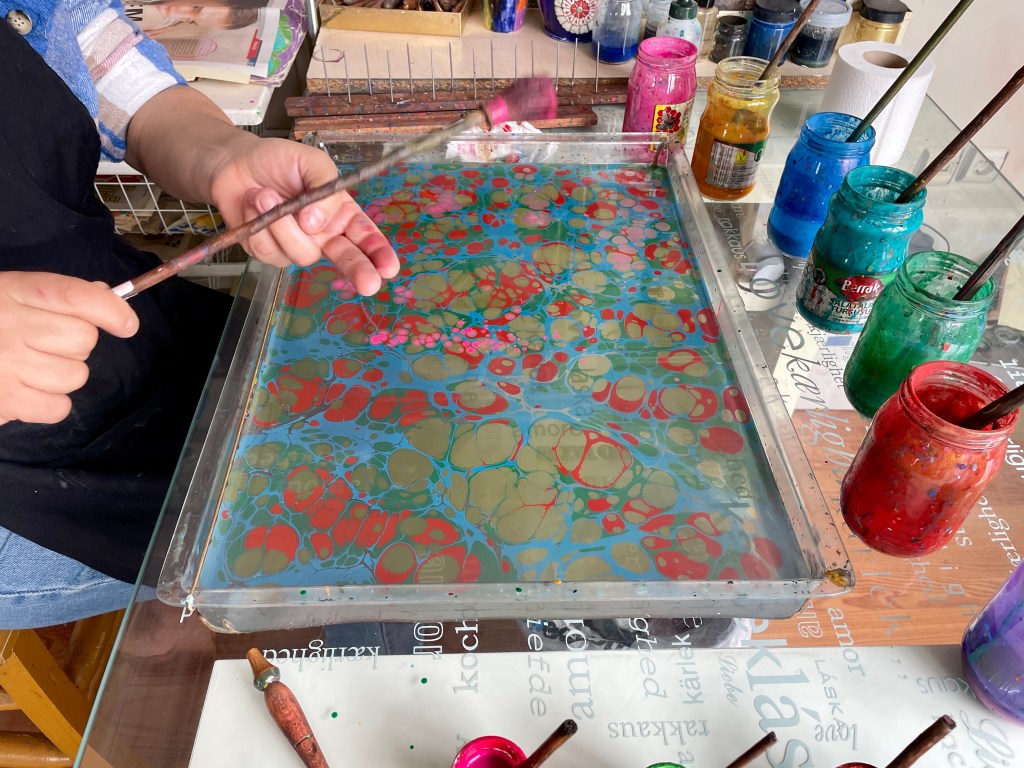
Know as اَبری (ah-bree) in Persian, the term refers to the cloud-like appearance of ink upon paper. Suspended above a bath of water mixed with gall (the substance found in an animal’s gallbladder), the inks cast colorful clouds, pushing upon each other as oil would in water. Keragin (seaweed powder) is added as a thickening agent. Today keragin is imported from the States.

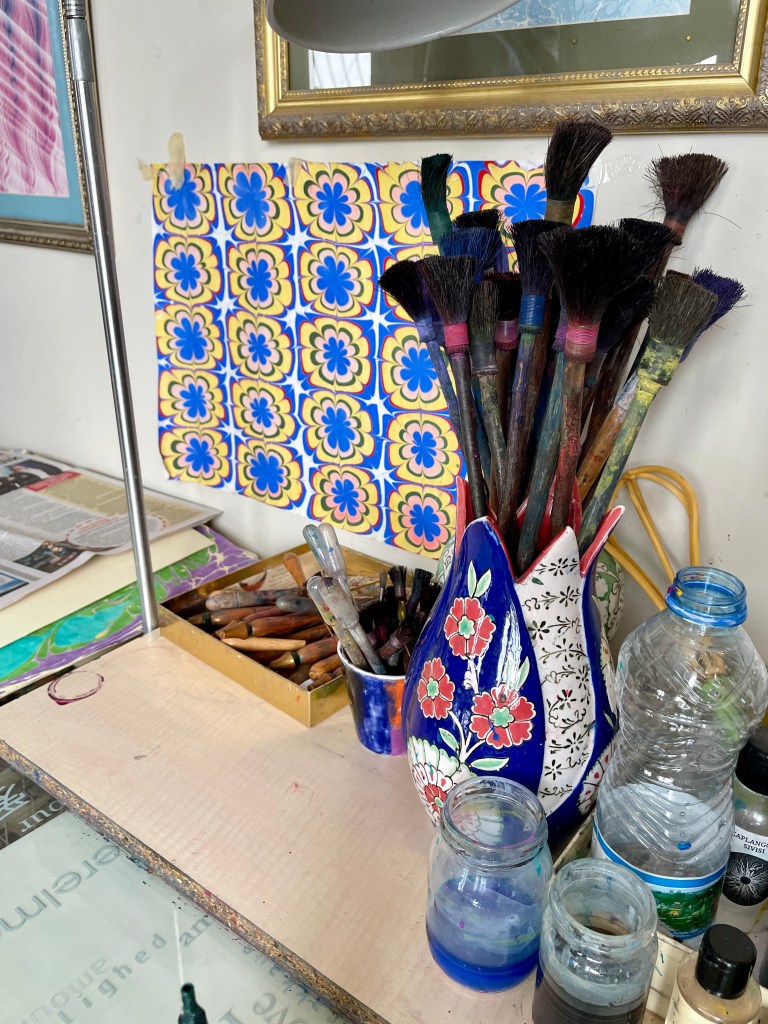
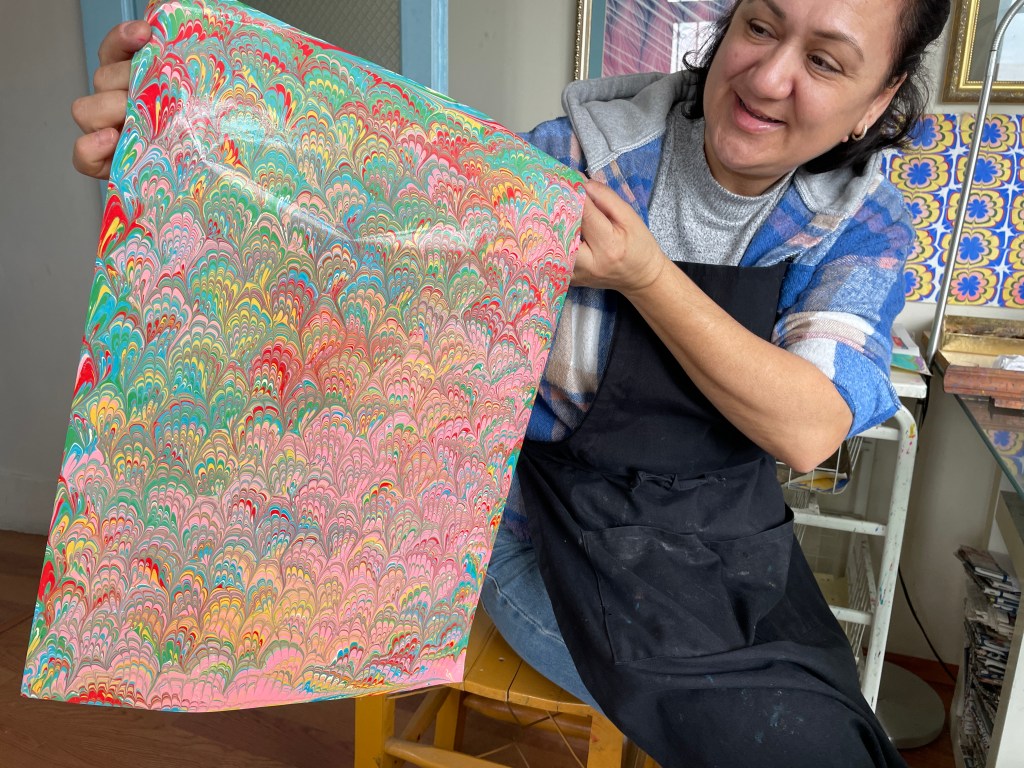
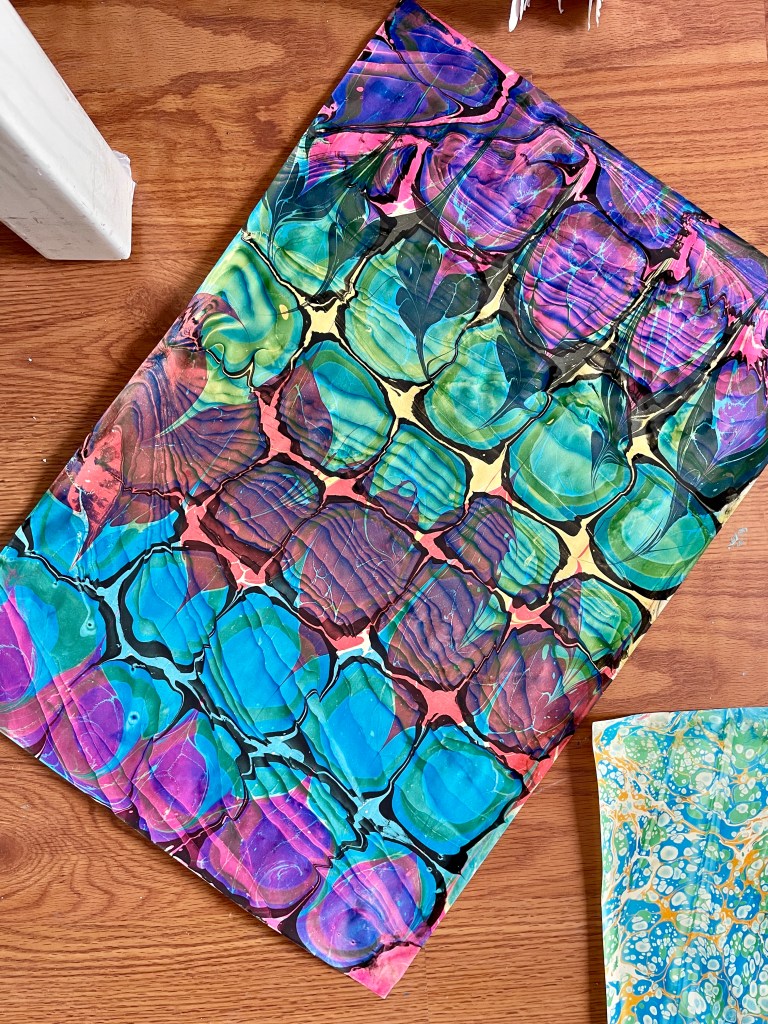
The studio, Turkish Arts, lies just a stone’s throw from the Hagia Sophia. Founded by my wonderful teacher, Betül, the workshop space is perched five stories above the street. The view of the Bosphorus Strait over the rooftops was mystical on a rainy Sunday. Betül is an incredibly accomplished artist, having studied traditional arts at Mimar Sinan Fine Art University here in Istanbul. She makes it look so easy! I was thankful for her help correcting my posture, how I held the brush, and how much ink I added before squeezing the excess. The technique below is called peacock and surprisingly easy, achieved by using a series of combs running through the ink.

I spend a few hours in the studio, trying different techniques which varied from flower creation to the more abstract, which I enjoyed the most. Just as I enjoying cooking rather than the more precise baking, I enjoy making art when I can be loose and inventive.

As I worked, the beautiful sounds of Radyo Voyage filled the studio. A Turkish radio station which plays a diverse array of music from countries worldwide, it set a mood perfectly. Available worldwide via Radyo Voyage’s app and website, I would highly recommend.

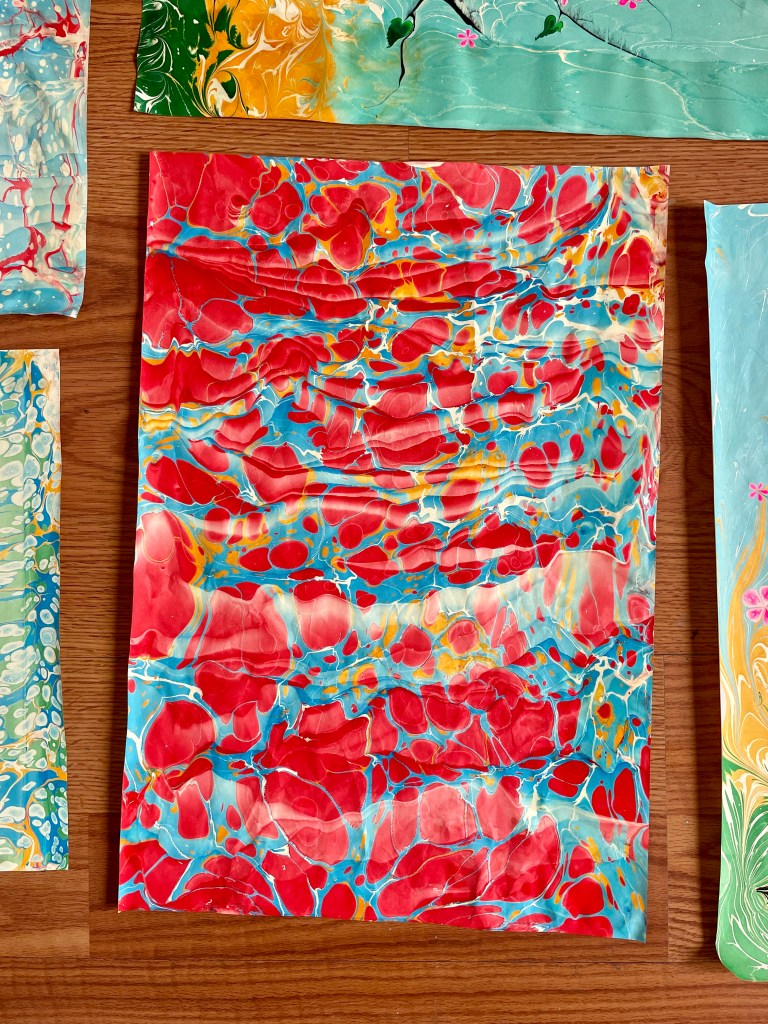
There is a contemporary marbling technique called Spanish marbling or “drunken marbling”. Likely the result of a happy accident (as we say in the art world), Spanish marbling incorporates a crumpled piece of paper which is flattened and shifted in the bath to mimic waves on the sand. The effect is really beautiful and harder then it looks to achieve!

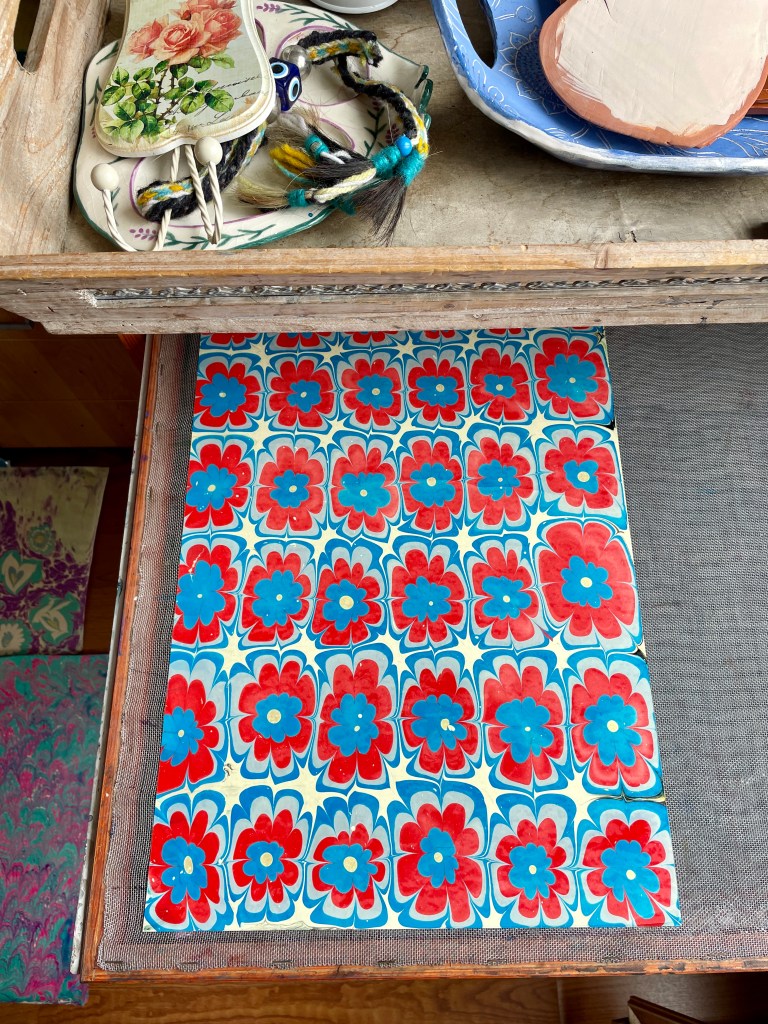
My favorite result was a twice-dipped piece (below right), the first dip made by my teacher and the second (the blobs) made by me. The colors don’t bleed in the process but the layering makes for stunning results. On the left, I applied the same technique – applying dots of ink to form circles which reduced in size. I then used a thin wire tool to push the ink towards the middle of the circle, forming petals of a flower.

As my time in the studio drew to a close, I placed each sheet of paper on a mesh drying rack. Betül turned on the heating unit above to help speed up the drying process. After lunch with the friend, I returned two hours later to pick up my finished papers. All in all, a beautiful experience I would love to share with future visitors.

Sightseeing

After a week spent teaching online, amidst the fallout from the earthquake along Turkey’s southern border, I needed to change it up. I decided to book a room in the Fatih neighborhood of Istanbul, close to a number of tourist sites. Despite having lived here for nearly 8 months, I haven’t made time to visit Istanbul’s crown jewels – the Hagia Sophia and the Blue Mosque. No time like the present.

After lunch downtown with friends, I took the tram to Eminönü. I headed downhill towards the banks of the Bosphorus and easily located Hotel Turkish House. As is customary in Turkey, I was offered chai (Turkish for “tea”) or coffee upon arrival. Having no immediate plans and knowing that it’s considered rude to refuse, I sat down to enjoy my chai in the hotel’s gorgeous entryway.

I was lucky enough to be joined by the hotel’s owner and designer, an architect from Turkey’s Izmir region. We quickly made conversation and she asked me where I was from and what had brought me to Turkey. She shared that she’s spent a little time in Cambridge, MA, and had even delivered her son to a camp in Maine outside Camden a number of years ago. A fascinating and accomplished person, it was wonderful to talk to her.

With the days staying lighter longer, I had my sights set on the Great Palace Mosaic Museum, just a short walk from my hotel. Turns out that the Great Palace wall abuts the hotel’s garden, fully visible from my room. It’s not everyday that you find a 6th Century Byzantine palace wall outside your hotel window. Turkey is full of amazing ruins existing side-by-side with contemporary life.

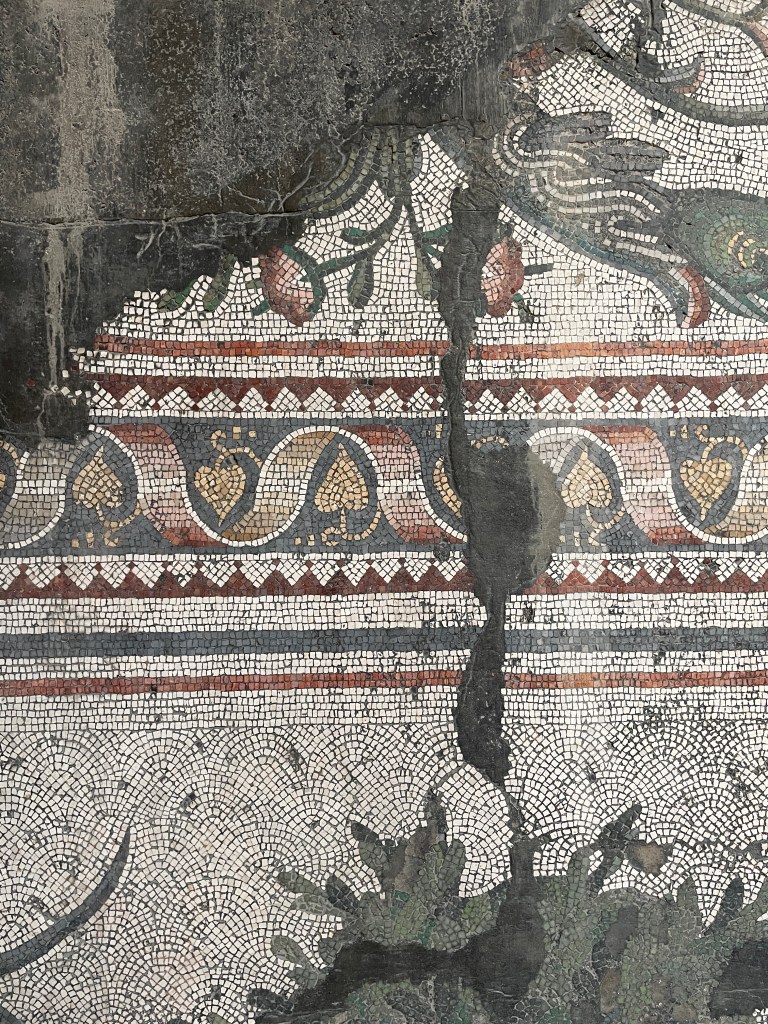
The mosaics at the museum were exquisite. Restorations had begun in the 70s and today we enjoy the mosaic floors and walls of the Palace created during the time of Justinian. It’s truly mind-blowing. A lot has been done to ensure that the colors don’t fade as they are unearthed.

Next I visited Sultanahmet and enjoyed watching the gulls circle the minarets of the Blue Mosque. With dome upon dome, the Blue Mosque is a sight to behold. It is just as stunning as it was when Brett and I first visited back in 2009.

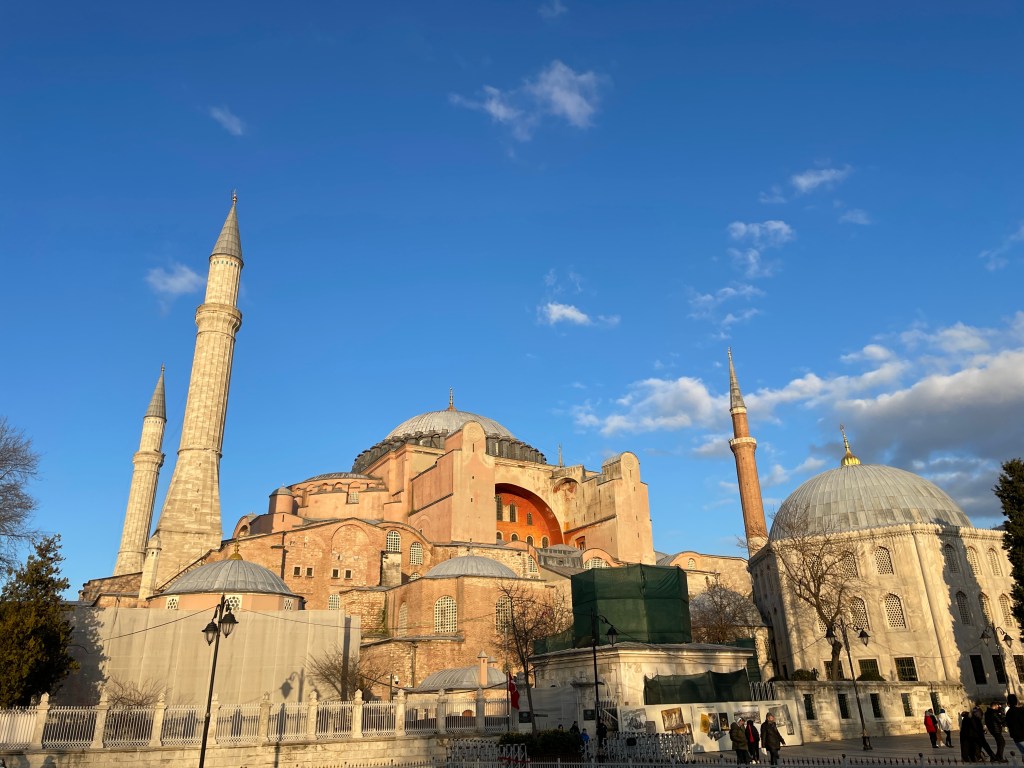
Thanks to the lack of tourists in winter, I was able to walk right into the Hagia Sophia. This stunning building has changed job titles many times since its construction in 360 AD. It’s been a Greek Orthodox Church, a mosque, and a museum (which it was when I last visited Istanbul).

Today it is once again a mosque so I was asked to cover my head with my scarf. I also had to remove my shoes before entering the main prayer hall. It was just as beautiful as I had remembered – rivaling St. Isaac’s in St. Petersburg and St. Paul’s in London. A hush fell over the visiting crowd, respectful of those answering the afternoon call to prayer.

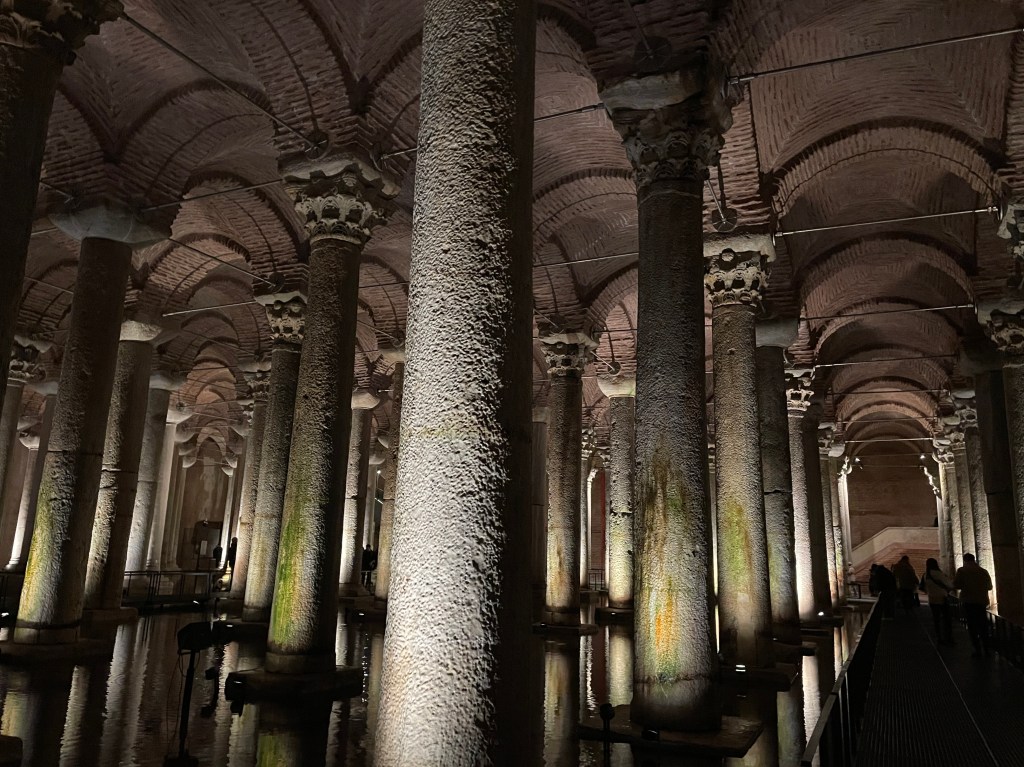
Upon exiting, I was feeling lucky so I popped across the street to the entrance of the newly renovated Basilica Cistern. Another hold over from the reign of Justinian, the Cistern once provided water to the Great Palace as well as the Topkapı Palace (a destination for another day). I could not believe my luck as I was able to walk right in after purchasing my ticket.

The mystical space features over 300 marble columns, lit by a rotating light show. The effect is both eerie and ethereal. Thanks to the late hour, I had the place nearly to myself and I was struck by sound of droplets hitting the water, falling from the ceiling thanks to condensation.

Winding my way around the space on a raised metal boardwalk, I took in the contemporary sculptures on display. Adding to the magical appeal, many sit partially submerged in the water of the cistern, lit from below. A not-to-miss experience in Istanbul, for certain.

As I tried to digest all of the history available in this one amazing city, I watched as the sky turned pink and orange – a signature Istanbul sunset. Making my way to the Arasta Bazaar (a minuscule, more tidy version of the Grand Bazaar), I admired the embroidered textiles on display.

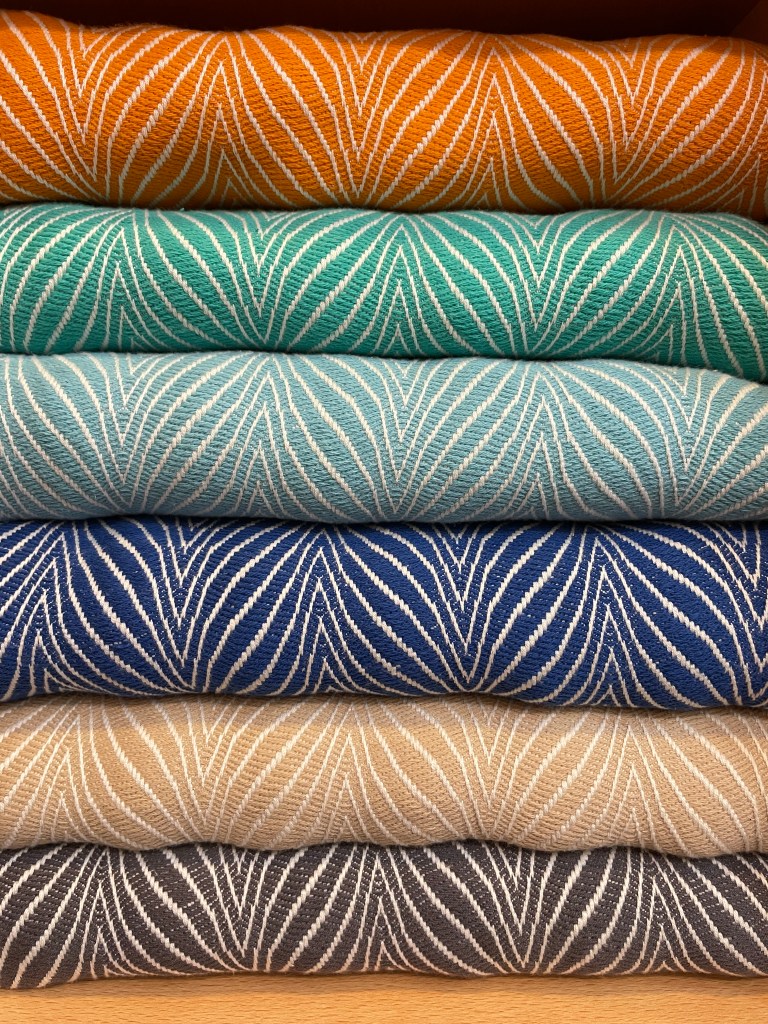
My destination was Jennifer’s Hamam. Another not-to-be-missed destination in Istanbul, Jennifer’s is beloved by local ex-pats and tourists alike. The story goes that Jennifer, a Canadian woman living in Istanbul, travelled the Turkish countryside searching for traditional textiles and artisans. Dismayed at the generational loss of trained craftsman, she created a consortium of artists across the country and began producing gorgeous Turkish towels made of organic cotton, linen, and silk.

Featuring traditional patterns (my favorite is “baklava”), the tiny store is stocked floor to ceiling with the towels and garments. It’s incredibly high in quality and truly fun to get lost making choices. Jennifer employs an all Turkish staff and I was able to have a long chat with the two men working that day, checking in on their families in the earthquake region and getting their take on the situation as a whole. They were overwhelmed by the global response to Turkey’s cry for help – teams of volunteers arriving from countries as far reaching as Australia, Mexico, and Japan. We all had tears in our eyes, united by our shared humanity.

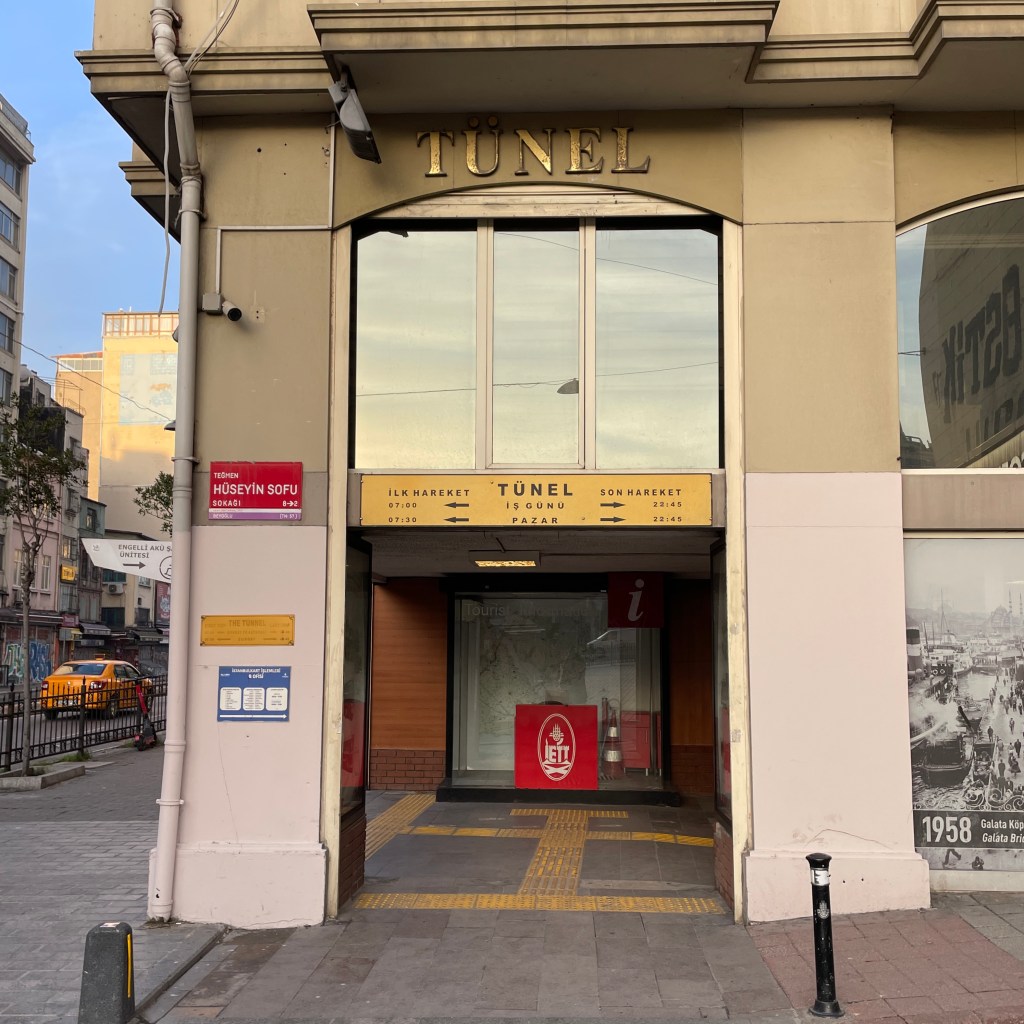
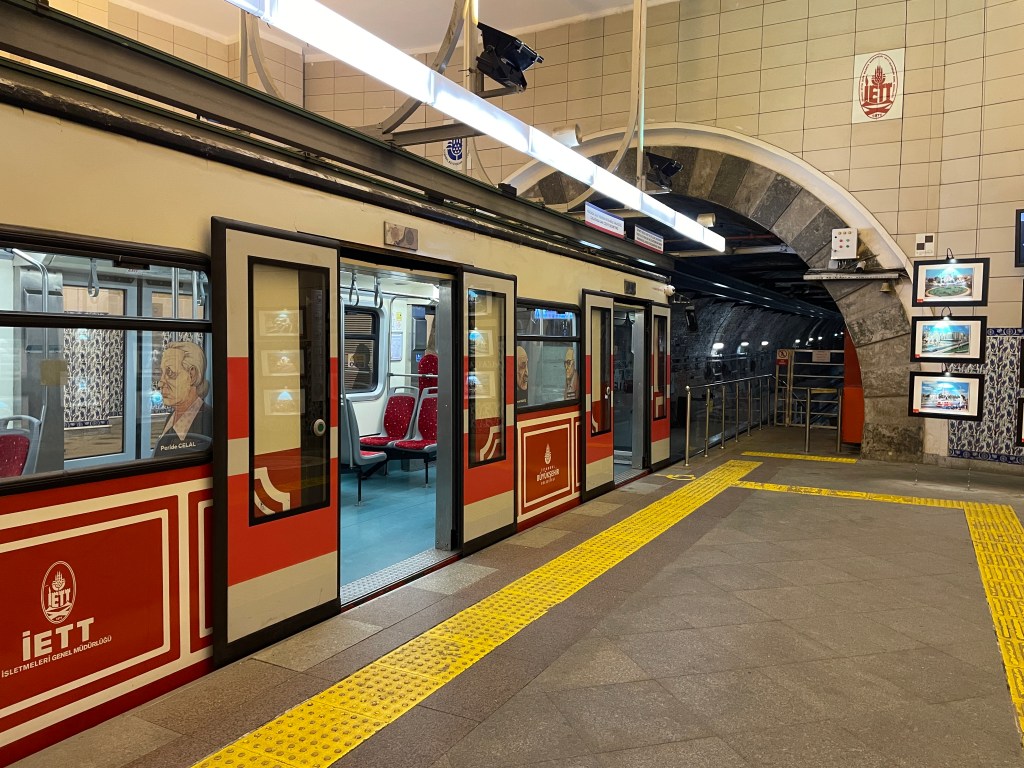
After a good night’s rest back at Hotel Turkish House, I crossed over to Istanbul’s Golden Horn for breakfast with friends. Stumbling upon the entrance by accident, I took the Tünel funicular up to Beyoğlu. In operation since 1875, it’s the second oldest underground urban railway in the world, bestest only by the London Underground. Another opportunity unique to Istanbul, I would highly recommend a ride.

I capped off my downtown stay with a Turkish breakfast at Privato. Nothing like sharing a Turkish breakfast with friends to help you slow down and appreciate the moment.

My time downtown helped refresh my outlook during a tough time but also reminded me of two things: First, that the kindness and generosity of the Turkish people is truly unmatched, even in the face of harrowing times. Second, that Istanbul is an incredibly dynamic city bursting of ancient and modern wonders. Now taking reservations for Fall 2023 😉

Swanky

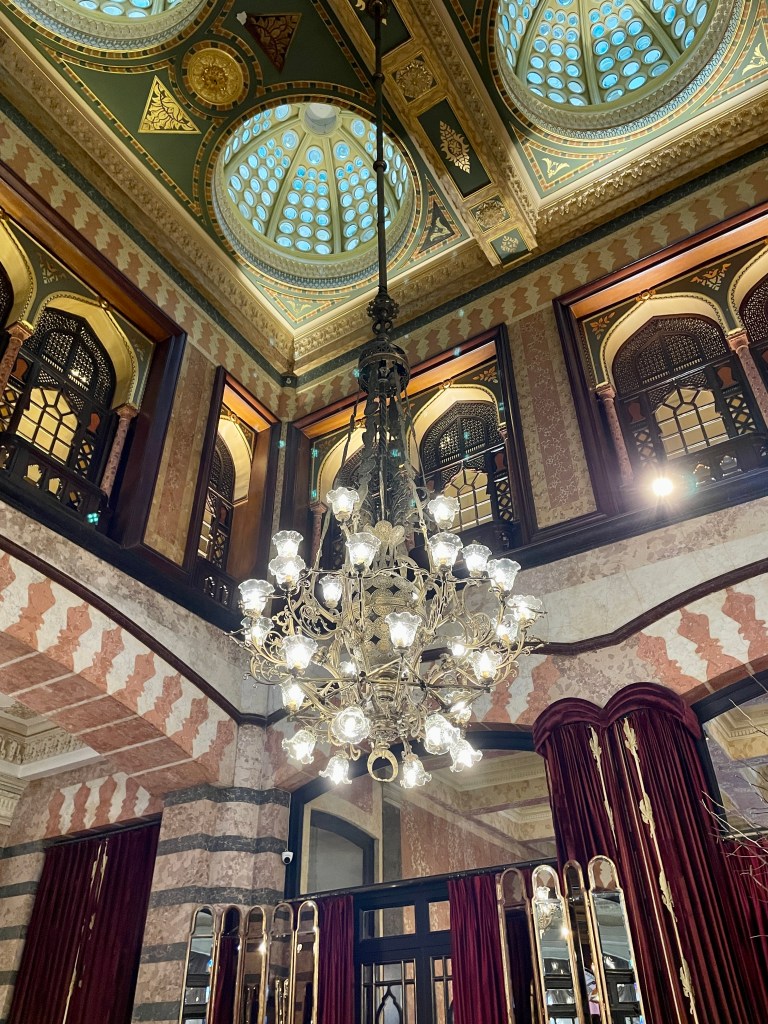
The history of Istanbul’s Pera Palace Hotel is as storied as the building’s Art Nouveau facade. Built in 1892 to house passengers on the Orient Express, the hotel is located in Istanbul’s Beyoğlu neighborhood.

Aside from the Turkey’s imperial palaces, the hotel was the first building in the Ottoman Empire to be powered by electricity. Light still dances spectacularly across the marble walls, adorned in Byzantine stripes and topped with six domes full of beautiful blown glass.

From Hemingway to Graham Greene, numerous writers have used the hotel as a backdrop for their novels. Agatha Christie is said to have written Murder on the Orient Express during her time in residence.

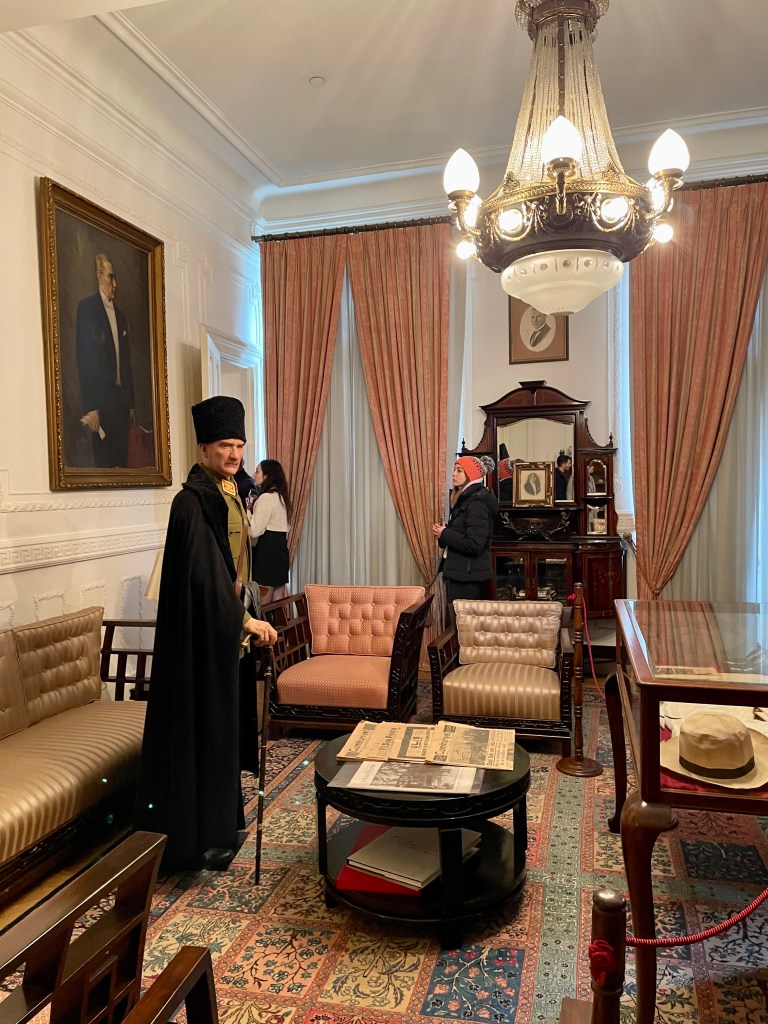
Famous political faces have also walked the halls of the Pera Palace Hotel. US First Lady Jacqueline Kennedy visited while she was roaming the Aegean as Jackie O. On the first floor, Room 101 contains a museum dedicated to President Ataturk, founding father of the Republic of Turkey.

Tea at the Pera Palace had been on my radar since last spring when my friend Bea recommended it while biding her time in Istanbul. Bea knows good taste! Our Sunday afternoon tea proved as lovely as expected. Red velvet curtains hung from the walls as we enjoyed profiterole, simit, and other delicious pastries.

Fun fact: in Turkish, “pasta” is the name for baked goods like cakes or pastries. My local bakery is called Ekmek Pasta Cafe (Bread Pastry Cafe). Erişte, meanwhile, is the Turkish word for “noodle”.

The ballroom was in recovery from a wedding the night before. Very Marie Antoinette in palette and tone, the clocks decorating the sitting room were reminiscent of Fabergé.

The Pera Palace Hotel proved the perfect spot to liven up a grey Sunday in late January and fabulous company proved an antidote to the Sunday Scaries. Wishing you all a wonderful start to the week!

Selçuk

Happy New Year! Hope that your 2023 is off to a good start, healthy and happy. I’ve just returned from a fantastic trip to the States. Wasn’t too hampered by the deep freeze in the northeast, spent lots of time walking in the woods with friends and family, really enjoyed cooking for my family. Made a quick trip to Vermont to meet a new little dude named Wyatt and saw some Christmas lights with my god kids at the Roger Williams Zoo. A perfect end to 2022, couldn’t have asked for more.

Moloko, for her part, was super lucky to have the company of two amazing catsitters, Mic and Sarah (thank you, TrustedHousesitters!). They kept me in the loop with daily proof-of-life photos and showered Mol with lots of love and attention. They also spoiled me with home cooked meals as I returned from the States and support as I took off again to explore a bit more of Turkey.

Embarking on my first solo travel in country, I chose Selçuk as my destination upon the recommendation of a friend. A quick one-hour flight from Istanbul to Izmir and a one-hour drive later, I arrived at my destination. The town of Selçuk is built around the ruins of the ancient Roman port of Ephesus, once the second largest city in the Roman Empire (the largest being Rome). In its heyday (1st century BC), the city was home to a quarter of a million people.

Turkish Village Life

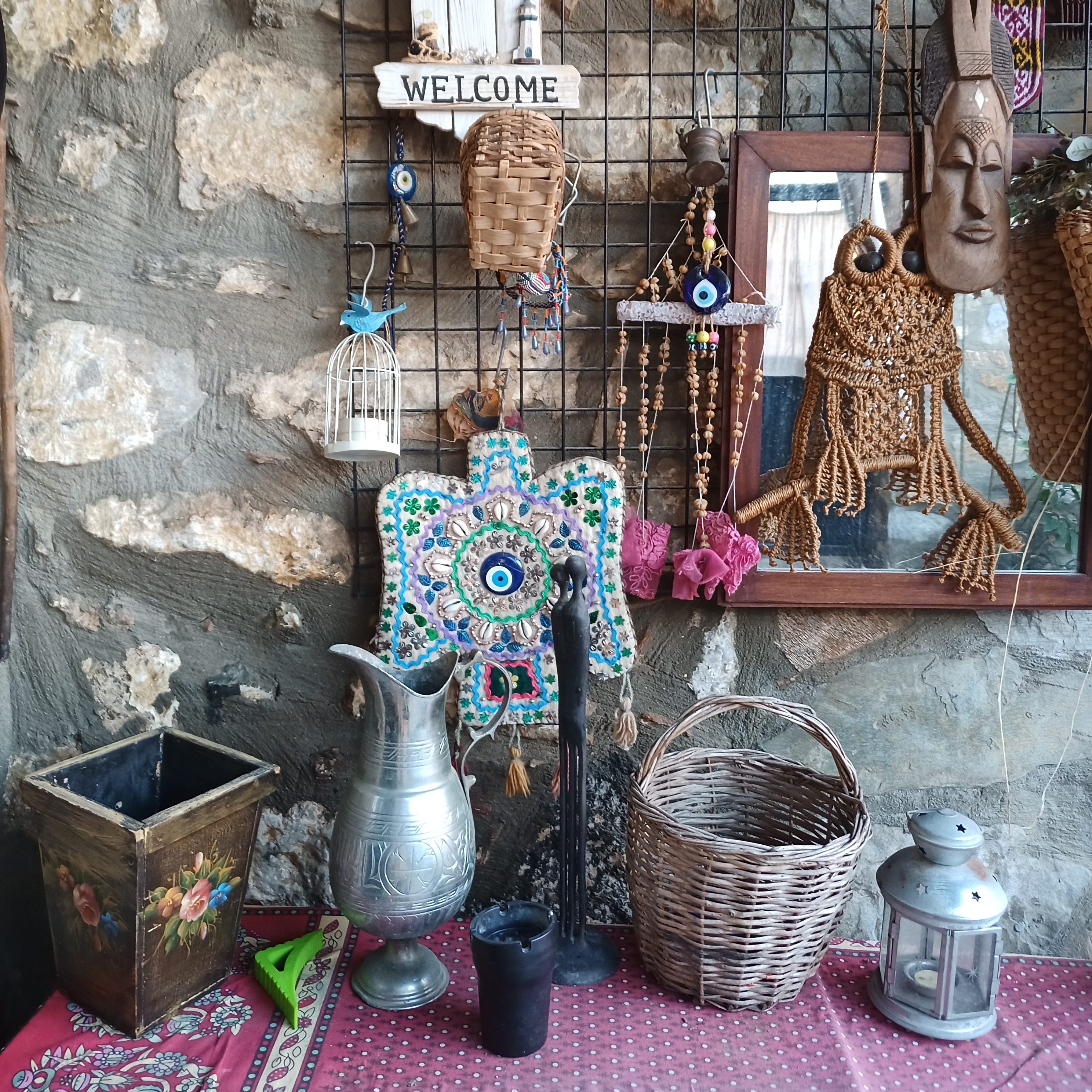
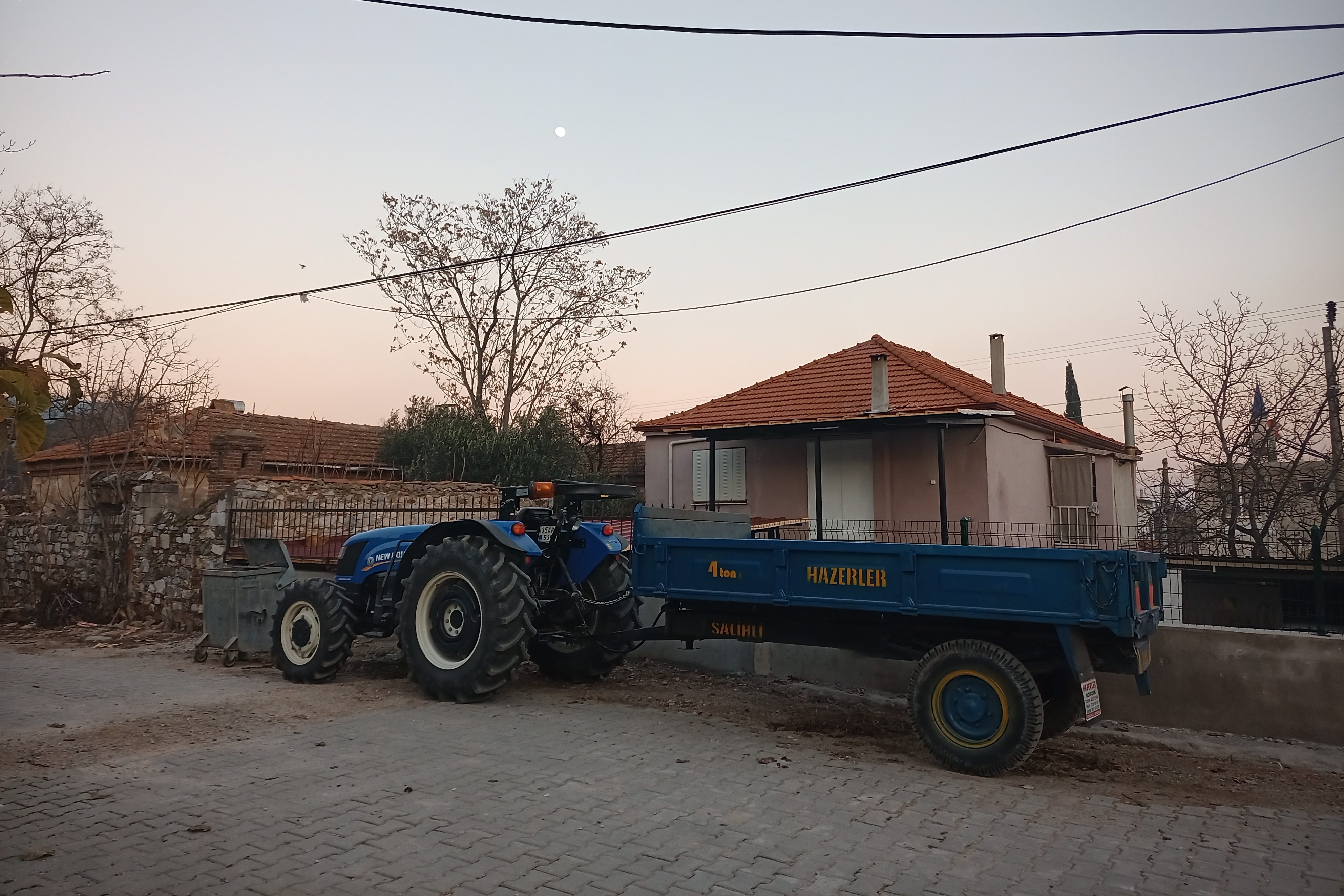
I opted to stay in an Airbnb in Çamlık, just down the road from Selçuk. Jockeying for my parking spot with tractors, village life proved perfect for a little R&R and a chance to beat my jet lag before school started. Extremely friendly villagers, roving gangs of chickens, and my hosts’ mop of a dog all welcomed me in. Life moves at a decidedly quieter pace in the village, with its inhabitants rarely getting going before mid-morning. I rose daily at 7:30am, however, as the neighborhood dog harmonized with the muezzin call from the local mosque.

Ancient Ephesus

As this was a solo trip, I had done a fair amount of research ahead of time, mapping out a detailed itinerary so I wouldn’t be caught without destination nor direction. A beautiful part of traveling alone is being able to switch gears immediately, often while en route. Weather and distance took me on a few unexpected adventures this trip but having no pressure of what I had to do was a lovely way to wind down after the winter holidays.

I started my tour of Ancient Ephesus at the Basilica of St. John. Sure-footed, I made my way up the hillside through the ruins. Vineyards and olive groves dotted the surrounding landscape, providing views similar to the landscapes of Tuscany. With a 360 degree view of the valley below, it is said that John wrote his gospel upon this very hilltop. Yes, John and Mary (Jesus’ mother) are said to have travelled to Ephesus between 30-45 AD, with John eventually dying in the city in 99 AD. Justinian erected a basilica onsite in the 6th century but, sadly, only ruins remain today as the church was destroyed by a major earthquake in the Middle Ages.

Making my way past checkpoints of local police, I next visited the site called “Efes”, or Ancient Ephesus itself. Aside from a tour group from China and a few Russian families, I had the place to myself. The weather was gorgeous and I was able to find a spot on the marble steps from which to sketch the Celsus Library (pictured above), a stunning facade against the blue sky of the day.

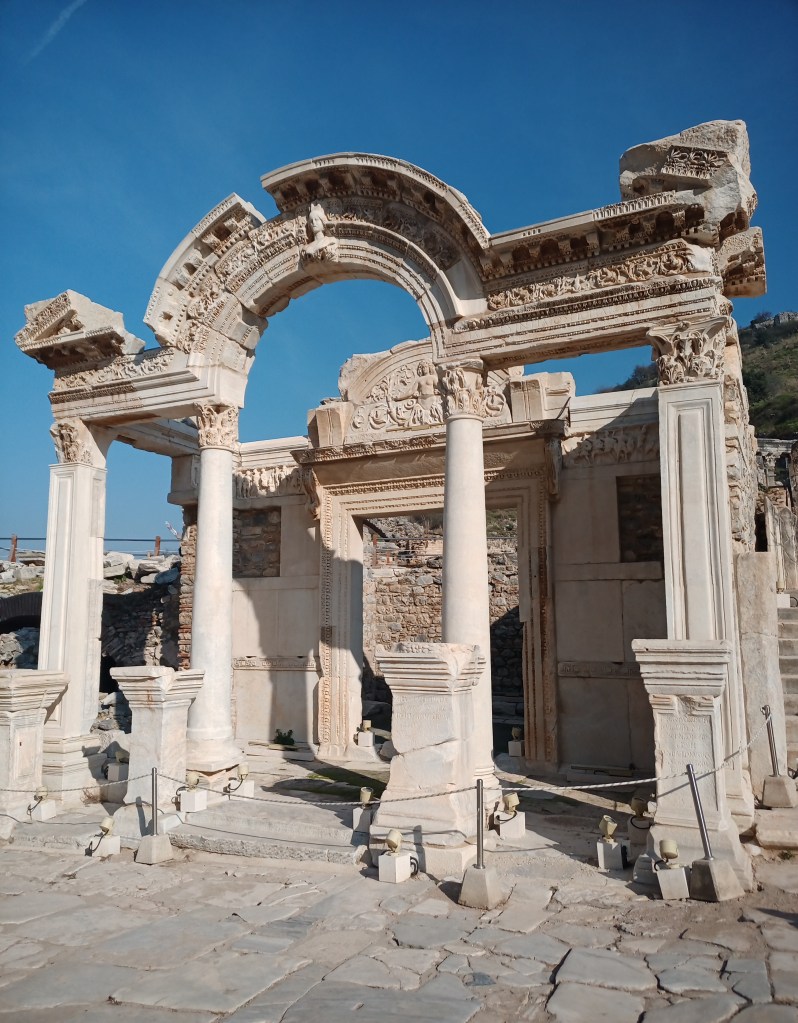
Curetes Street (above center), is bookended by the Hercules Gate at the top and the Celsus Library below. The street reminded me of Pompeii, and even parts of the Roman Forum. Turkey, however, allows tourists to get much closer to the ruins. In fact, some people even climb on them which makes this former museum educator scream on the inside. Happily, a number of local cats were posed and ready for their close up as they reposed in the sun. The facade of the Temple of Hadrian (above left) stands about halfway down Curetes Street. The foundation features Greek writing, a reminder that though the Romans built the city, the local population wrote and spoke Greek.

Renting a car gave me great flexibility and I spent one afternoon in Şirince, a hillside town known for it’s wine and markets. I enjoyed the vibe and was happy to do a little shopping before making my way down the switchbacks back to Selçuk.

Making the most of wine country, I enjoyed dinner at Mayadan Restaurant, a local vineyard with gorgeous views and delicious wine. Like many wineries in Turkey, you can also stay overnight with cottages and a luxurious hotel both available. Guests can sip local wine while enjoying gorgeous sunset views as the sun slips behind the olive groves.

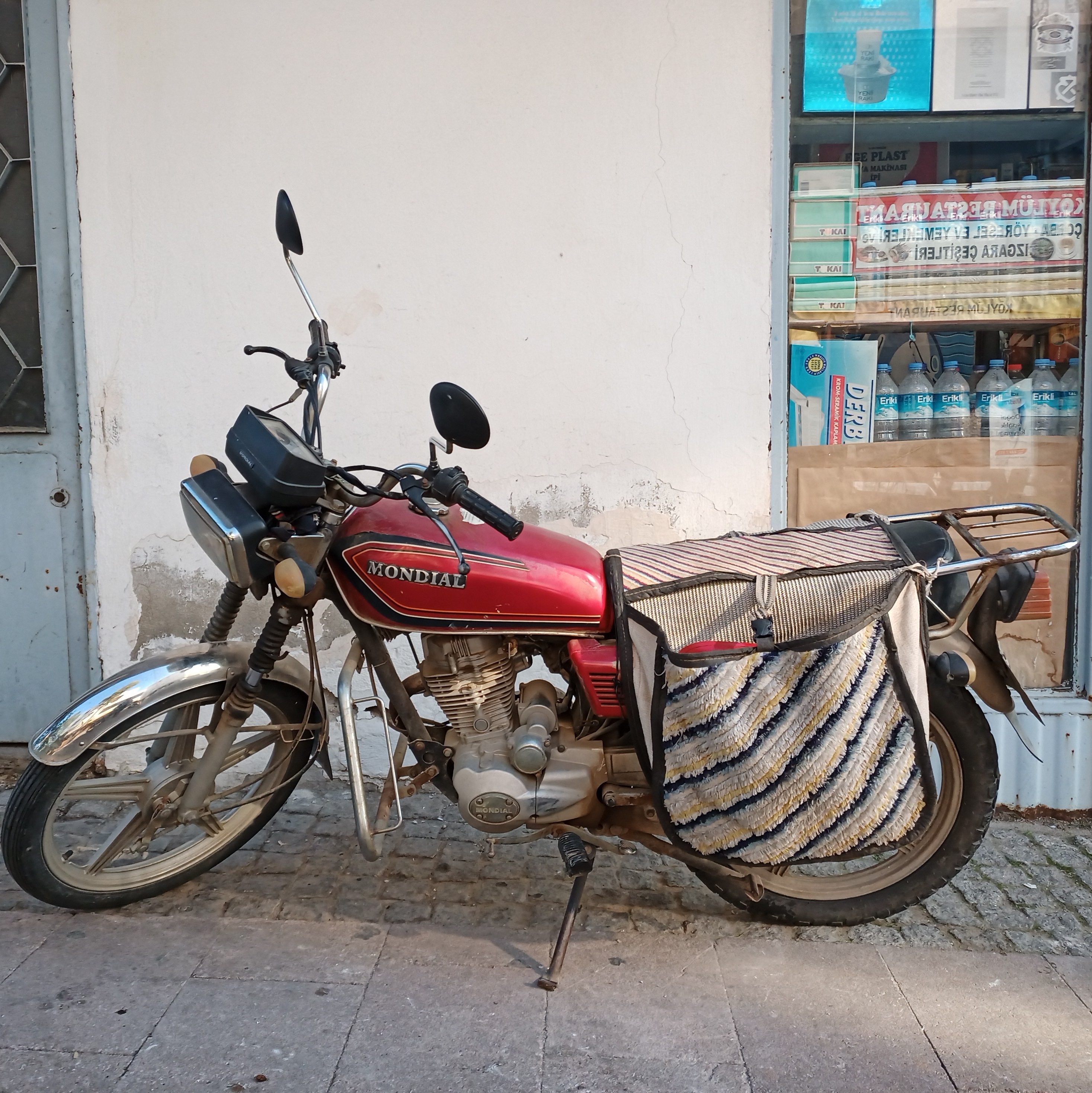
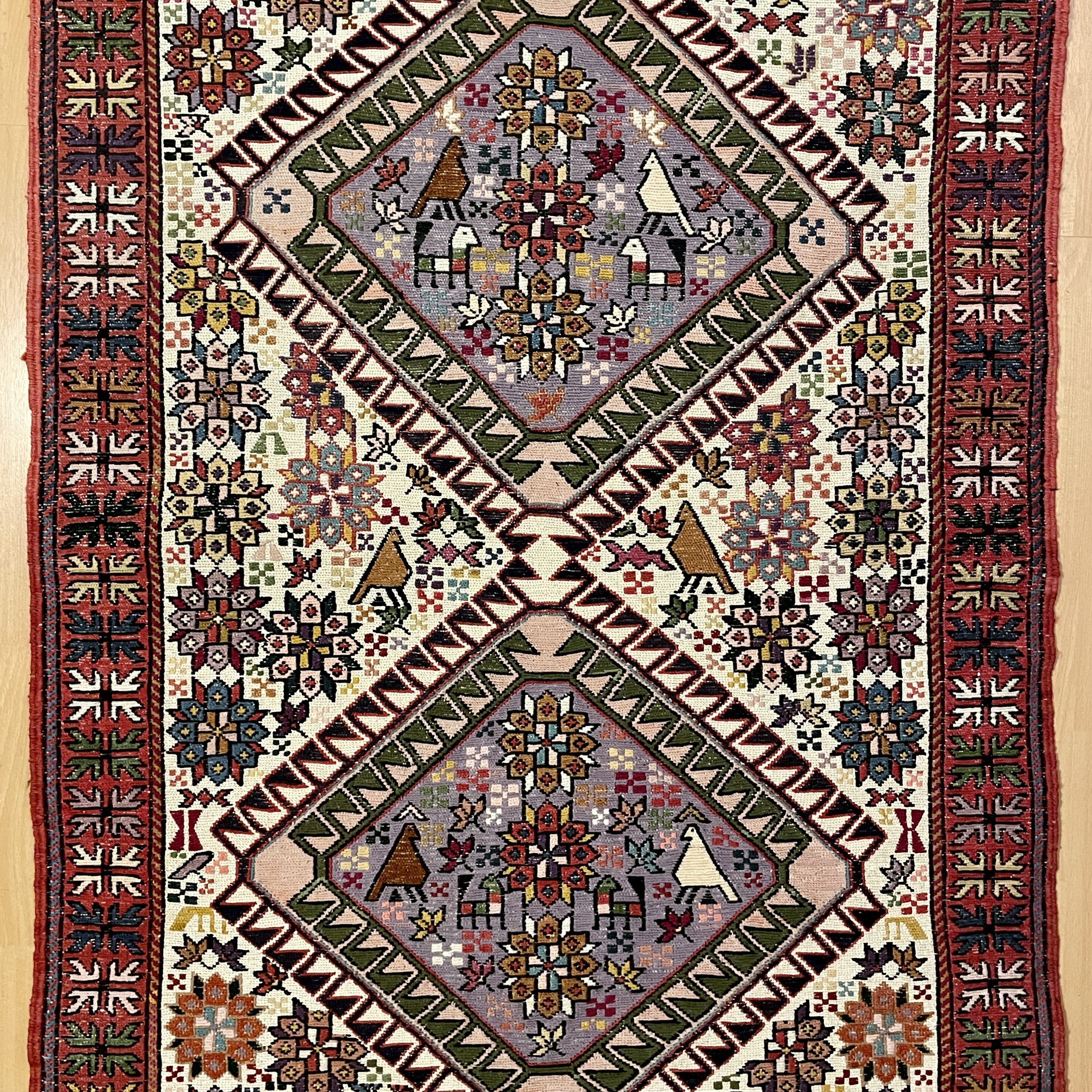
Had some fun learning about Turkish rugs while in Selçuk. Geometric patterns are the local custom. Practice dictates that a double knot is tied onto each warp or vertical string, creating a super strong rug. I bought a kilim rug runner (lower right). Kilim = flat weave, while pile = tufted. The shop wrapped my rug up so tight that I was able to fit it in my backpack for the flight home. I also learned about contemporary uses for historic Turkish textiles. For instance, motorcycles in Turkey often sport the goat hair saddlebags which were originally designed for camel transport. The waterproof goat hair protected the contents of the bags from the camel’s sweat, just as it protects the motorcycle rider’s items from the elements today.

As is often true of touristy areas, there are some sights that don’t measure up to expectation for one reason or another. In this case, I found the port of Kuşadası to be choked with people, cars, and cruise ships (though Pigeon Island proved a cool walk). Mary’s House was a bit of a letdown (there’s no proof Mary and John lived there – Rick Steves uses “alleged” to describe the site). If I were to recommend this trip to others, I would suggest a one night stay at Ayasoluk Hotel in Selçuk (lovely view and staff) followed by a stay at the vineyard in Çamlık.

For me, my stay in the Turkish village was really the icing on the cake. Welcomed by my hosts and treated to food and local wine in their home, I couldn’t have asked for a better experience. I felt very safe the entire time I was traveling. Back in Istanbul, I’ve been reunited with Moloko and have returned to a full time school schedule. Next week begins Semester 2 which means that I’m halfway through my first year teaching in Turkey. I’m looking forward to hosting visitors this spring and have a few new countries on the horizon – notably Georgia and Greece. Stay tuned!

How Bazaar

Forgive the pun – as a teacher with two weeks left of school, my sanity is hanging by a thread! It’s hard to believe but 2022 is rapidly drawing to a close. Holiday parties abound and the weather here has shifted to grey skies with a near constant mist of rain. Reminds me of the fall I spent in Oregon. I’m excited to be headed back to Massachusetts very soon to see family and friends. My first fall in Turkey is nearly in the books.

Heading back to the States is always exciting. Spending time with loved ones, hiking familiar trails, and cozying up to watch the Pats all sound pretty great right about now. It’s also a great excuse to share treasures from my travels with the folks back home. And when you live in Turkey, there’s only one place to shop for literally anything you could ever dream of – Istanbul’s Grand Bazaar.

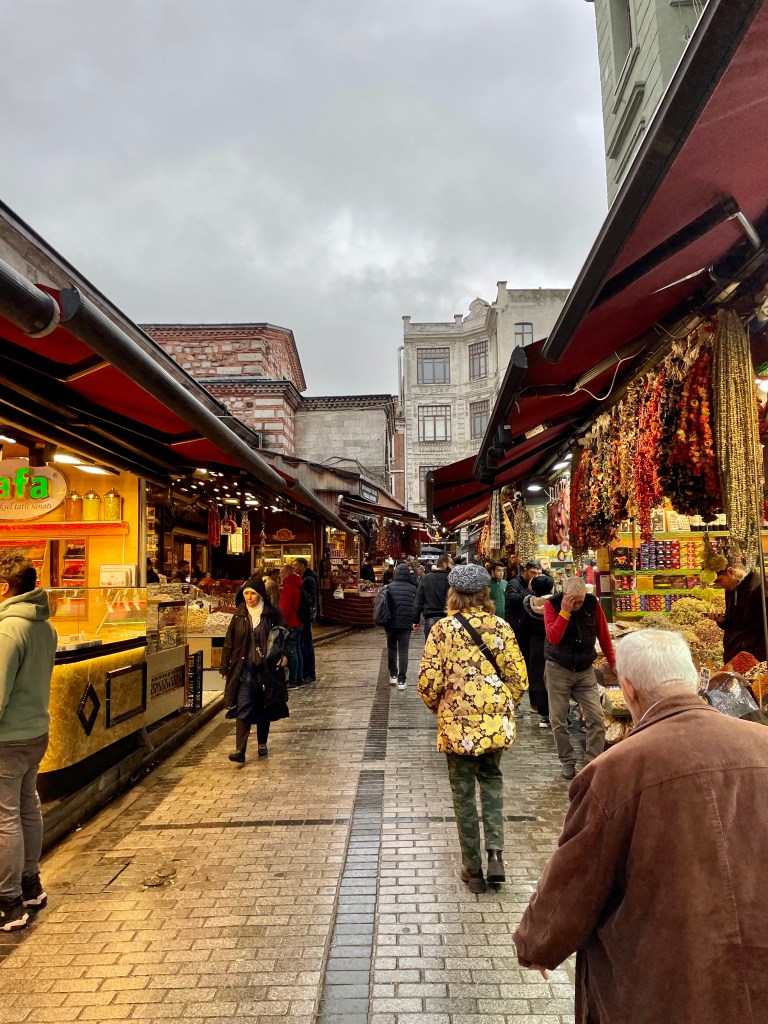
My friend Michele offered to show me around the marketplace this past Saturday morning. She’s lived here for ten years and knows the Bazaar like the back of her hand. I could not recreate our route if I tried! That’s Michele leading the way into the Eminönü marketplace in her yellow jacket. I’m sure you’d never guess that she, too, is an art teacher 😉 Birds of a feather.

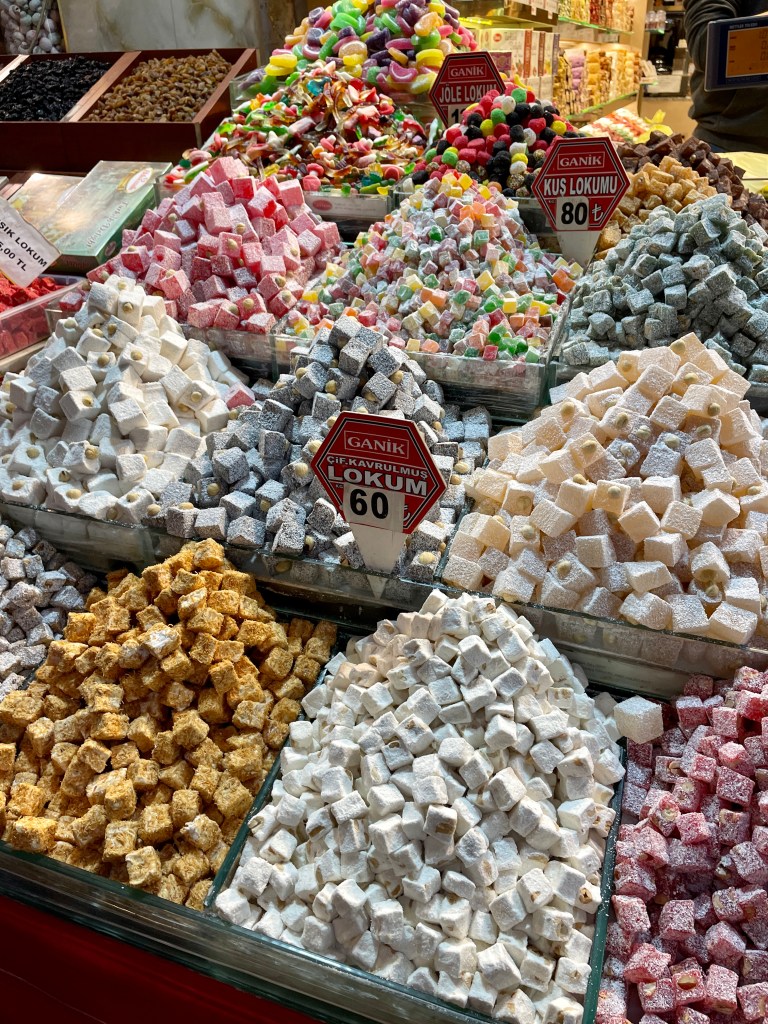
The skies threatened as made our way through the continually narrowing streets. Turkish delights beckoned at every stall with each vendor selling their special mix of options. Piles of spices lined the aisles as well. Keep in mind, we’re not in the actual Grand Bazaar nor the Spice Bazaar – this is the stuff on the outside, ripe for the picking.

Small shops hawked everything you could possibly think of. There was the guy sharpening knives behind his little pushcart and a man attempting to carry bags and bags of rice on his shoulders down the cobblestone alleyways. Vendors called out cheerfully in English, easily identifying me as an American (I was with an Aussie and a Kiwi, odd man out). Must have been my Eddie Bauer raincoat (lol).

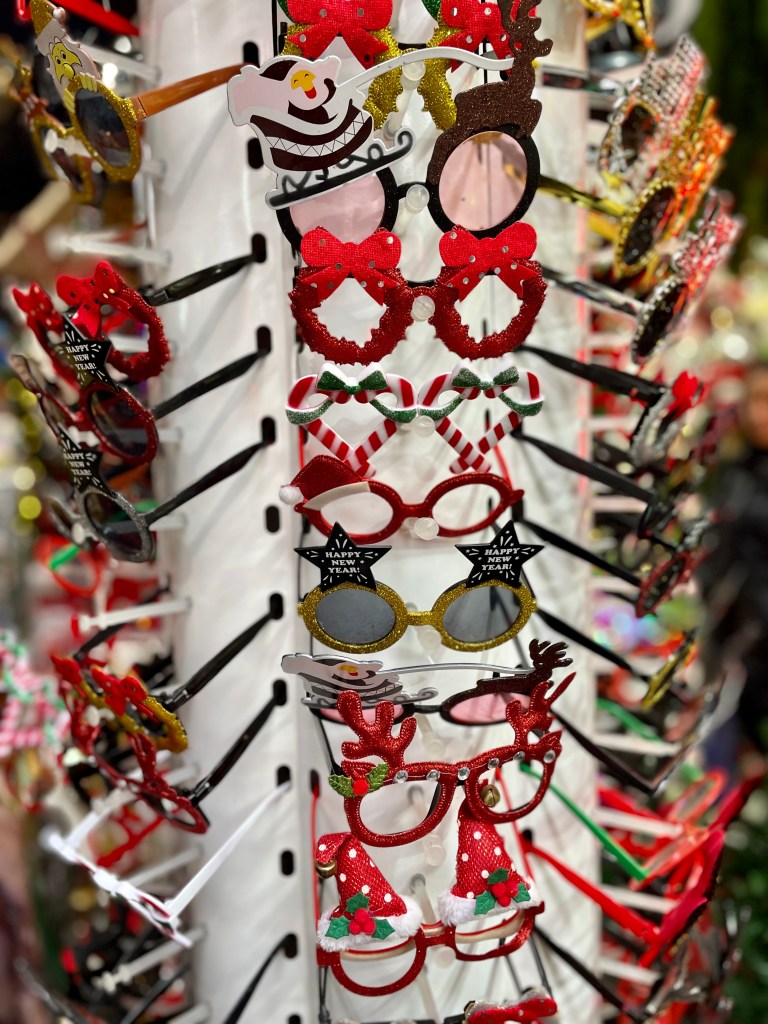
Multiple shops were overflowing with Christmas gear. Considering that 99% of Turkish people consider themselves to be Muslim, this was a bit unexpected. But we happily snapped up some glasses for the photo booth at the holiday party next weekend.

Possibly my favorite corner in the market contained all the paper goods and handmade paper stores one could ever need. I had a lot of fun picking out souvenirs for folks back home and it brought back good memories of shopping hanji in Namdaemun.

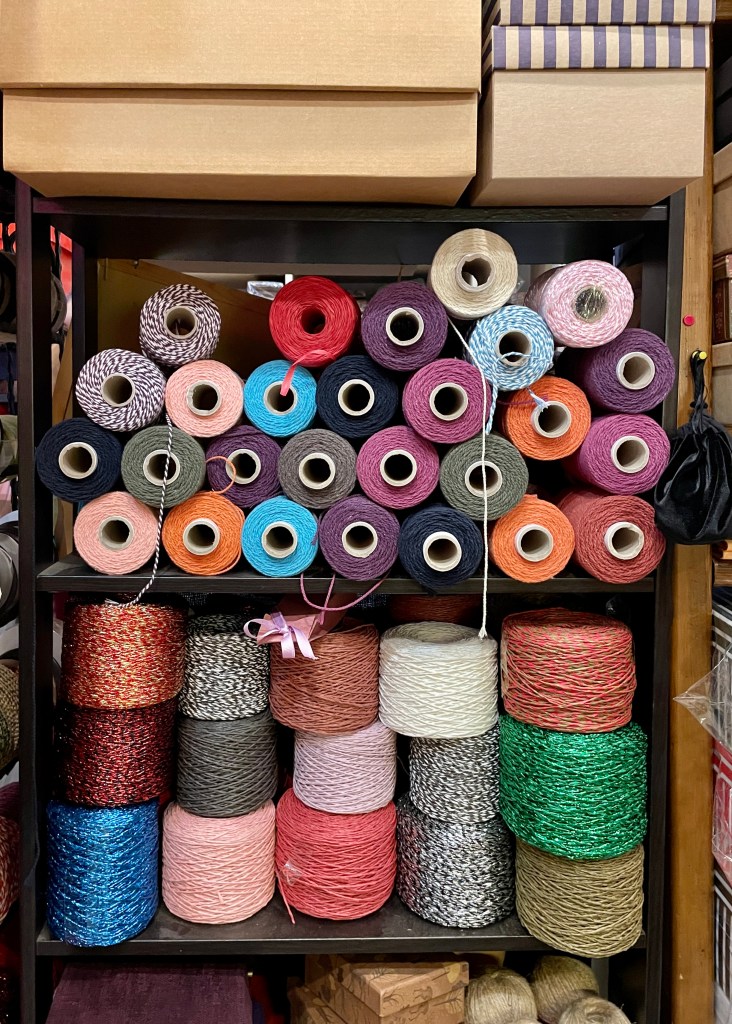
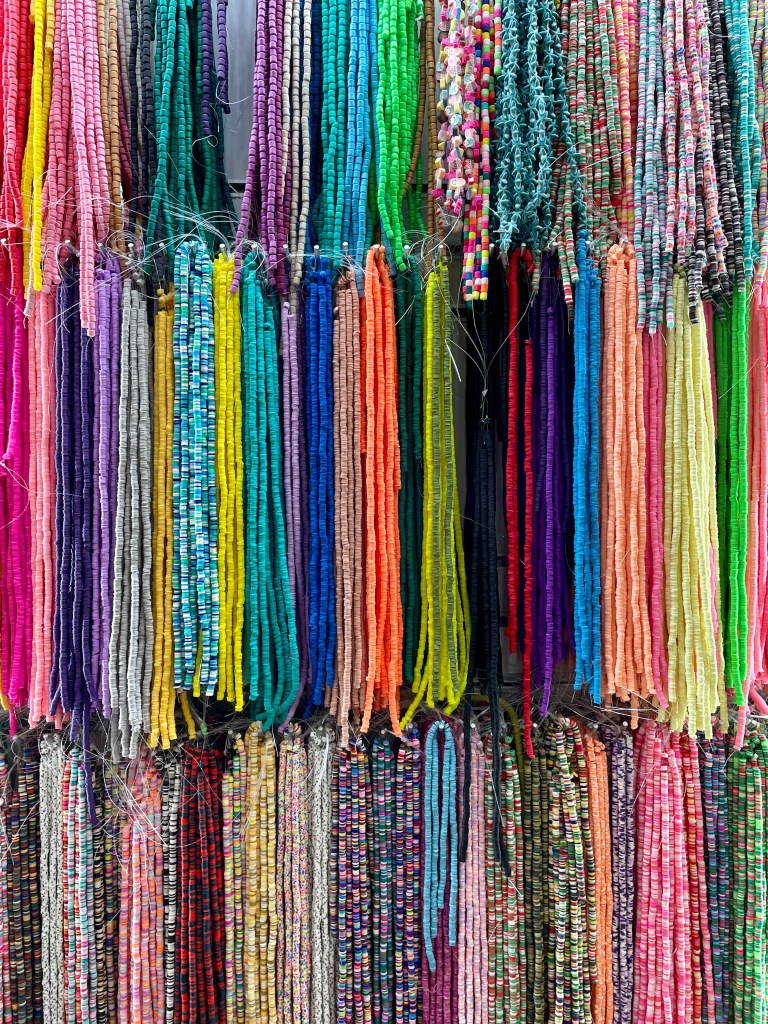
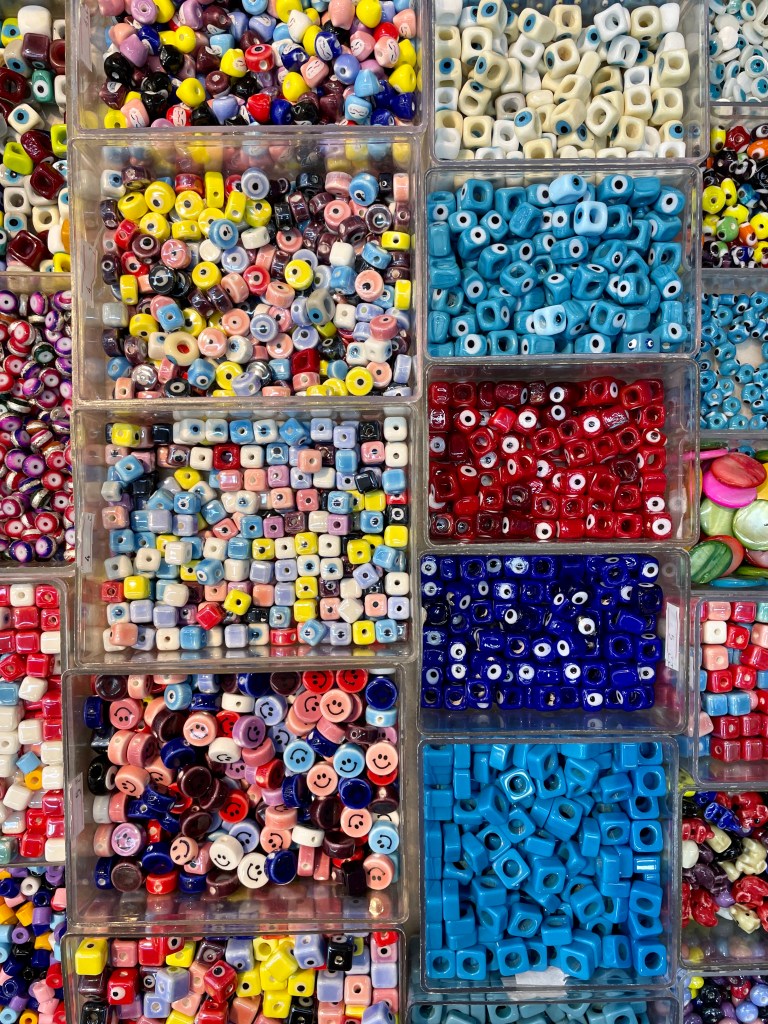
There were entire stores filled with only boxes, twine, and wrapping materials. Michele really took our tour to the next level when she brought us to the jewelry market. 6+ floors of shops dedicated to glass pieces, silver pendents, and strings-on-strings of beads.

This was peak sensory overload, as you might imagine. Michele adopted mosaics as her COVID handicraft and, with options like these, I can certainly see why.

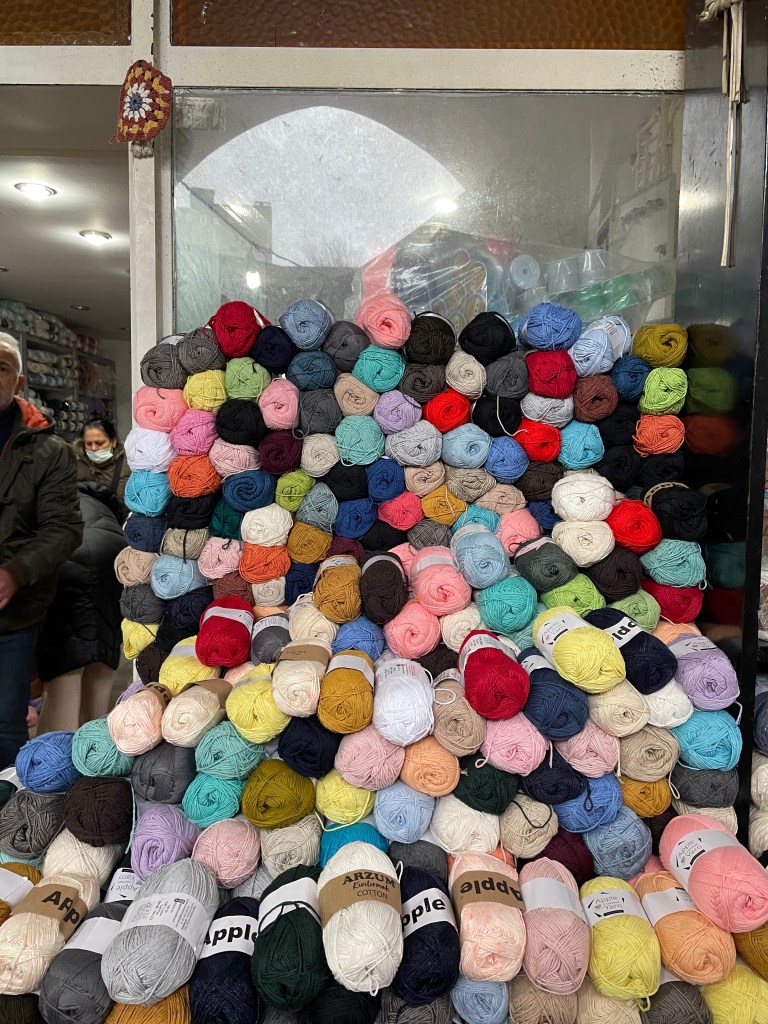
There is an entire floor dedicated to yarn, probably a dozen shops in total. Macrame materials, cotton yarn, wool, organic yarn. If you name it, it exists on the upper level of the marketplace.

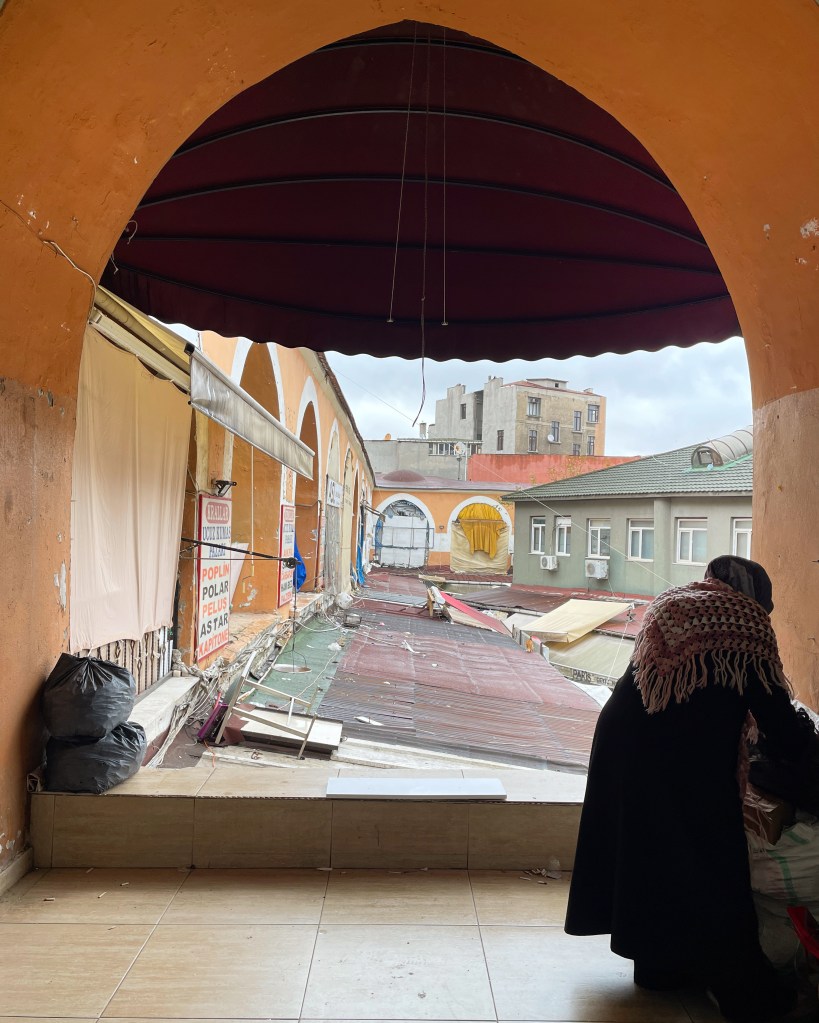
As Jenn knows, I’m not a huge fan of shopping as a past time so I tried to take this all in as sightseeing. It became harder to do as the morning wore on and the streets began to fill with people. Below is a moment of respite I found above the crowds, the landscape echoing the dusty rose palette of nearly everything here in Istanbul. There is beauty in the breakdown.

Please keep in mind that at no time did we actually enter the Grand Bazaar itself. That adventure will have to wait for another day. But this overload of color, texture, and noise was enough to brighten up this grey December morning which began with this view of the Bosphorus.

Some of you have asked, is life in Istanbul really as wonderful as it seems? The answer is not so black and white. Excursions like this one to the bazaar are not my everyday life, but they are within reach with the help of others. It would be possible to filter this blog like any other type of social media – often with rose-colored glasses. Be assured – I do see red when frustrations appear and they certainly do appear, just as they would in daily life anywhere. It’s an experiment in extremes at times. Expat life isn’t always easy and seemingly simple tasks can prove wildly challenging in a foreign language. But there’s a lot of beauty in this life, too. As someone recently reflected, you can let these things get to you or let them pass. Truly depends on the day but that’s my task as I begin to settle in to my home-for-now.

Thank you for following along with my journey! I hope to welcome many of you in person to this wild and wacky place in the coming years. As you can see, Moloko has launched a visitor campaign of her own, modeling the comfort and snuggle opportunities afforded by the guest room, now open for business.

As 2023 approaches, I want to wish you the best, wherever this holiday season may find you. Whether with relatives or chosen family or both, I hope this December brings you all the blessings of the season and, perhaps, renewed hope for the year to come. Please take care and I’ll catch you on the flip side!

Safe & Sound

Greetings from Istanbul. The mood is decidedly despondent after yesterday’s tragic events. If you have not yet heard, there was an explosion on a very popular shopping street downtown. Six people were killed and nearly 80 others wounded. It was a picture perfect fall day with shoppers and families out enjoying the surprising November warmth. The events of yesterday brought back the not-so-distant memory of the Boston Marathon bombing in 2013. Another glorious day ripped apart by an act of senseless violence.

Before this terrible event unfolded, I took a little weekend adventure on the other side of the Bosphorus Strait. Istanbul is one of the only cities in the world that spans two continents and I hadn’t yet made it to the Asian side. With that in mind, I made a last minute AirBnB booking and Googled ferry departures.

There is a ferry terminal is located just off my main bus line, making for an easy transit. The ferry ride itself cost all of 80 cents and I was treated to a few stops on opposing sides of the canal before we moved into the open channel of the Bosphorus.

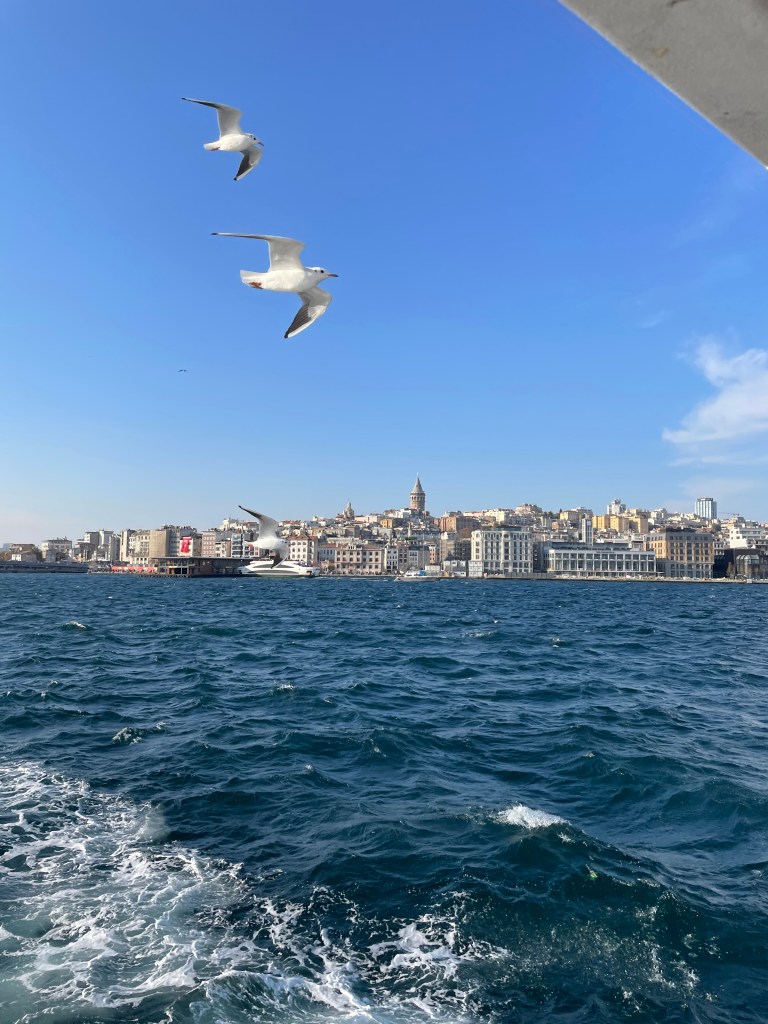
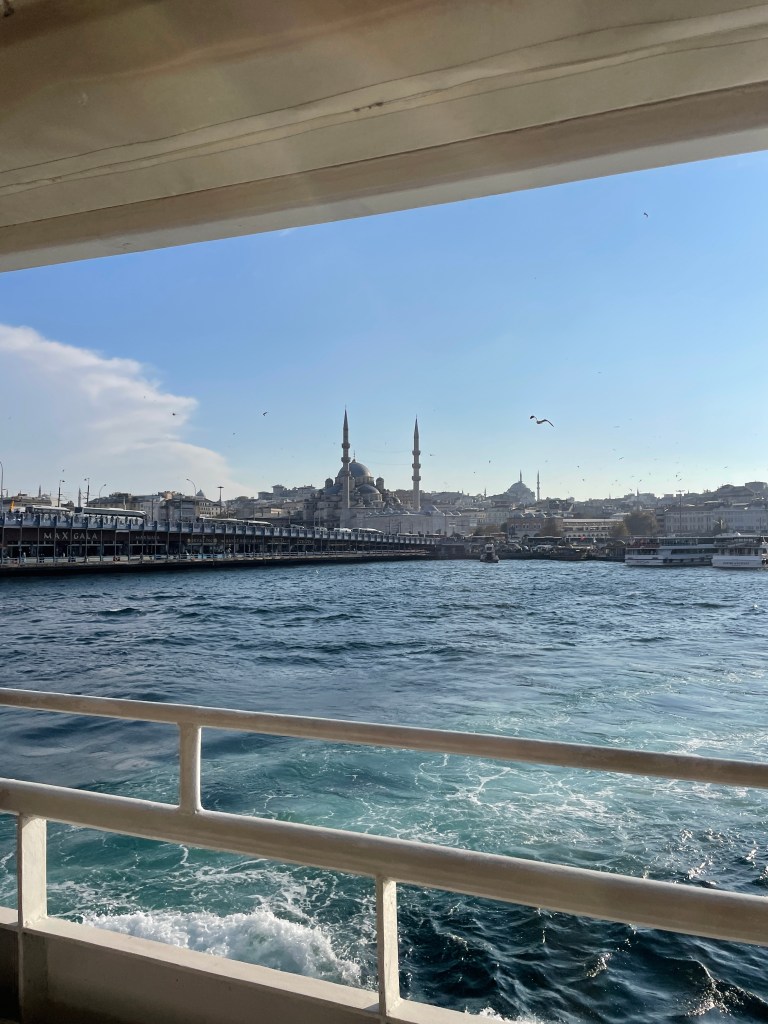
The Bosphorus Strait is over two miles wide at parts, giving the illusion of the open ocean at times. There was light chop on the water as the seagulls drafted our wake. Wooden benches lined the top deck and vendors rolled through, deftly brandishing tea in traditional glass cups, their sea legs the result of thousands of crossings over their lifetime.

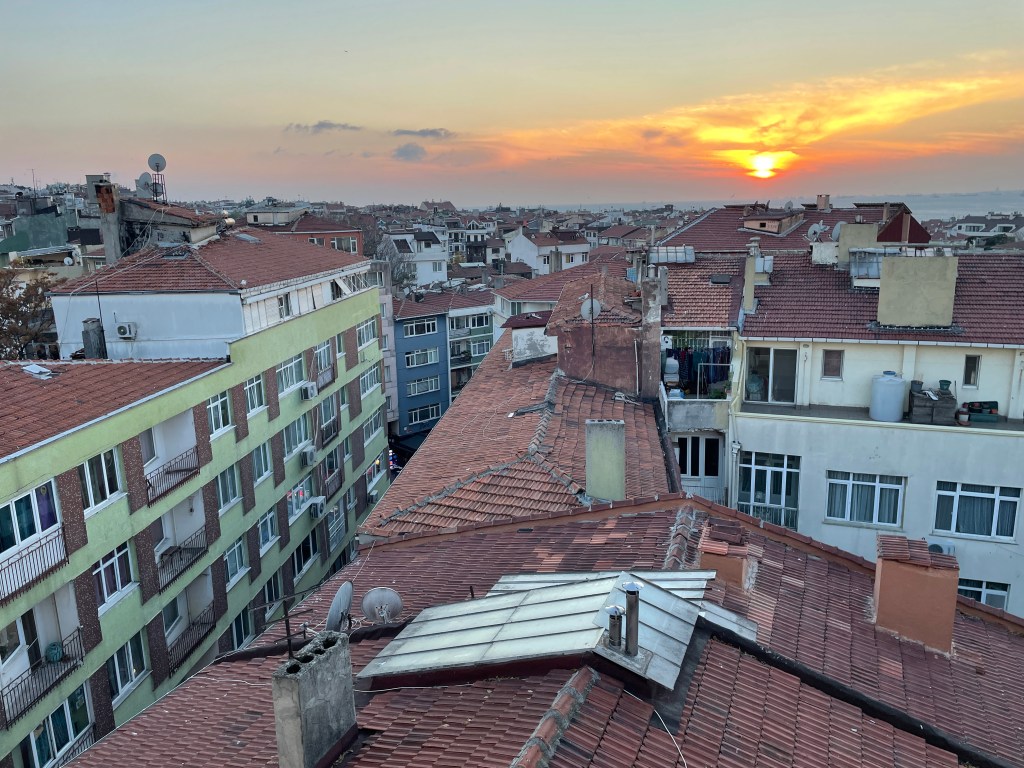
We steamed for Kadıköy, a popular port neighborhood once home to prehistoric settlements of civilization. Today it’s a hot spot for nightlife, hipsters, and rich retirees – though they have mostly moved over to Moda, the calmer neighbor to the south. I found my sixth floor walk up and set up to enjoy the sunset from the rooftop.

I could hear the roar of the crowd from the football (soccer) stadium just over the hill. Day drinkers were hitting their stride and restaurants were beginning to set up on the streets below.

Kadikoy has a vibe all its own – very free spirited and relaxed. I checked out a record store and a few bookshops before meeting up with some friends from school who took a water taxi over from downtown. The restaurant scene appears to be pretty fabulous in Kadıköy, where you can find anything from Italian to Ottoman.

On Sunday, I awoke early to explore the neighborhood of Moda. With the bars only recently shuttered, I had the sunrise all to myself. Just me and the sea gulls.

Walking the perimeter of Moda, I met many a cat living in the rocks of the breakwater and watched the massive tankers on maneuvers out in the strait. Making my way back to Kadikoy’s ferry terminal, I boarded a boat bound for Karikoy to meet friends for brunch.

The morning couldn’t have been more glorious and my sweater was plenty warm despite the mid-November date. The gulls bobbed and weaved, occasionally flying between the posts on top deck while matching course and speed.

We sailed past the Hagia Sophia and the Blue Mosque, each lit up by single beams of sunlight as if on a movie set. I reveled in Istanbul’s beauty, on full display against the backdrop of a true blue autumn sky.

After docking, I made my way up to Galata Tower to enjoyed brunch with some new friends. We happily swapped stories of our respective weekends and enjoyed yet another delicious Turkish breakfast.

My thoughts are with the loved ones of those lost yesterday. Those who commit acts of terror wish to sow fear, to fracture relations and turn us against one another. But they will not keep me from exploring this city which I am growing to know, this culture I am only beginning to understand.

Seasonal

Autumn is beginning to make its way to Turkey. Chilly mornings and windy days signal the changing of the guard. We had our first rainy day on Saturday and it was much appreciated – required respite after all my busy travel of late.

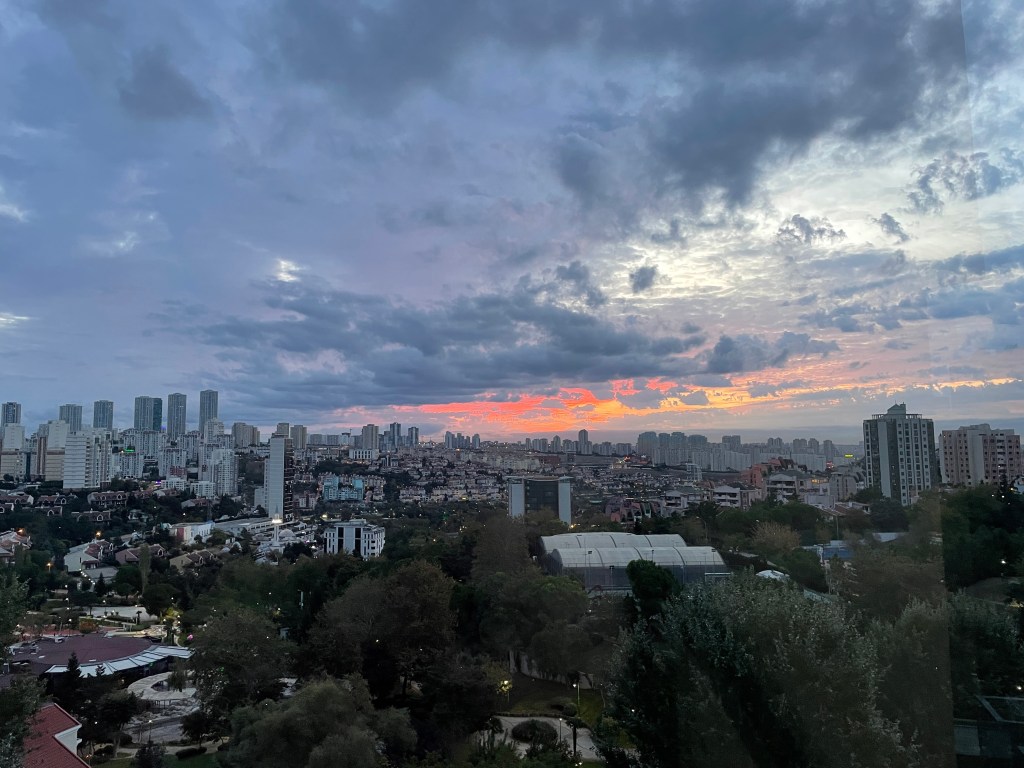
Sunrise over Gölet Şelale (Şelale Park)

As I often do on Saturday mornings, I made my way to our nearby Pazartürk, our vibrant neighborhood bazaar. As the skies overhead threatened, I ducked under the garage doors of the warehouse and was immediately engulfed in the hustle and bustle of the marketplace.

You can really appreciate the change of seasons at a local market. Turkey, much like Korea, only offers seasonal produce. Once the strawberries are gone, they are gone until next summer. Granted, the growing season is longer here than in Korea and then in certainly Russia, so I’m still able to find an avocado or two.

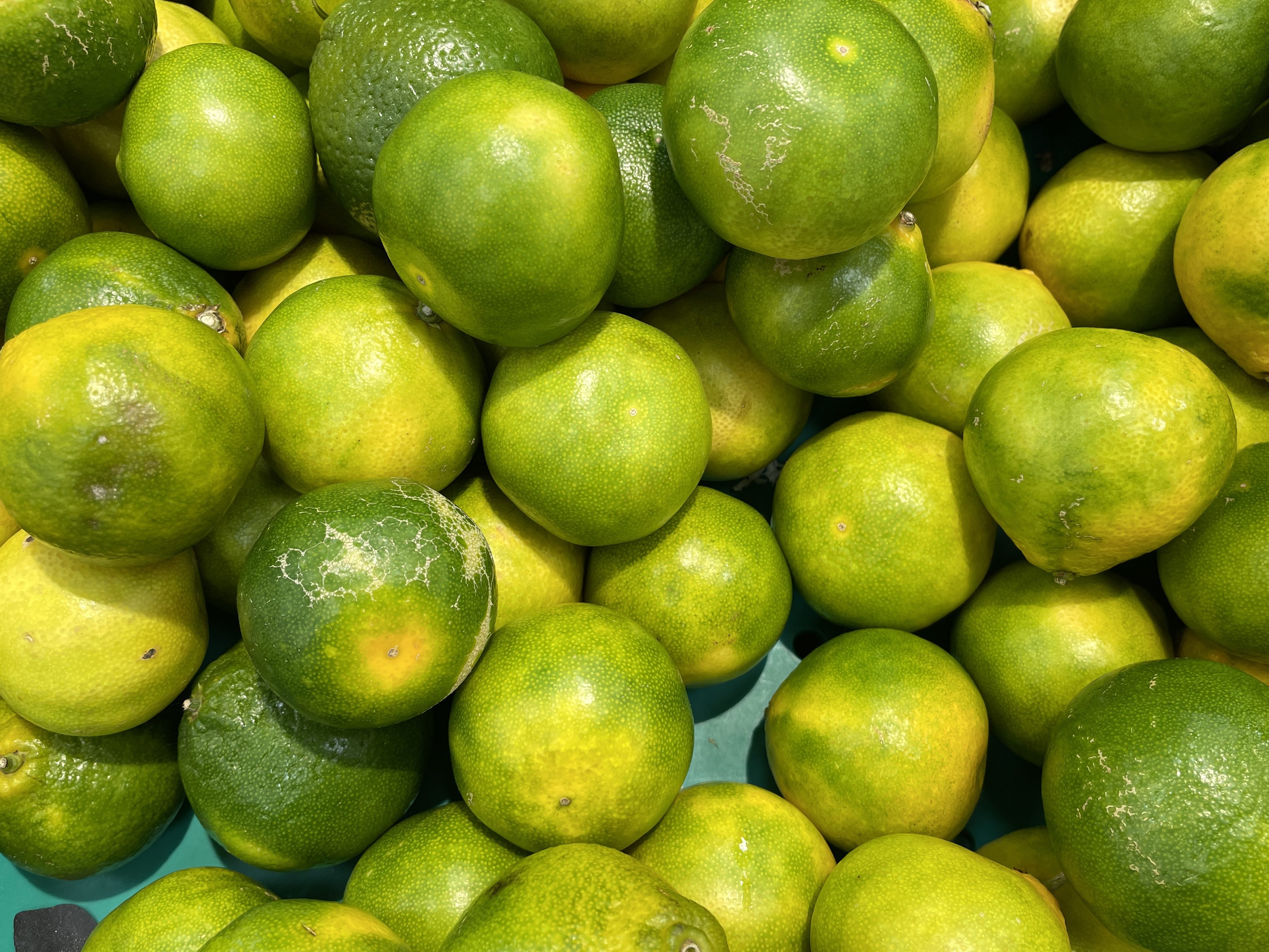
Mandalina – a tart Turkish tangerine (green when ripe)

Plums are no longer on offer but apples are, much like in the States. After a summer off, lemons are coming back around while watermelon is on its way out. Pomegranate is ripe for the taking with, as we found out in Daylan, a growing season from August to November. Peaches (thankfully) still abound and soon will give way to dried apricots (my favorite).

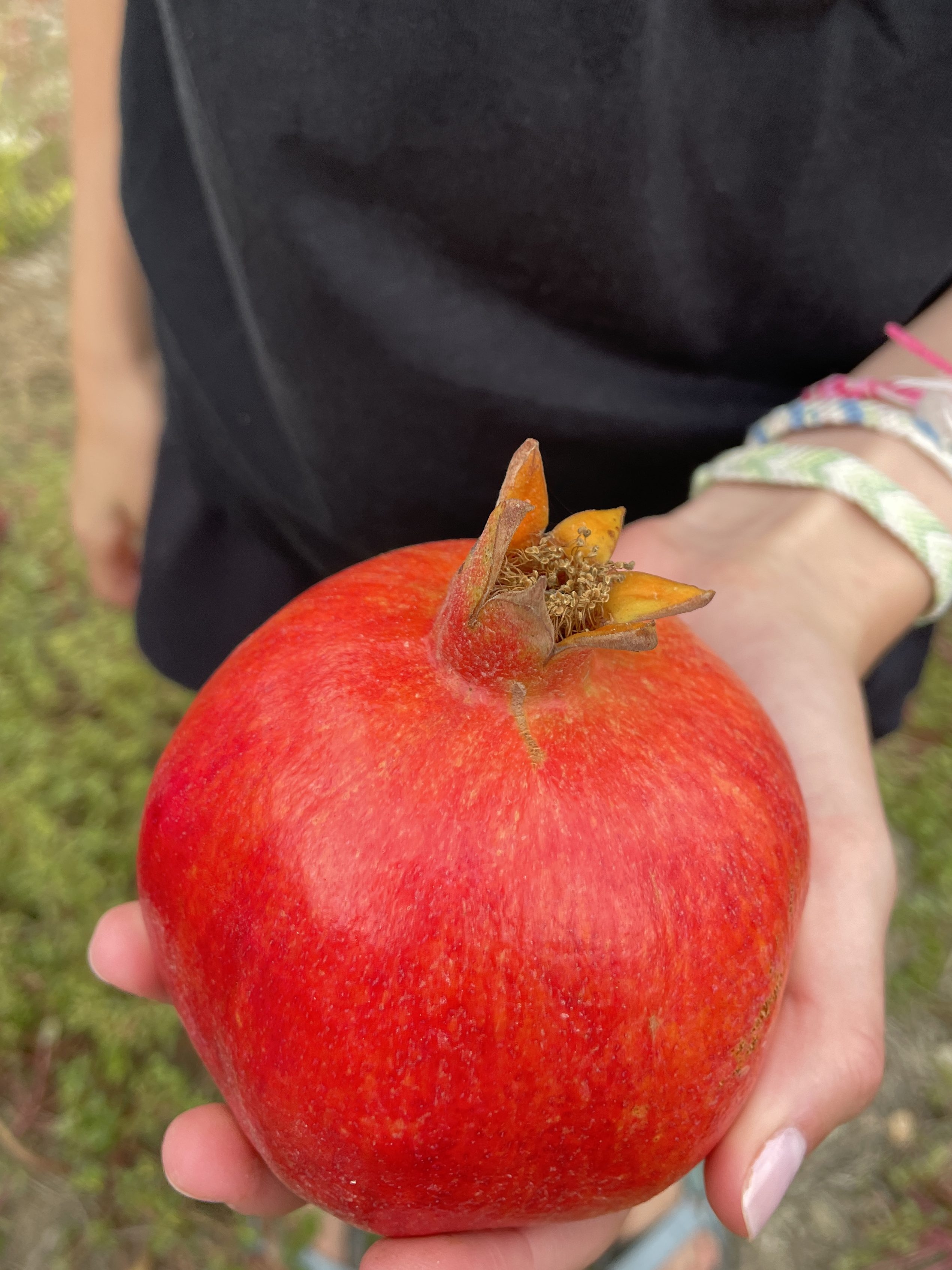
Pomegranate – Turkey’s pride and joy, red and ripe from the tree

Mushrooms and walnuts have never looked better but peas have passed. Broccoli can be found occasionally but is mostly finished. Chestnuts are just getting started and soon Istiklal Street will be teeming with vendors, roasting the nuts as the tram runs past.

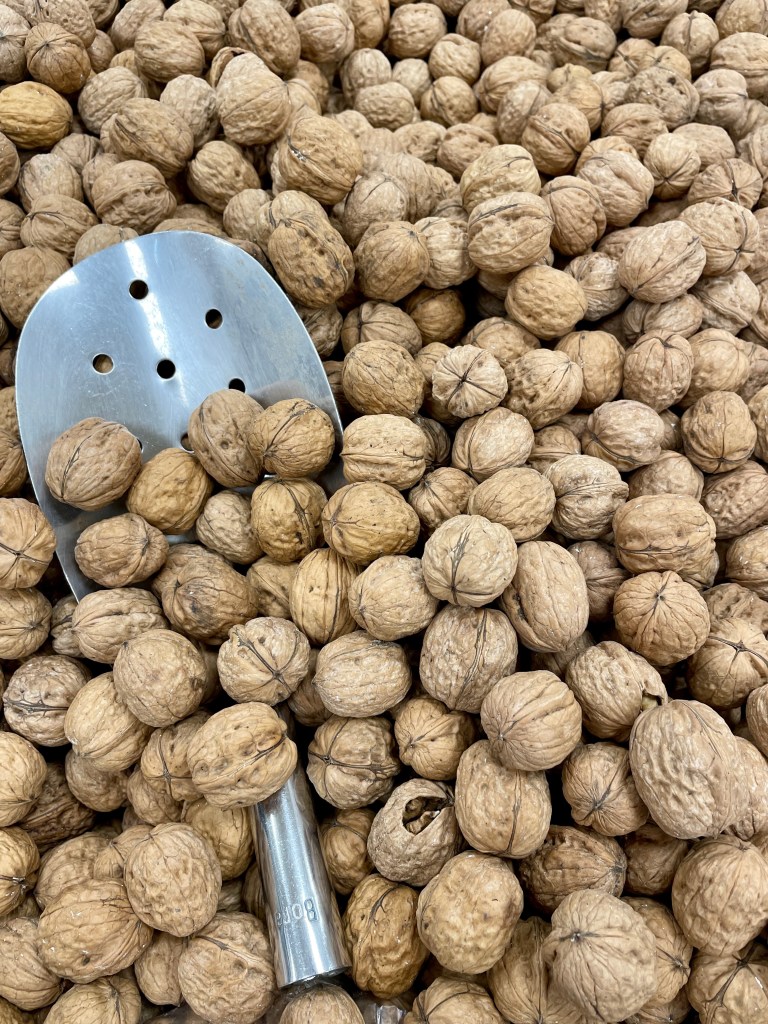
Walnuts – vendors always toss in a few extra for free after they’ve weighed your bag

Sadly I’ll have to wait until next summer for my beloved artichoke but thankfully the all time Turkish delight, eggplant, is just gearing up for its run. What would a mezze be without eggplant?!

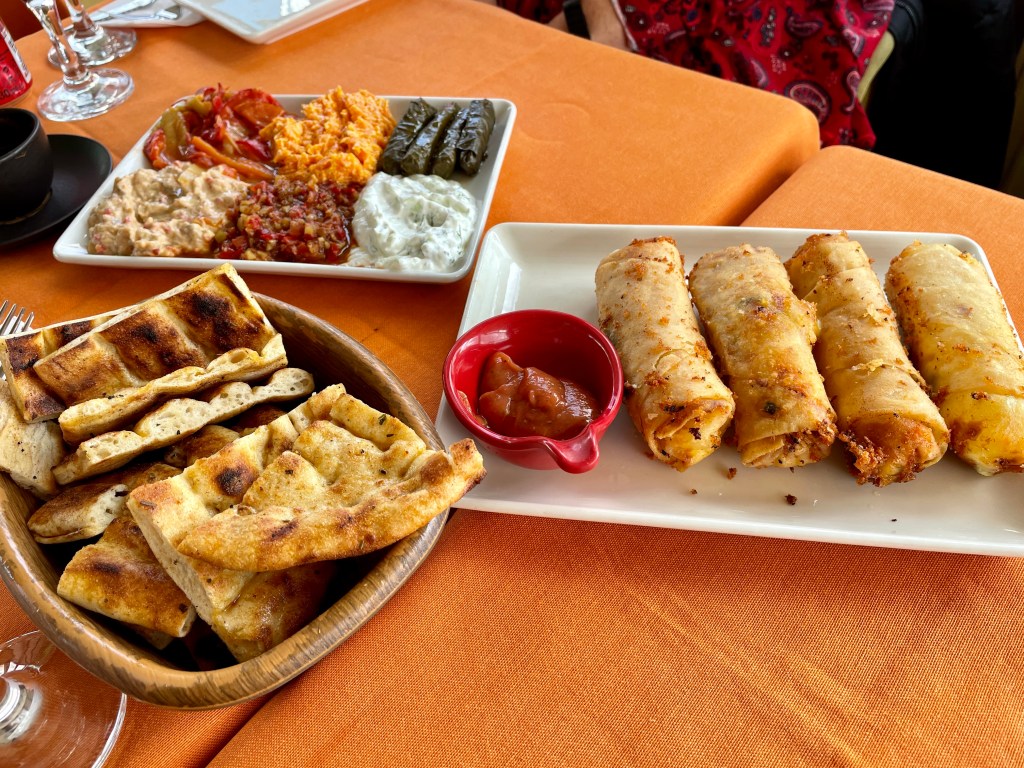
A mezze platter with yogurt, eggplant, peppers, and grape leaves above. Fried borek and charcoal roasted bread below.
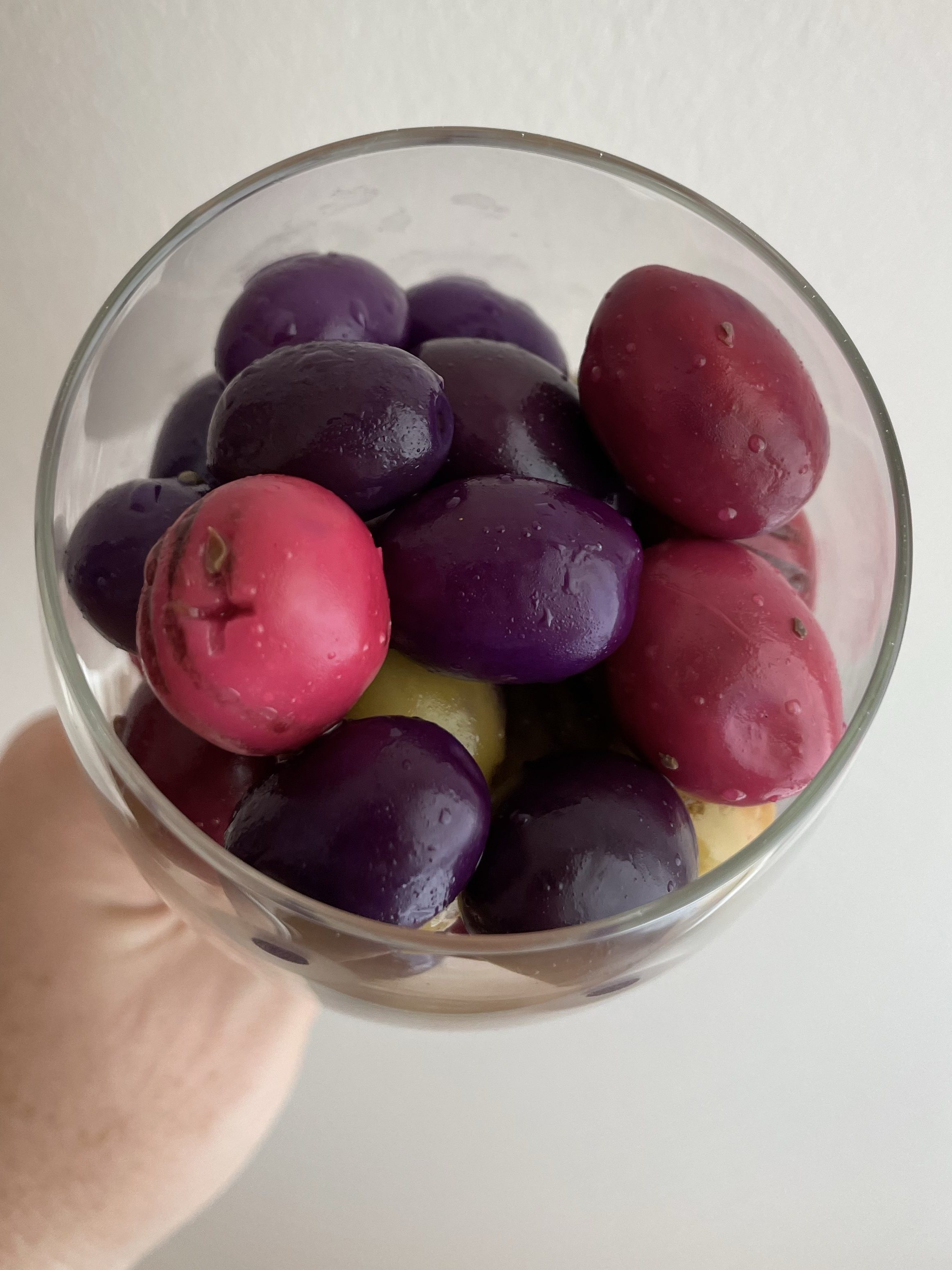
Thankfully, my new favorite – grilled olives – seem to be available year round. Love the colors!

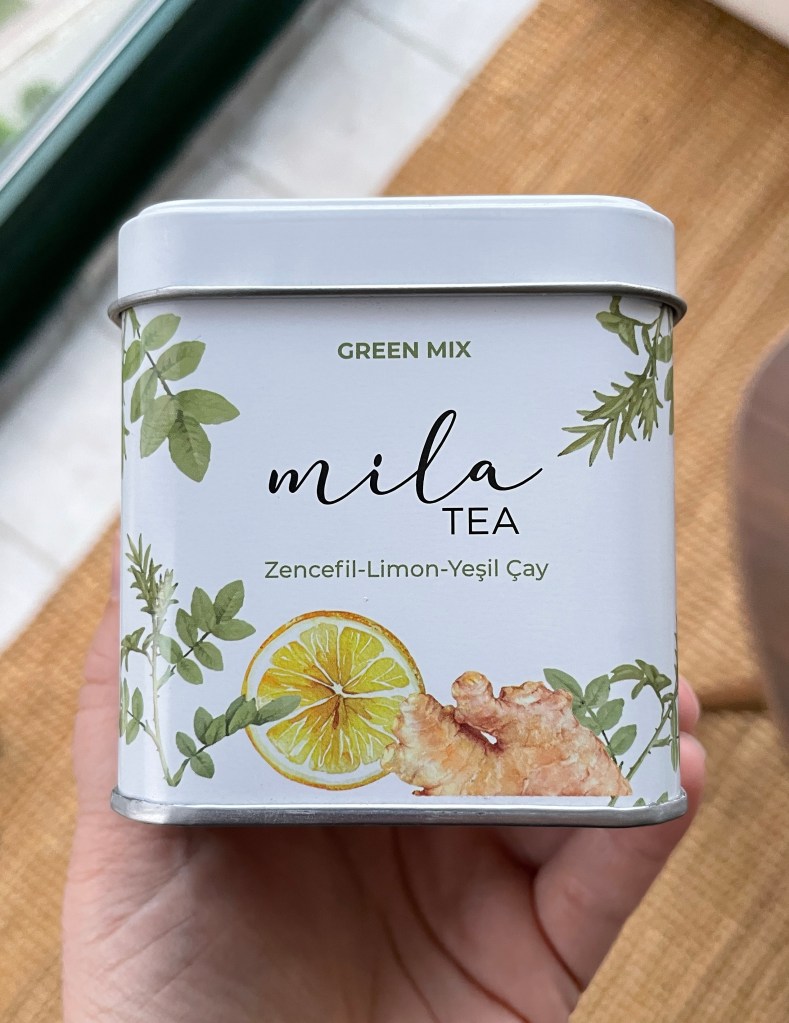
After an afternoon of napping with the cat, I walked to the local supermarket (Migros) for the essentials I couldn’t find at the marketplace. Peanut butter is available and so is a myriad of chai in this tea-rich country. Green tea with ginger and lemon is my latest find.

Çay = tea (pronounced “chai”)

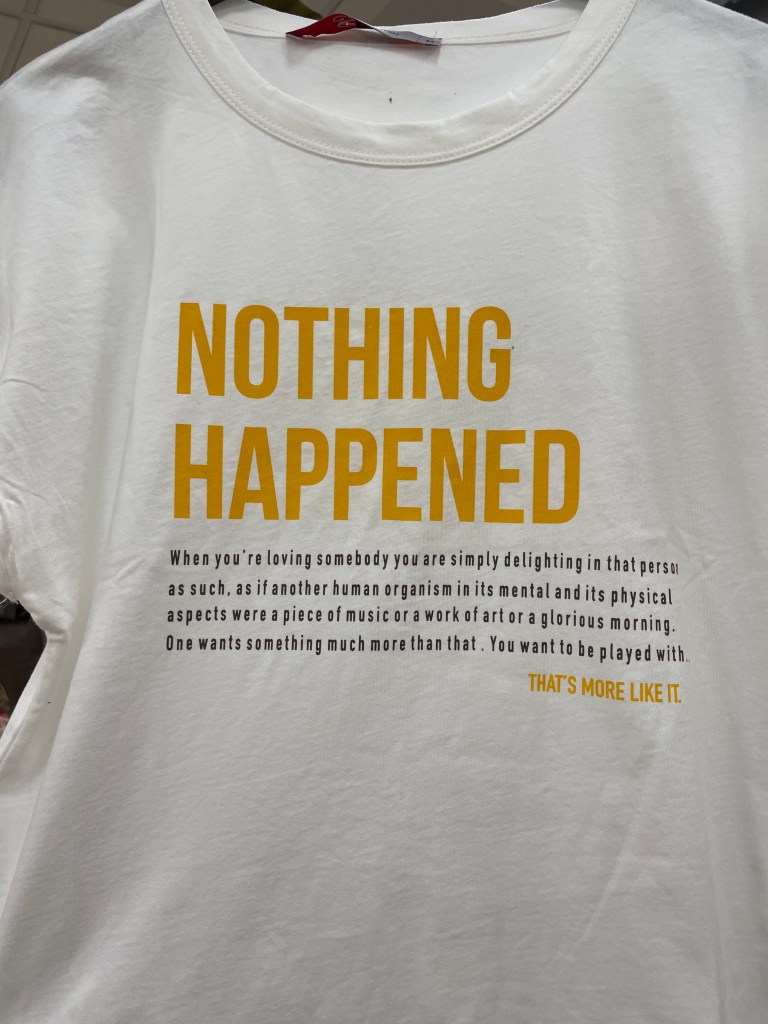
I’m always amused by the t-shirts with English text available for sale at the supermarket. The shirts may not boast the grammatical challenges as they often do in parts of Asia but the random sayings are just as puzzling.

That one took a weird turn…
This weekend capped off with a trip downtown and lunch with a few lovely new friends. With a view of the Bosphorus and sunshine to boot, we enjoyed borek, mezze, and – of course – baklava for dessert.

Lunch gifted by my very thoughtful coworker from Innovation Charter, Scott, and his wife.

Hope you’ve enjoyed this little food tour. This is just the tip of the iceberg as to the delicious delicacies that Turkey has to offer. Have a great week, everyone!