The Grand Bazaar

Today’s tale begins with a quest – my friend Karen wished to purchase a few lamps. My friend Michele knew someone (Mandy) who knew a lamp guy. Enter: a trip to Istanbul’s Grand Bazaar. We decided to make an afternoon of it and it turned into quite an adventure. Hard to put into words but I’ll try…

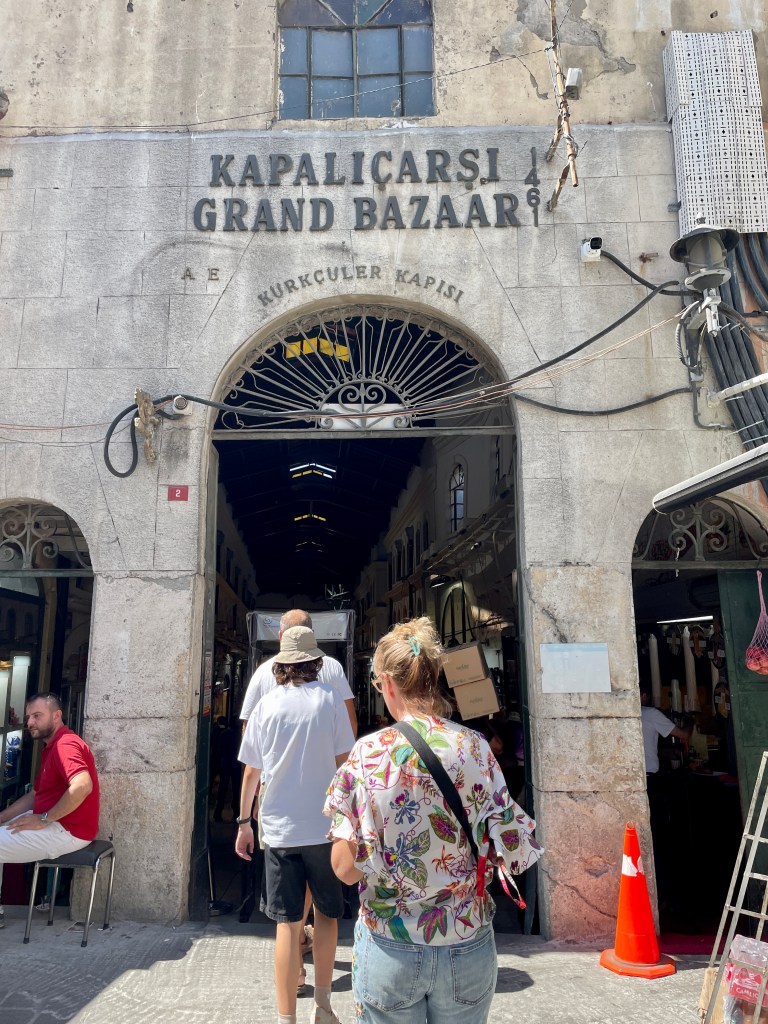
The Grand Bazaar (Turkish: Kapalıçarşı, meaning ‘Covered Market’; also Büyük Çarşı, meaning ‘Grand Market’) in Istanbul is one of the largest and oldest covered markets in the world, with 61 covered streets and over 4,000 shops on a total area of 30,700 m2, attracting between 250,000 and 400,000 visitors daily. In 2014, it was listed No.1 among the world’s most-visited tourist attractions with 91,250,000 annual visitors. (Wikipedia) The Bazaar opened during the winter of 1455/56, shortly after the Ottoman conquest of Constantinople.
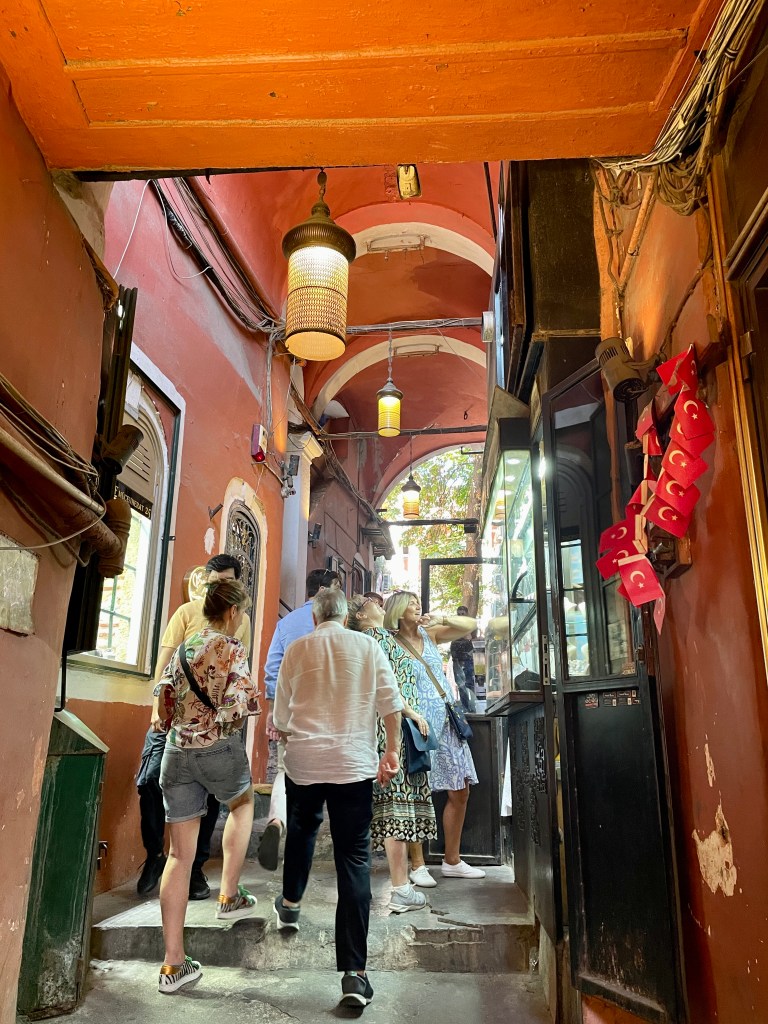
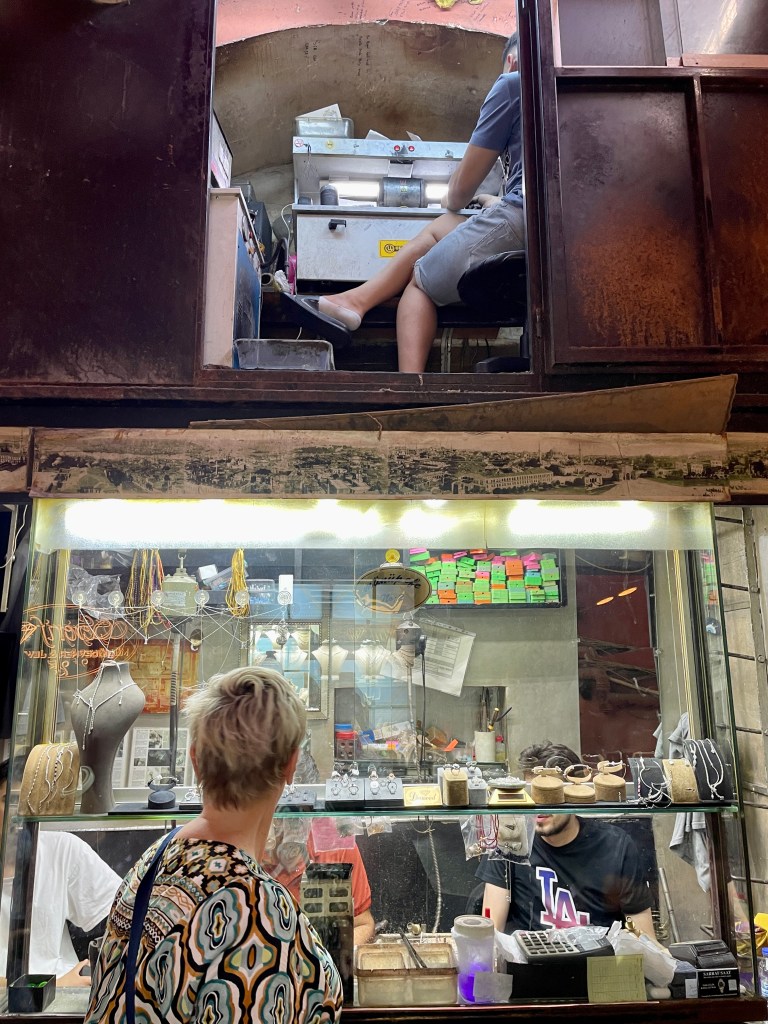
Quite simply, this maze of alleyways and covered corridors is intimidating. Thankfully, we had Mandy, who knows everyone. A septuagenarian who has entertained a multitude of entrepreneurial endeavors over her decade in Istanbul, Mandy knows everyone. Vendors shouted out her name in greeting as we passed. They ushered us into their stores, plying us with leather jackets and hilarious complements. She asked about their mothers, their nephews, and their personal health. It was quite an sight to behold.
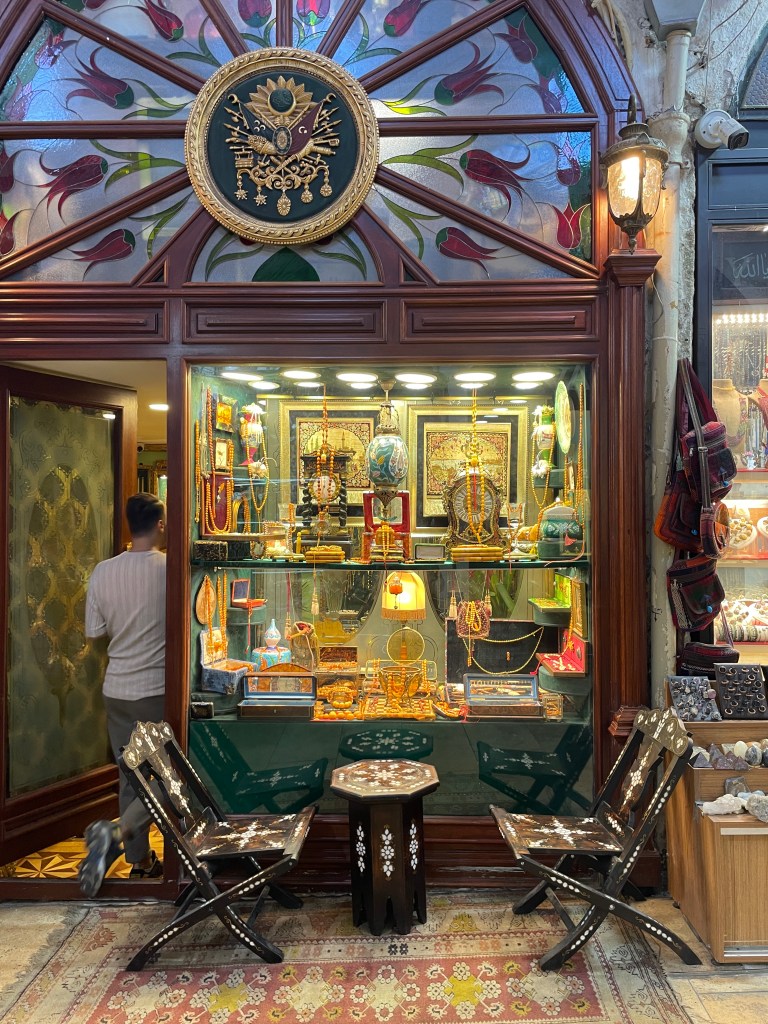
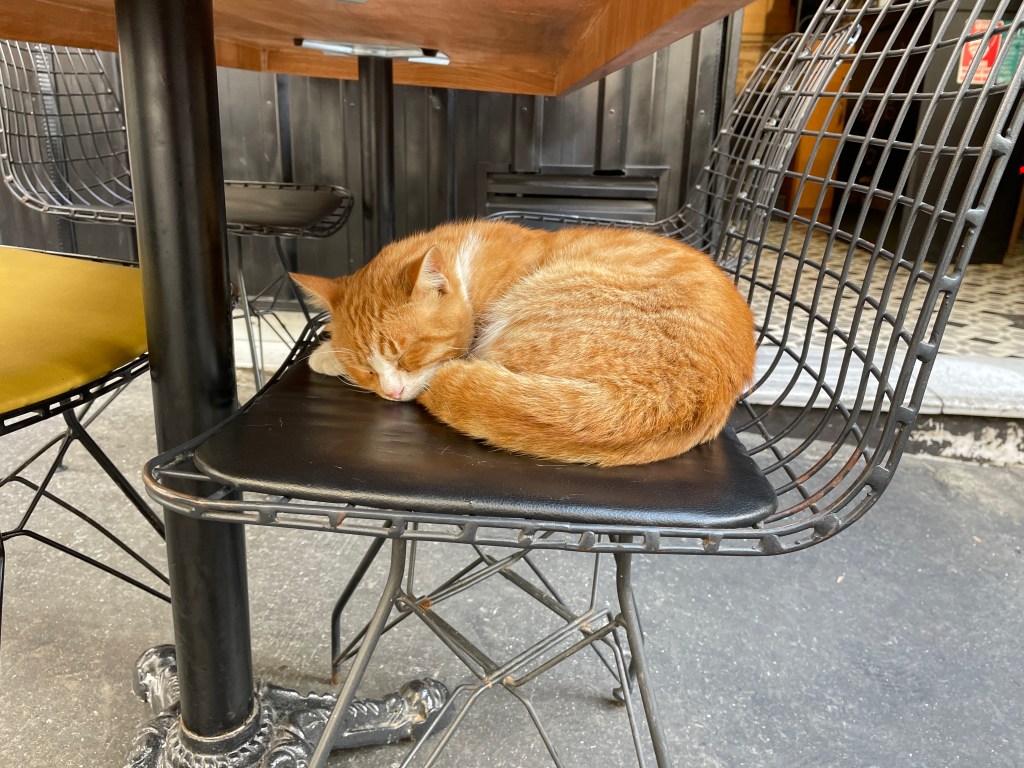
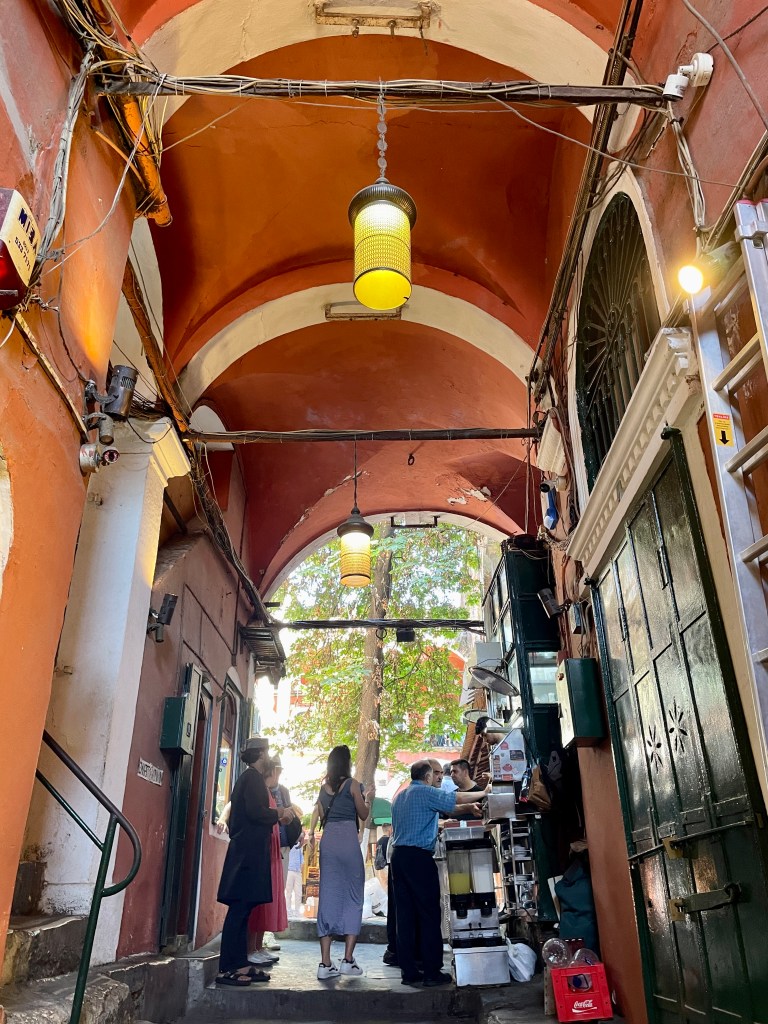
Mandy and Michele deftly led us through the Bazaar, eventually through an alleyway which opened into a courtyard where men sat on stools sipping chai below a leafy green arbor. A cat slept under the shade of a grape leaf while a textile artist shaved a rug up on the roof, seemingly light years above from the hustle and bustle of the Bazaar.
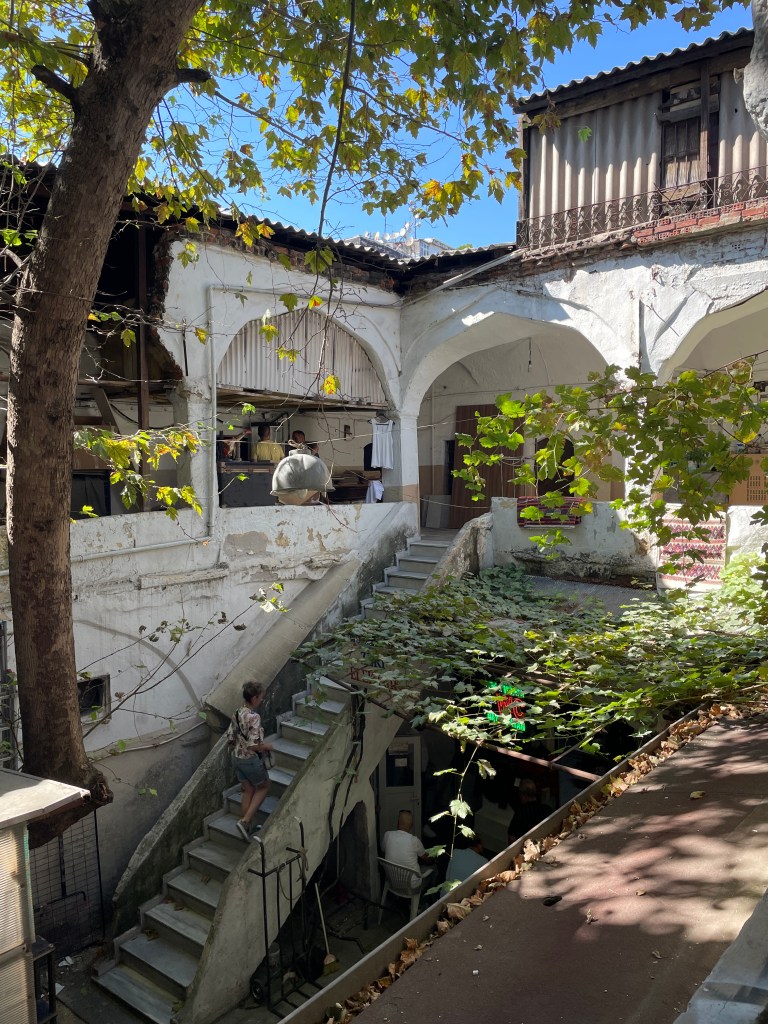
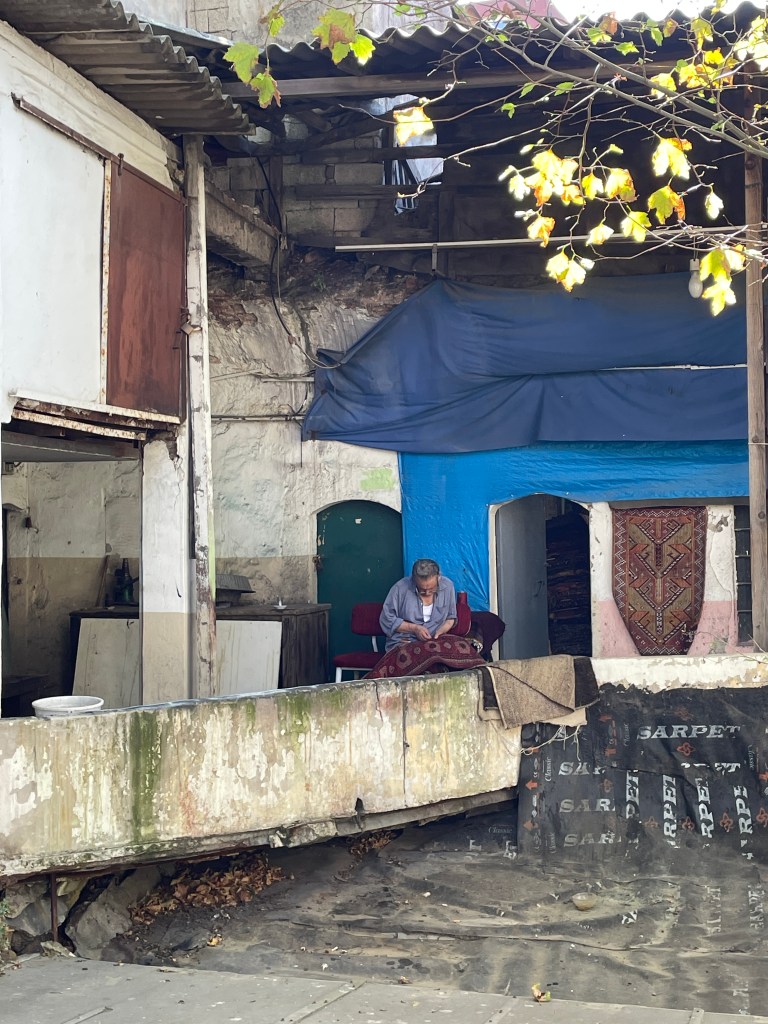
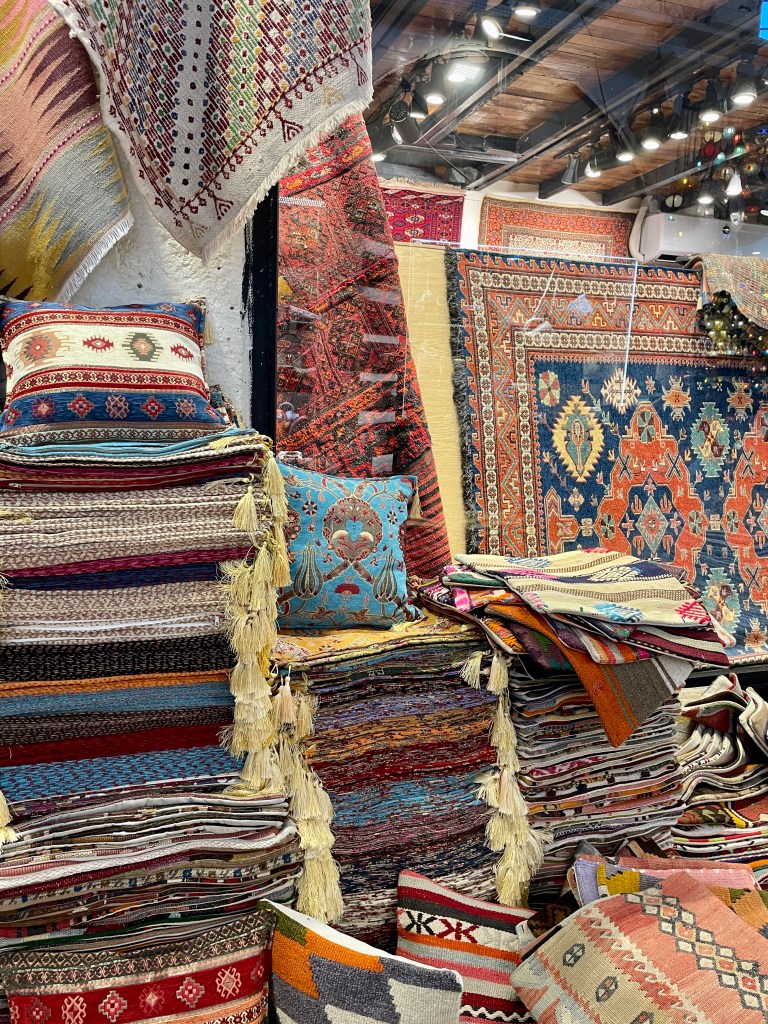
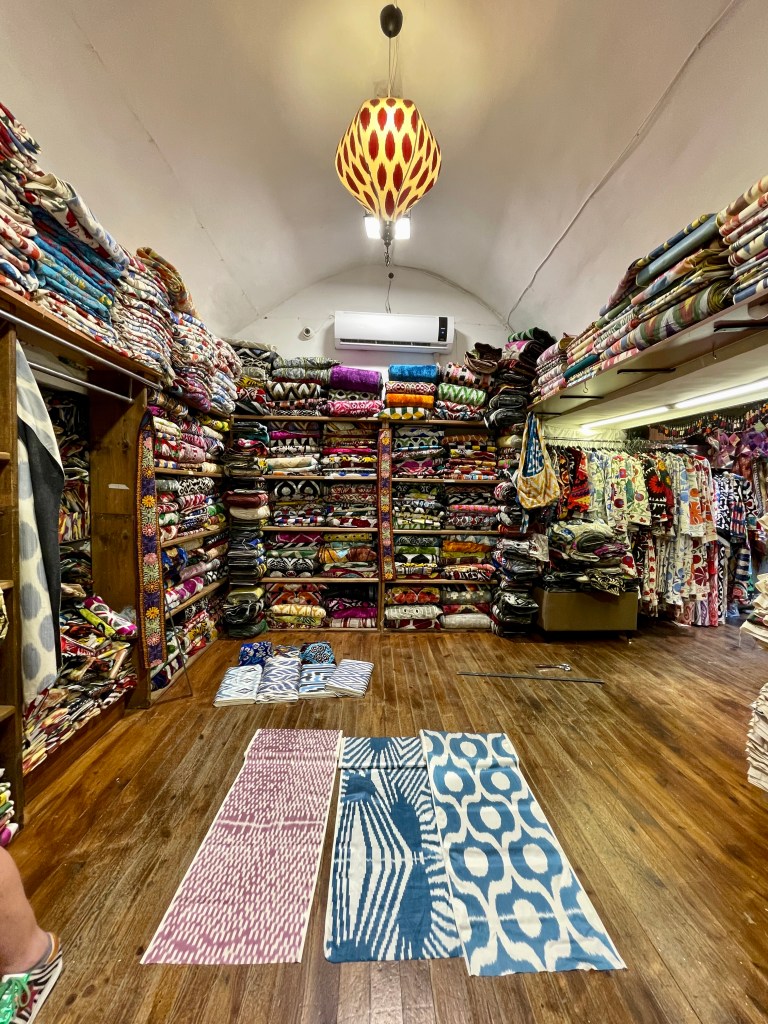
We were ushered into a shop filled floor-to-ceiling with Uzbek fabrics of every pattern and color imaginable. The shopkeepers immediately offered us tea (“chai”), coffee, or water (“su”), as is customary. It was so bloody hot that we gladly accepted a cool drink. Owing to their faith in Mandy’s choice of company (as well as, no doubt, our foreign change purses), we were left alone to make the store our personal closet.
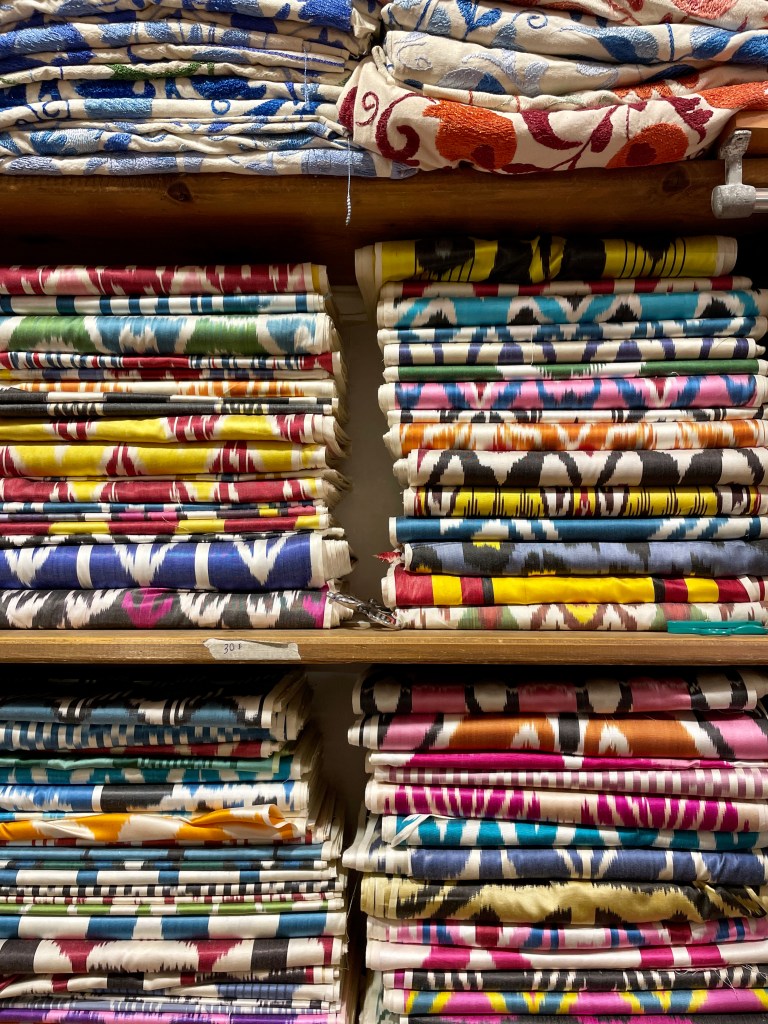
We tried on coats of technocolors rivaling Joseph’s own. Mandy and Michele searched for pillow fabric (front, back, and piping). I helped Karen choose three suitable lampshade fabrics to suit her new apartment with great views on the Bosphorus.
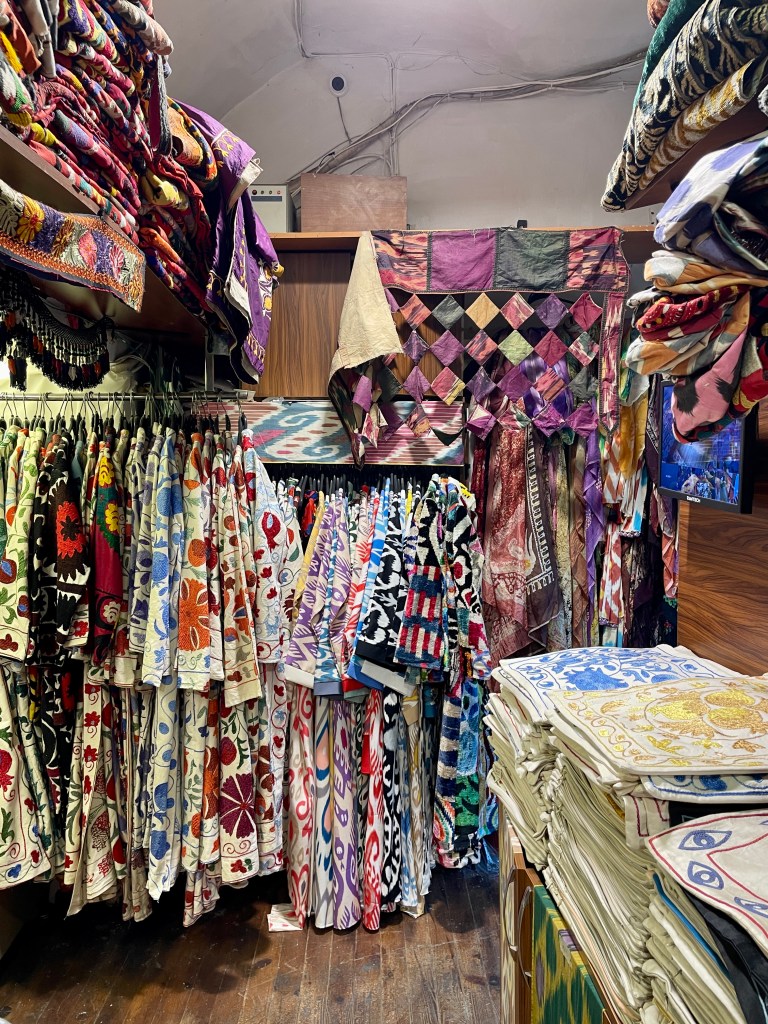
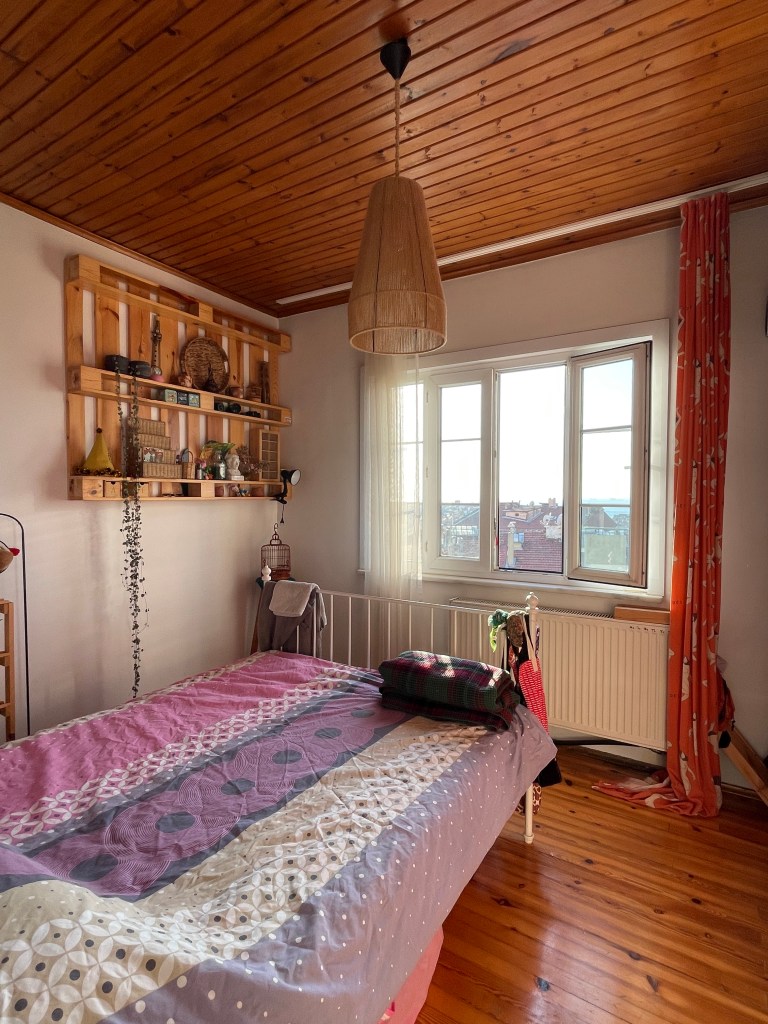
Near the door, I spotted a unique tapestry featuring squares of fabric sewn in diamond formation (above right). It reminded me of something that might hang over a doorframe and, in fact, it was. Over 80 years old, an antique from Uzbekistan. Frayed at the edges and in need of a little TLC, the colors were beautiful and I knew they would do perfectly over my headboard. You see, in the land of the moving fault lines, you don’t hang framed artwork above your bed. The tapestry was too good to pass up.

Everyone made their purchases, with a bit of a comedy ensuing. Each of us checking our Turkish bank accounts to sell dollars for lira, using credit cards from New Zealand and Australia, or a fresh $100USD from the States. Quality goods do not come cheap! Even in Istanbul. We walked out a couple hours later, our pockets a little lighter, but each with treasures to cherish.

In the steamy August heat, we were in need of another cool drink. Strolling the Bazaar, Michele spotted a favorite cafe (Çinili Cafe) and we scored a corner table. Over an iced chocolate and sweet pastries, we relished our purchases and the kindness of the shopkeepers who had taken good care.
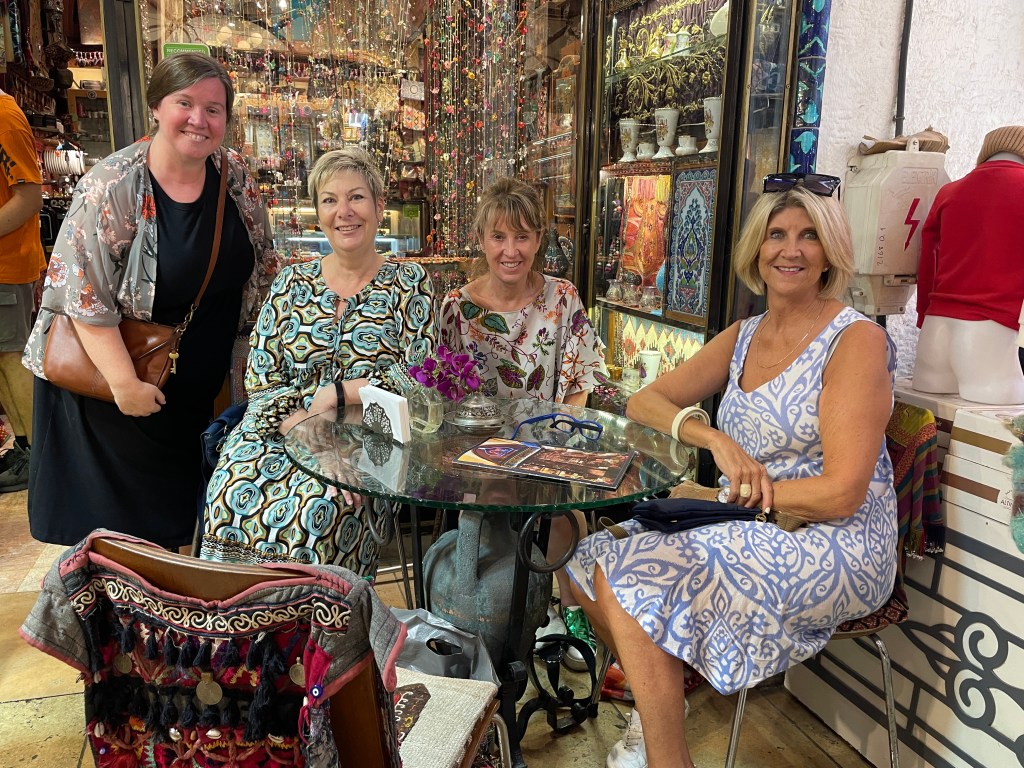
We got to talking with our waiter, who turned out to be the cafe owner’s son. Mandy asked a question about a Muslim sect and the young man replied that he didn’t know, his family was Christian. So unusual! In this land of Islamic faith, only 0.2% of the population is Christian. I taught a few cousins last year from Mardin, an ancient town in eastern Turkey which was founded in the 11th century BC. They were passionately proud of their Assyrian Christian heritage.

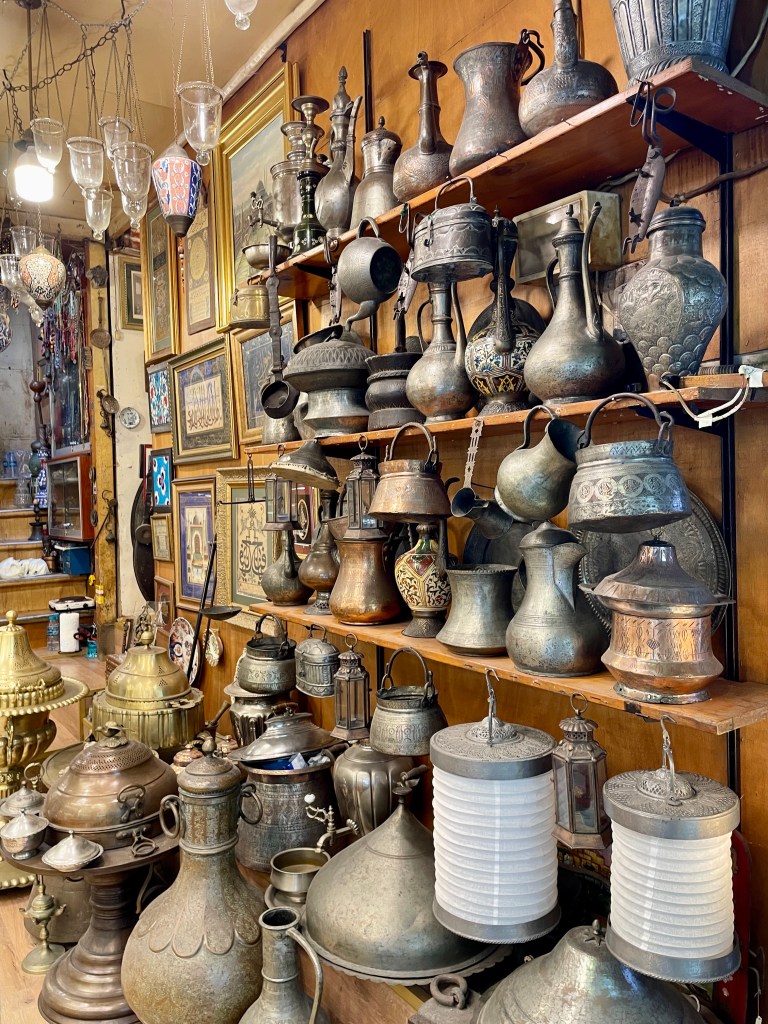
Turns out Mandy, too, knows a family of Christians from this area, who turned out to be good family friends of the cafe owner. The world really seemed a little smaller in that moment. Catching up on their mutual friends (someone got married last year), the cafe owner also shared that he has worked in the Grand Bazaar for 54 years.

A fascinating and intimate subculture lives within the passageways and alleyways of the Bazaar, one I only caught a brief glimpse of that day. I look forward to going back in the future and bringing guests to Mandy and Michele’s favorite haunts. It does not seem quite so intimidating anymore, instead more of a new city to explore. With a quarter to half a million visitors per day, this concept tracks.

Back at home, I made quick work of hanging the tapestry. I was quite pleased that it looked exactly as I had hoped, pulling all the colors in the room together. A memory of our day at the Grand Bazaar, a seminal experience I will surely never forget.

Grand Bazaar vendors:

Nurem (Uzbek textiles, lampshades, clothing, and pillows)

Sermon Almaz (wooden handicraft, board games)

Adnan & Hasan (carpets, kilims)

Gian Mori (leather goods)

Çinili Cafe (cold chocolate, apple pie, treats)
That’s a wrap

Hard to believe but my first school year in Turkey is coming to a close. It’s been quite a ride and I’m thankful to be on the other side. Thank you all for following along! It’s so great to hear from you and share these adventures, too. Here’s a couple from the last few weeks, wrapping up the year out on the water.

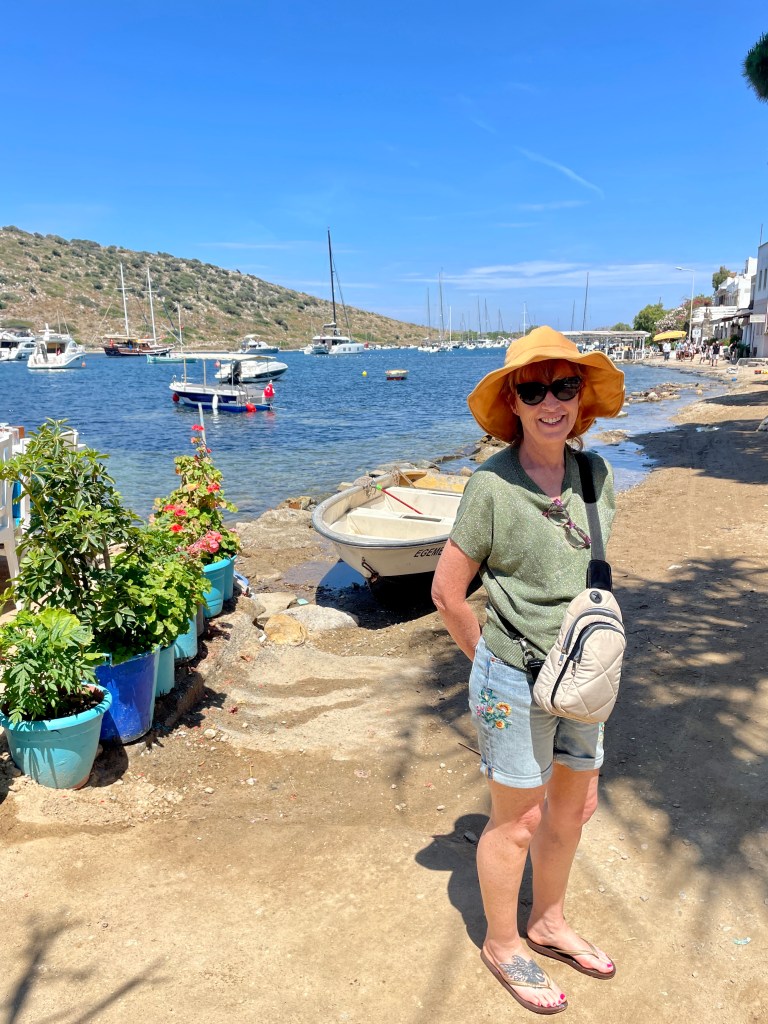
First up is Bodrum. An hour south of Istanbul by plane, it’s a waterfront town with lots of fun for tourists to enjoy.

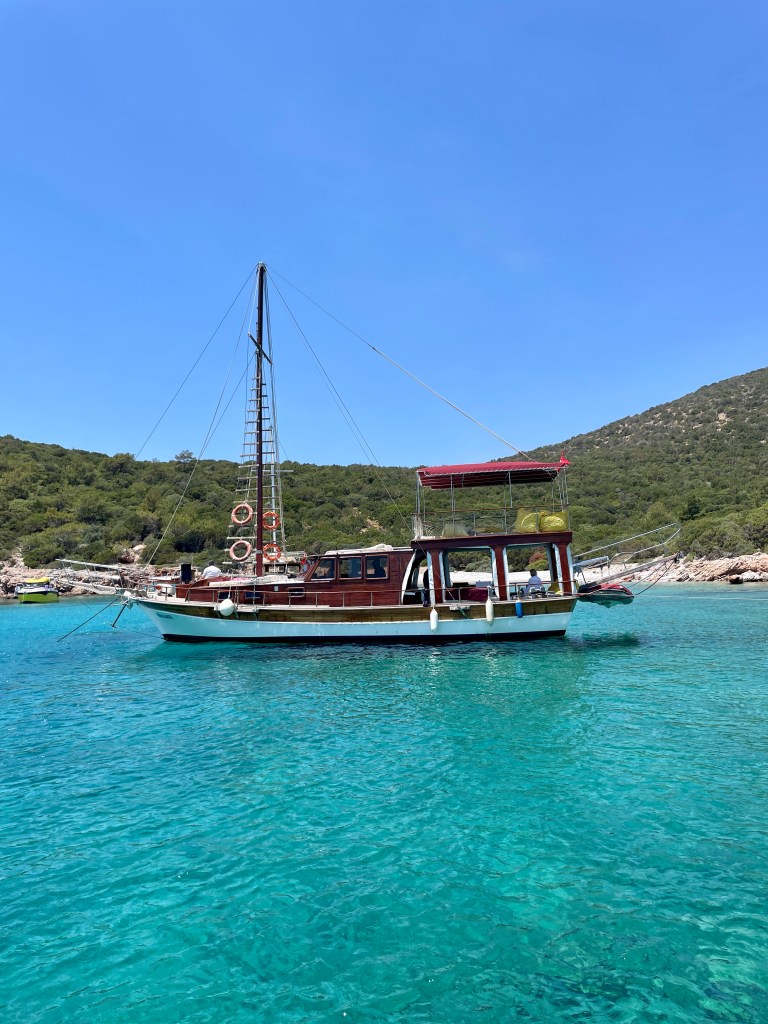
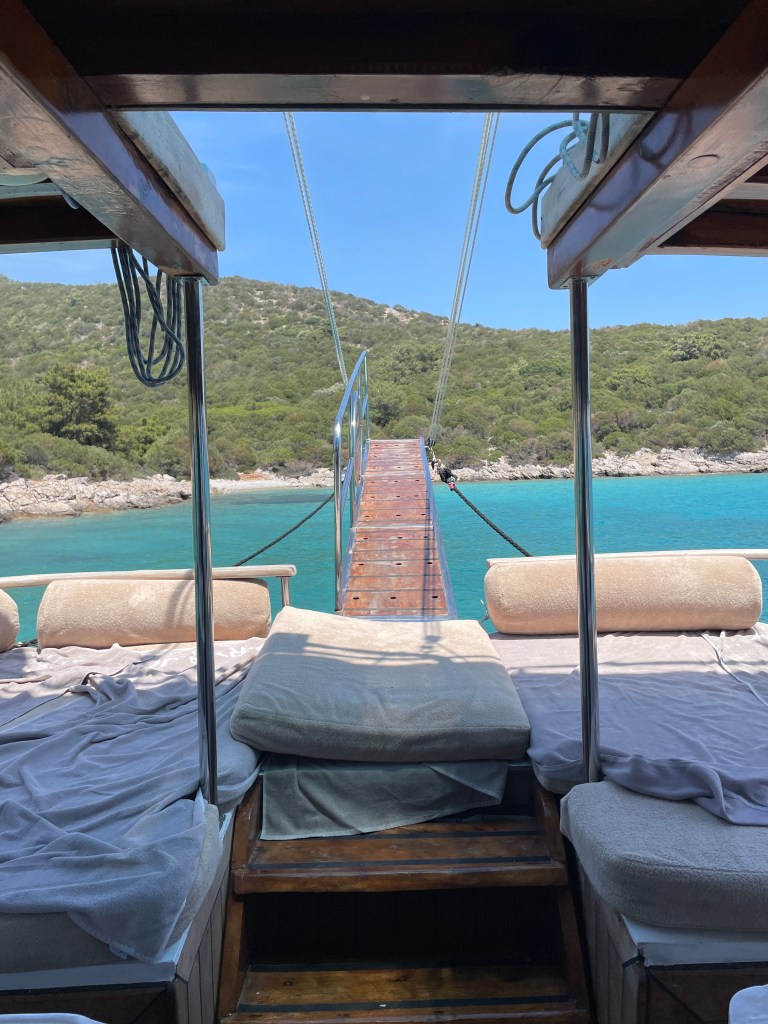
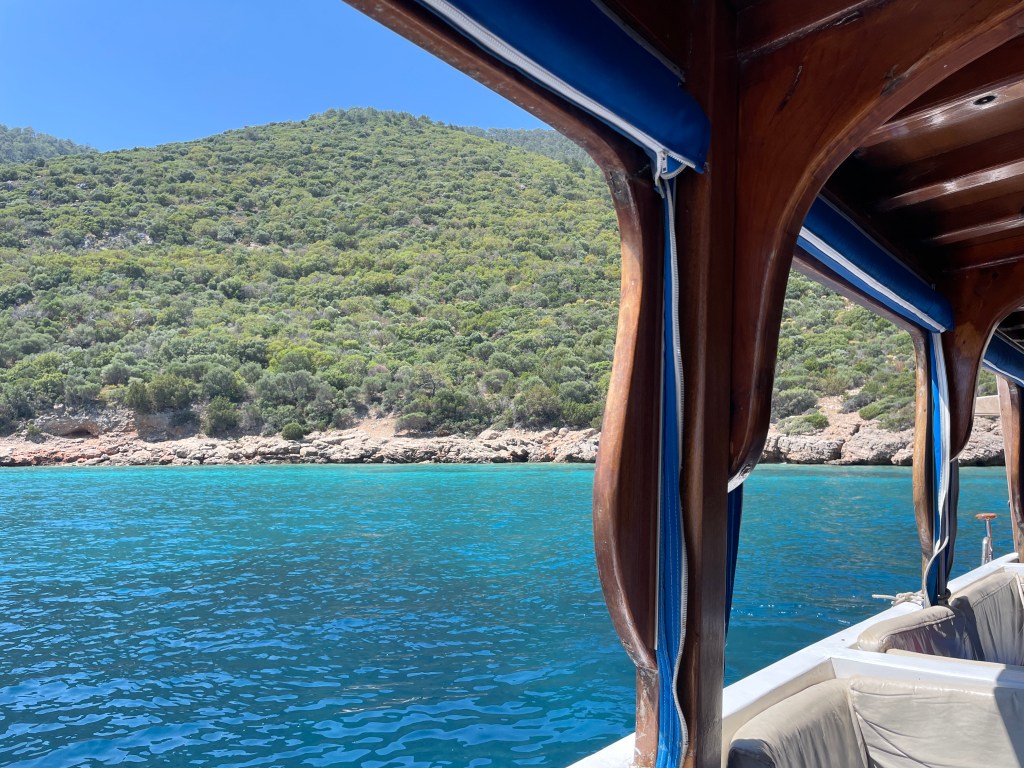
On Saturday, we rented a boat for the day to do some cove hopping. The water is just stunning here – so clear you can see all the way to the bottom. Quite chilly in June but the salt of the Mediterranean lets you float for hours.

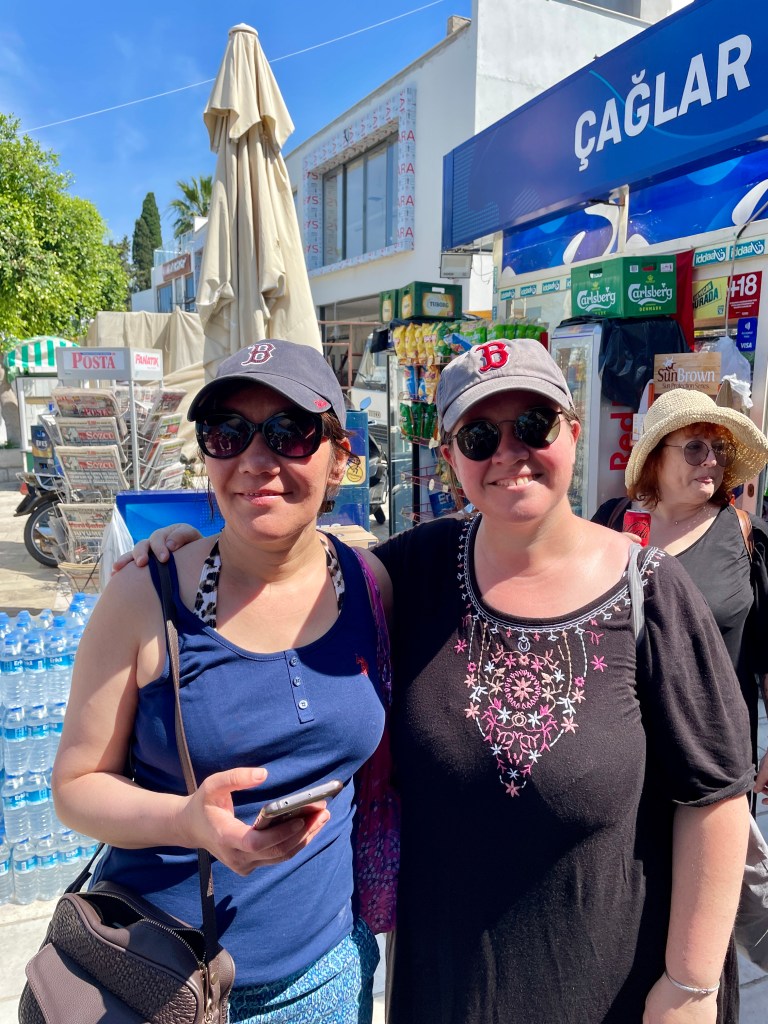
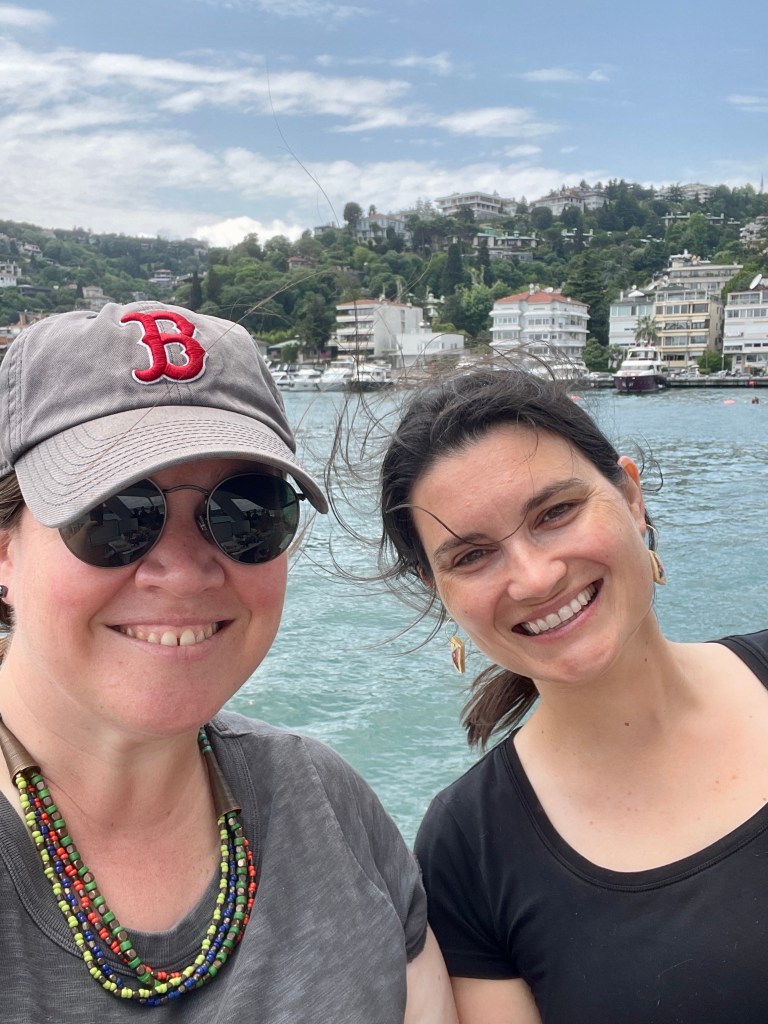
Here’s Dina and I repping the Sox. Her husband is from Salem, Mass.

On Sunday, my wonderful friend Michele took a few us to a little village called Gümüşlük on the other side of the Bodrum peninsula.

We took a dolmuş to get there. A dolmuş is a mini bus and the word translates to “it’s full” in Turkish. The van only departs when it has enough passengers and takes you to destinations at a fraction of the cost of a private taxi.

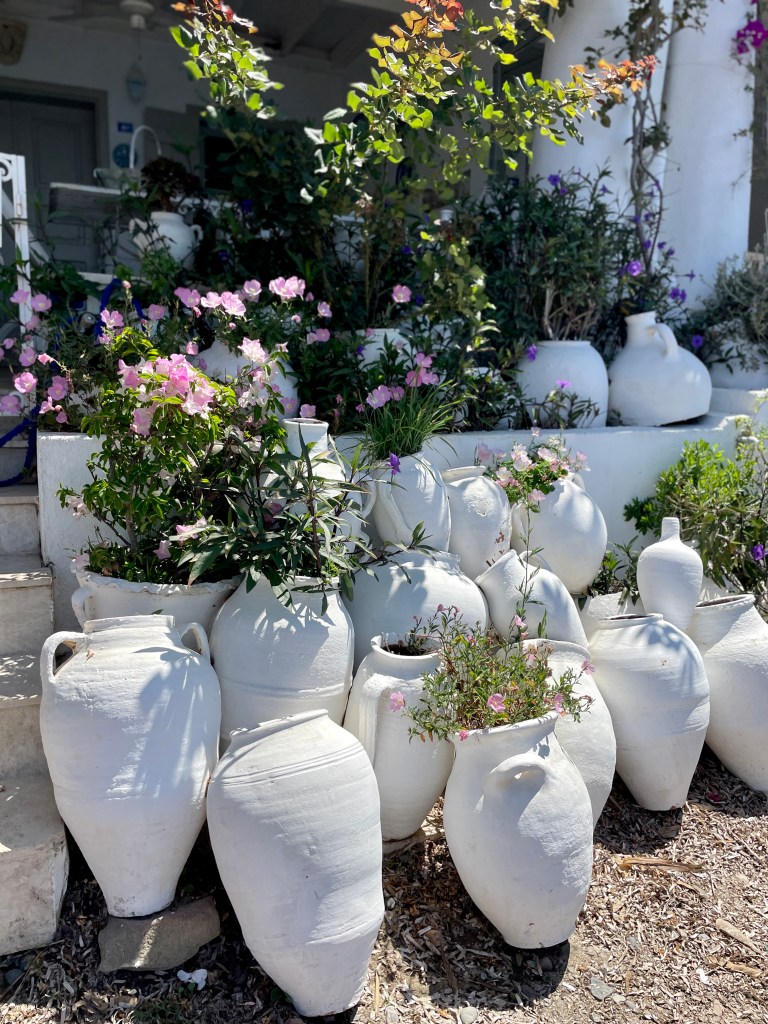
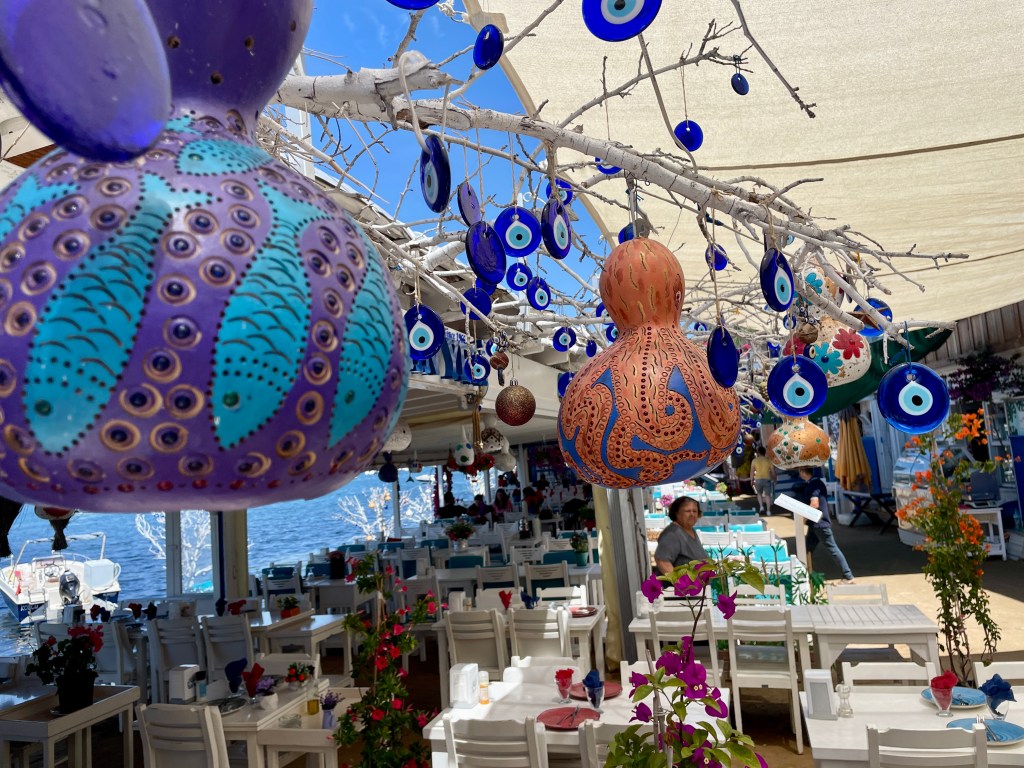
We wandered around the shops and checked out the a waterfront cafes. Evil eyes are a staple of Turkey and this village also featured gourds decorated by hand.

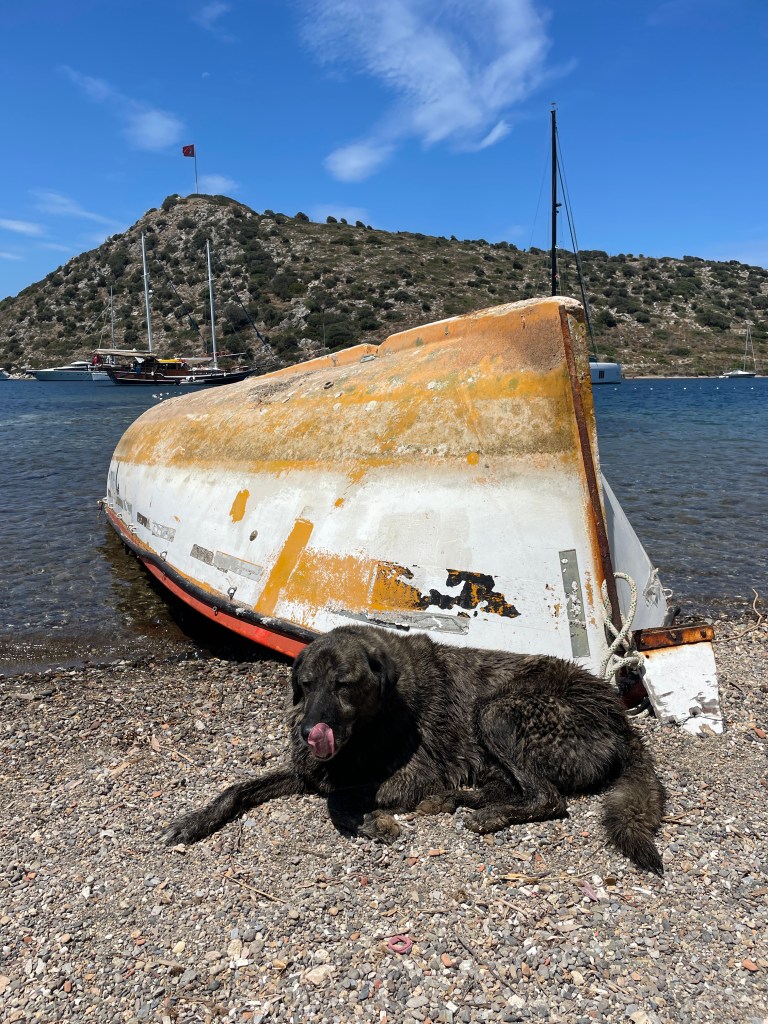
We met a sweet pup taking a dip and joined him, putting our feet in to cool off during the heat of the day.

All too soon it was time to return to Istanbul for another week of exams and end-of-the-year activities. Thankful for such a wonderful group!

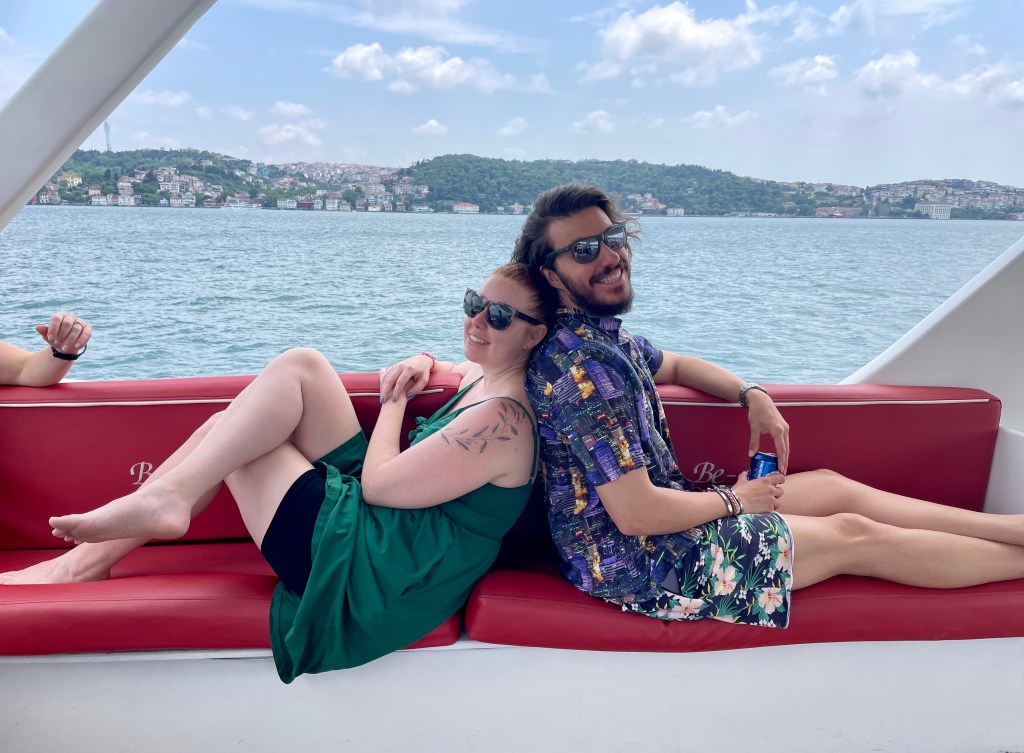
Back in Istanbul, my friend Kelly arranged a boat trip to celebrate our colleagues and friends who are leaving this year. Goodbyes are a given in ex-pat life but it’s great to go out on a high note.

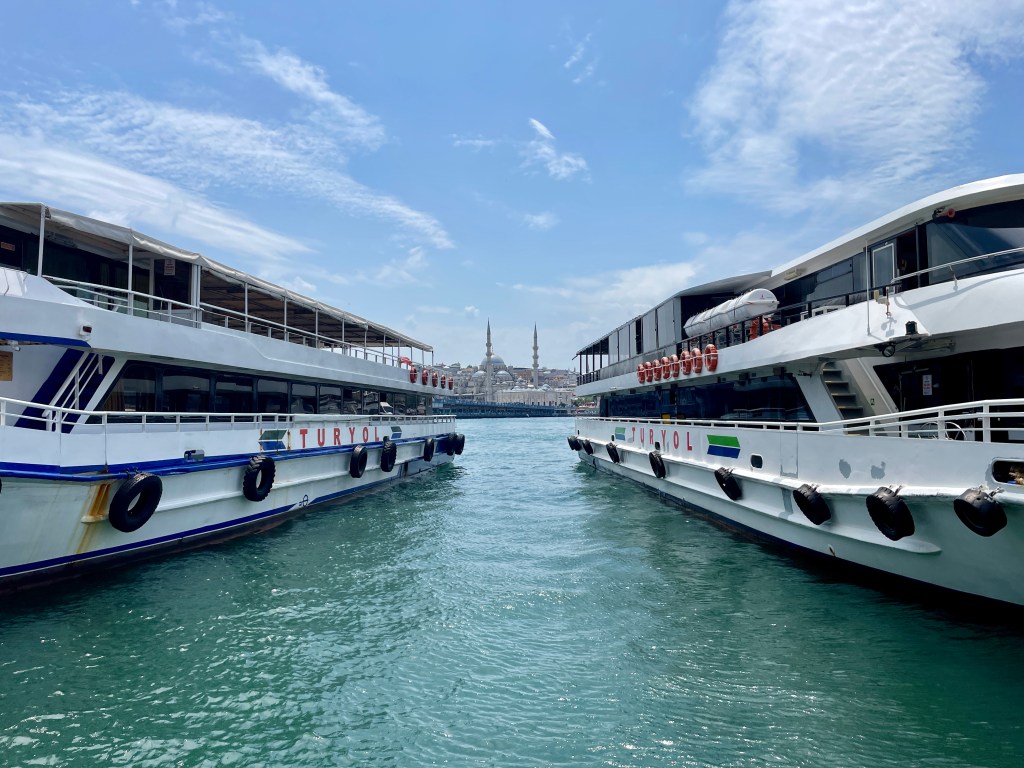
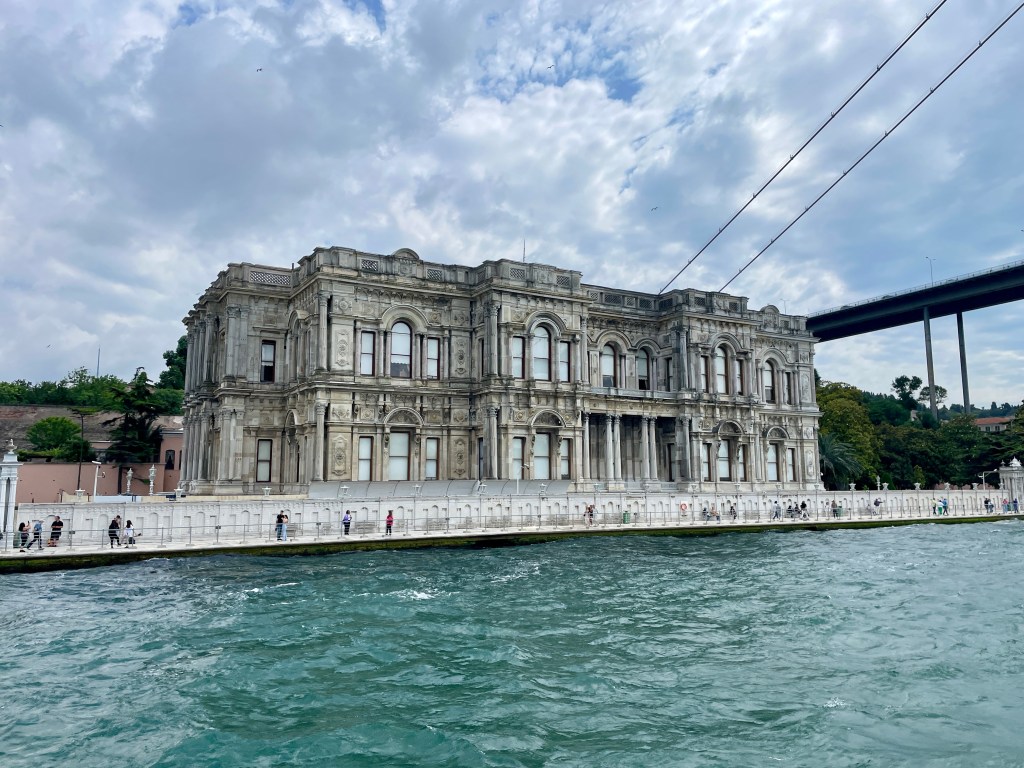
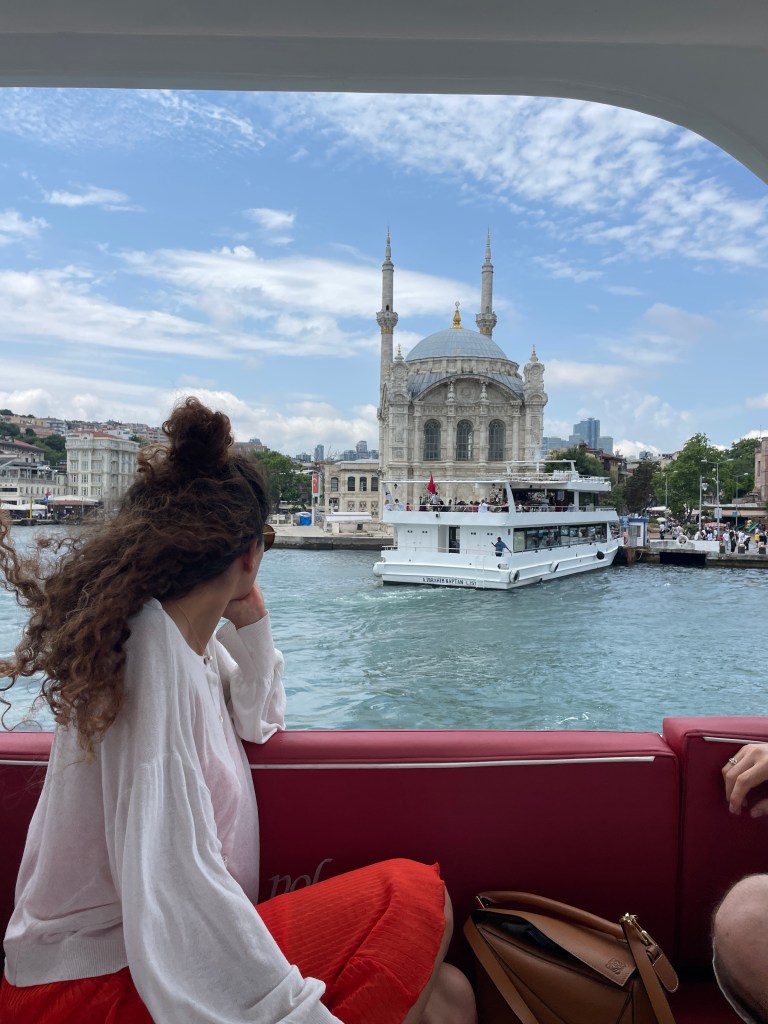
We headed north on the Bosphorus Strait, skirting the banks and taking in the stone palaces dotting the shoreline. These stone giants are memorials from the Ottoman age and many are decorated in the Baroque style of their original age.

The day was such a lovely break from exam marking and the craziness that marks the end of the school year. The Bosphorus is really something special.

I fly back to Boston in a week. Fun plans in store for the summer. Give a shout if you’re in New England – would love to see you 🙂

Staycation

As April turned to May, I was lucky enough to have my friend Tori come to visit from Vermont. I had a long weekend which turned out to be the first of many thanks to the election situation. More on that another time. I was thrilled when Tori could find the time for a week’s trip to Turkey and the direct flight from Boston made the trip fairly simple (Anne’s diner and Don’s airport shuttle included).

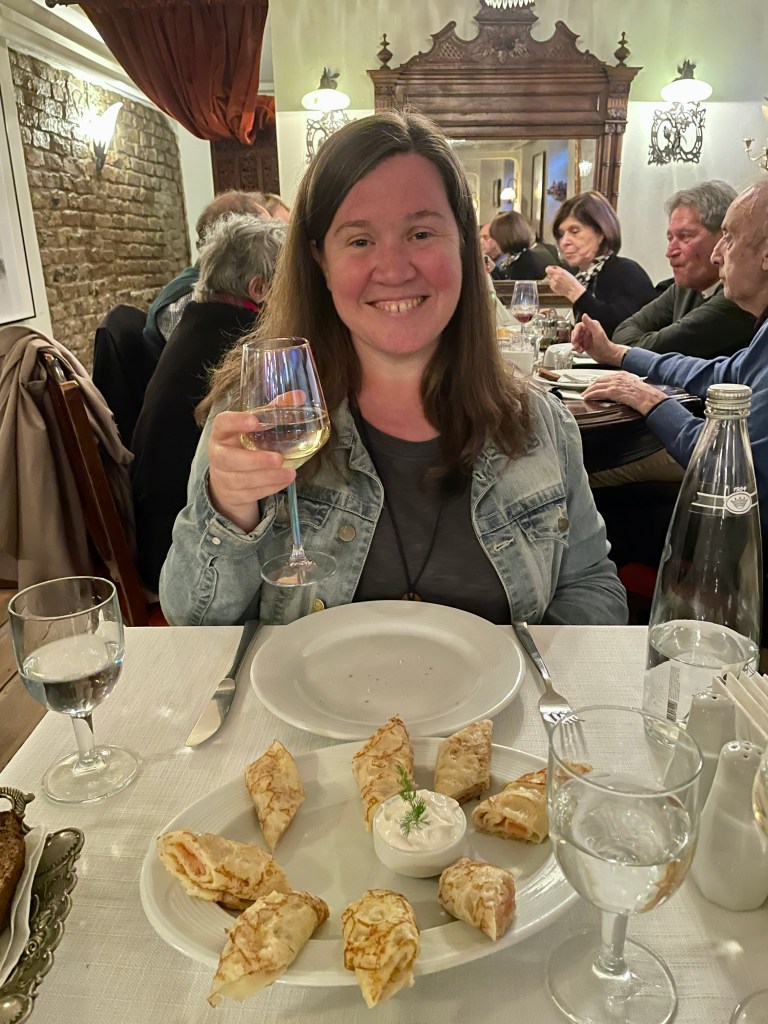
Leaving Moloko with yet another set of wonderful cat sitters, Tori and I headed downtown to dinner at Ayaspaşa Rus Lokantası. The most authentic Russian fare in Istanbul, we did our best to sample the trip Tori did not get to take due to COVID in May of 2020. The plate in front of me contains salmon blini with sour cream (yum). We were even treated to singing and dancing in the restaurant.

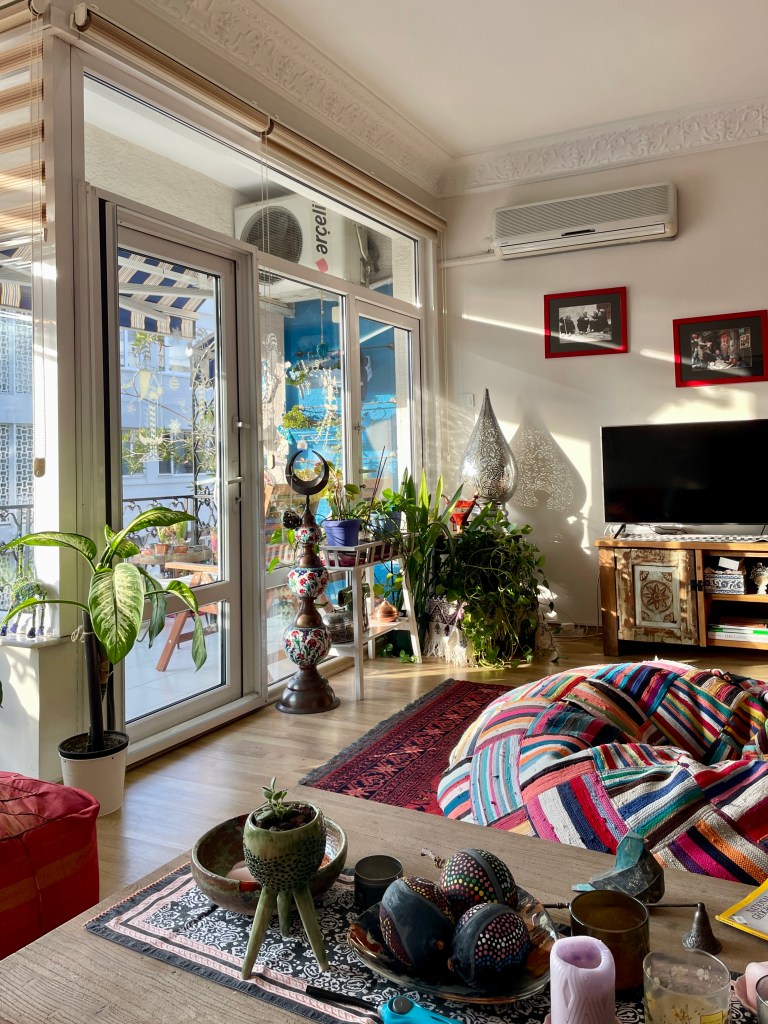
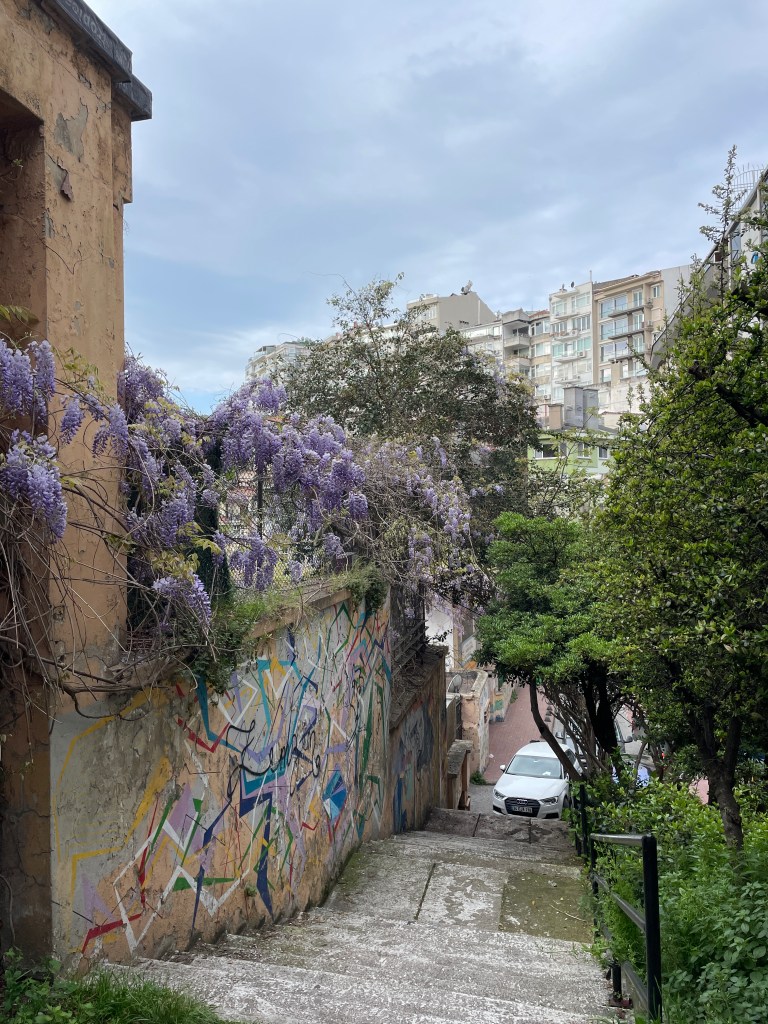
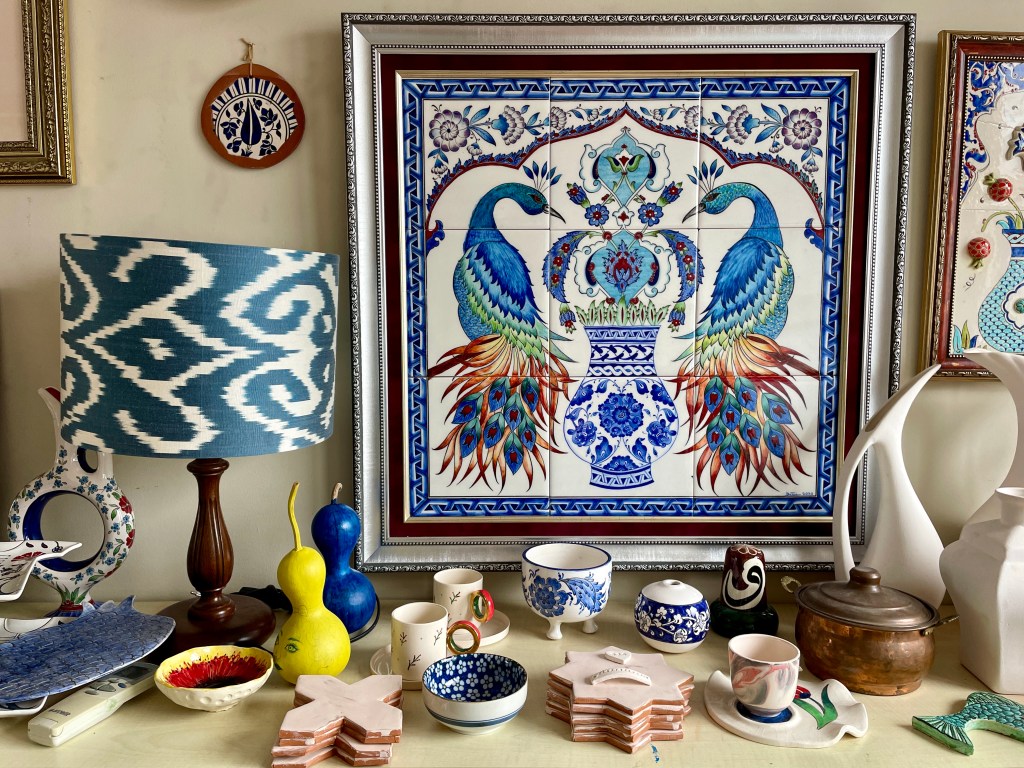
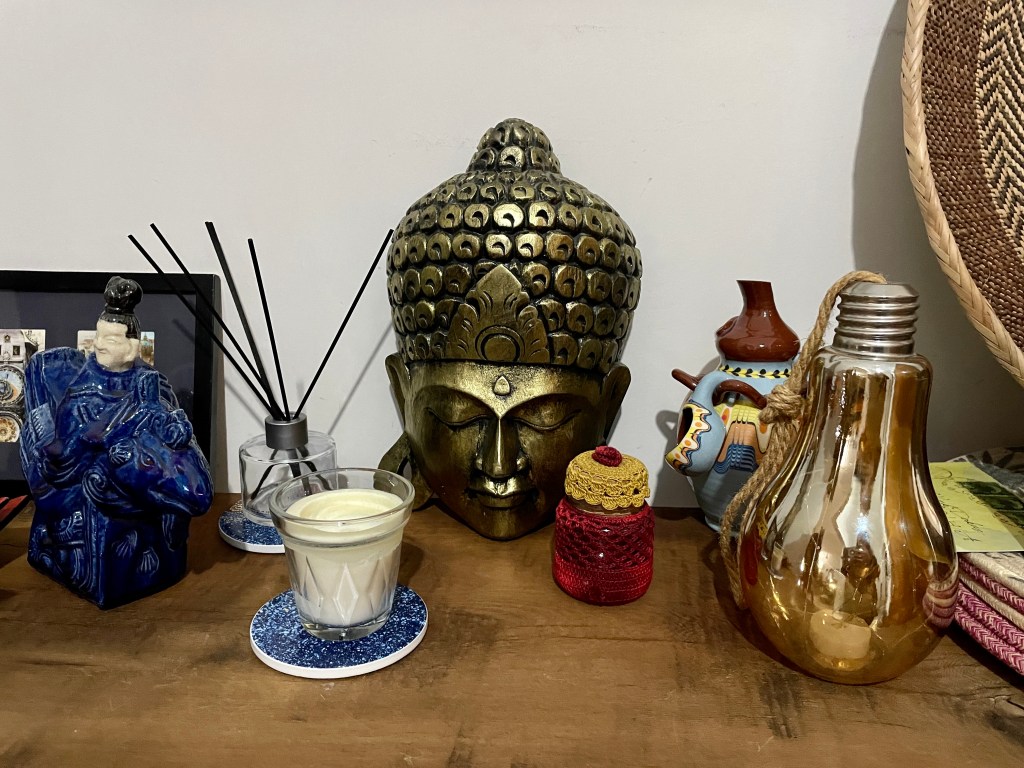
My friend Michele graciously welcomed us to stay at her downtown apartment just behind Taksim Square. Thanks to her gorgeous art collection from all over the world, it reads as a boutique hotel, replete with a view of the Bosphorus off her balcony. As walked down the steps to catch the tram, we passed the beautiful wisteria in full bloom.

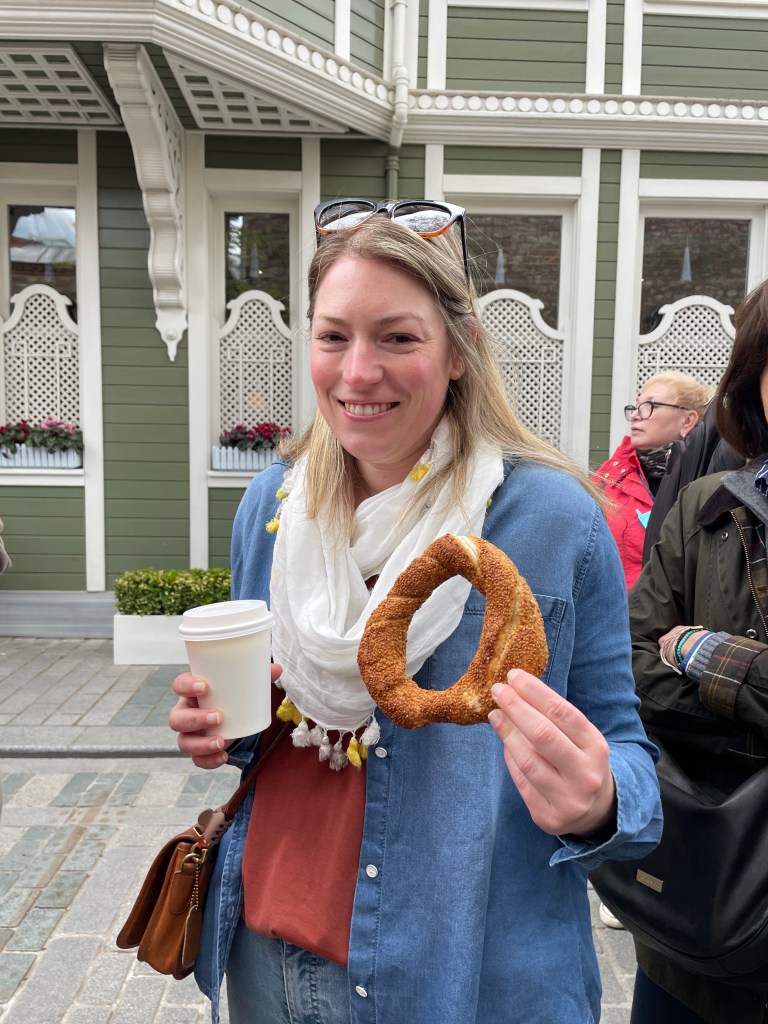
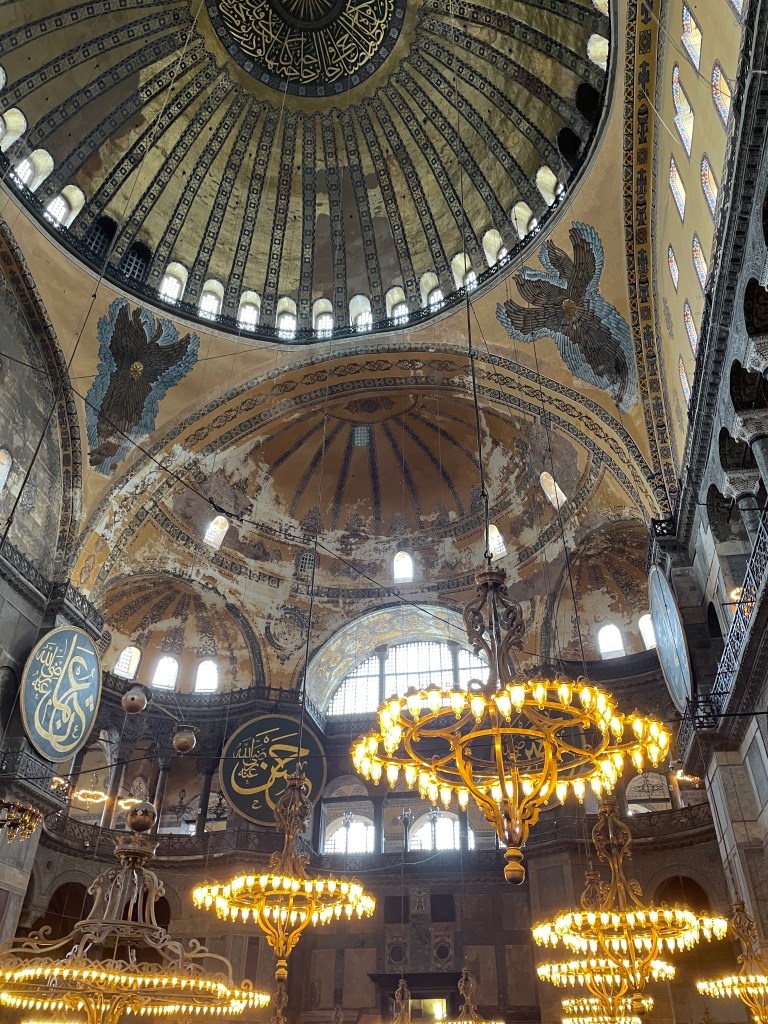
Fresh off my first set of visitors, I had a lot of fun to playing tourist in Istanbul. Thanks to the first go round, I learned you must get to the Hagia Sophia as the line forms at 9am. See us here in line, my second weekend in a row! Managed to grab a simit and coffee on the way. The Hagia Sophia really is as beautifully stunning and peaceful as it seems in pictures.

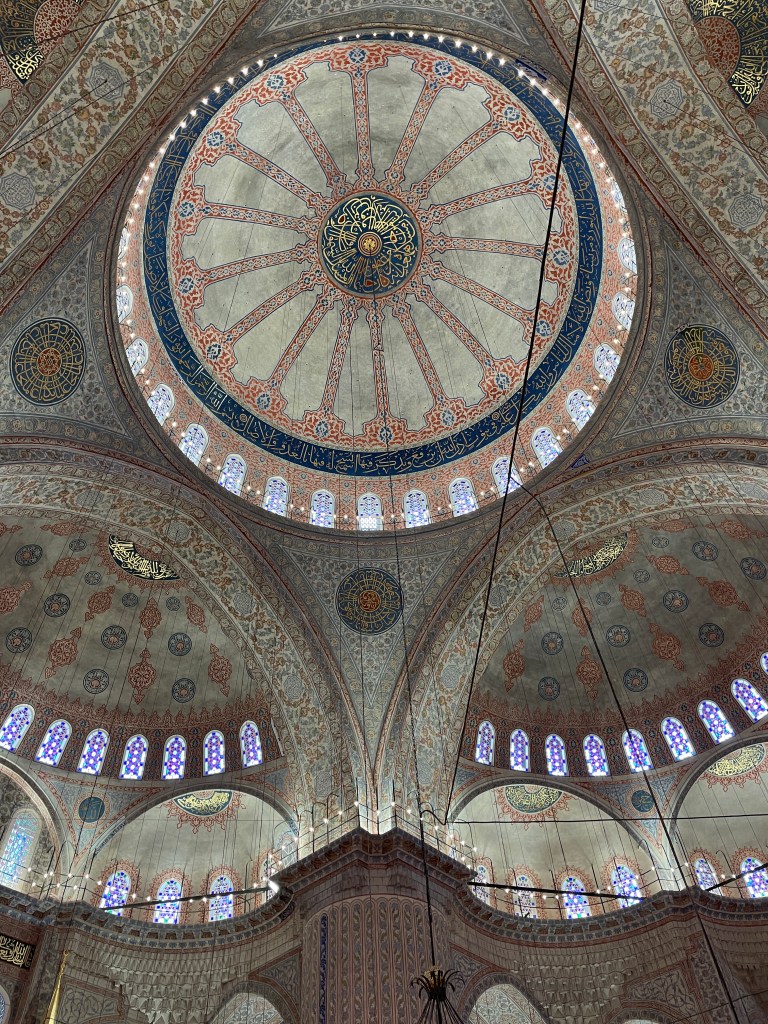
After our time inside, we took pictures out front and walked across Sultanahmet to the Blue Mosque in which 20,000 blue Iznik ceiling tiles truly baffle the mind.

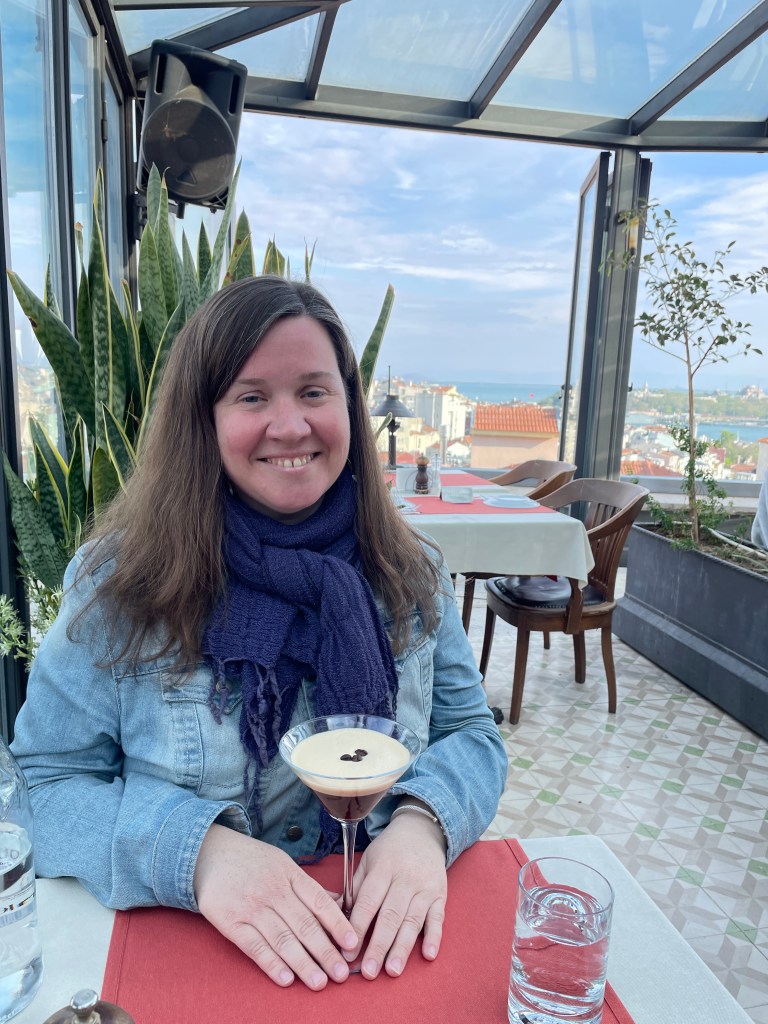
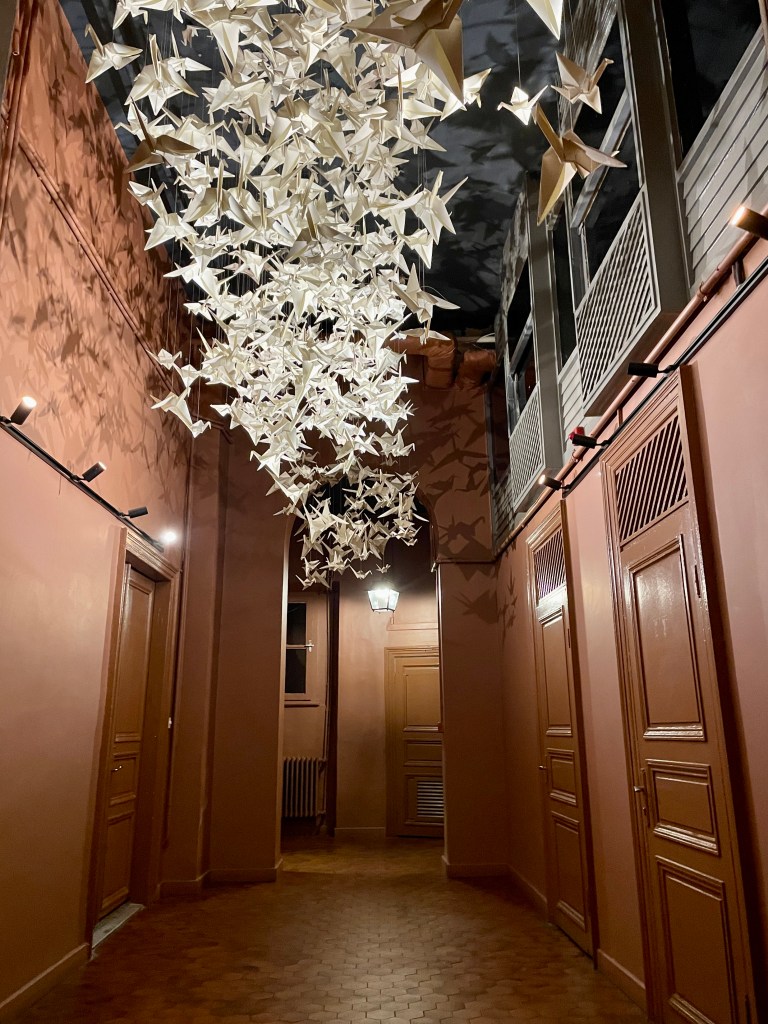
Rooftops are surely the best way to experience the stunning landscape of Istanbul. We opted for good views and good taste – drinks at Corinne Hotel‘s rooftop bar and dinner at Hodan‘s beautiful garden restaurant. Love the origami installation in the entryway.

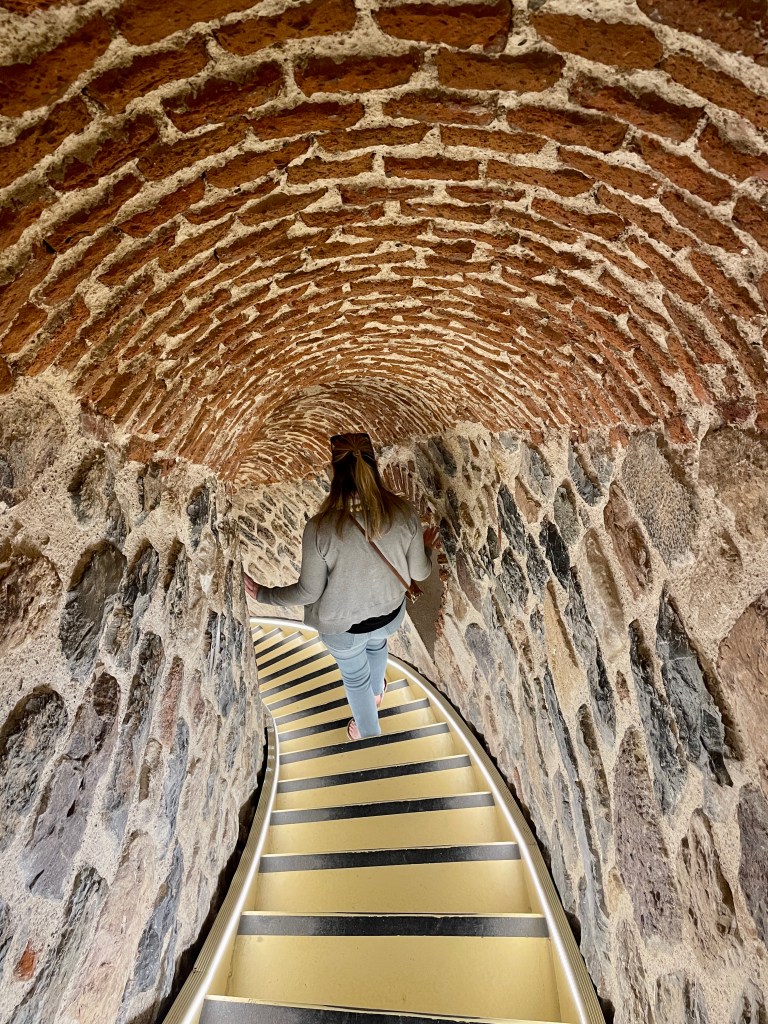
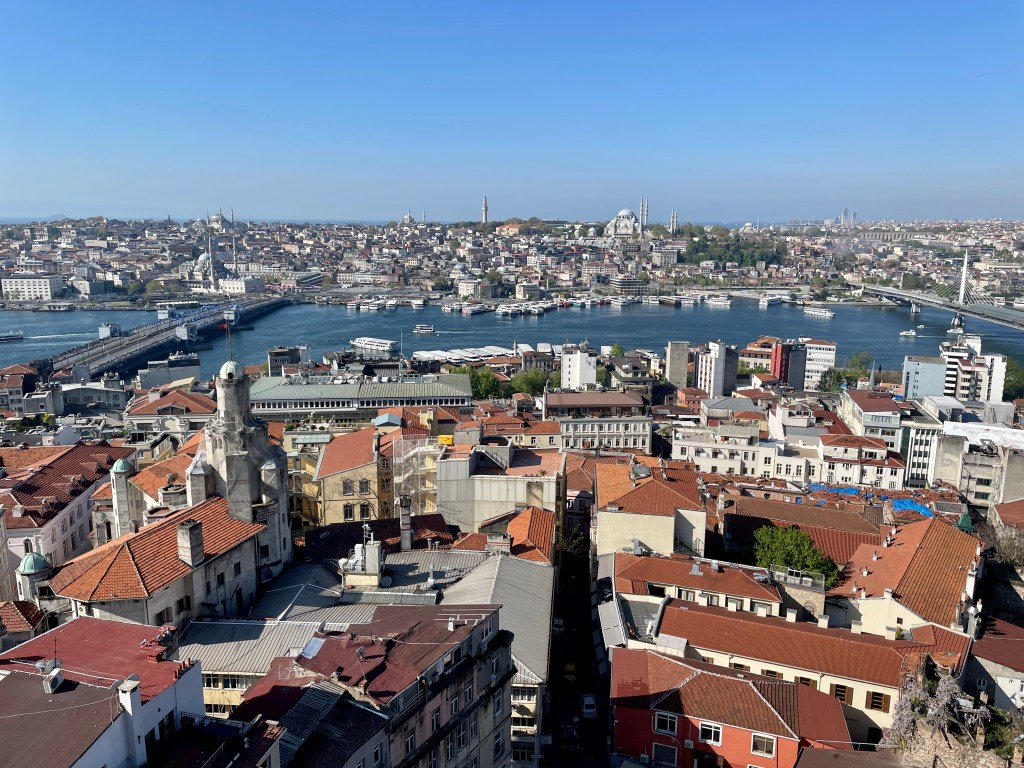
Checking off a number of Istanbul bucket list items, I had pre-ordered tickets to Galata Tower. Newly reopened after renovations, the tower was built in the 1300s by the Genoese colony. The Pera neighborhood was once divided into quadrants, respectively housing merchants from Genoa, Venice, Tuscany, and Ragusa (today the Croatian coastline).

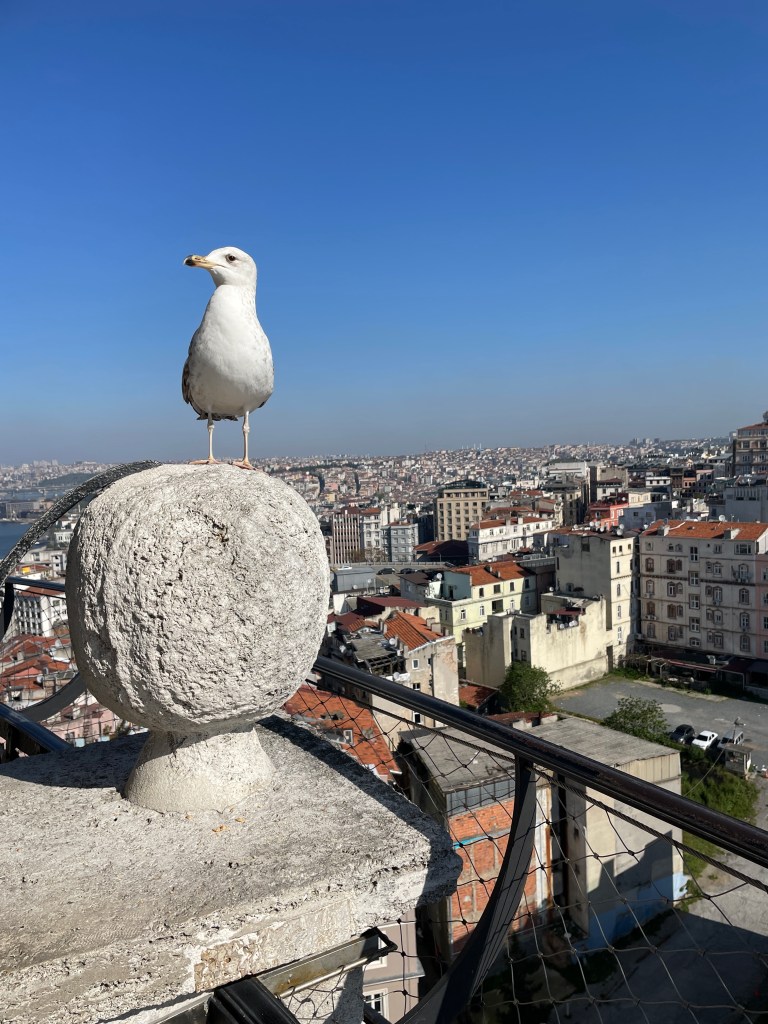
The view from Galata Tower did not disappoint on such a bluebird day. And, in fact, we were joined by a cheeky gull on the observation deck.

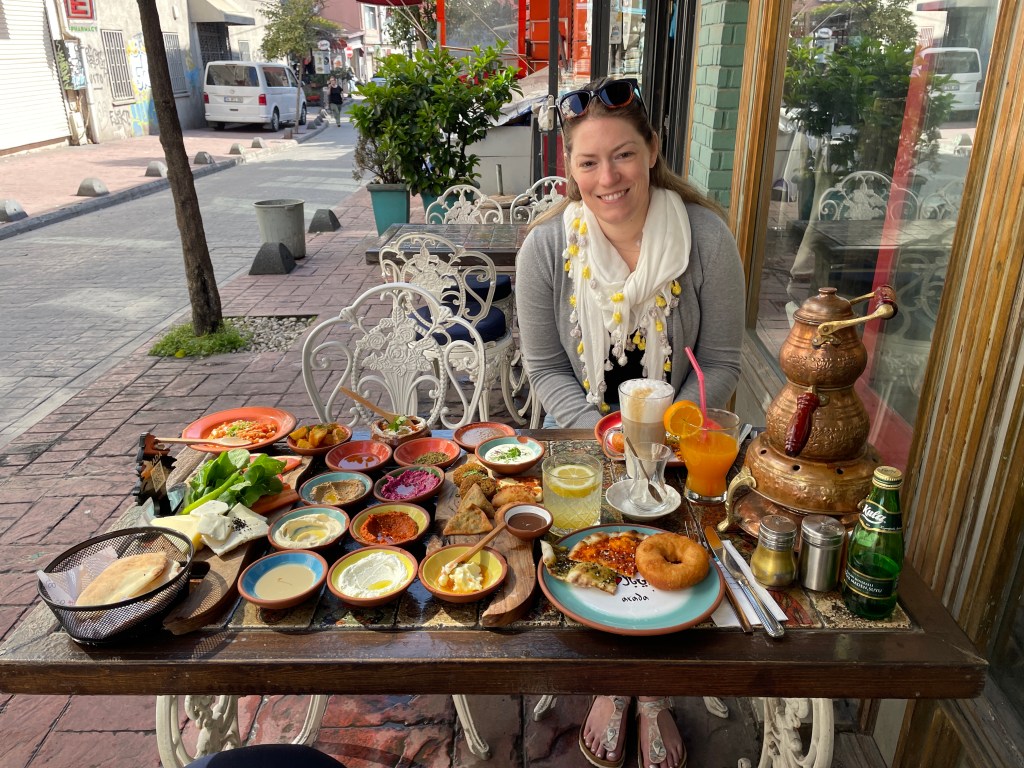
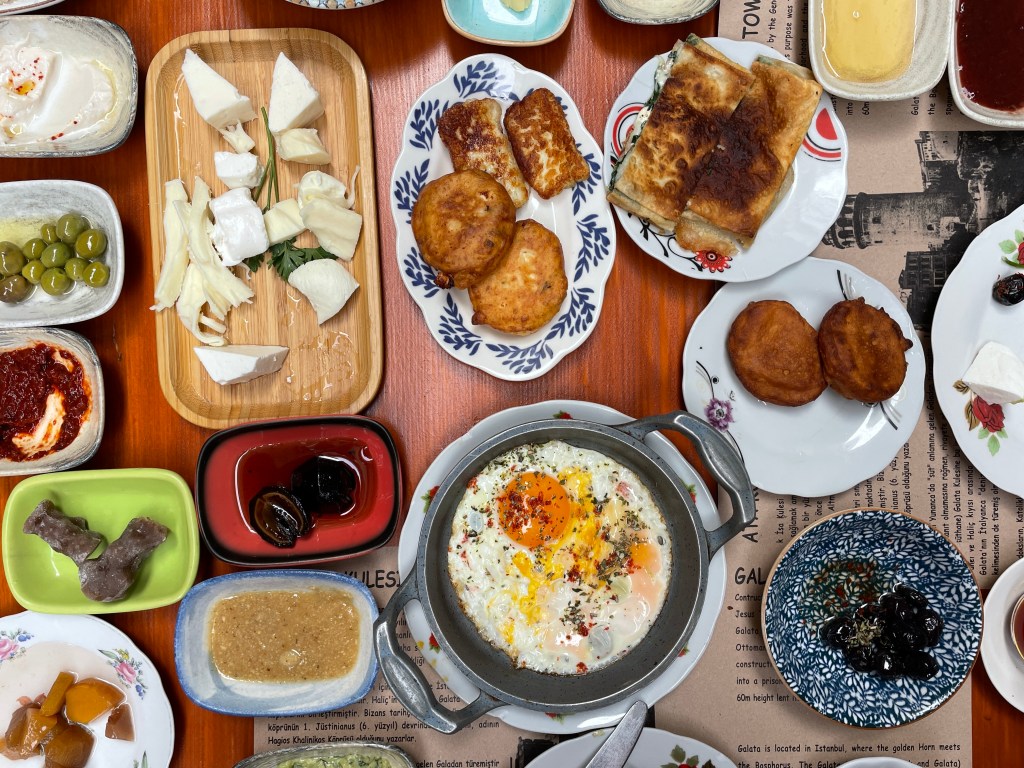
After, we enjoyed a decadent breakfast at Arada Cafe (a cross between Lebanese and Turkish breakfast). We were quickly very full and enjoyed visits from a number of my coworkers who live in the neighborhood.

I wanted Tori to experience a different side of Turkey but we didn’t want to board another plane. We opted for a night on Büyükada, one of the Prince’s Islands in the Sea of Marmara. An easy ferry ride away, Büyükada proved the perfect little island getaway. Since the ferries are run by the municipality, you can tap your Istanbulkart at the ferry terminal. It cost us a mere $2 each to reach the island.

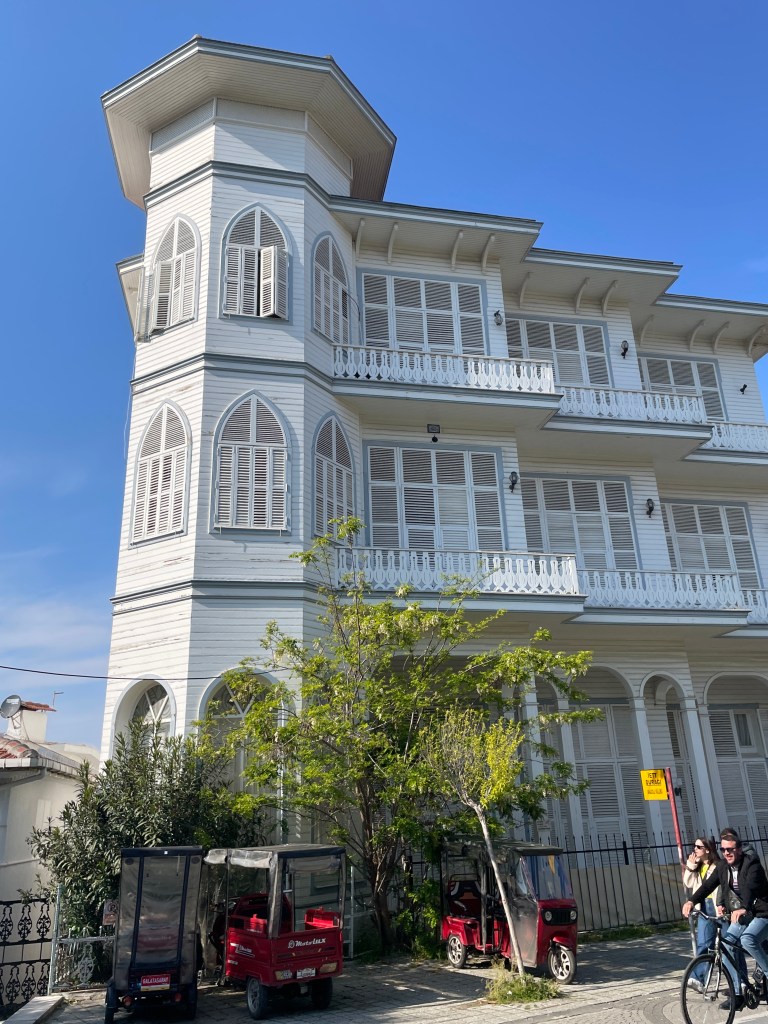
Büyükada could not have been more different from downtown Istanbul. Bicycles and electric golf carts are the main mode of transportation. We walked around, taking in the old Victorian homes once occupied by wealthy Jewish vacationers. We caught a pop up of Emma’s Baked Goods recommended by a friend. After the tourists left for the night, it was fun to have the place to ourselves.

The next morning, we rented bikes and spent a lot of walking those bikes up and down the steep hills of the island. It was nice to get outside the downtown and escape the packed crowds disembarking from the ferries. As it was a public holiday in Turkey and the economy is not great, many people have chosen to stay local for holidays this year, bringing intense crowds to the city and the islands.

All too soon it was time to leave island life behind and return to normal life. Tori headed back to Boston and home to her own furry companions. Moloko and I were sad to see her go but really enjoyed her visit. I will be taking that same flight back to Boston in just about a month. Summer is coming fast! Hope you’re all doing well and taking care. More adventures to come…

Tulips

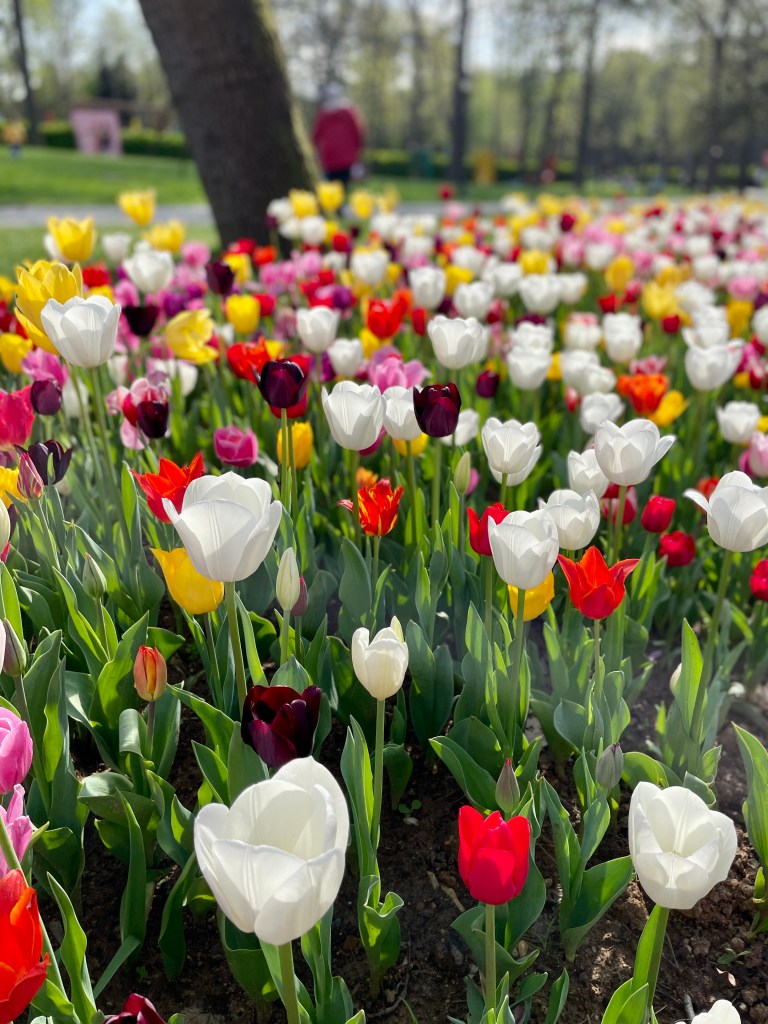
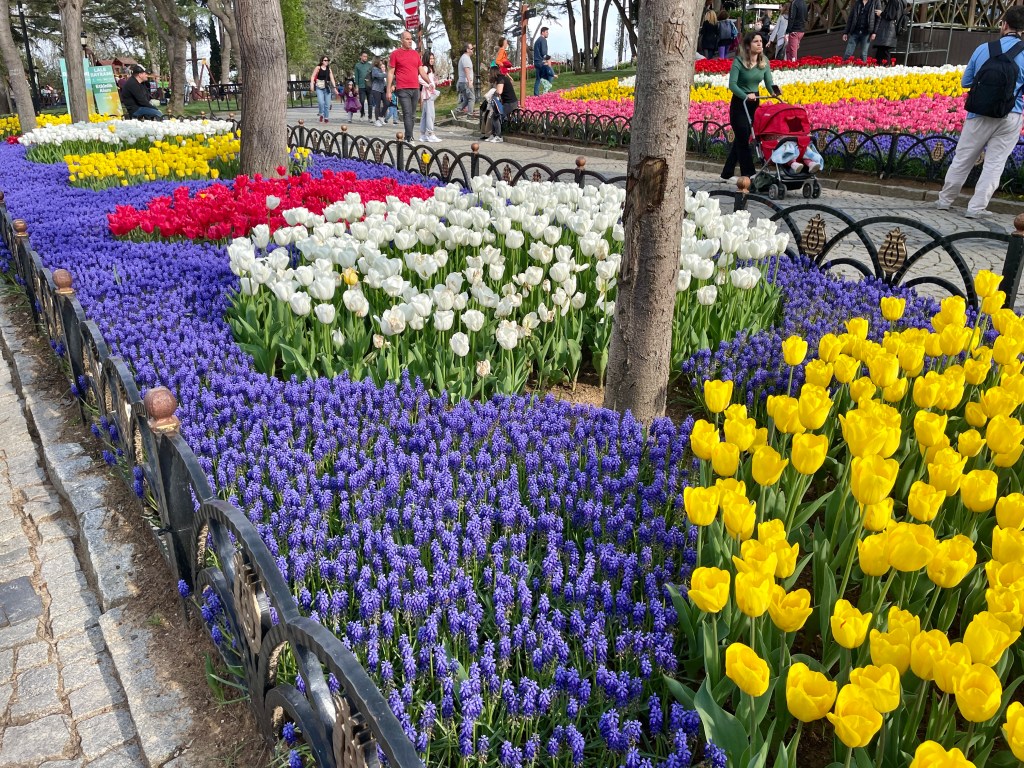
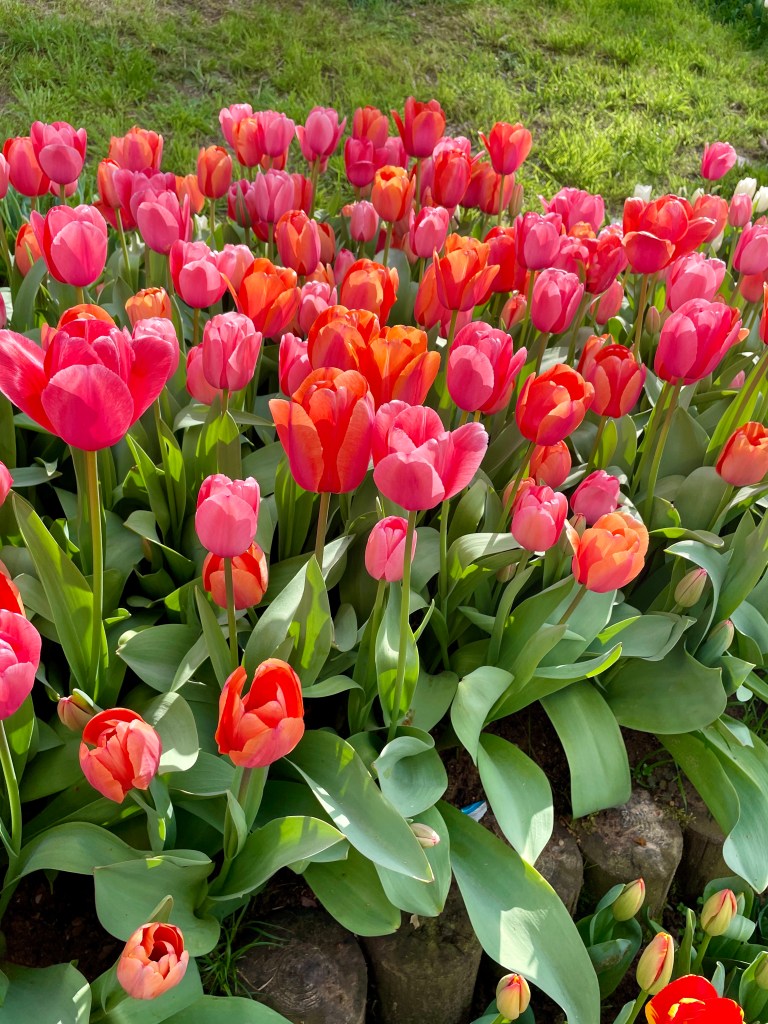
Spring has come to Istanbul and it has brought many visitors from the States. Over the past few weeks, I’ve had the chance to welcome my parents, close family friends, and good friend Tori from Vermont. It’s the perfect time of year to tour Turkey, with cool temps a decent chance of sunshine, and tulips in bloom!

Tulips are a big deal here. They are displayed in mosaics on sidewalks (see the icon of this blog), embroidered on textiles, and – as I’ve come to find – blanket Istanbul parks and medians from April through May.

Tulips were brought from Turkey to Holland in the 1500s. It is suspected that bulbs were first transported from Turkey to Austria by an ambassador of the Hapsburg Empire (Marie Antoinette’s fam). In Vienna, botanist Carolus Clusius worked to develop the tulip. Clusius then brought the tulip to the Netherlands after he was named director of the botanic gardens at Leiden University.

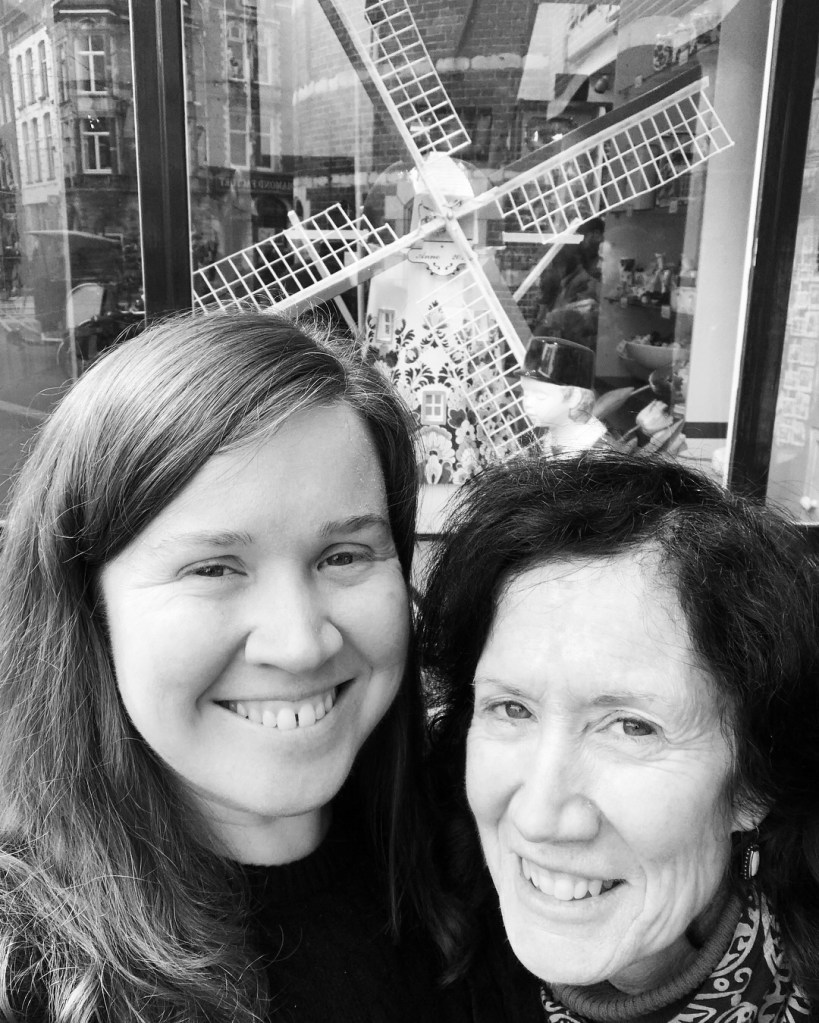
I’ve known of the tulip’s origin since my mom and I visited the Tulip Museum in Amsterdam back in 2018. There, the Dutch acknowledged that tulips have their origins in Turkey. In fact, the botanical name for tulips is derived from the Turkish word “tulbend” or “turban”, which the flower resembles.

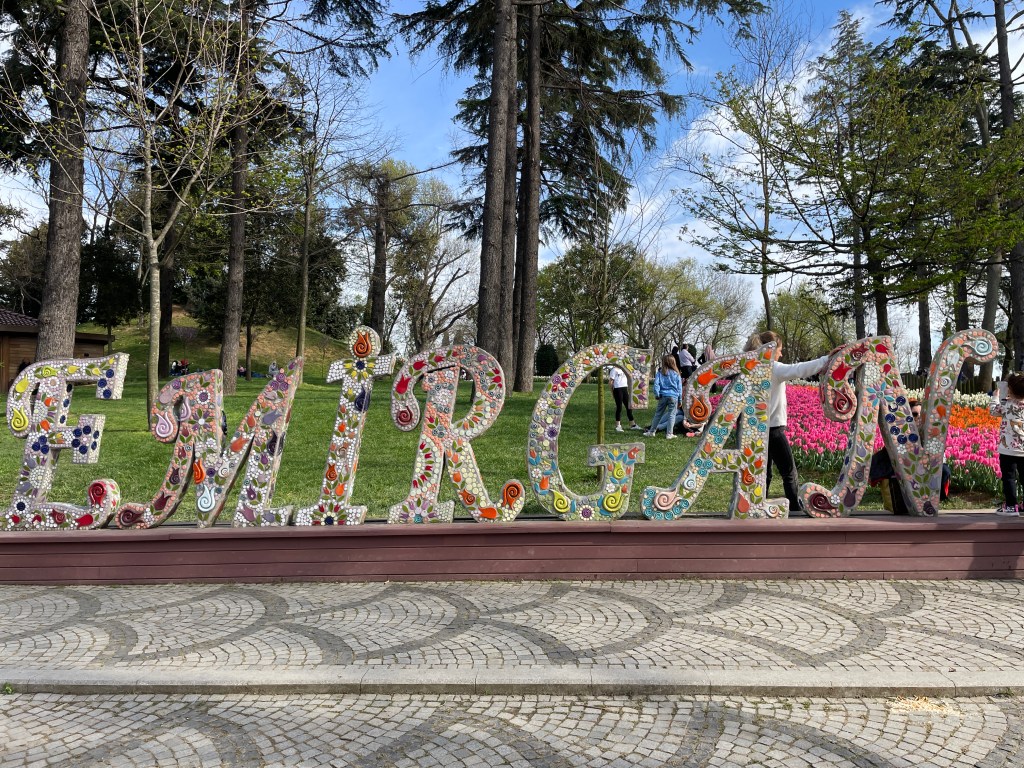
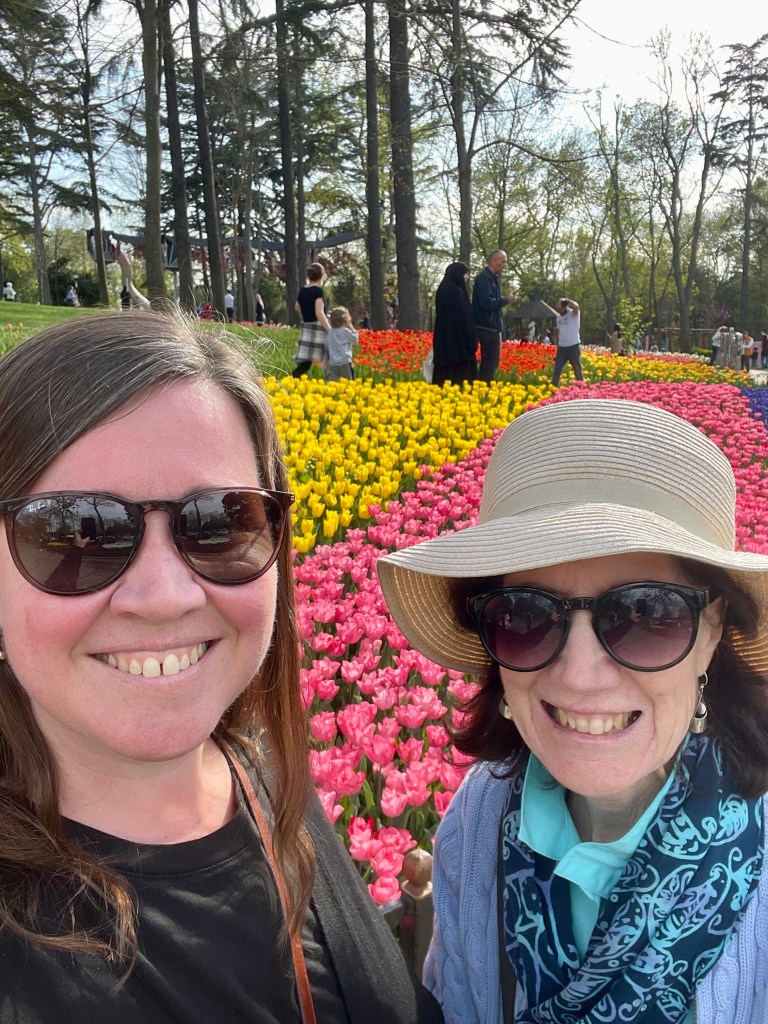
After arriving in Istanbul, I had heard rumor of a must-see tulip garden called Emirgan Park. When my parents confirmed their visit for April, I knew I would take my mom to see it.

Once we entered the park, the gorgeous tulips surrounded us. Given the limited time that the tulips are in bloom, all of Istanbul turned out to take advantage of the beautiful weather. Families set up picnics and photo shoots to enjoy the good vibes.

The garden visit was a nice bookend to our trip to Amsterdam back in 2018. Really special to host family here in Istanbul and thankful to those willing to make the trip.

Touring around Istanbul was loads of fun but we also had other plans just across the Aegean. To be continued…

Ebru

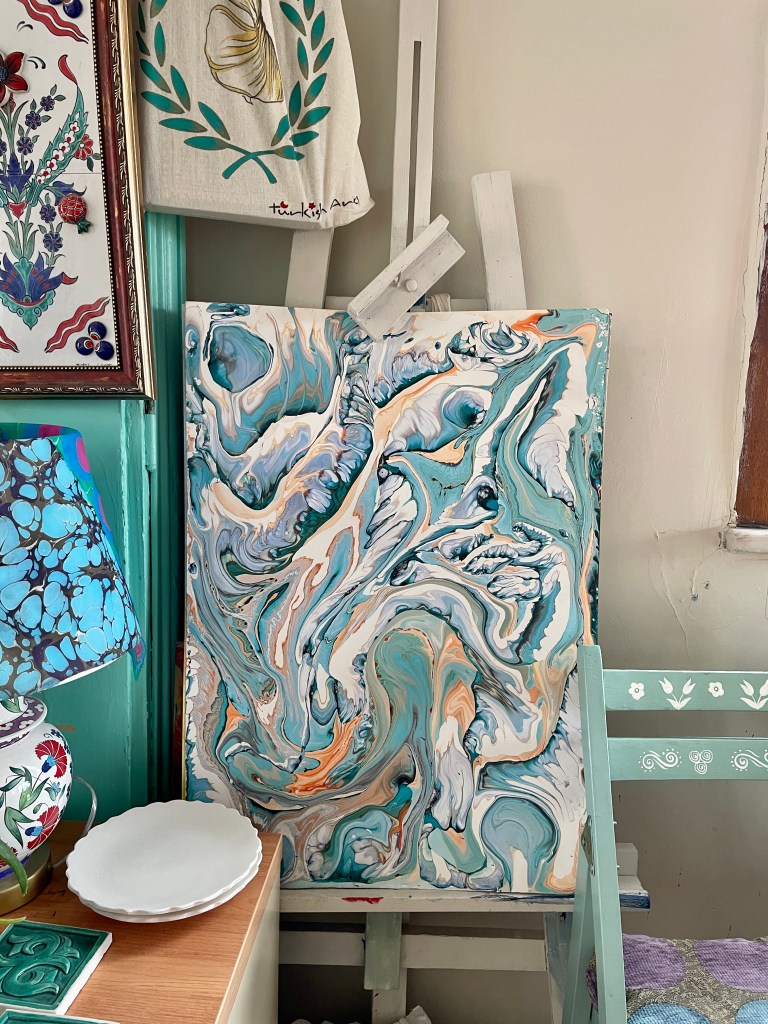
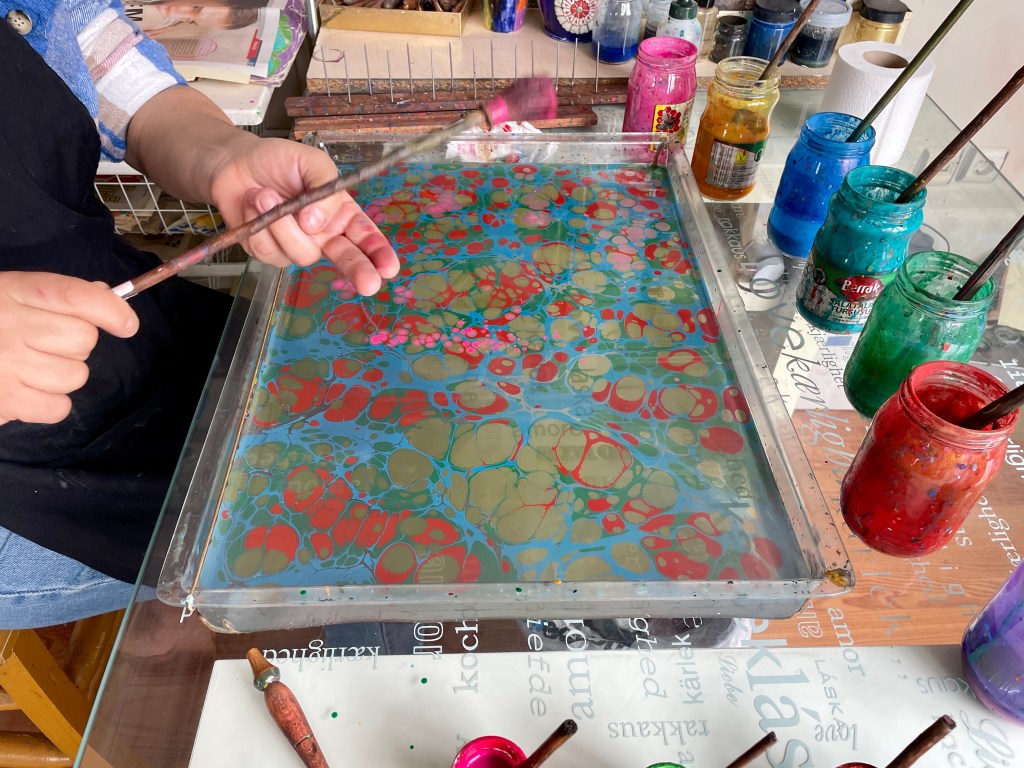
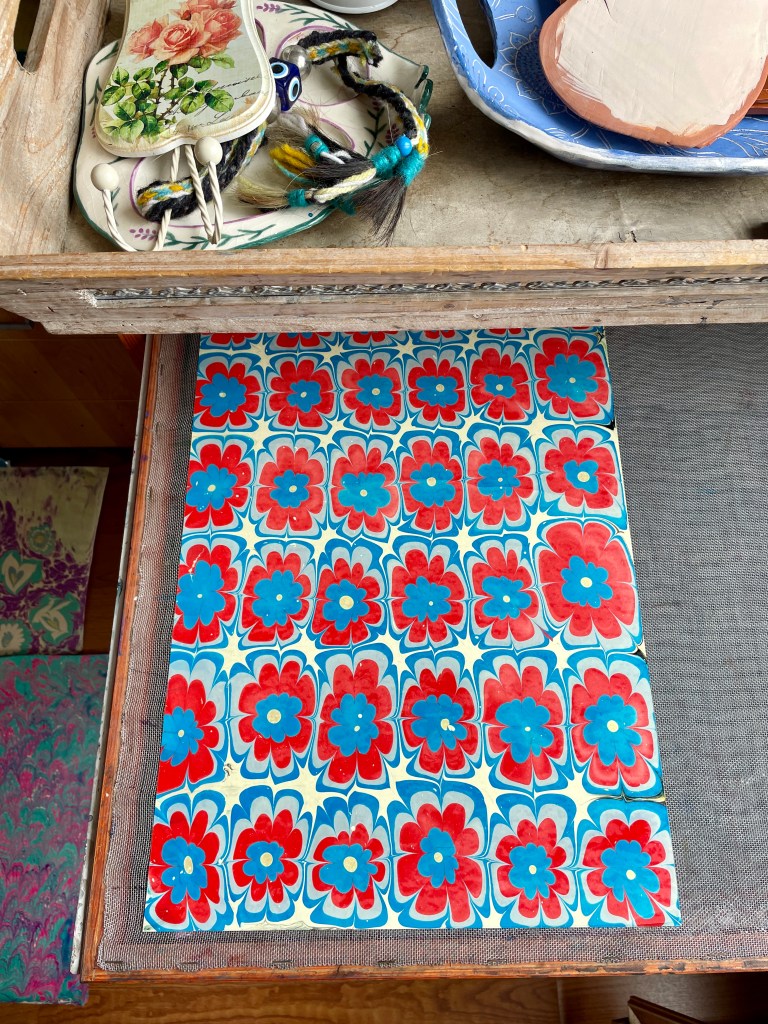
On a bit of a creative streak, I sought out a traditional Turkish paper marbling class this past weekend. Ebru (ay-brew) as it’s called, translates to marbling in Turkish. Popular during the Ottoman reign, ebru was born at the same time that paper was invented.

The technique of paper marbling dates back to the 9th and 10th centuries. As with so many artistic techniques found along the Silk Road, it’s country of origin is a bit murky. Geotags include Iran, Turkestan (a region of Central Asia, not a country), Japan, and China.

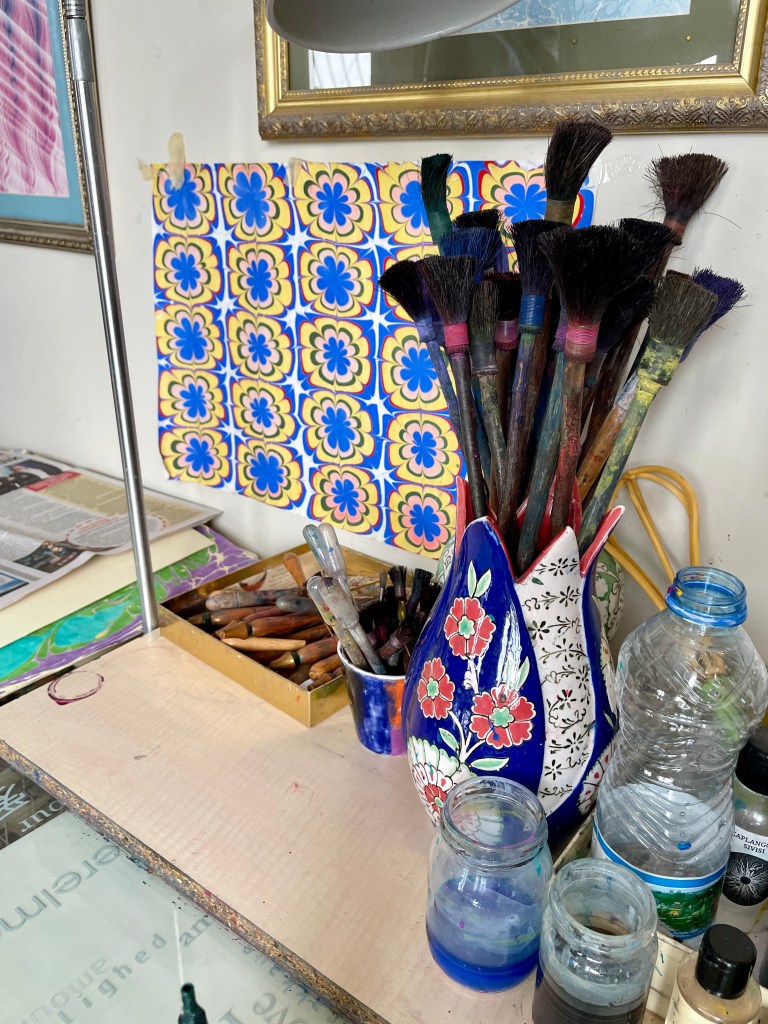
Know as اَبری (ah-bree) in Persian, the term refers to the cloud-like appearance of ink upon paper. Suspended above a bath of water mixed with gall (the substance found in an animal’s gallbladder), the inks cast colorful clouds, pushing upon each other as oil would in water. Keragin (seaweed powder) is added as a thickening agent. Today keragin is imported from the States.

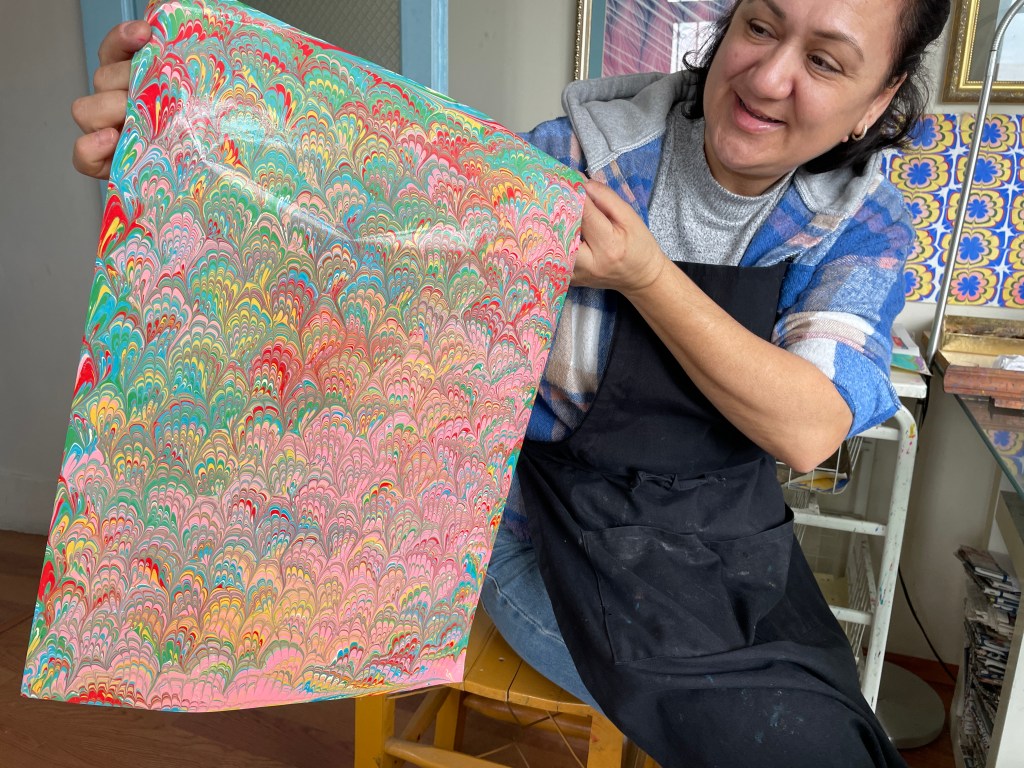
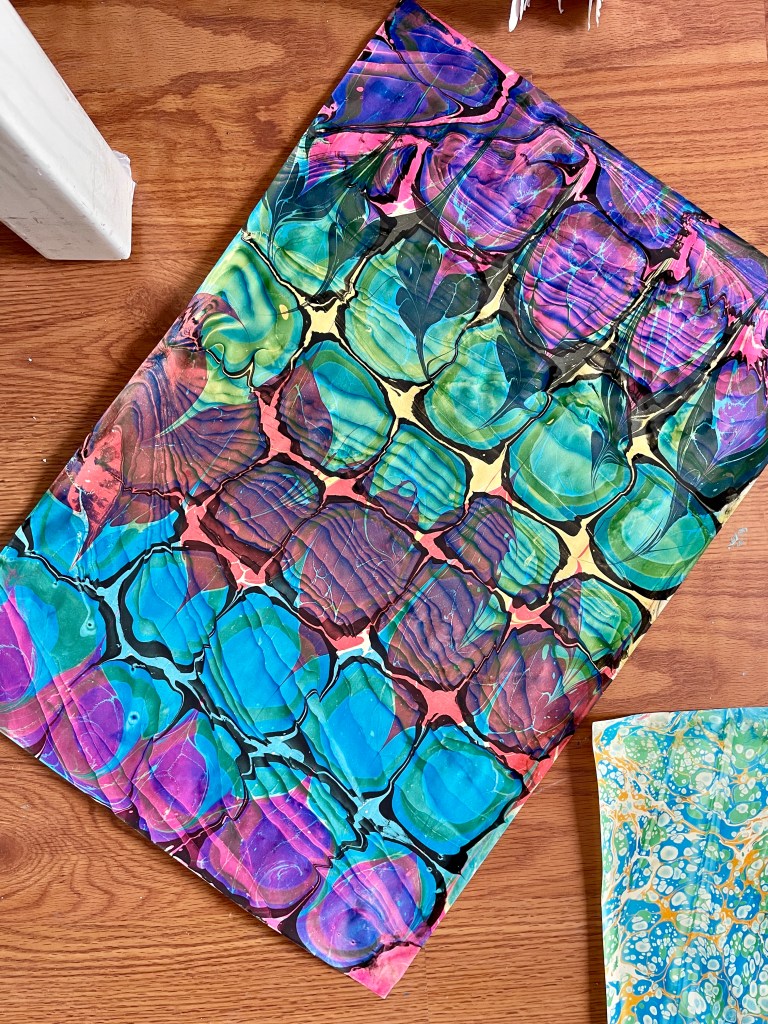
The studio, Turkish Arts, lies just a stone’s throw from the Hagia Sophia. Founded by my wonderful teacher, Betül, the workshop space is perched five stories above the street. The view of the Bosphorus Strait over the rooftops was mystical on a rainy Sunday. Betül is an incredibly accomplished artist, having studied traditional arts at Mimar Sinan Fine Art University here in Istanbul. She makes it look so easy! I was thankful for her help correcting my posture, how I held the brush, and how much ink I added before squeezing the excess. The technique below is called peacock and surprisingly easy, achieved by using a series of combs running through the ink.

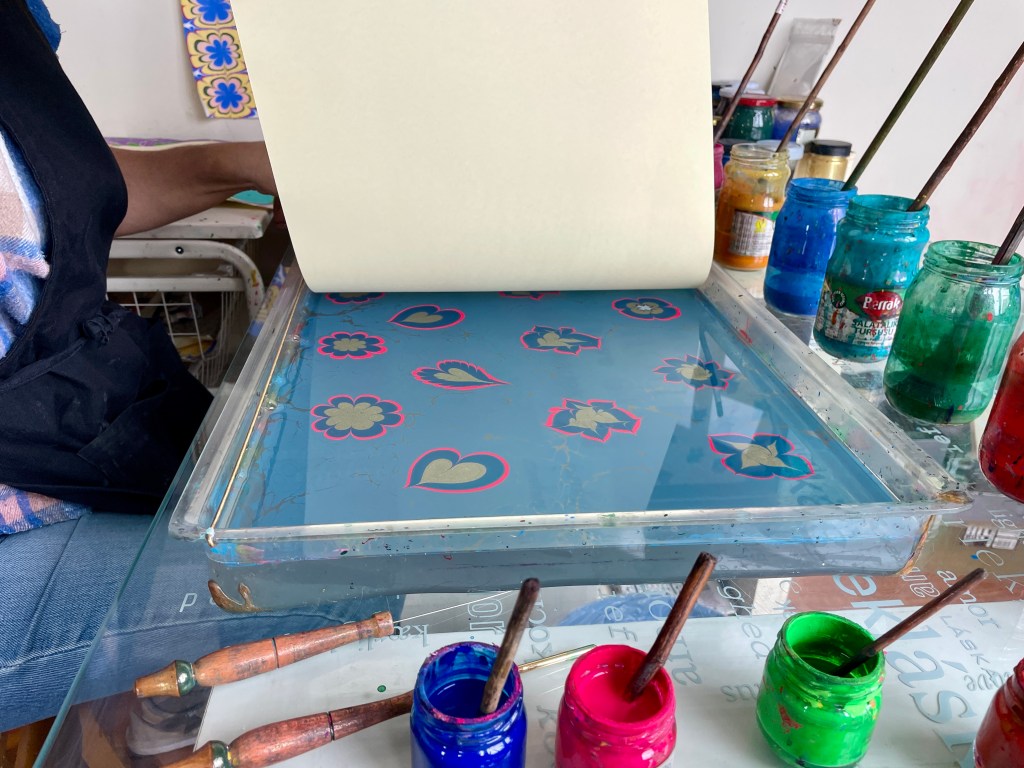
I spend a few hours in the studio, trying different techniques which varied from flower creation to the more abstract, which I enjoyed the most. Just as I enjoying cooking rather than the more precise baking, I enjoy making art when I can be loose and inventive.

As I worked, the beautiful sounds of Radyo Voyage filled the studio. A Turkish radio station which plays a diverse array of music from countries worldwide, it set a mood perfectly. Available worldwide via Radyo Voyage’s app and website, I would highly recommend.

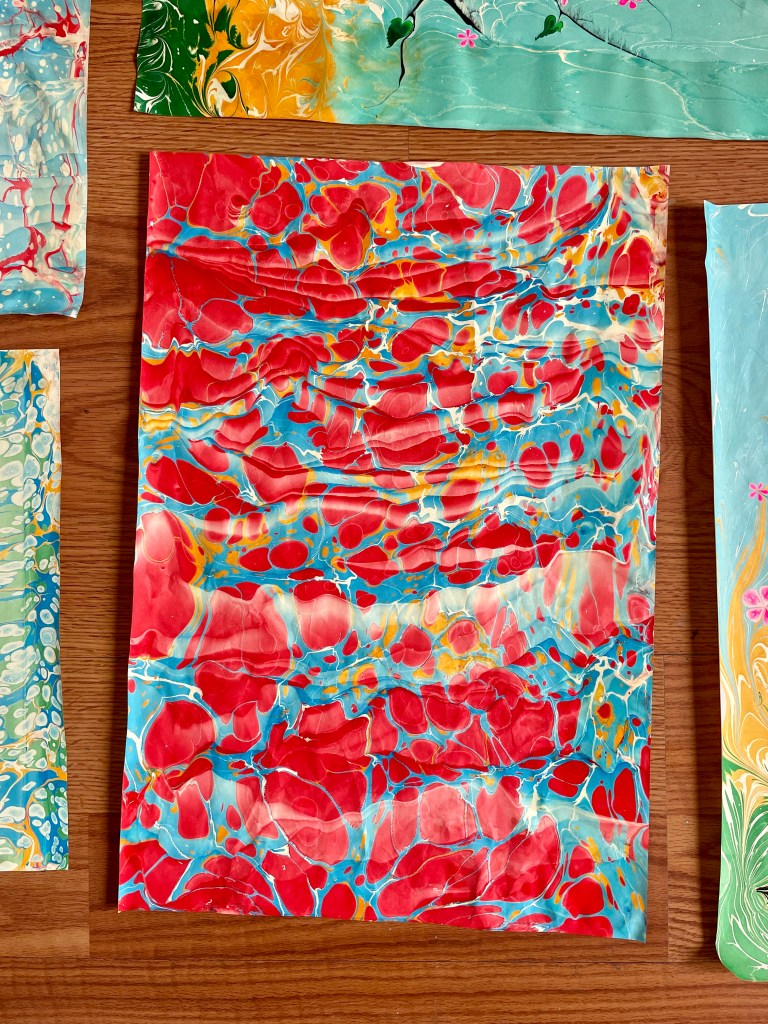
There is a contemporary marbling technique called Spanish marbling or “drunken marbling”. Likely the result of a happy accident (as we say in the art world), Spanish marbling incorporates a crumpled piece of paper which is flattened and shifted in the bath to mimic waves on the sand. The effect is really beautiful and harder then it looks to achieve!

My favorite result was a twice-dipped piece (below right), the first dip made by my teacher and the second (the blobs) made by me. The colors don’t bleed in the process but the layering makes for stunning results. On the left, I applied the same technique – applying dots of ink to form circles which reduced in size. I then used a thin wire tool to push the ink towards the middle of the circle, forming petals of a flower.
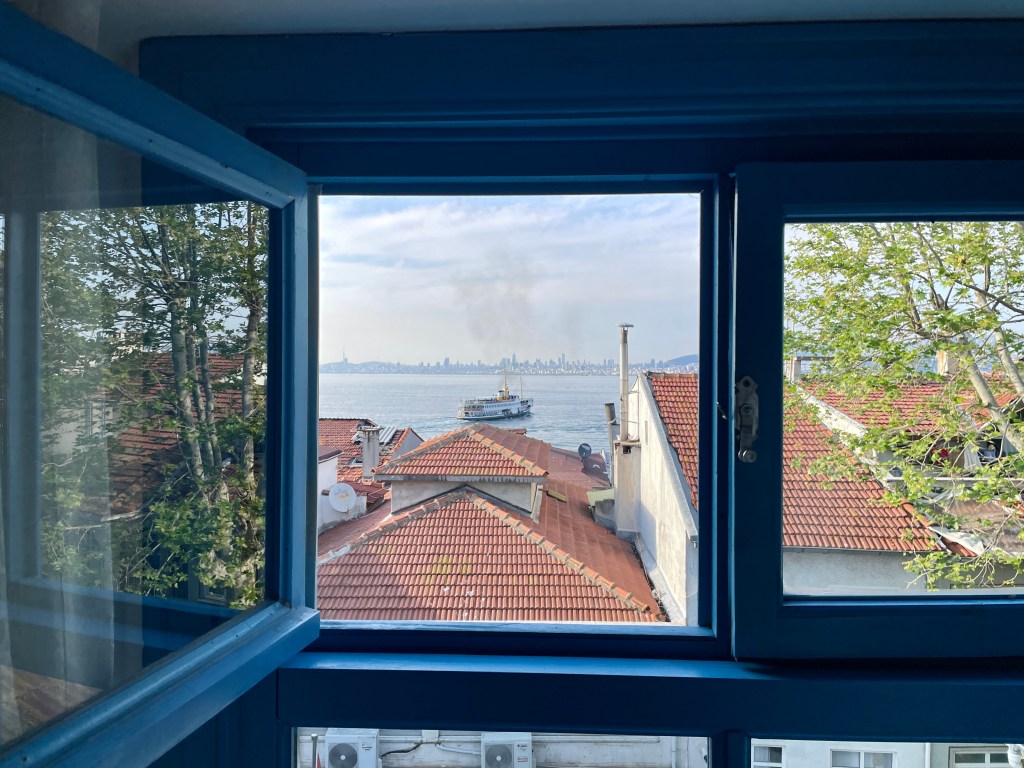
As my time in the studio drew to a close, I placed each sheet of paper on a mesh drying rack. Betül turned on the heating unit above to help speed up the drying process. After lunch with the friend, I returned two hours later to pick up my finished papers. All in all, a beautiful experience I would love to share with future visitors.

How Bazaar

Forgive the pun – as a teacher with two weeks left of school, my sanity is hanging by a thread! It’s hard to believe but 2022 is rapidly drawing to a close. Holiday parties abound and the weather here has shifted to grey skies with a near constant mist of rain. Reminds me of the fall I spent in Oregon. I’m excited to be headed back to Massachusetts very soon to see family and friends. My first fall in Turkey is nearly in the books.

Heading back to the States is always exciting. Spending time with loved ones, hiking familiar trails, and cozying up to watch the Pats all sound pretty great right about now. It’s also a great excuse to share treasures from my travels with the folks back home. And when you live in Turkey, there’s only one place to shop for literally anything you could ever dream of – Istanbul’s Grand Bazaar.

My friend Michele offered to show me around the marketplace this past Saturday morning. She’s lived here for ten years and knows the Bazaar like the back of her hand. I could not recreate our route if I tried! That’s Michele leading the way into the Eminönü marketplace in her yellow jacket. I’m sure you’d never guess that she, too, is an art teacher 😉 Birds of a feather.

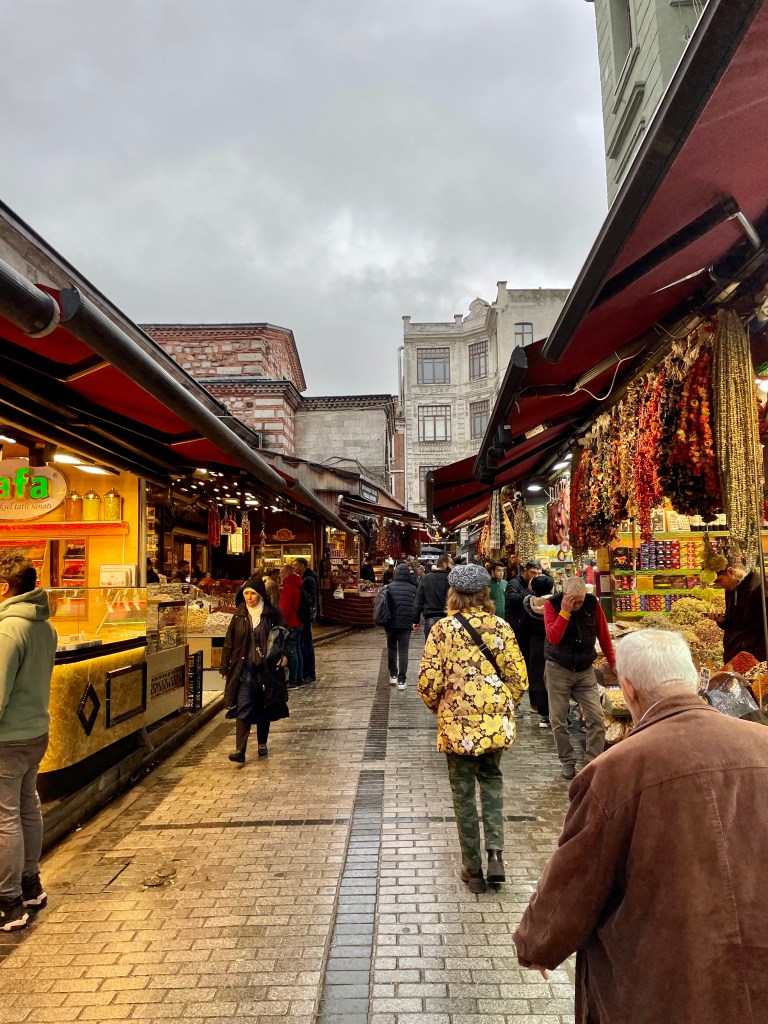
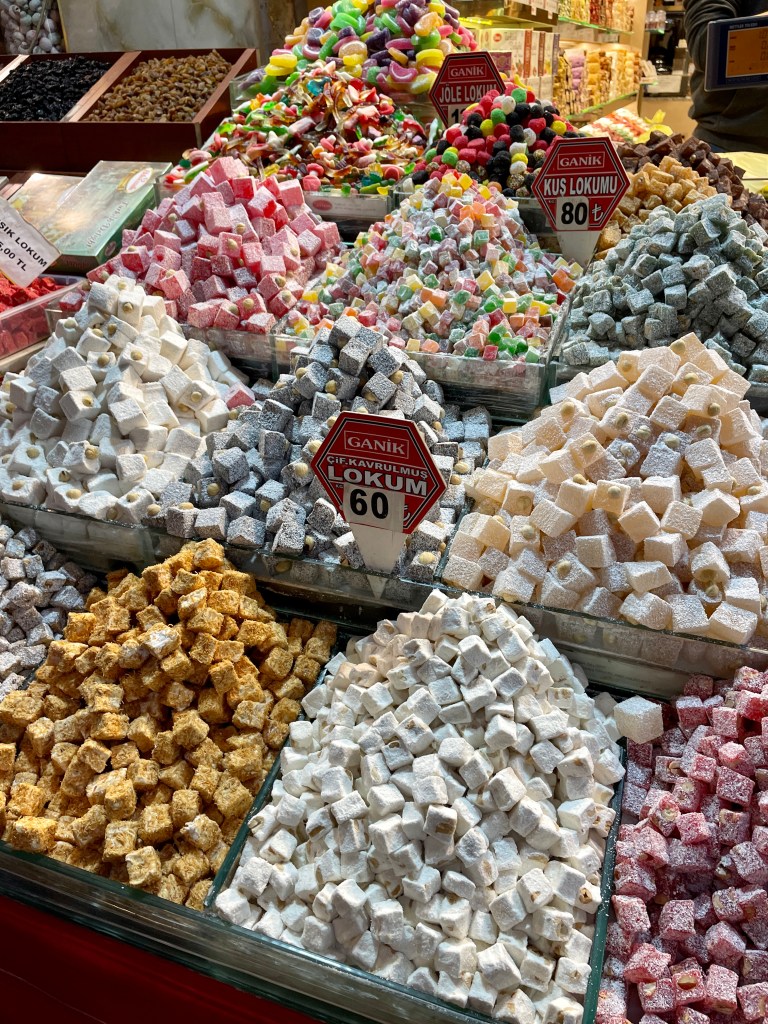
The skies threatened as made our way through the continually narrowing streets. Turkish delights beckoned at every stall with each vendor selling their special mix of options. Piles of spices lined the aisles as well. Keep in mind, we’re not in the actual Grand Bazaar nor the Spice Bazaar – this is the stuff on the outside, ripe for the picking.

Small shops hawked everything you could possibly think of. There was the guy sharpening knives behind his little pushcart and a man attempting to carry bags and bags of rice on his shoulders down the cobblestone alleyways. Vendors called out cheerfully in English, easily identifying me as an American (I was with an Aussie and a Kiwi, odd man out). Must have been my Eddie Bauer raincoat (lol).

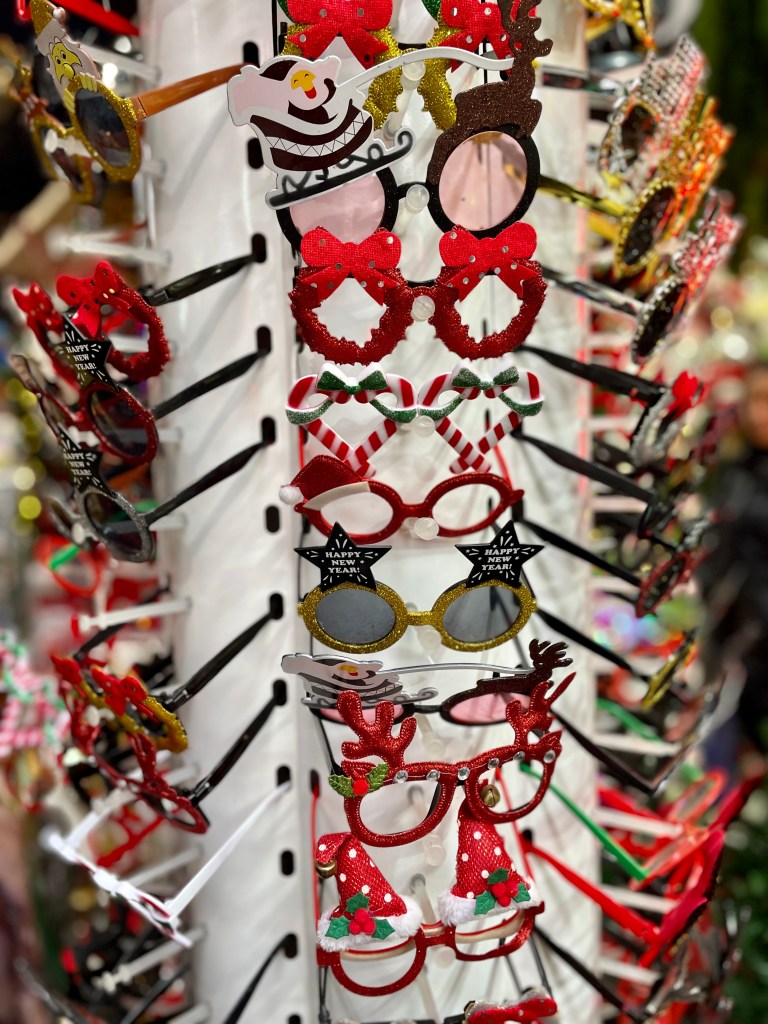
Multiple shops were overflowing with Christmas gear. Considering that 99% of Turkish people consider themselves to be Muslim, this was a bit unexpected. But we happily snapped up some glasses for the photo booth at the holiday party next weekend.

Possibly my favorite corner in the market contained all the paper goods and handmade paper stores one could ever need. I had a lot of fun picking out souvenirs for folks back home and it brought back good memories of shopping hanji in Namdaemun.

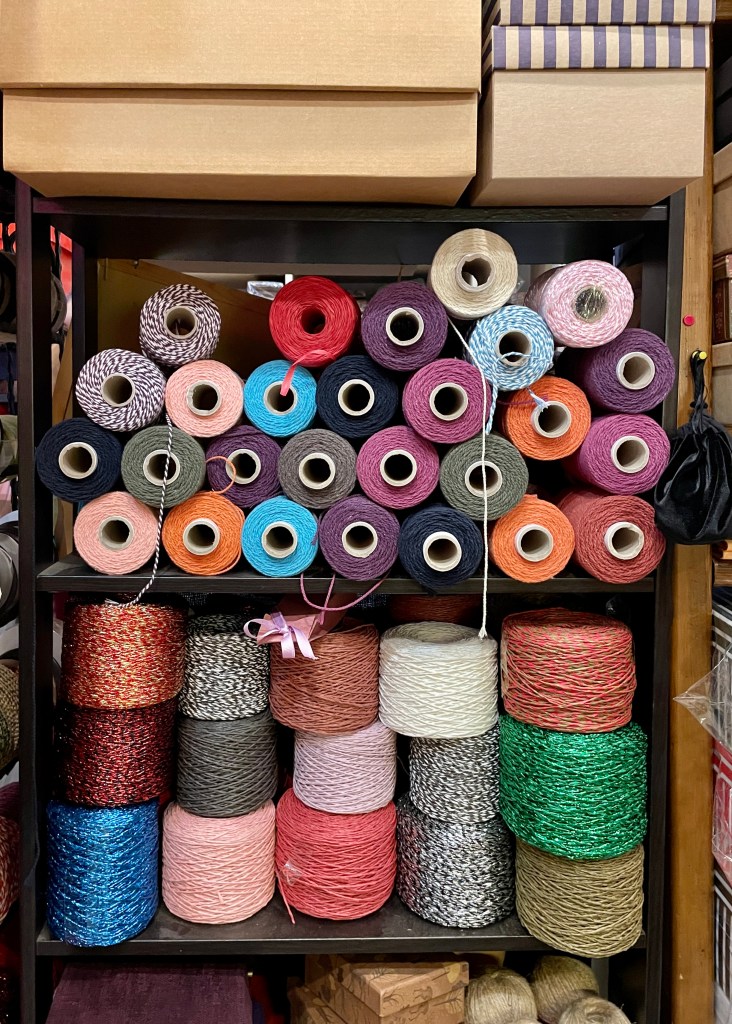
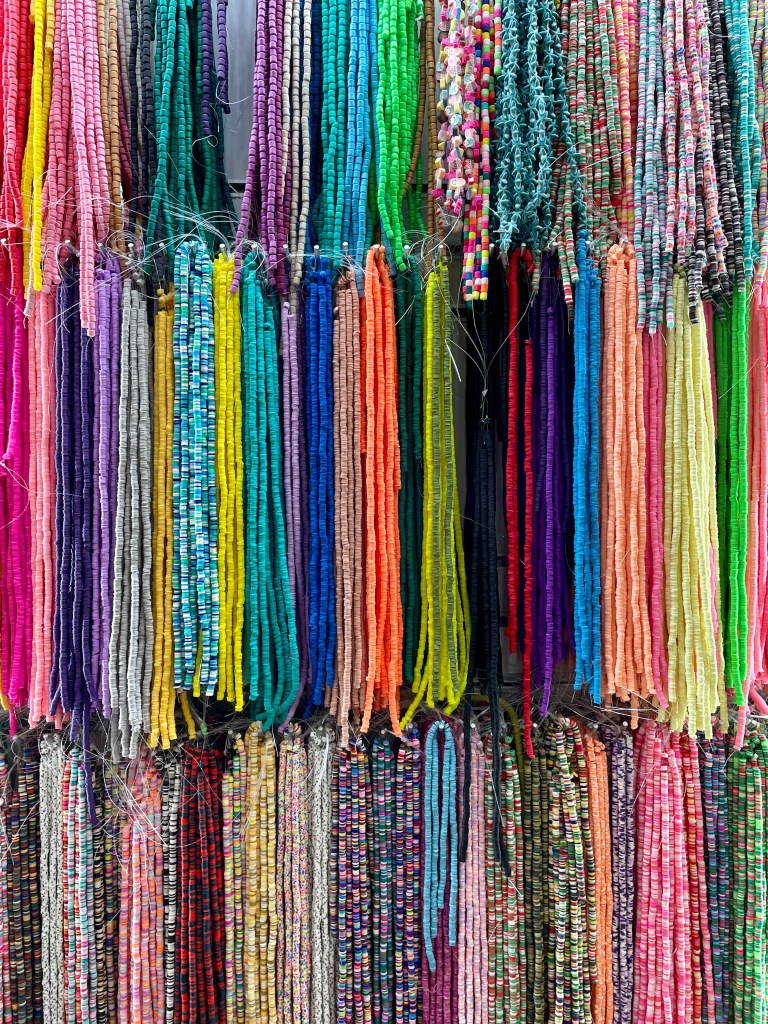
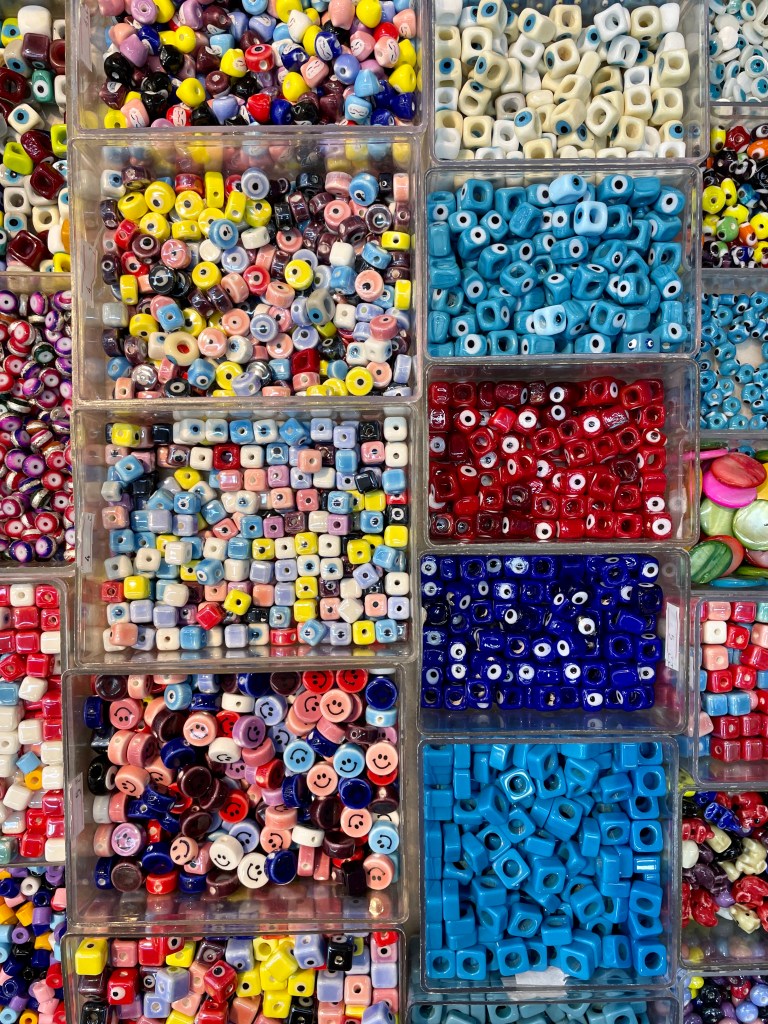
There were entire stores filled with only boxes, twine, and wrapping materials. Michele really took our tour to the next level when she brought us to the jewelry market. 6+ floors of shops dedicated to glass pieces, silver pendents, and strings-on-strings of beads.

This was peak sensory overload, as you might imagine. Michele adopted mosaics as her COVID handicraft and, with options like these, I can certainly see why.

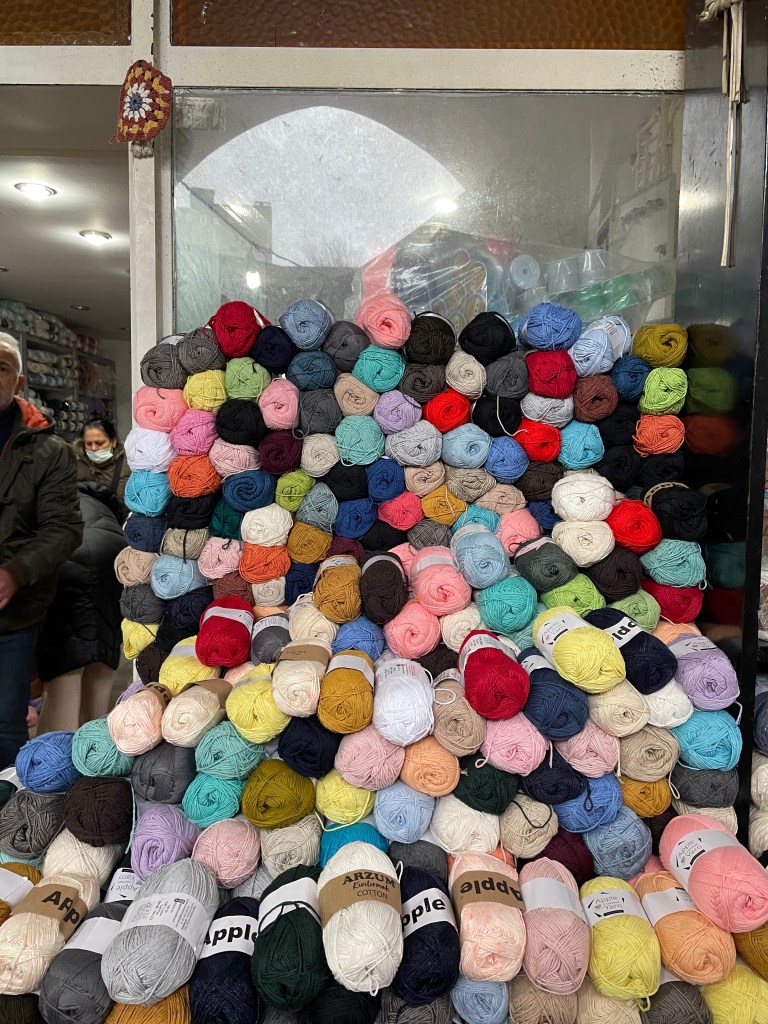
There is an entire floor dedicated to yarn, probably a dozen shops in total. Macrame materials, cotton yarn, wool, organic yarn. If you name it, it exists on the upper level of the marketplace.

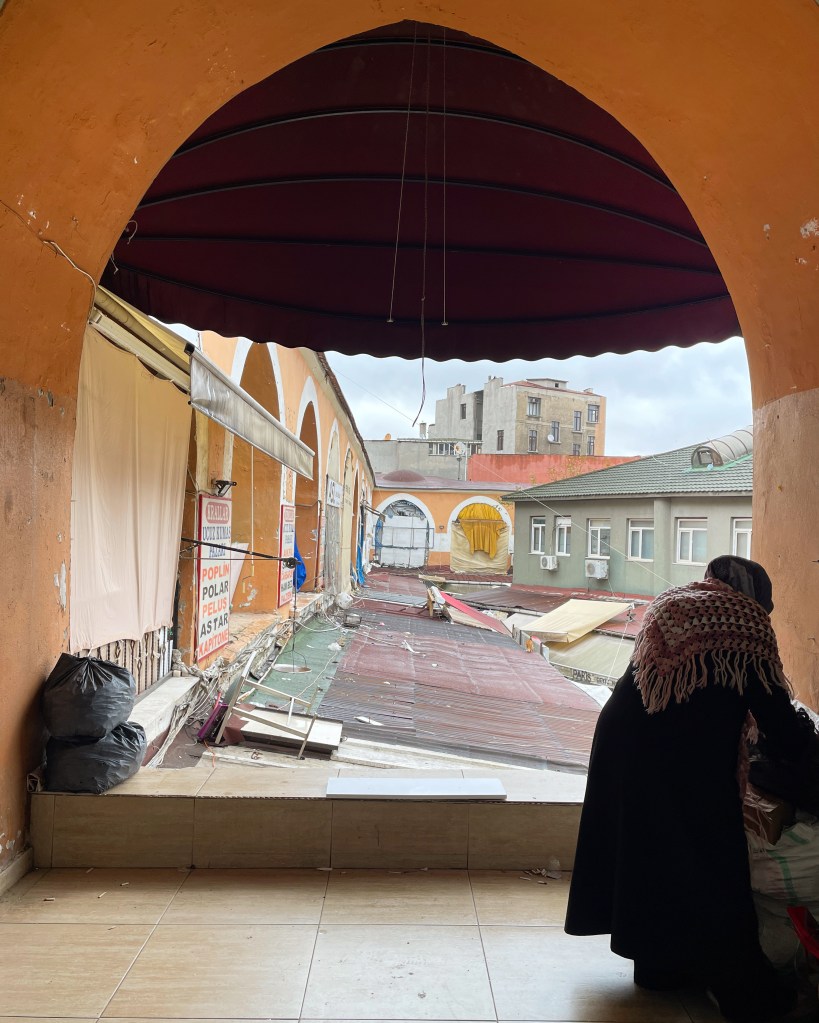
As Jenn knows, I’m not a huge fan of shopping as a past time so I tried to take this all in as sightseeing. It became harder to do as the morning wore on and the streets began to fill with people. Below is a moment of respite I found above the crowds, the landscape echoing the dusty rose palette of nearly everything here in Istanbul. There is beauty in the breakdown.

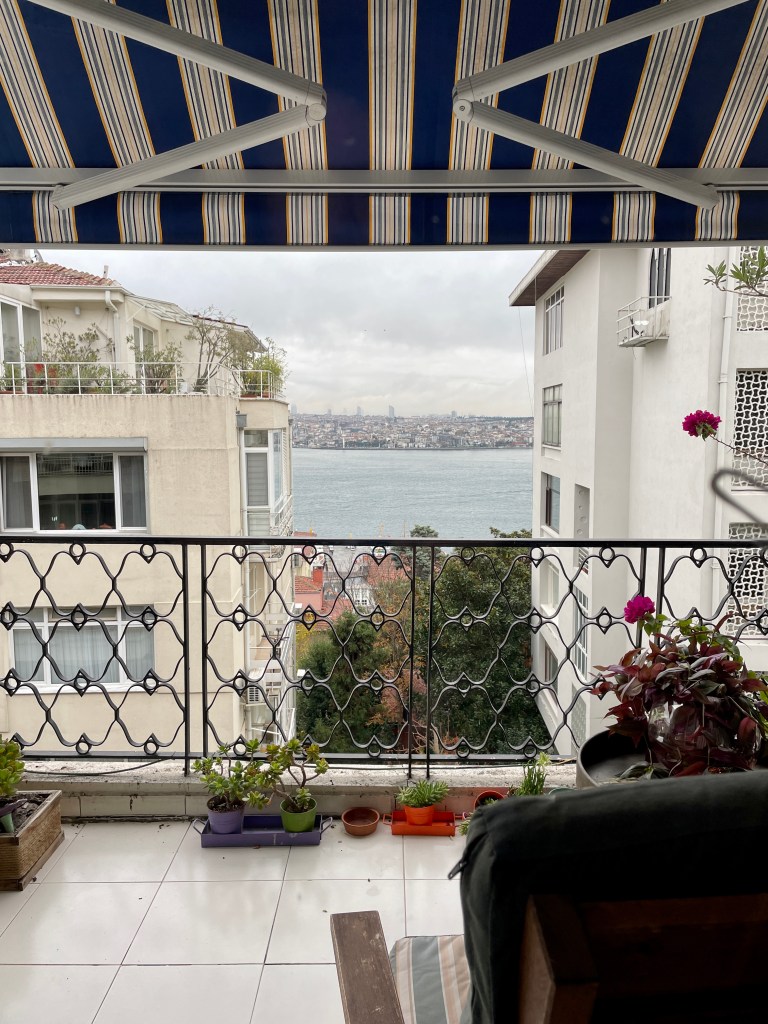
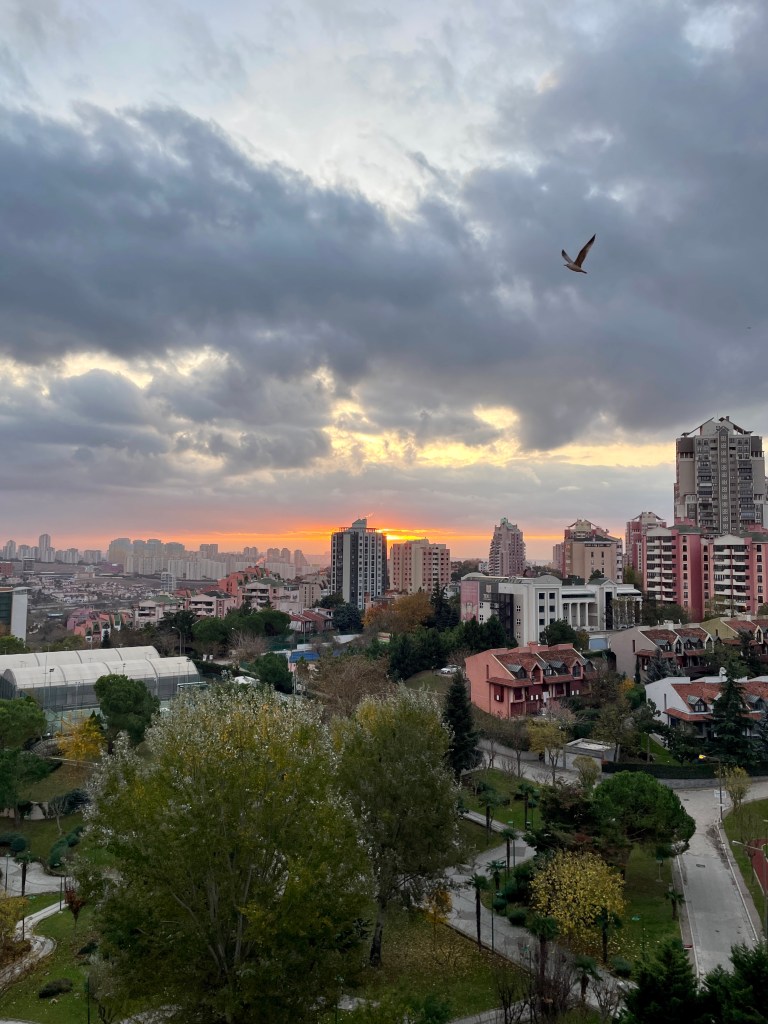
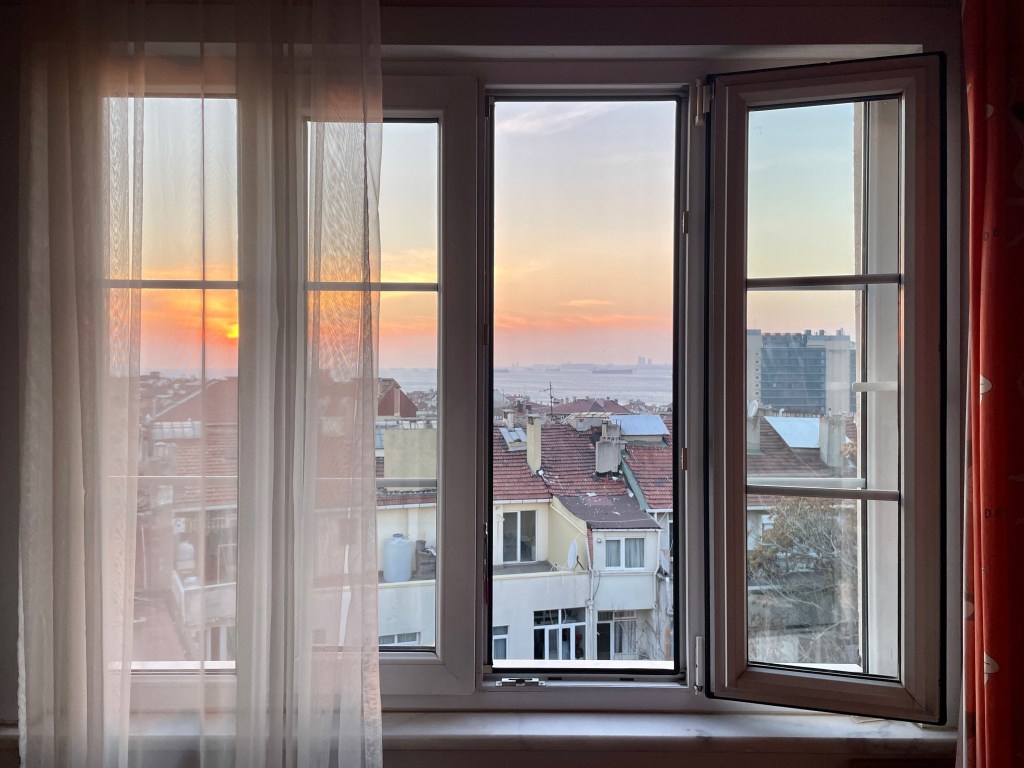
Please keep in mind that at no time did we actually enter the Grand Bazaar itself. That adventure will have to wait for another day. But this overload of color, texture, and noise was enough to brighten up this grey December morning which began with this view of the Bosphorus.

Some of you have asked, is life in Istanbul really as wonderful as it seems? The answer is not so black and white. Excursions like this one to the bazaar are not my everyday life, but they are within reach with the help of others. It would be possible to filter this blog like any other type of social media – often with rose-colored glasses. Be assured – I do see red when frustrations appear and they certainly do appear, just as they would in daily life anywhere. It’s an experiment in extremes at times. Expat life isn’t always easy and seemingly simple tasks can prove wildly challenging in a foreign language. But there’s a lot of beauty in this life, too. As someone recently reflected, you can let these things get to you or let them pass. Truly depends on the day but that’s my task as I begin to settle in to my home-for-now.

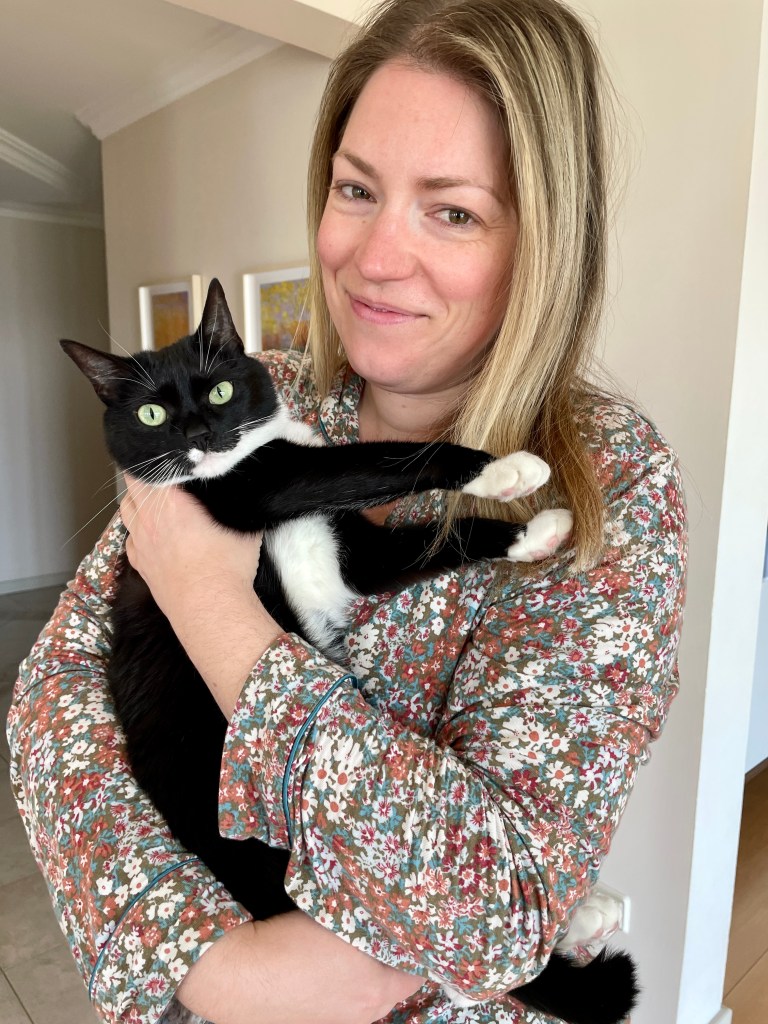
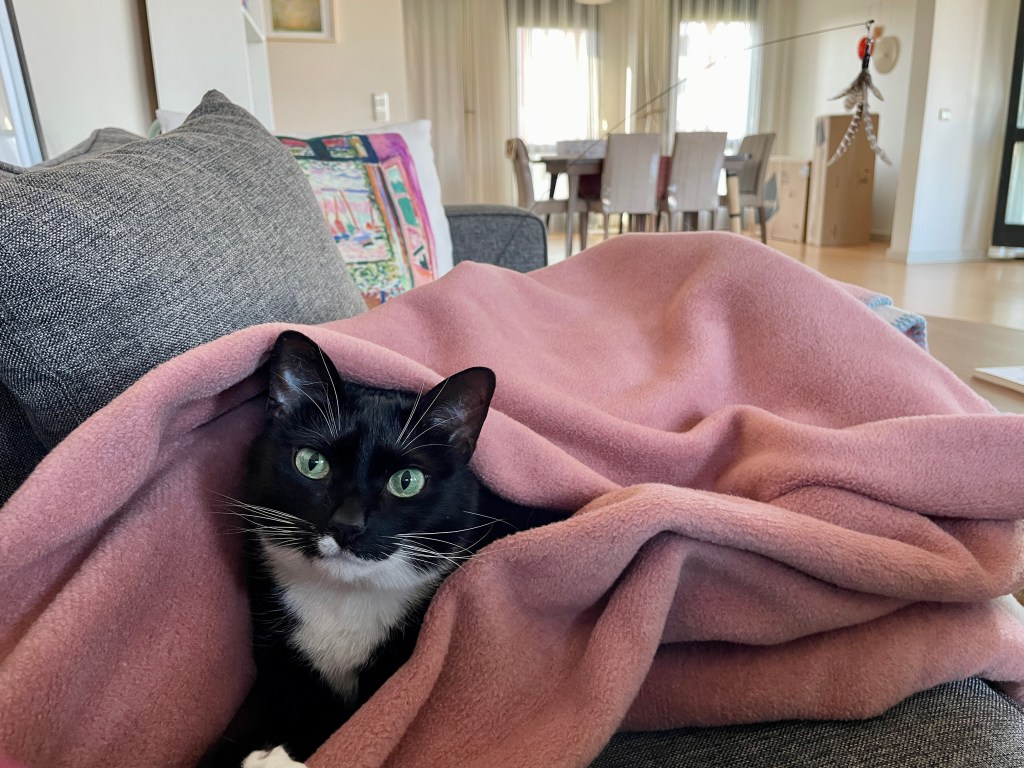
Thank you for following along with my journey! I hope to welcome many of you in person to this wild and wacky place in the coming years. As you can see, Moloko has launched a visitor campaign of her own, modeling the comfort and snuggle opportunities afforded by the guest room, now open for business.

As 2023 approaches, I want to wish you the best, wherever this holiday season may find you. Whether with relatives or chosen family or both, I hope this December brings you all the blessings of the season and, perhaps, renewed hope for the year to come. Please take care and I’ll catch you on the flip side!

Sh-sh-shaking

It has been another eventful week here in Turkey. On Tuesday morning, just after 4am, I awoke to my bed shaking and my Thai chimes ringing in the living room. My chimes were slamming against the wall so it only took about two seconds to realize we were having an earthquake.

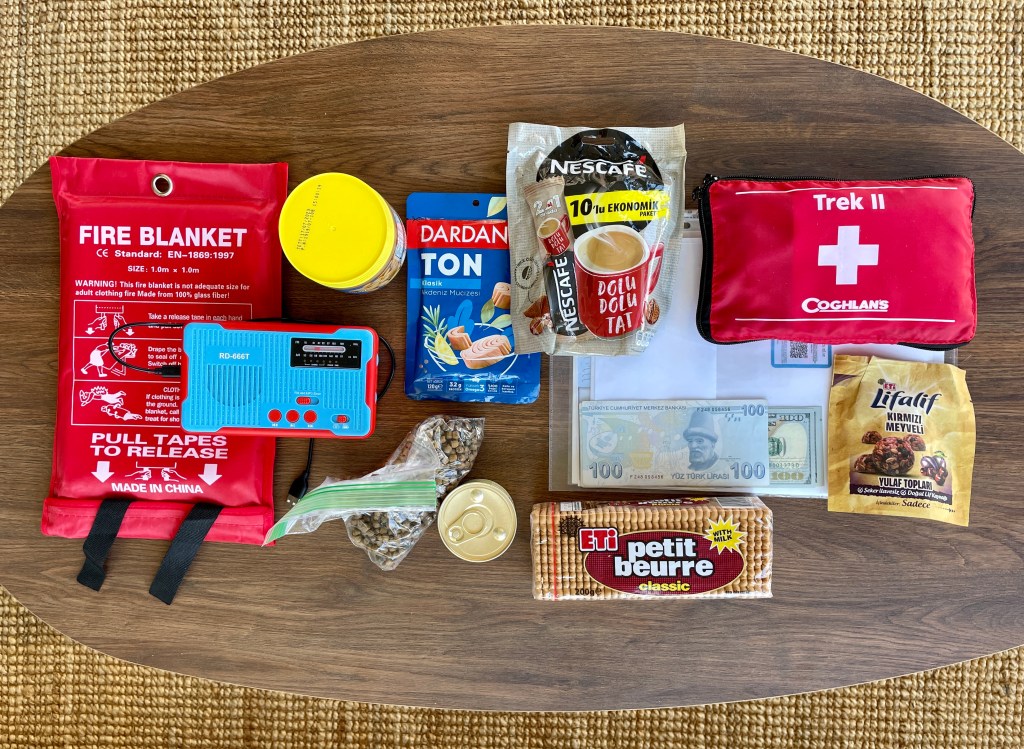
Thankfully I had been warned about earthquakes when I first arrived so I was prepared. I paid a carpenter to “earthquake-proof” my apartment, drilling into the concrete bedroom walls to prevent the heavy wardrobes from tipping over. I purchased a stockpile of water (enough for three days was the recommendation) to keep in my apartment, should I be stuck inside. I also packed a “go-bag”, a practice I had put into place during some of the more tense moments in Moscow, when I had to anticipate possibly leaving the country suddenly. The items below are part of the contents of my go-bag.

Thankfully, this earthquake was fairly benign. Centered 250 km due east in Duzce, it registered a 6.0 but was thankfully shallow. While that region experienced a number of aftershocks in the hours and days which followed, life went on as usual here. The chatter on my morning bus ride to school was more excited than usual. Most of my students seem to have slept through it, according to my informal classroom polls. Unlike the bombing the week prior, my school didn’t feel the need to issue any community statement. CNN didn’t even carry the story due to a lack of injuries (thankfully) compared to a fatal Indonesian earthquake only days before. And though my toaster has twice blown the electricity in my entire apartment, there were no further issues following this event. Here’s hoping that this is the last exciting event for a while. Pictured below, a slightly shell-shocked kitten in the early morning hours, not thrilled to have experienced her first earthquake.

On a lighter note, World Cup fever has gripped our community. With 60+ countries represented in our student body, the kids are passionate about watching the matches and talking constant smack in class. We’re streaming Iran vs. Wales in study hall and national jerseys are worn with pride daily. Football is life in Europe and Turkey is no exception. The last time I enjoyed the World Cup in Europe was at TASIS when we let the campers stay up to watch Spain beat the Netherlands in 2010. Waka waka.

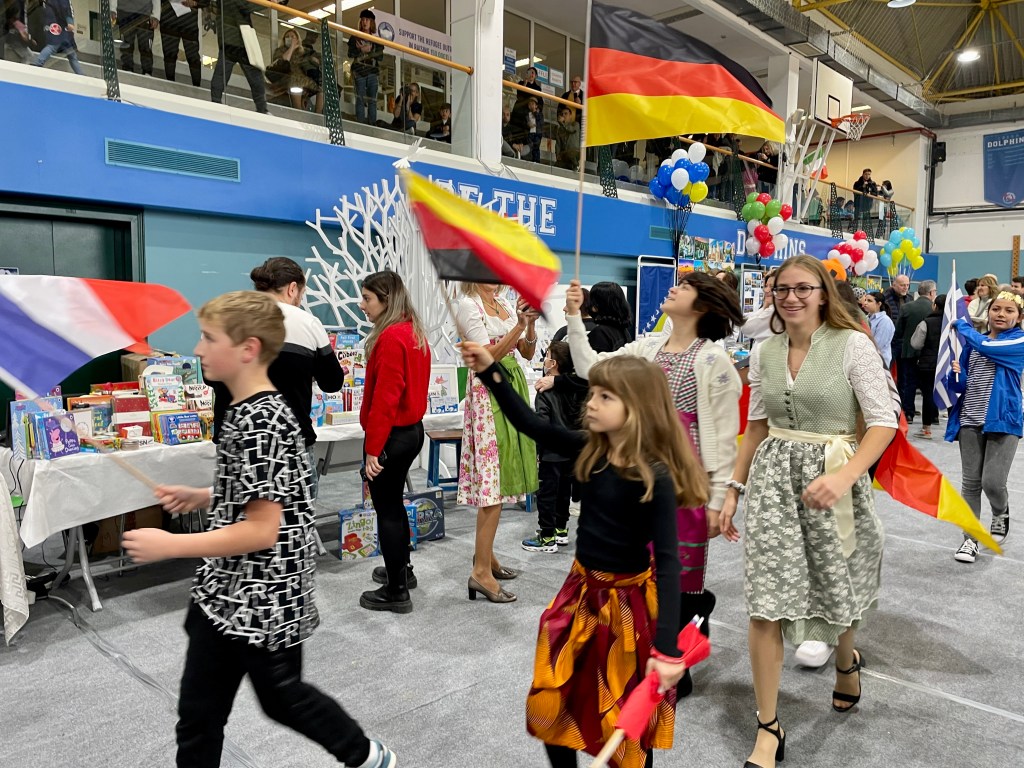
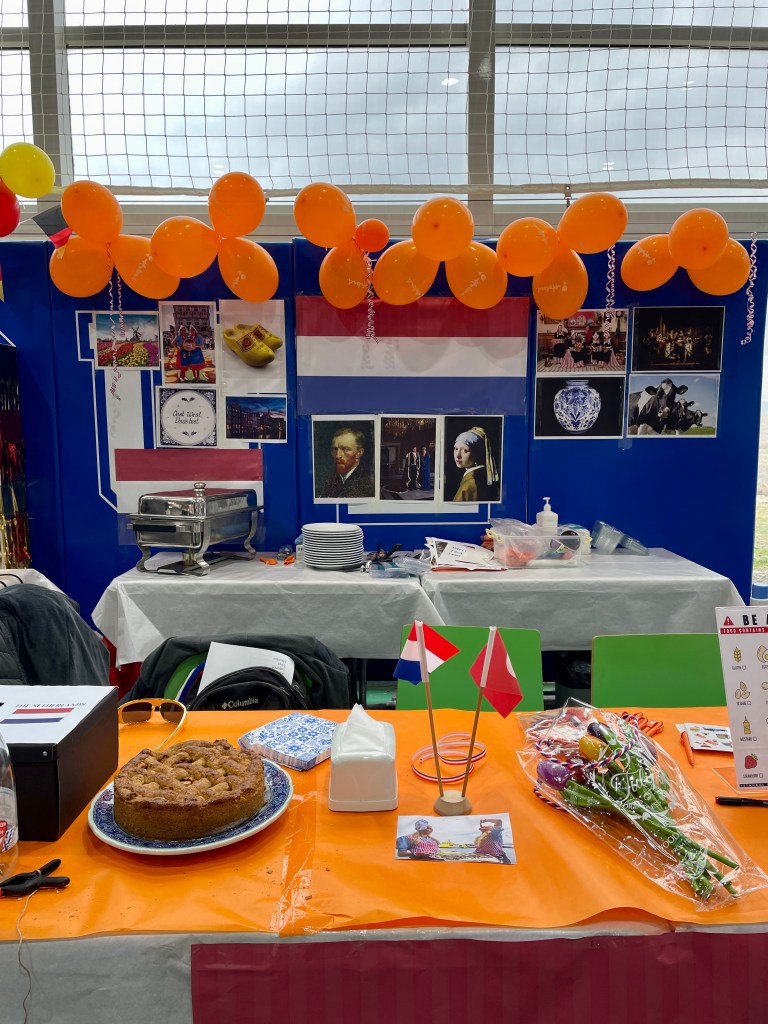
Piggy-backing on all that national pride, my school celebrated International Day on Saturday. A flag parade was announced and a lot of delicious food was served. Students who don’t normally engage were happy to help their parents out at their national booths. The event, like the World Cup, spurred a lot of conversation entry points with my students, and I heard about family moves to Turkey from Ethiopia, Morocco, and Iran in recent days. The majority of my students are very privileged to have made this jump and be attending a private international school.

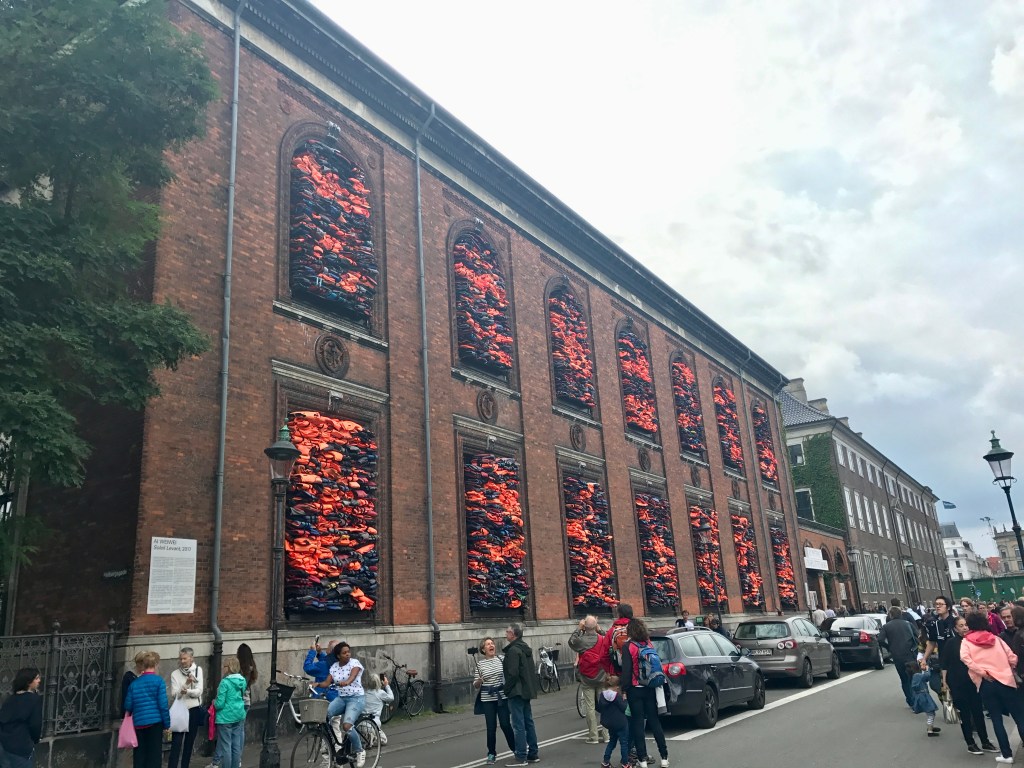
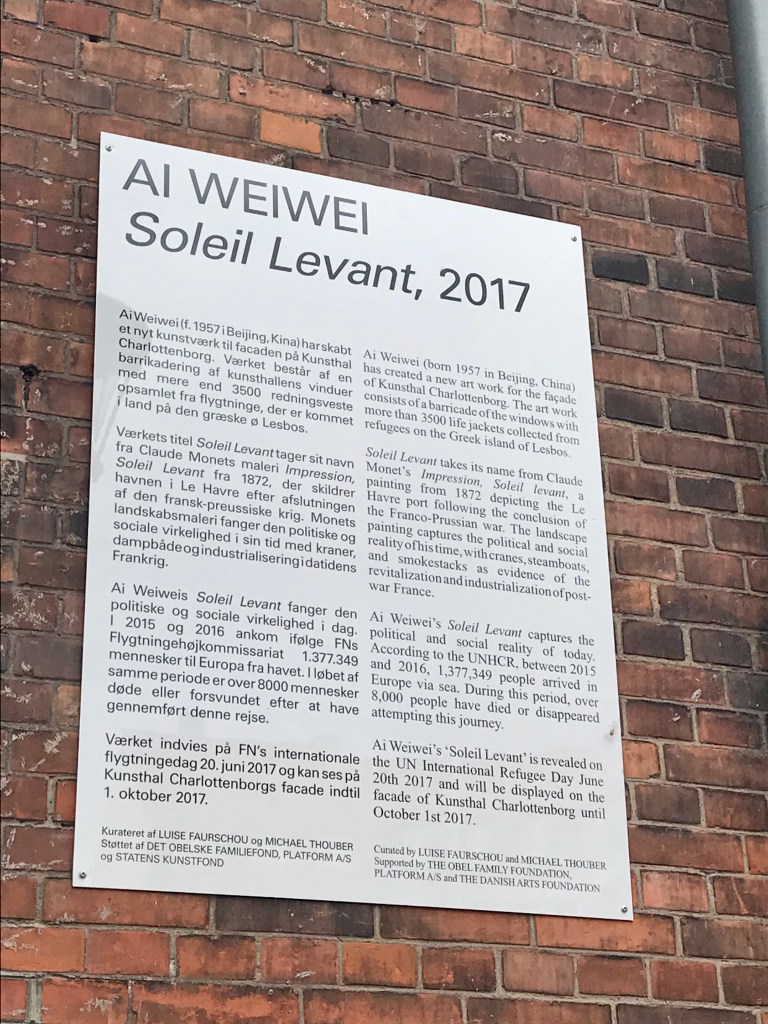
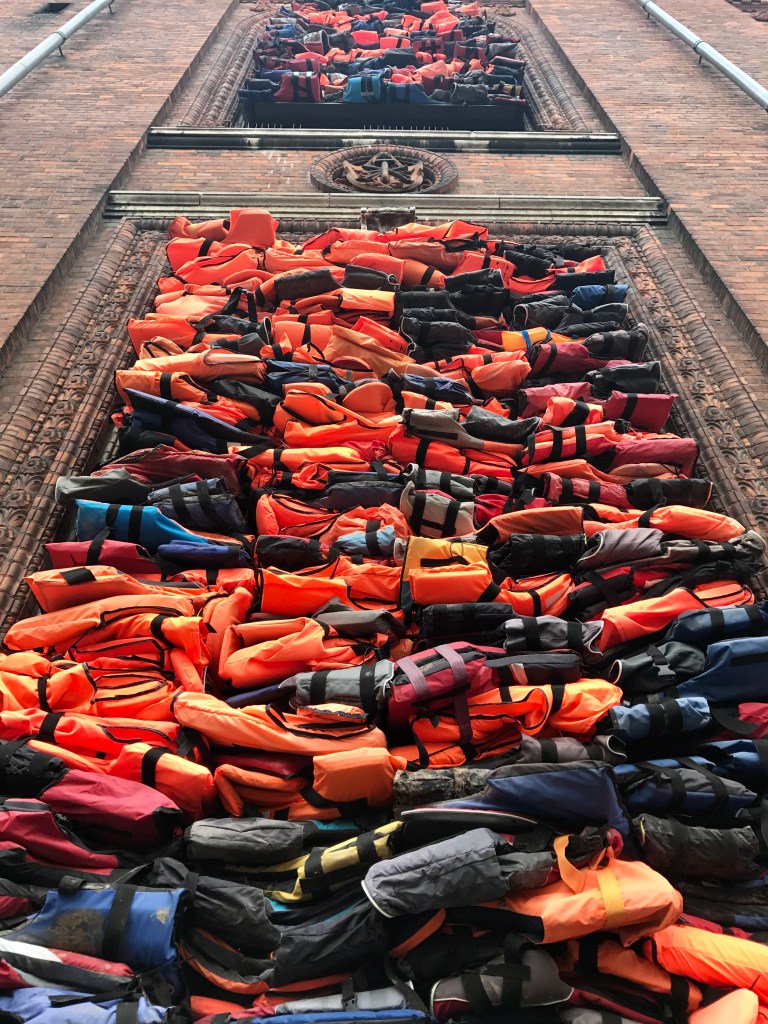
Capping off International Day, I watched a new film on Netflix called The Swimmers. Premiering just this weekend, the film details the harrowing journey of two sisters from Damascus, Syria, through Istanbul and onto mainland Europe (Greece) by boat. We hear about refugees arriving on Greek islands in the news, Ai Weiwei creates art installations from the hundreds of thousands of life preservers abandoned on the beaches, but to observe this film, based on the true story of Olympian Yusra Mardini (Rio 2016), is wild. The pics below are my own taken from Ai Weiwei’s installation in Copenhagen in 2017.

“It could never happen here”, a phrase uttered all too often in this tumultuous world should be a warning to us all. As a US citizen, with only two countries bordering my own and vast oceans protecting me from international invasions, I will admit to being very naive of my privilege. This movie breaks down those walls, painting a picture to how quickly people can be forced into refugee situations and in my own backyard here in Turkey.

Today I’m headed down to Fatih, the neighborhood which encompasses Istanbul’s Grand Bazaar. It’s hard to believe but I’m on the hunt for Christmas presents, my flight home being less than three weeks away. Always fun to share the treats of a new place with those back home. As always, thanks for reading and I wish you all a safe and healthy start to December.

Safe & Sound

Greetings from Istanbul. The mood is decidedly despondent after yesterday’s tragic events. If you have not yet heard, there was an explosion on a very popular shopping street downtown. Six people were killed and nearly 80 others wounded. It was a picture perfect fall day with shoppers and families out enjoying the surprising November warmth. The events of yesterday brought back the not-so-distant memory of the Boston Marathon bombing in 2013. Another glorious day ripped apart by an act of senseless violence.

Before this terrible event unfolded, I took a little weekend adventure on the other side of the Bosphorus Strait. Istanbul is one of the only cities in the world that spans two continents and I hadn’t yet made it to the Asian side. With that in mind, I made a last minute AirBnB booking and Googled ferry departures.

There is a ferry terminal is located just off my main bus line, making for an easy transit. The ferry ride itself cost all of 80 cents and I was treated to a few stops on opposing sides of the canal before we moved into the open channel of the Bosphorus.

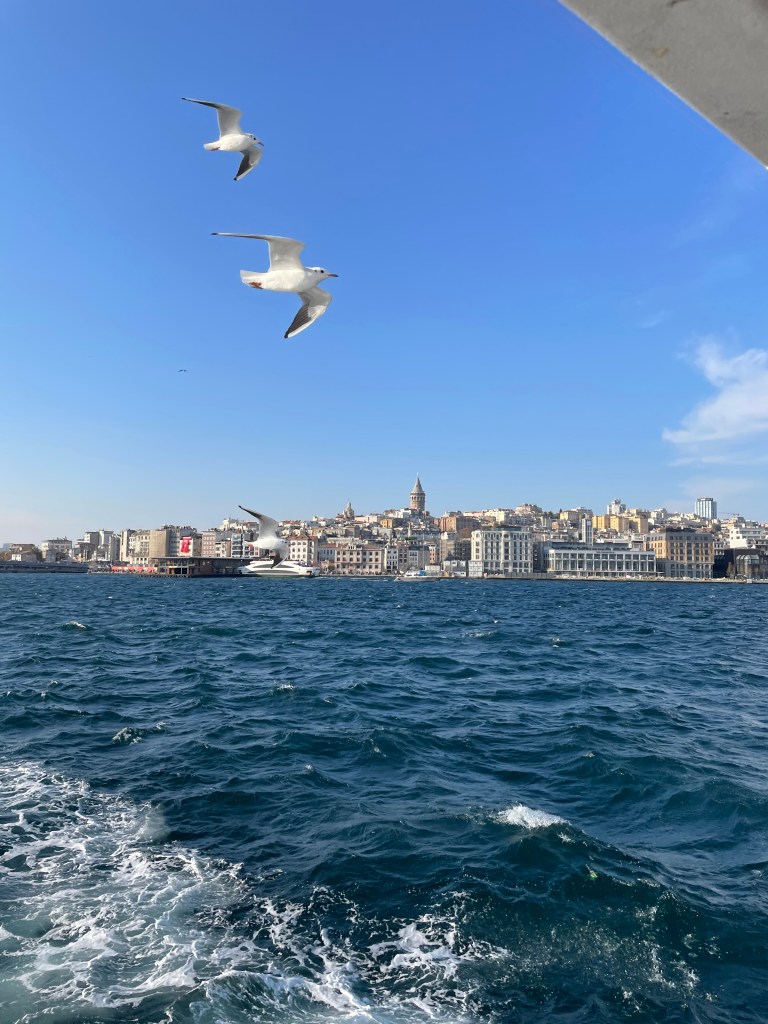
The Bosphorus Strait is over two miles wide at parts, giving the illusion of the open ocean at times. There was light chop on the water as the seagulls drafted our wake. Wooden benches lined the top deck and vendors rolled through, deftly brandishing tea in traditional glass cups, their sea legs the result of thousands of crossings over their lifetime.

We steamed for Kadıköy, a popular port neighborhood once home to prehistoric settlements of civilization. Today it’s a hot spot for nightlife, hipsters, and rich retirees – though they have mostly moved over to Moda, the calmer neighbor to the south. I found my sixth floor walk up and set up to enjoy the sunset from the rooftop.

I could hear the roar of the crowd from the football (soccer) stadium just over the hill. Day drinkers were hitting their stride and restaurants were beginning to set up on the streets below.

Kadikoy has a vibe all its own – very free spirited and relaxed. I checked out a record store and a few bookshops before meeting up with some friends from school who took a water taxi over from downtown. The restaurant scene appears to be pretty fabulous in Kadıköy, where you can find anything from Italian to Ottoman.

On Sunday, I awoke early to explore the neighborhood of Moda. With the bars only recently shuttered, I had the sunrise all to myself. Just me and the sea gulls.

Walking the perimeter of Moda, I met many a cat living in the rocks of the breakwater and watched the massive tankers on maneuvers out in the strait. Making my way back to Kadikoy’s ferry terminal, I boarded a boat bound for Karikoy to meet friends for brunch.

The morning couldn’t have been more glorious and my sweater was plenty warm despite the mid-November date. The gulls bobbed and weaved, occasionally flying between the posts on top deck while matching course and speed.

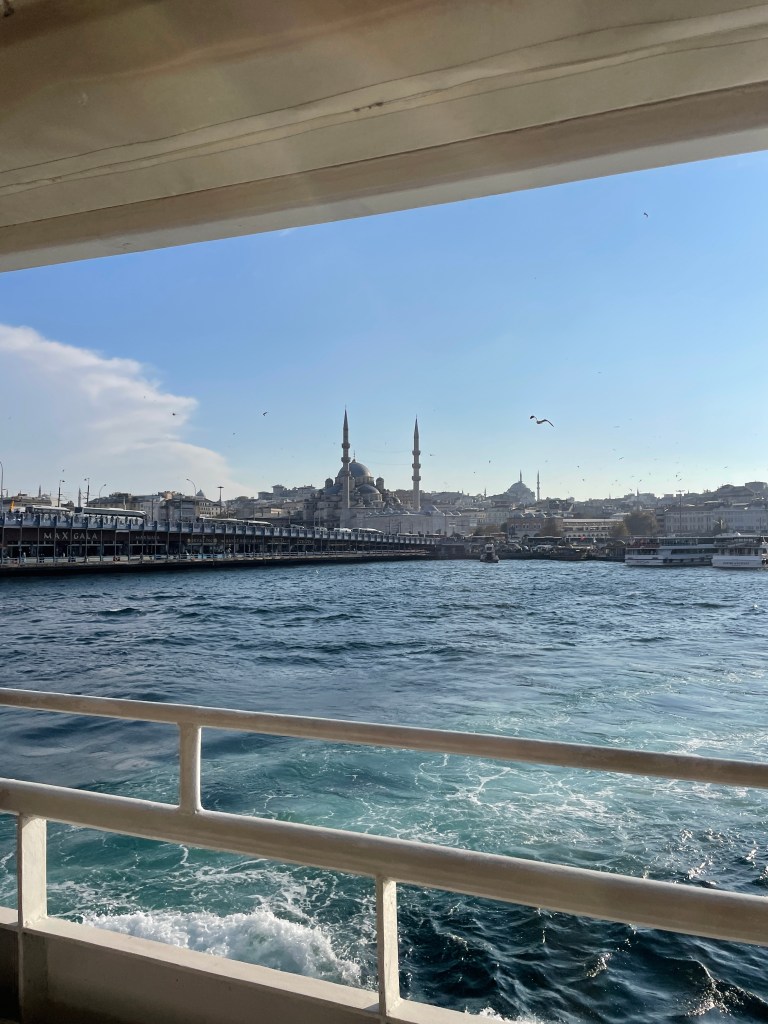
We sailed past the Hagia Sophia and the Blue Mosque, each lit up by single beams of sunlight as if on a movie set. I reveled in Istanbul’s beauty, on full display against the backdrop of a true blue autumn sky.

After docking, I made my way up to Galata Tower to enjoyed brunch with some new friends. We happily swapped stories of our respective weekends and enjoyed yet another delicious Turkish breakfast.

My thoughts are with the loved ones of those lost yesterday. Those who commit acts of terror wish to sow fear, to fracture relations and turn us against one another. But they will not keep me from exploring this city which I am growing to know, this culture I am only beginning to understand.

Sofia (Part 1)

Back in early September, as I began to brainstorm fall break destinations, Bulgaria sat firmly atop my list. I’d long heard that Sofia, the capital city, would be my kind of town – slightly rough around the edges with a good art scene, cafe culture, and plenty of green space. Bulgaria borders Turkey, Greece, and Romania, all colorful countries in their own right. I knew it was a former Communist Bloc state and the purported home of Viktor Krum. My new neighbor to the north beckoned and I accepted.

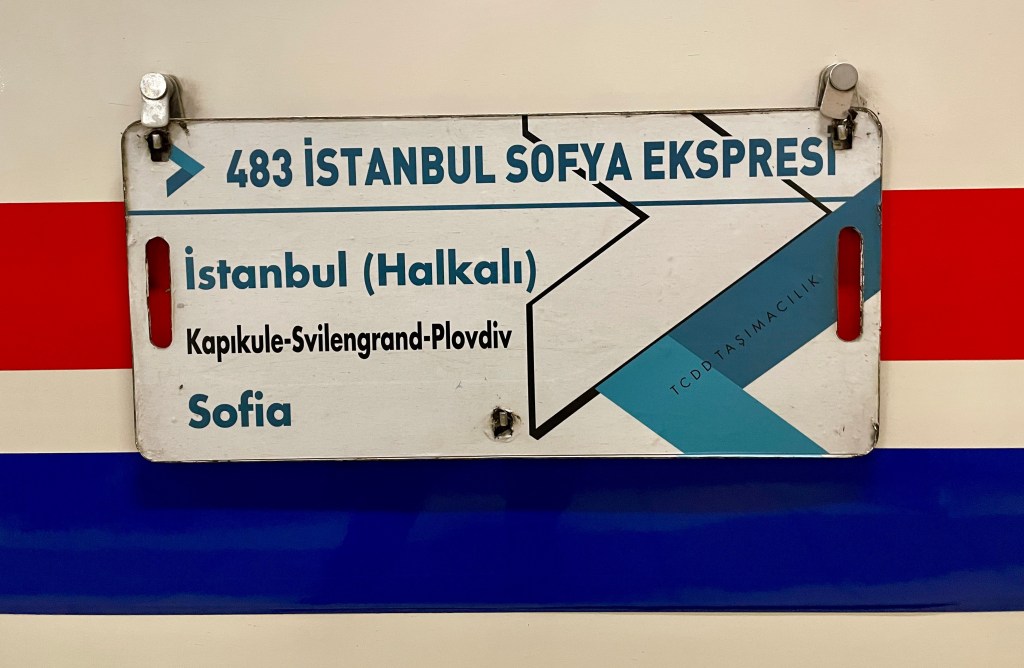
Having been landlocked in South Korea and restricted from exiting Russia by rail, I was eager to find a train which ran in between Istanbul and Sofia. Following a thin trail of websites, travel blogs and YouTube vlogs, I discovered the Sofia Express. The overnight journey would take roughly 12 hours and I was warned to bring my own food – there would be no dining car. There are two ways to purchase tickets for the Sofia Express and both involved in-person purchases at train station ticket windows. For anyone interested, you can find the details at the end of this blog.

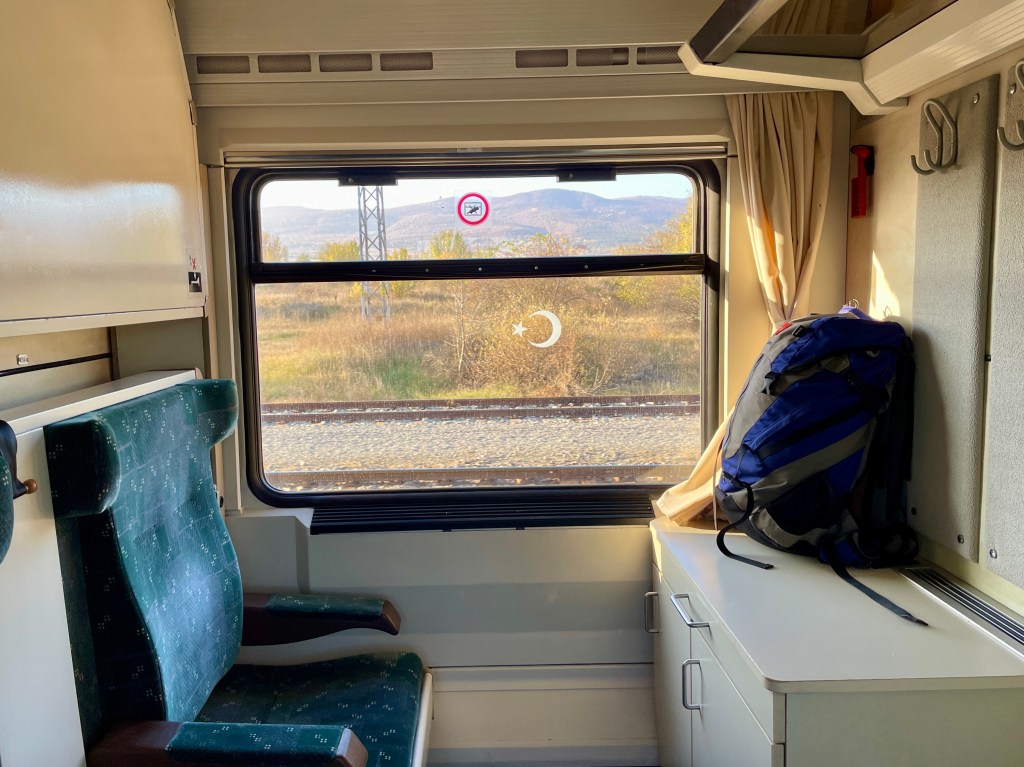
Fall break arrived and I boarded the Sofia Express at Istanbul’s Halkalı railway station for a 8:40pm departure. I had opted to purchase a full sleeper cabin for myself for security reasons and the cost totaled to $128 for the roundtrip journey. Pulling down the seats to create my bed, I made up the lower bunk as we got underway. Sailing past my school on the outskirts of town, we headed due west towards Bulgaria.

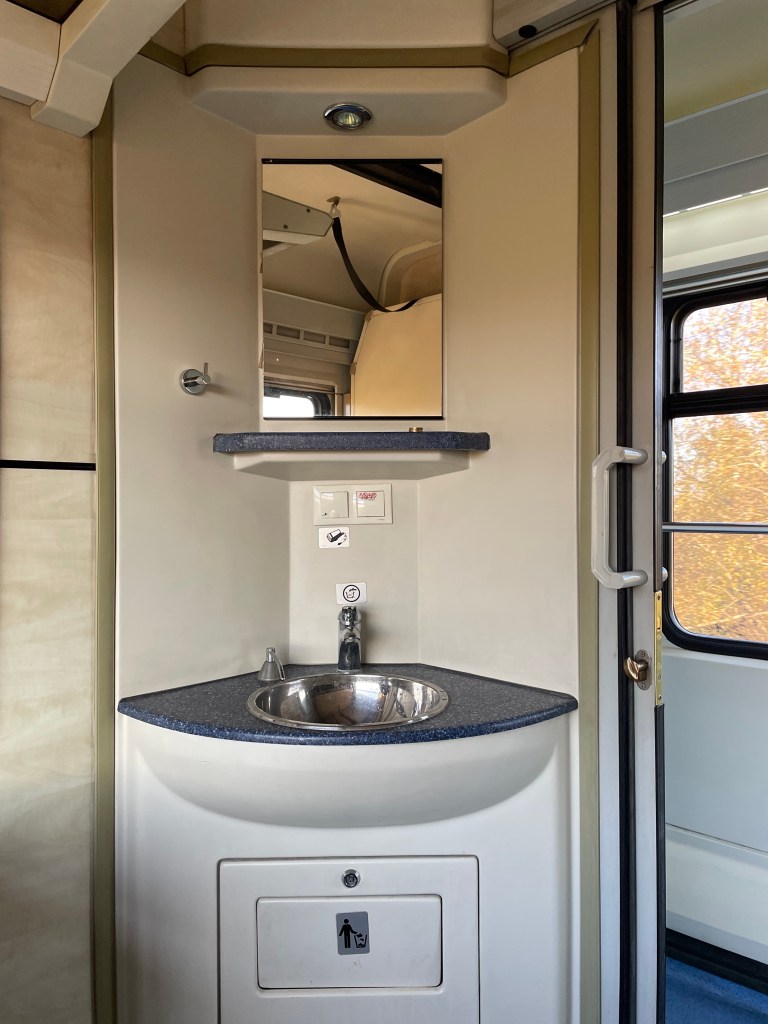
The Bulgaria-Turkish border intersects at the town of Edirne, which just narrowly skirts the edge of eastern Greece. Disembarking at the first border crossing, you are stamped out of Turkey by passport control around 1am. After settling back into your train berth about an hour later, the train rolls on for few kilometers and then begin the knocks from the Bulgarian border guards. These guys kindly take your passport away to stamp it and return it to you about an hour later. The whole procedure takes nearly three hours in total – not a smooth night of sleep, I’m afraid. But it could have been – the cabin beds were comfortable (for someone of my shorter stature) and very clean. The private sink and tiny fridge were nice features as well.

After a few hours of sleep, I awoke to the golden glow of the Bulgarian countryside. Mountains wrapped in orange ringed the edge of my horizon and fall was in full effect. We rolled past harvested fields but otherwise there was little trace of humanity beyond our train tracks.

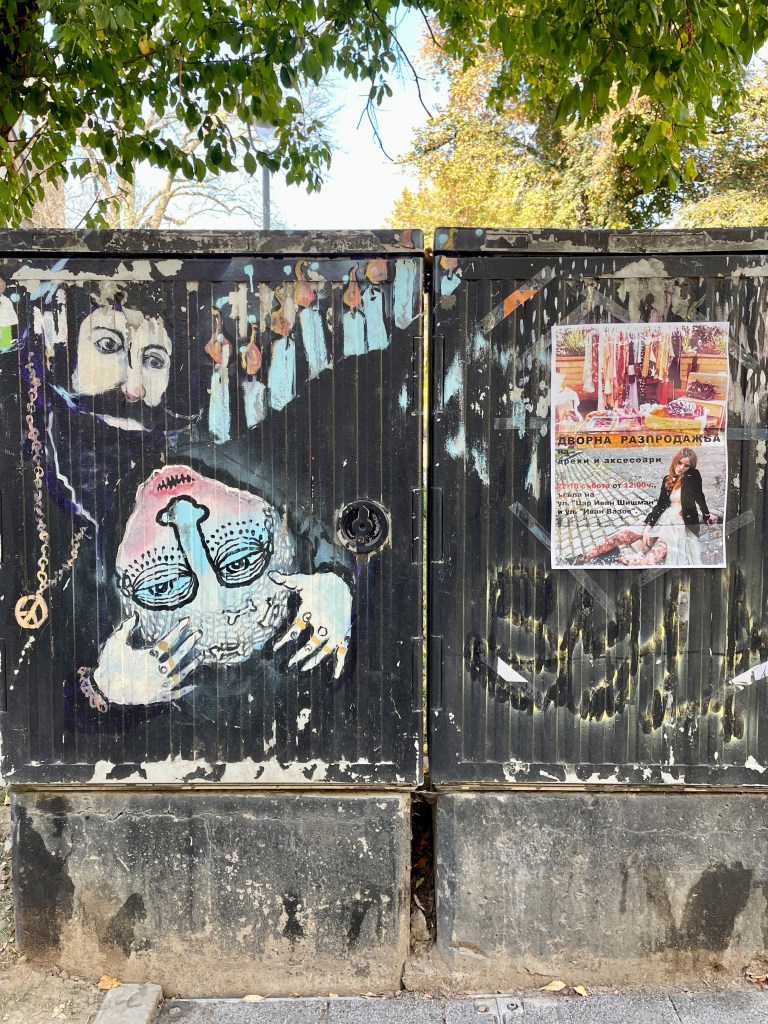
As we approached a number of small towns on the outskirts of Sofia, the homes reminded me of the dachas (country homes) outside of Moscow. The graffiti soon appeared, tags upon tags blanketing bridges and the side of the tracks. Cyrillic text took me right back to Russia.
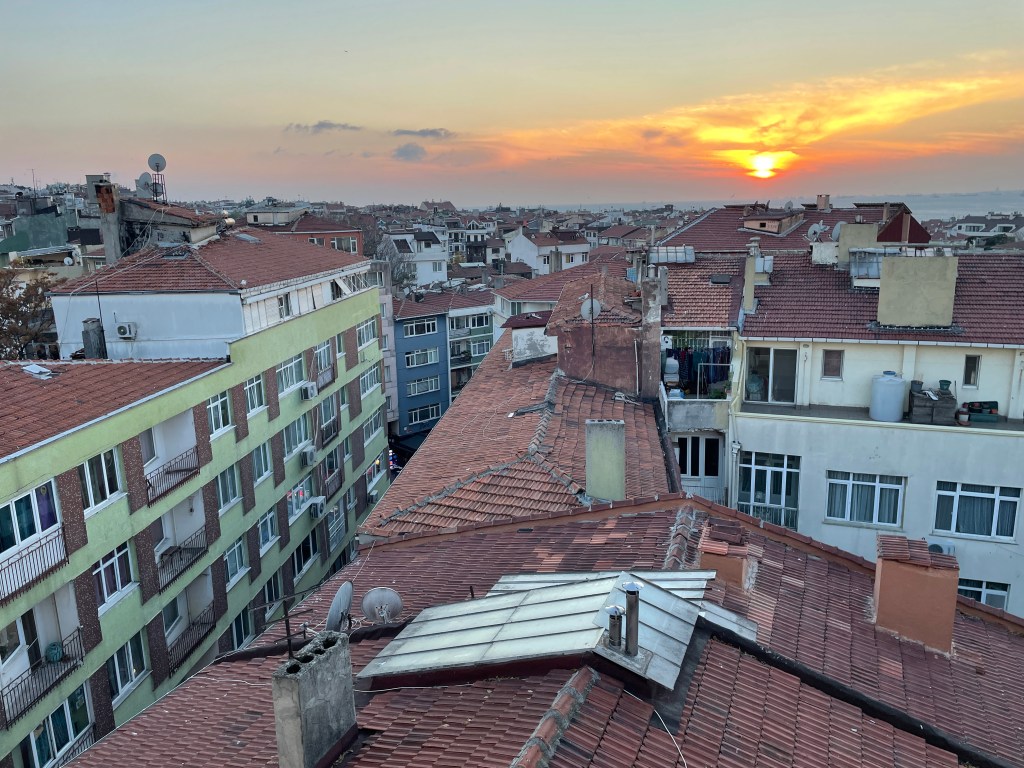
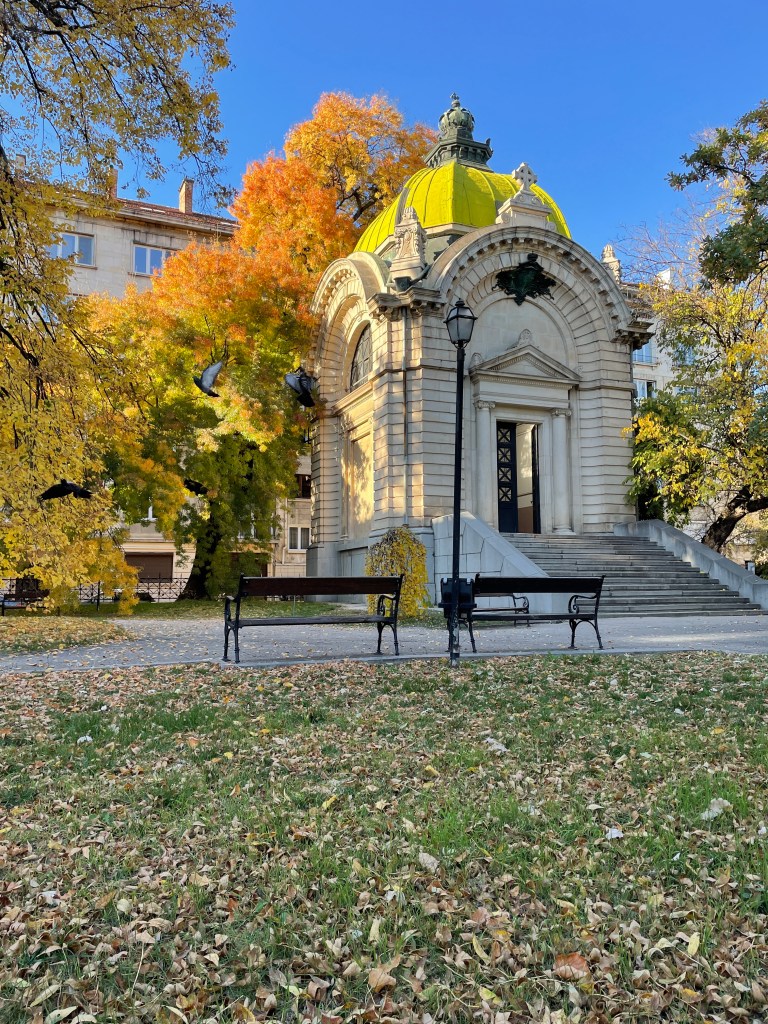
We rolled into Sofia’s Central Station around 10am and I set off on foot for downtown. Having no Bulgarian lev (local currency) and hours until my AirBnB was available, I made the most of the fairly flat walk, soaking in the beautiful foliage among the classical buildings.
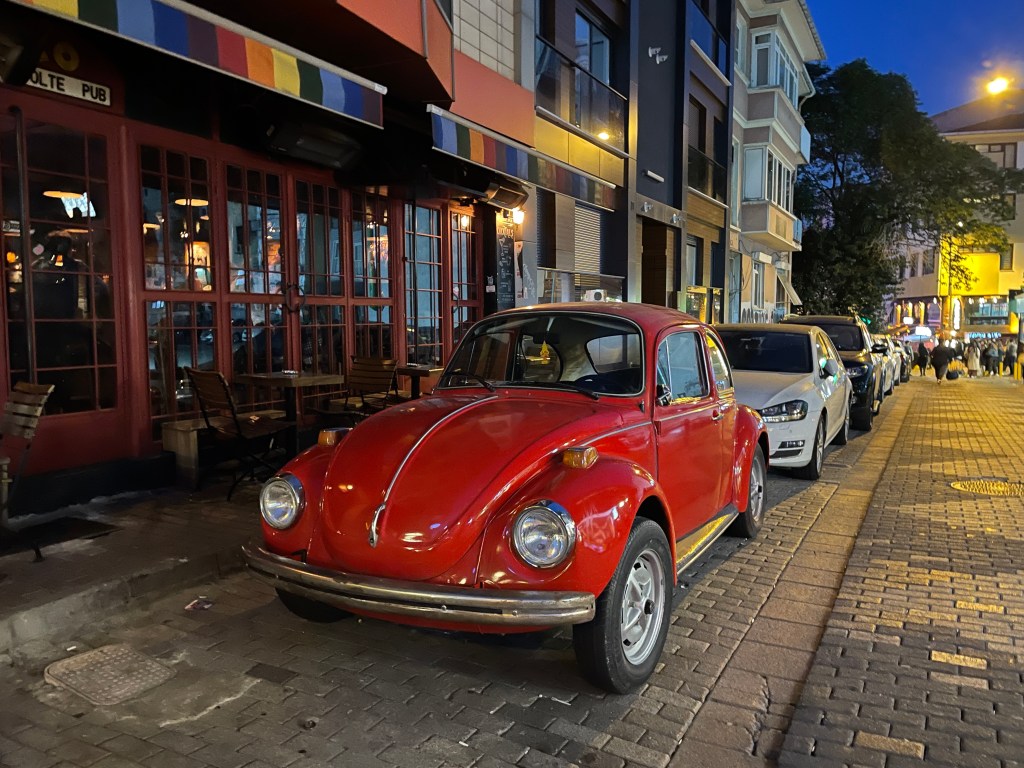
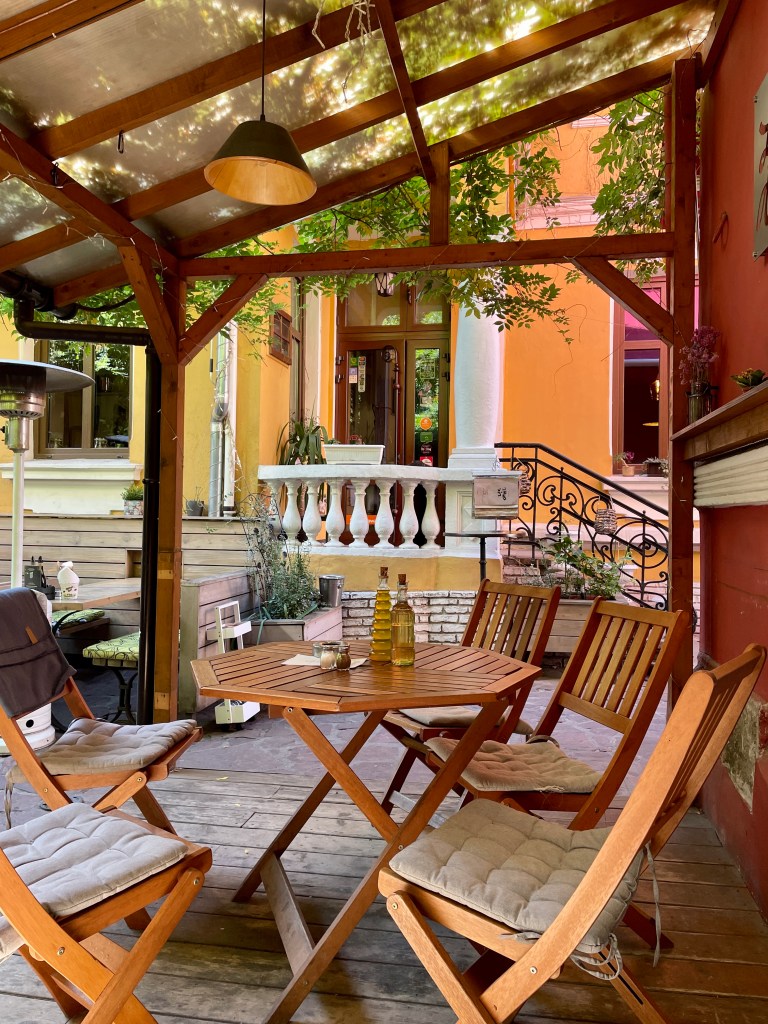
With no visa required for Americans, my travel preparations consisted of downloading the Google map of Sofia (a helpful thing to do when you don’t have wifi). I make sure to bookmark local cafes, bookstores, and art shops. These spots are great not only for my own hobbies but also for getting recommendations from friendly shopkeepers. My Sofia bookmarks included: Altruist (cafe with a patio out back), Slanchogled Sofia (art store), and The Elephant Bookstore (English titles). At the latter, the owner recommended The Little Things (pictured below), a sweet courtyard cafe where I found a cup of tea and lunch to get my trip started right.

Sold by the views of St. George’s Orthodox Church, my AirBnb was located in a residential neighborhood just off a main thoroughfare. The graffiti that blankets the city can give off an initially nefarious vibe, but I quickly realized that this was a cozy spot, with residents walking their dogs in the evenings and a wine bar just around the corner. I awakened to the ringing of church bells each morning.

I met up with my friend Linda soon after checking in. A Canadian who is married to a Bulgarian, Linda has lived in Sofia for over 20 years. Our paths have crossed at a number of conferences over the years and we caught up over dinner and drinks, having not seen each other since before the pandemic began. She approved of the walking tours I had lined up and recommended a bunch of great restaurants to check out. Nothing like advice from a local!

I’m going to stop here for now. I really loved Sofia and there’s just too much to share in one post. Thanks for reading and look for Part 2 in a few days 🙂

Purchasing Tickets for the Sofia Express in Istanbul:

Option 1: Go to Halkalı railway station, which is located 17 km from the city center on the Marmaray train line. Halkalı is the departure station for the Sofia Express. You can buy tickets from the ticket window at the top of the escalator.

Option 2: Sirkeci Railway Station or İstanbul Garı (located in Istanbul’s Fatih neighborhood). Directions told me to go to Ticket Window #4. I never saw Ticket Window #4 but I did find the ticket window labelled “International Trains” and was helped by a kind cashier who spoke plenty of English. My paper tickets in hand, I emerged victorious into Fatih and took my bus back to the ‘burbs.

Advice for the journey: Try to get to sleep soon after departure as you’ll be awake at the border from approximately 1am – 4am. Prepare for cabin knocks from border guards, line-ups at passport windows, and generally no attempt to make haste whatsoever. Both trains arrived 1-2 hours late, in my experience, so be careful when booking connections at your destination. Do bring your own food and some extra toilet paper wouldn’t hurt.

Seasonal

Autumn is beginning to make its way to Turkey. Chilly mornings and windy days signal the changing of the guard. We had our first rainy day on Saturday and it was much appreciated – required respite after all my busy travel of late.

Sunrise over Gölet Şelale (Şelale Park)

As I often do on Saturday mornings, I made my way to our nearby Pazartürk, our vibrant neighborhood bazaar. As the skies overhead threatened, I ducked under the garage doors of the warehouse and was immediately engulfed in the hustle and bustle of the marketplace.

You can really appreciate the change of seasons at a local market. Turkey, much like Korea, only offers seasonal produce. Once the strawberries are gone, they are gone until next summer. Granted, the growing season is longer here than in Korea and then in certainly Russia, so I’m still able to find an avocado or two.

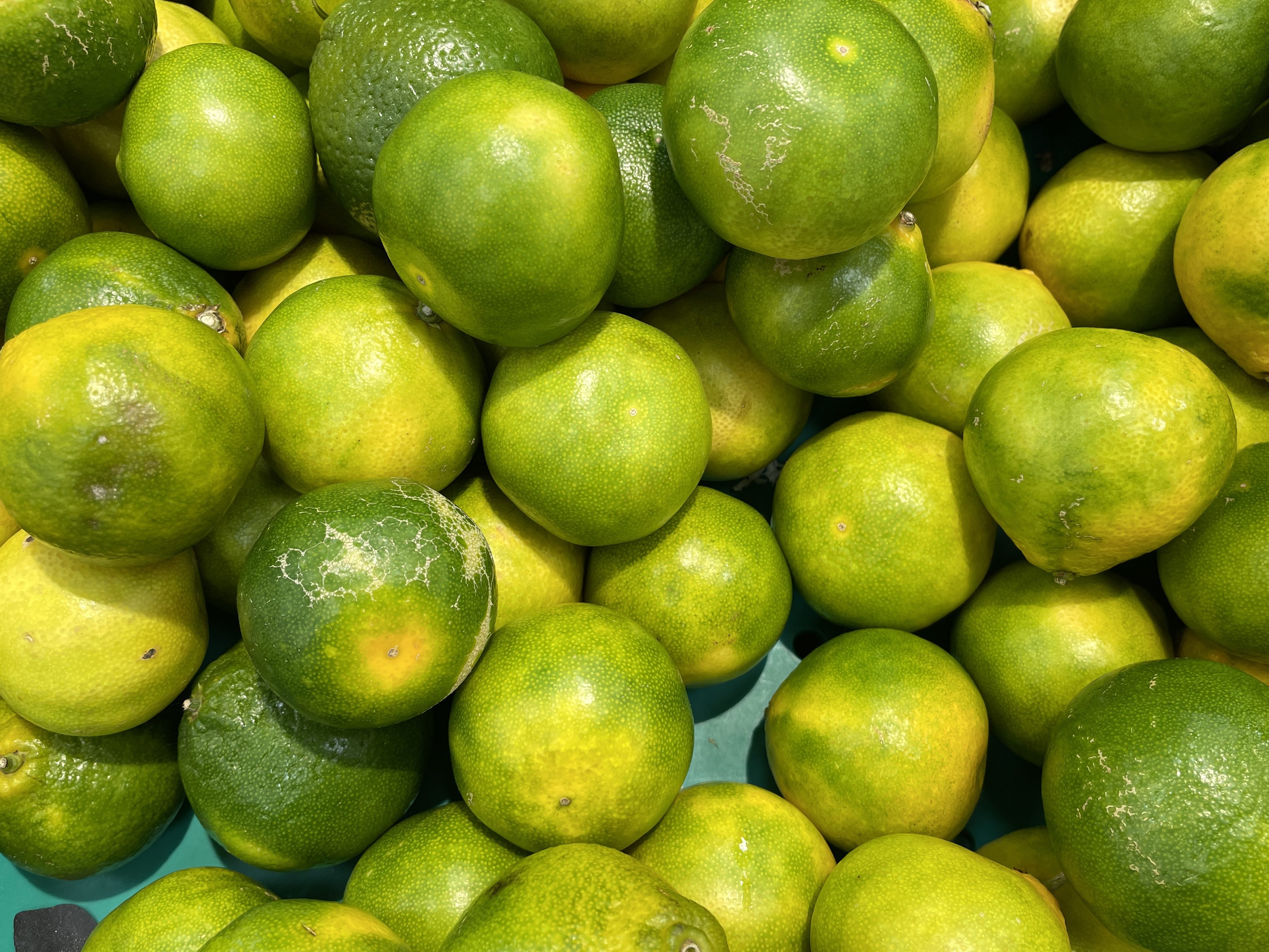
Mandalina – a tart Turkish tangerine (green when ripe)

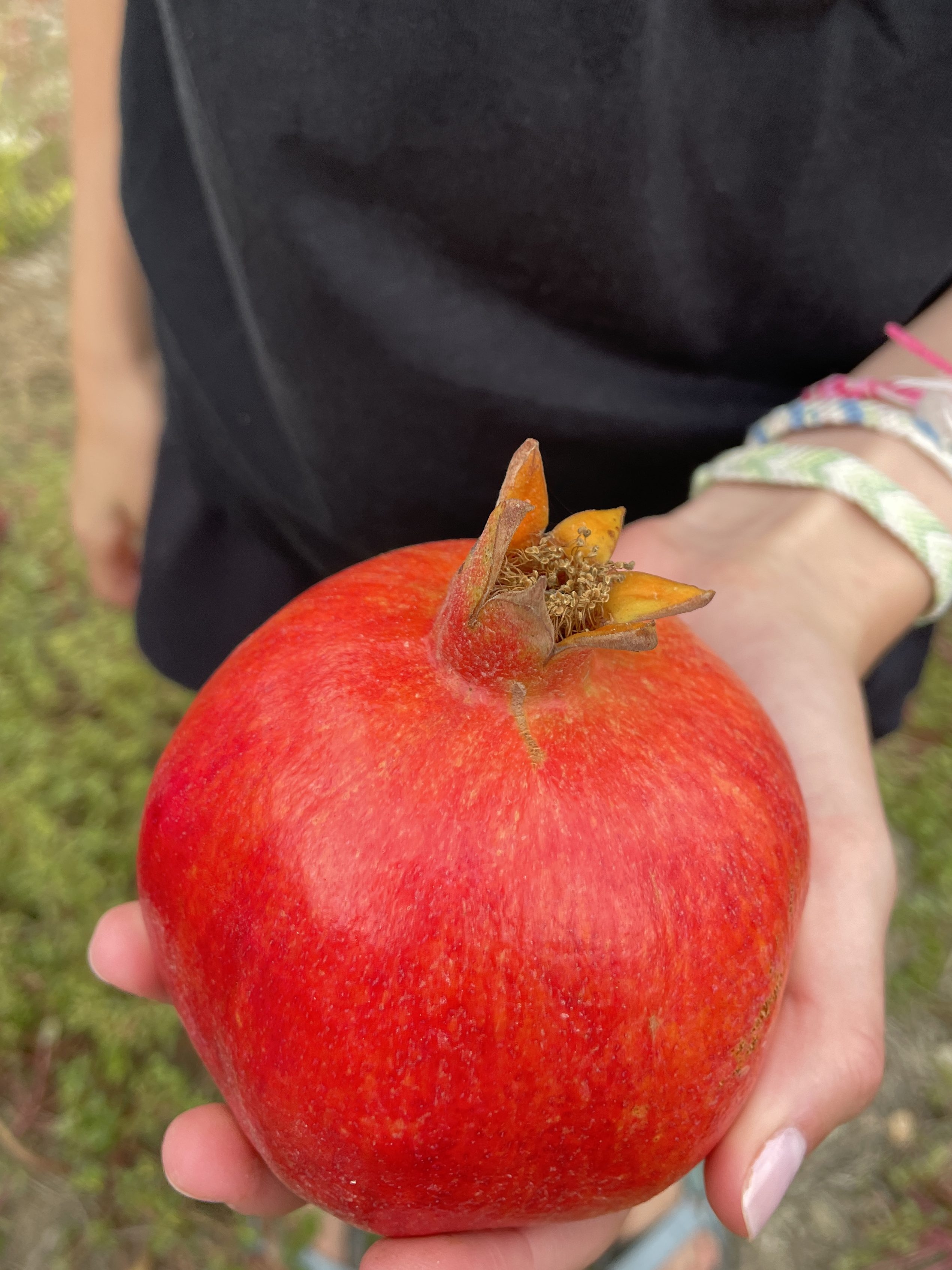
Plums are no longer on offer but apples are, much like in the States. After a summer off, lemons are coming back around while watermelon is on its way out. Pomegranate is ripe for the taking with, as we found out in Daylan, a growing season from August to November. Peaches (thankfully) still abound and soon will give way to dried apricots (my favorite).

Pomegranate – Turkey’s pride and joy, red and ripe from the tree

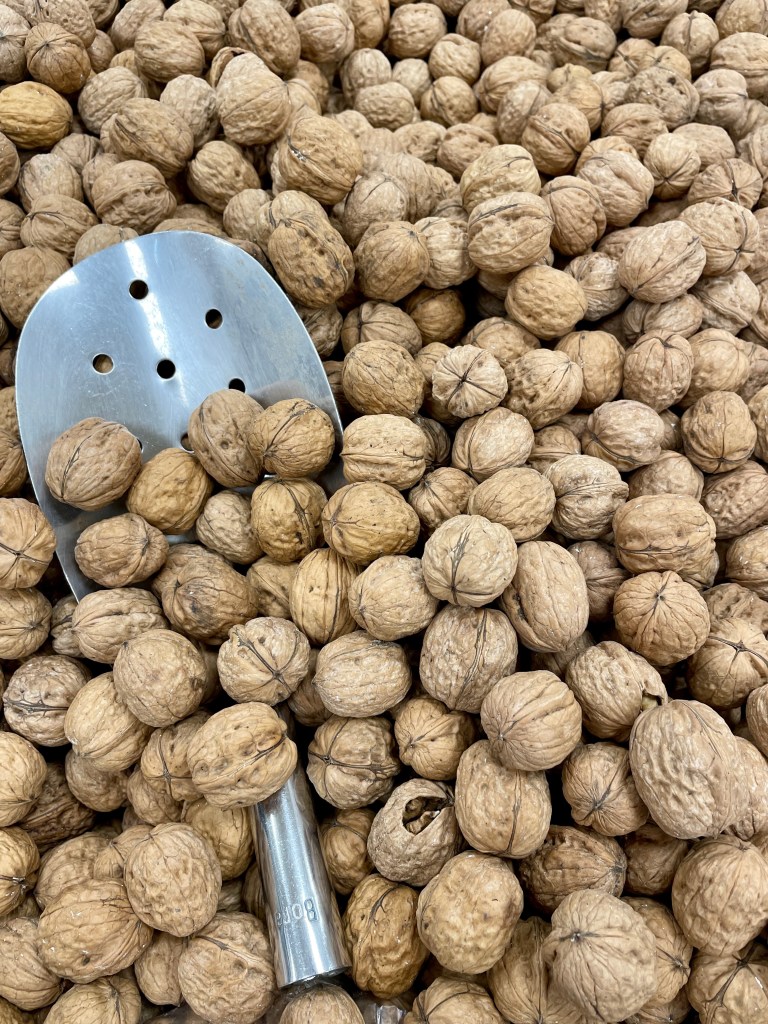
Mushrooms and walnuts have never looked better but peas have passed. Broccoli can be found occasionally but is mostly finished. Chestnuts are just getting started and soon Istiklal Street will be teeming with vendors, roasting the nuts as the tram runs past.

Walnuts – vendors always toss in a few extra for free after they’ve weighed your bag

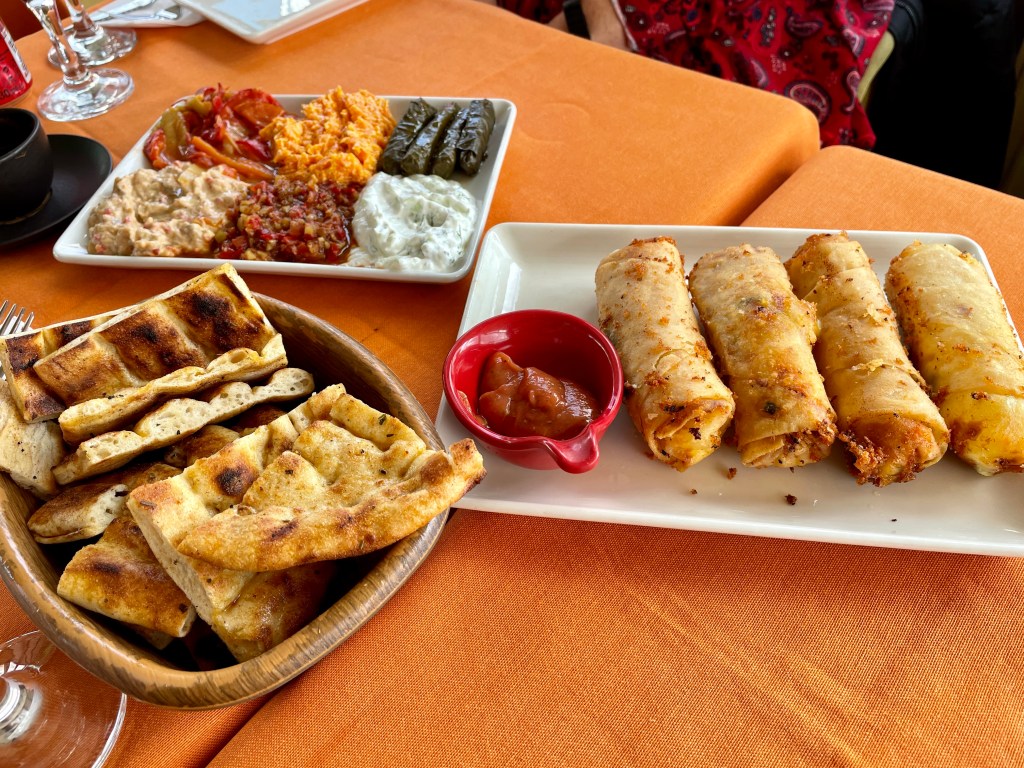
Sadly I’ll have to wait until next summer for my beloved artichoke but thankfully the all time Turkish delight, eggplant, is just gearing up for its run. What would a mezze be without eggplant?!

A mezze platter with yogurt, eggplant, peppers, and grape leaves above. Fried borek and charcoal roasted bread below.
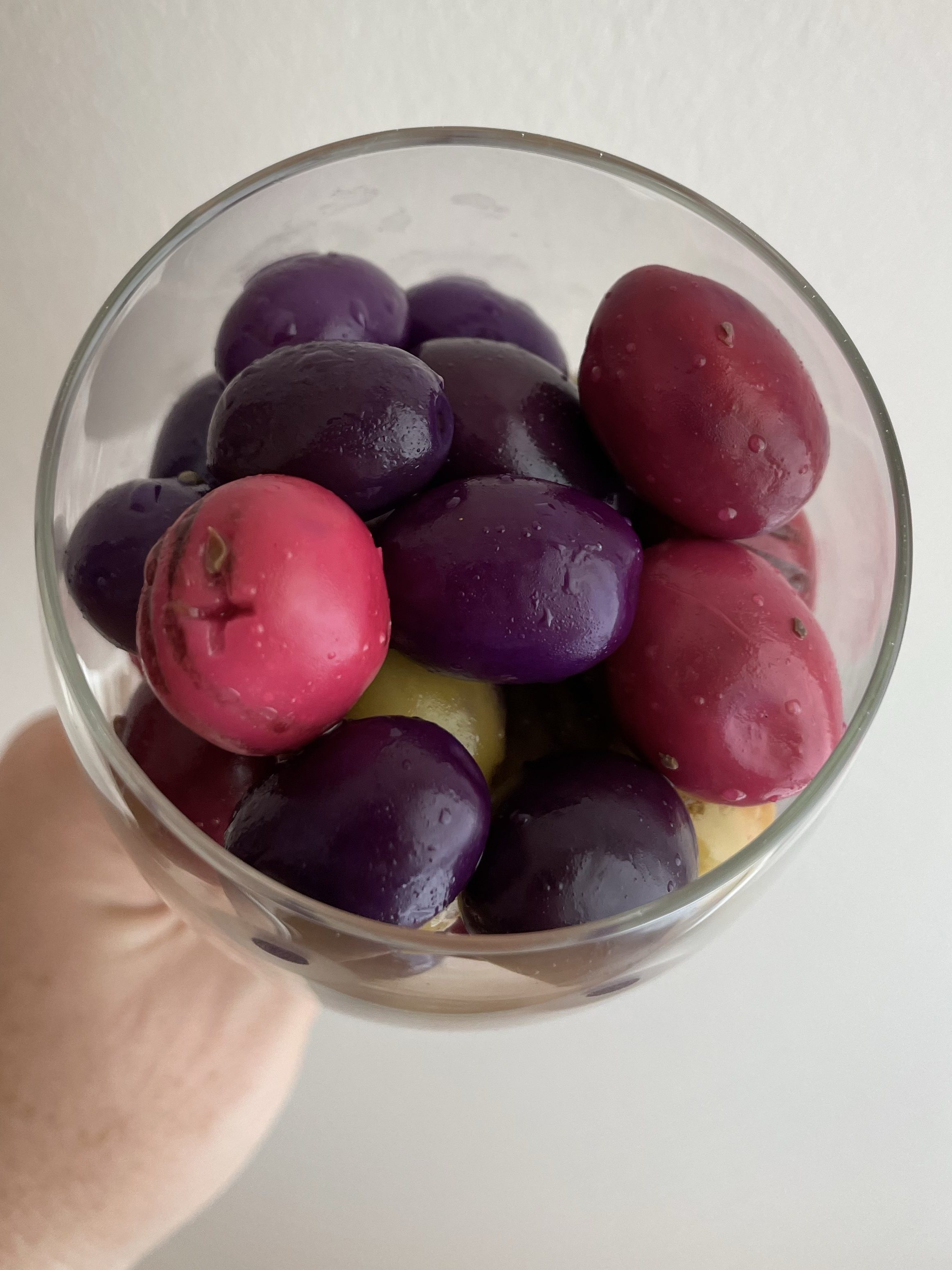
Thankfully, my new favorite – grilled olives – seem to be available year round. Love the colors!

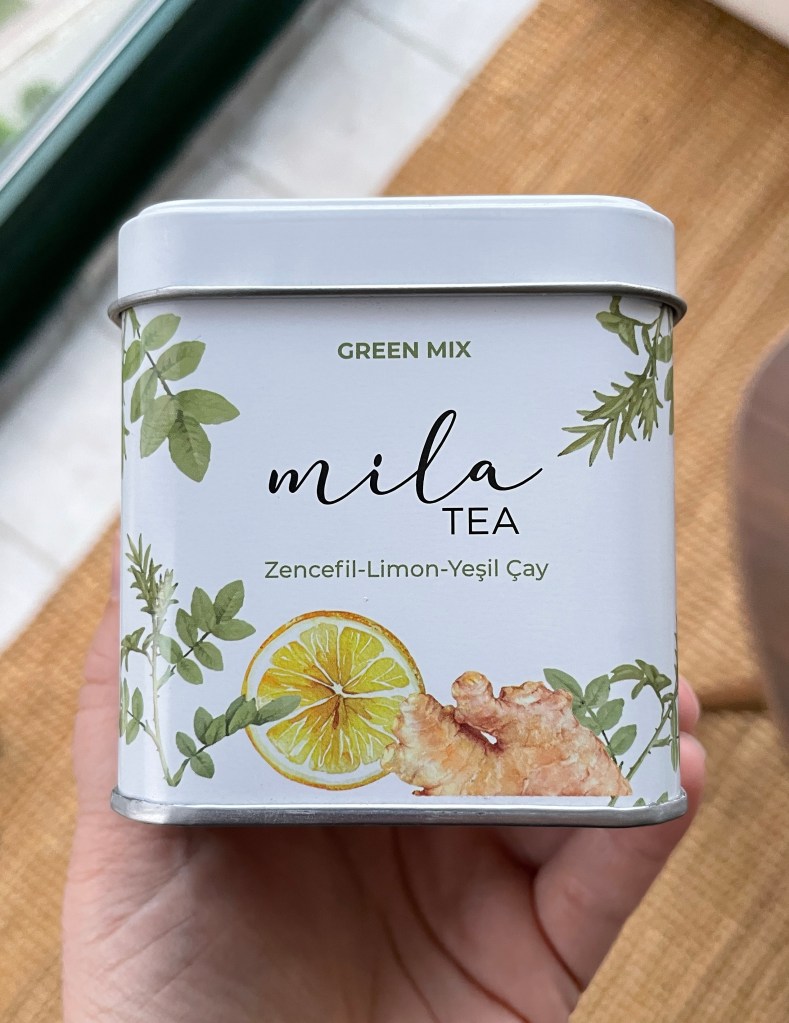
After an afternoon of napping with the cat, I walked to the local supermarket (Migros) for the essentials I couldn’t find at the marketplace. Peanut butter is available and so is a myriad of chai in this tea-rich country. Green tea with ginger and lemon is my latest find.

Çay = tea (pronounced “chai”)

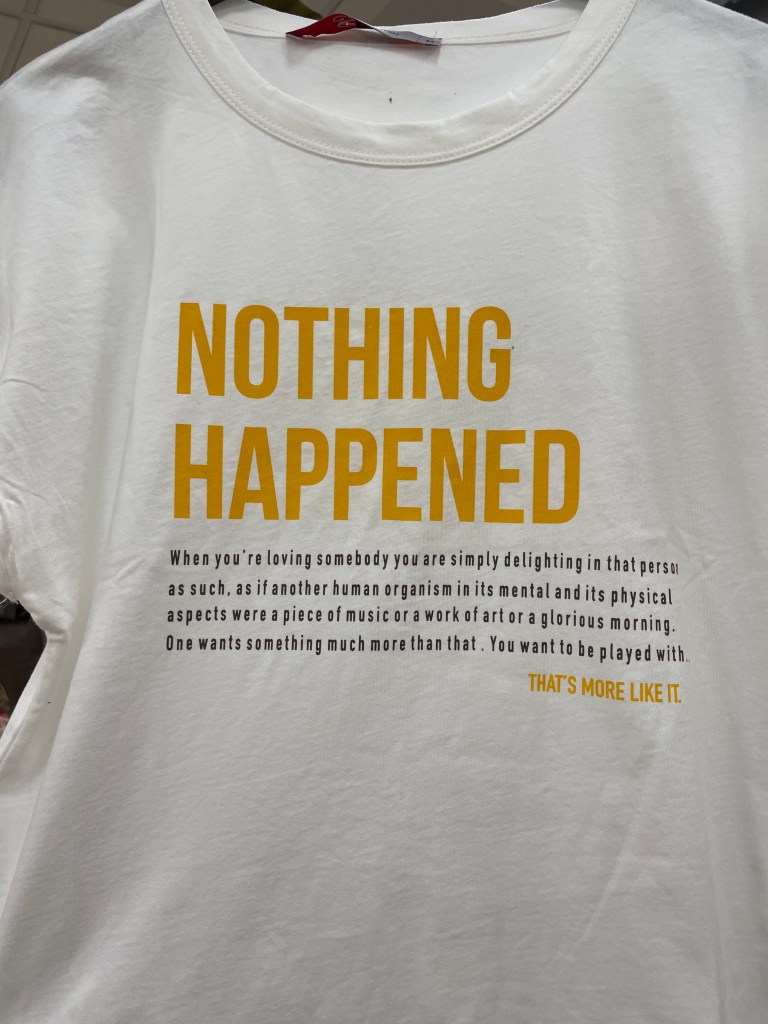
I’m always amused by the t-shirts with English text available for sale at the supermarket. The shirts may not boast the grammatical challenges as they often do in parts of Asia but the random sayings are just as puzzling.

That one took a weird turn…

This weekend capped off with a trip downtown and lunch with a few lovely new friends. With a view of the Bosphorus and sunshine to boot, we enjoyed borek, mezze, and – of course – baklava for dessert.

Lunch gifted by my very thoughtful coworker from Innovation Charter, Scott, and his wife.

Hope you’ve enjoyed this little food tour. This is just the tip of the iceberg as to the delicious delicacies that Turkey has to offer. Have a great week, everyone!