Bursa + İznik

Traveling around Turkiye is simply the best. This country is set up to be hospitable to travelers thanks to unique regional culture, easy smiles from the locals, and affordable transportation. I chose Bursa and İznik as destinations for the travel planned for my aunt and I. Both spots are former capitals of the Ottoman state and easily reachable within a few hours from Istanbul via bus.
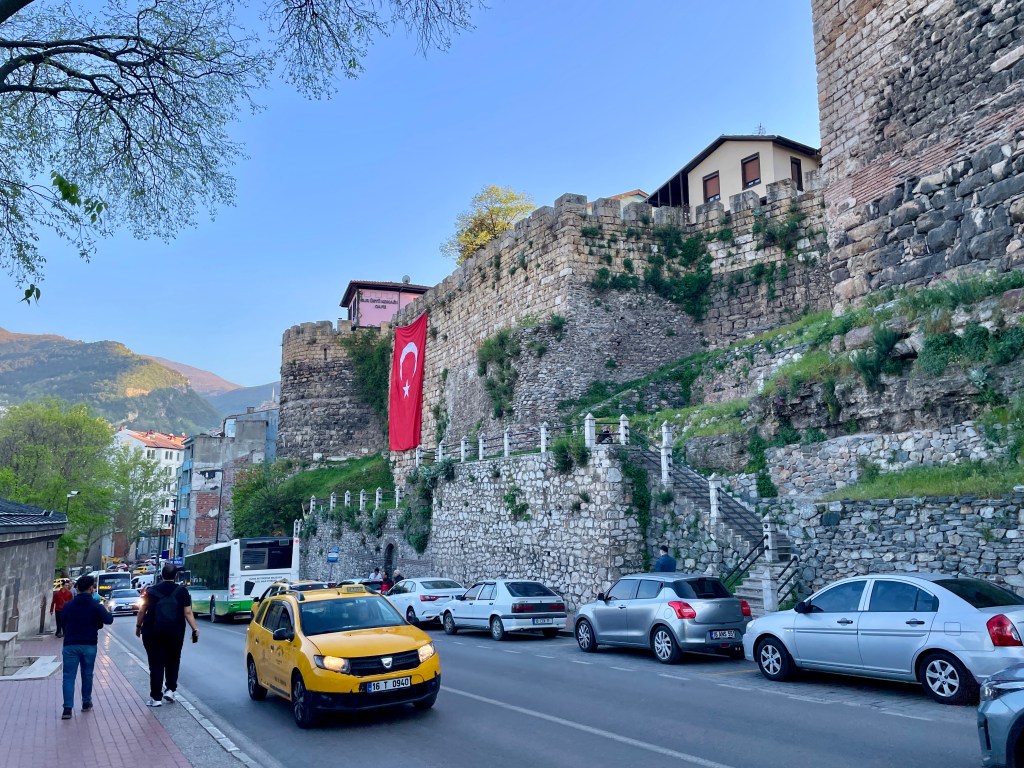
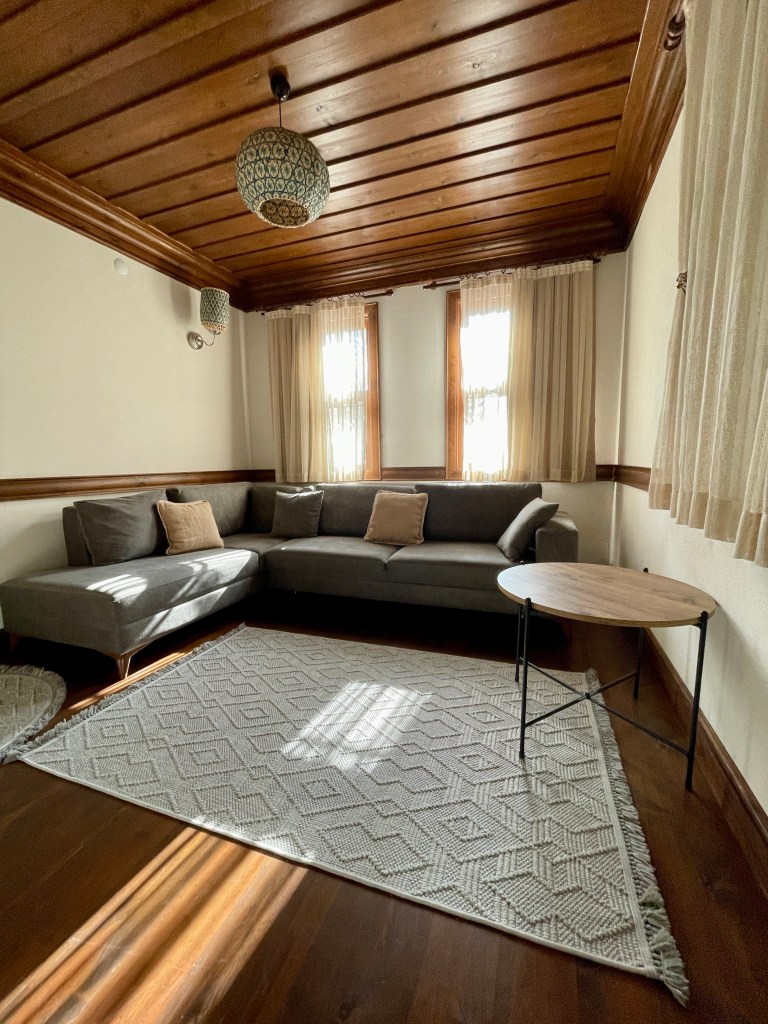
Bursa was up first, the fourth largest city in Turkiye. Known originally for its textiles of silk and lace, Bursa is today the center of the Turkish automobile manufacturing industry. Mountains hug the city to the southeast and green space can be found throughout the city. Incredibly, human settlement has been present in the region since 5200BC. Wishing to stay within Bursa’s historic center, I located an Airbnb in a restored Ottoman home. The property sat on the hillside just above the historic Ottoman city walls.
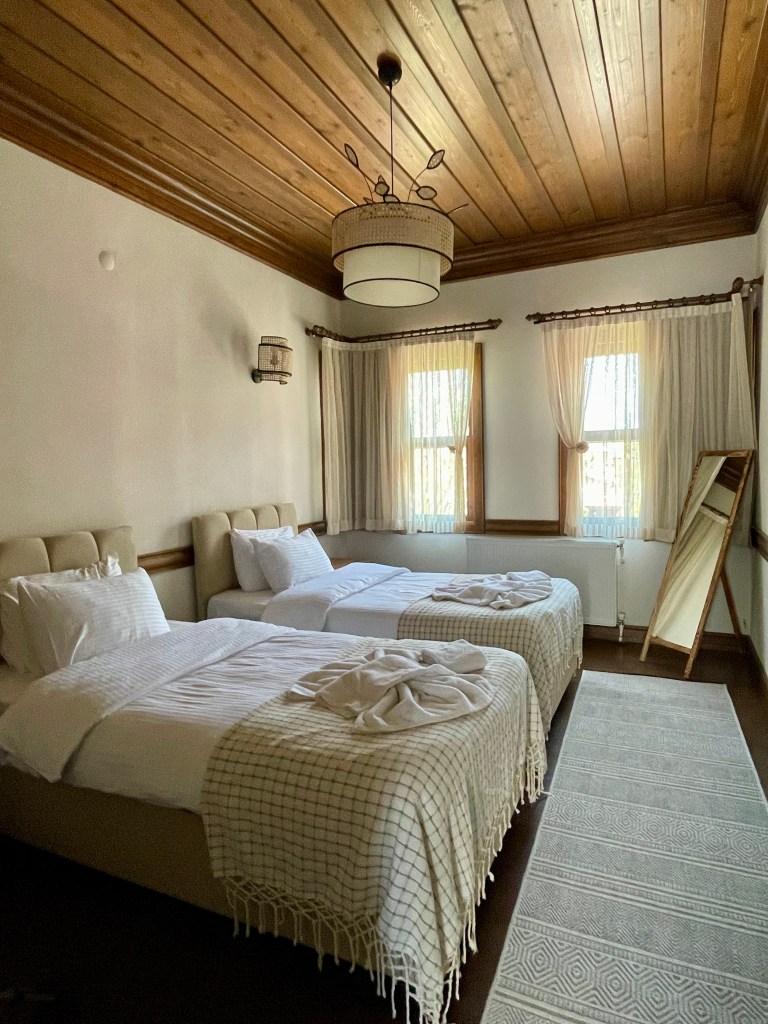
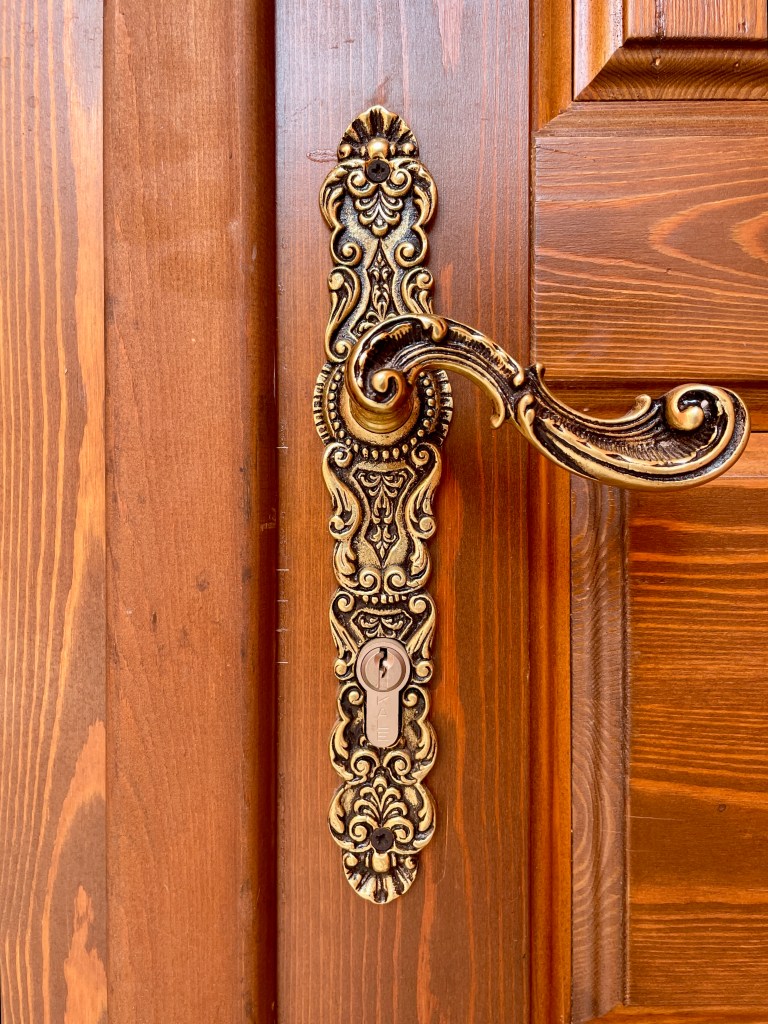
Our spacious abode turned out to be a stroke of luck. As we were in town on the first day of bayram (Eid), most Turks were at home celebrating the holiday with family. It’s always difficult to tell what will be closed and what will be open on holidays in Turkey.
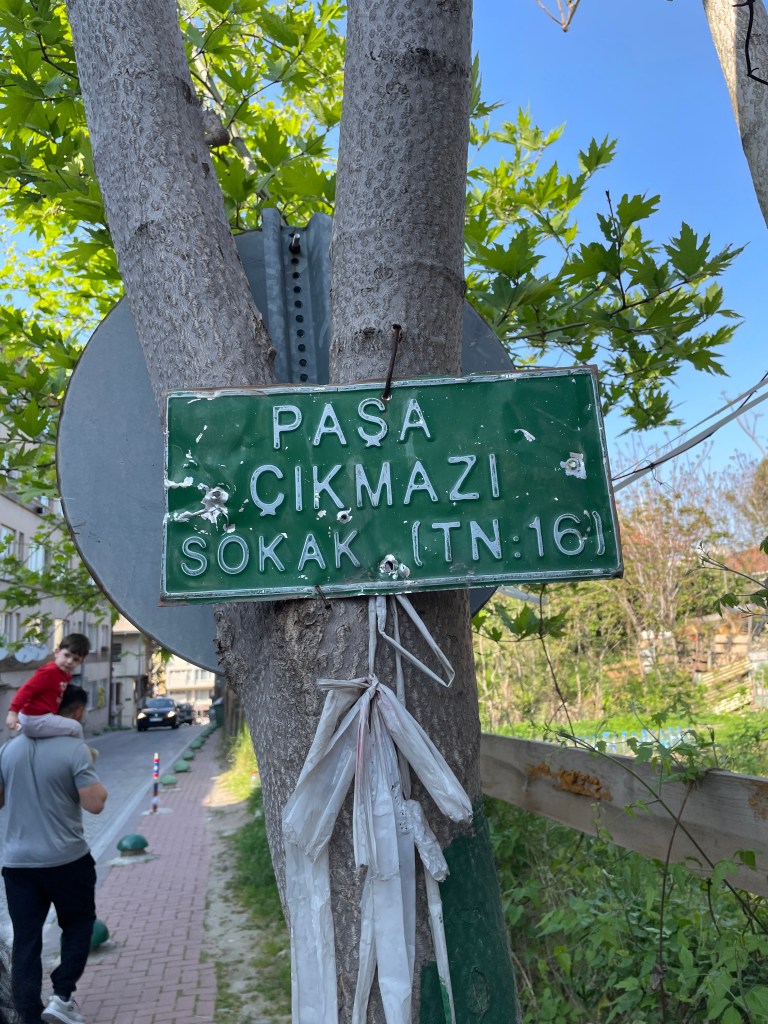
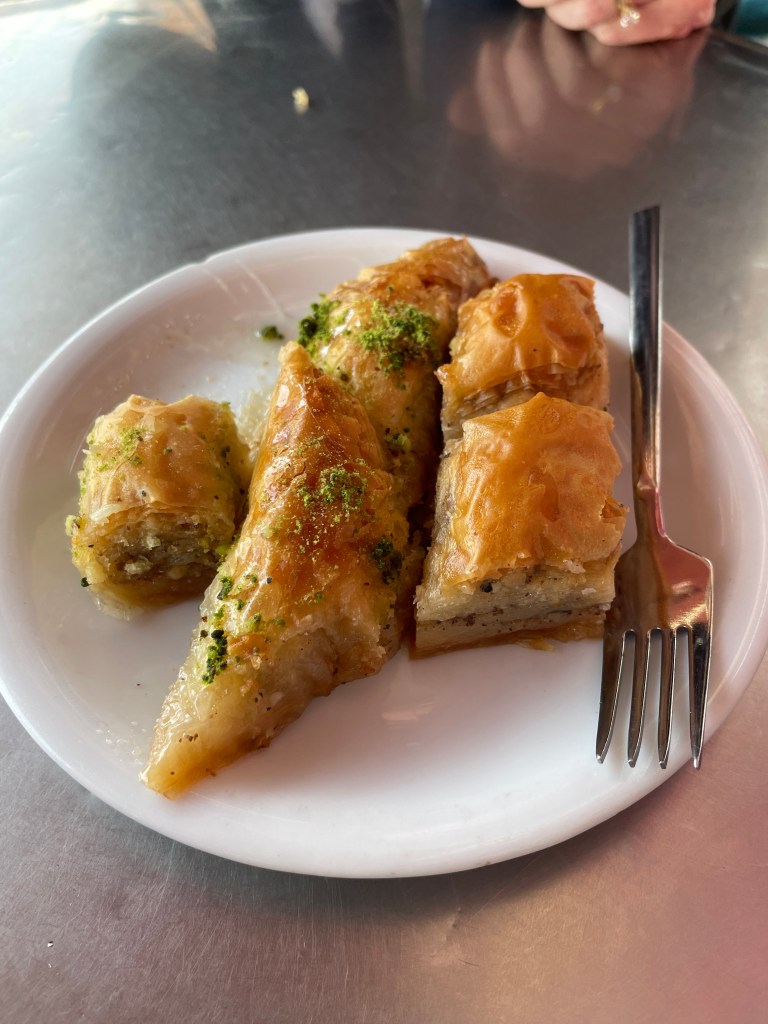
Hearing lots of foot traffic outside our home, we ventured out midday to see what the locals and tourists were up to. We sampled some baklava at a local cafe – it was the “sugar” eid, after all – and confirmed that the marketplace and historic sights were closed for the holiday.
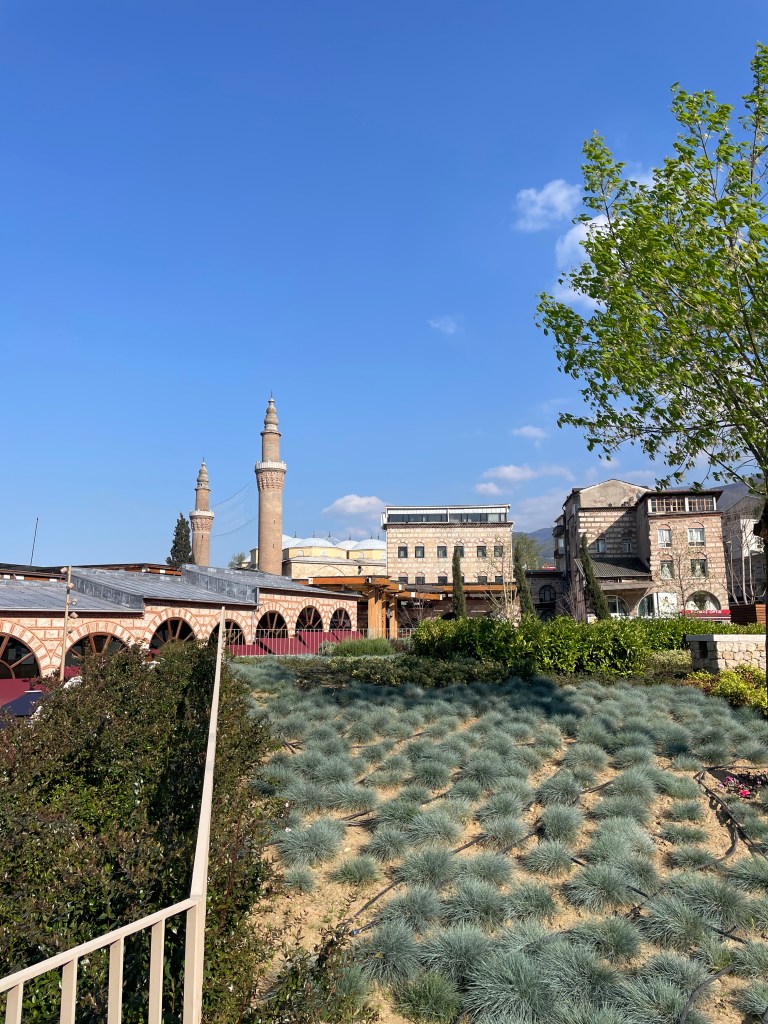
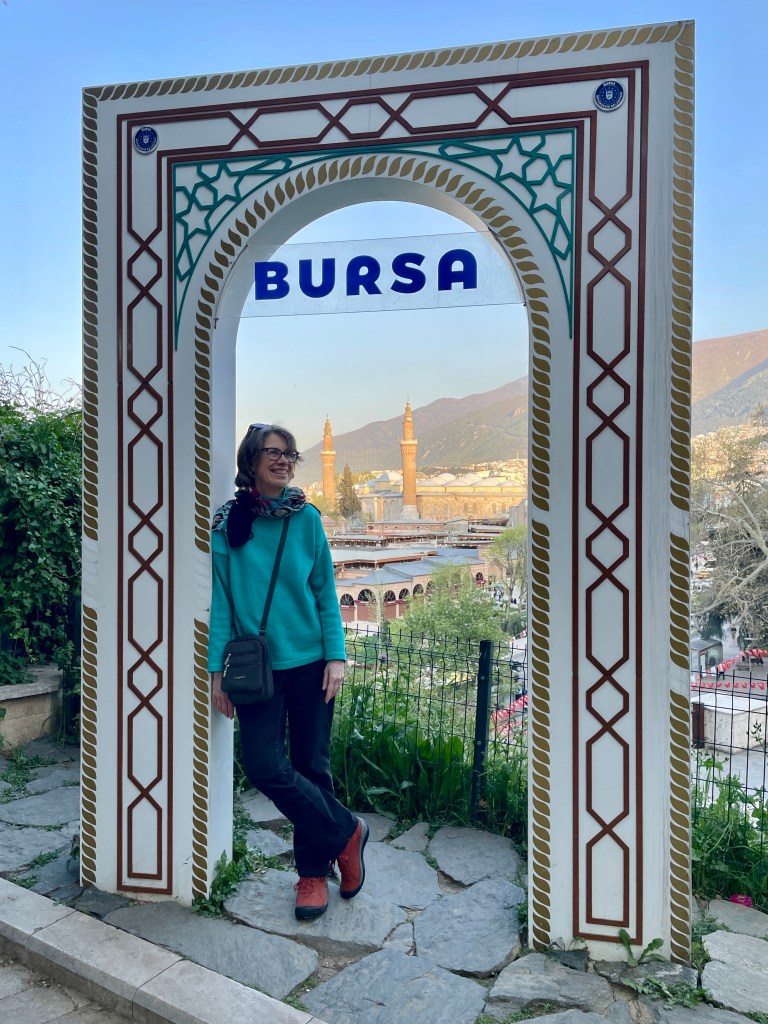
Luckily, we had ventured out the night before to see the open air market, the Grand Bazaar, and the Ulu Cami (Grand Mosque of Bursa). Here is Suz enjoying her Instagram moment with the foothills of Uludag in the distance.
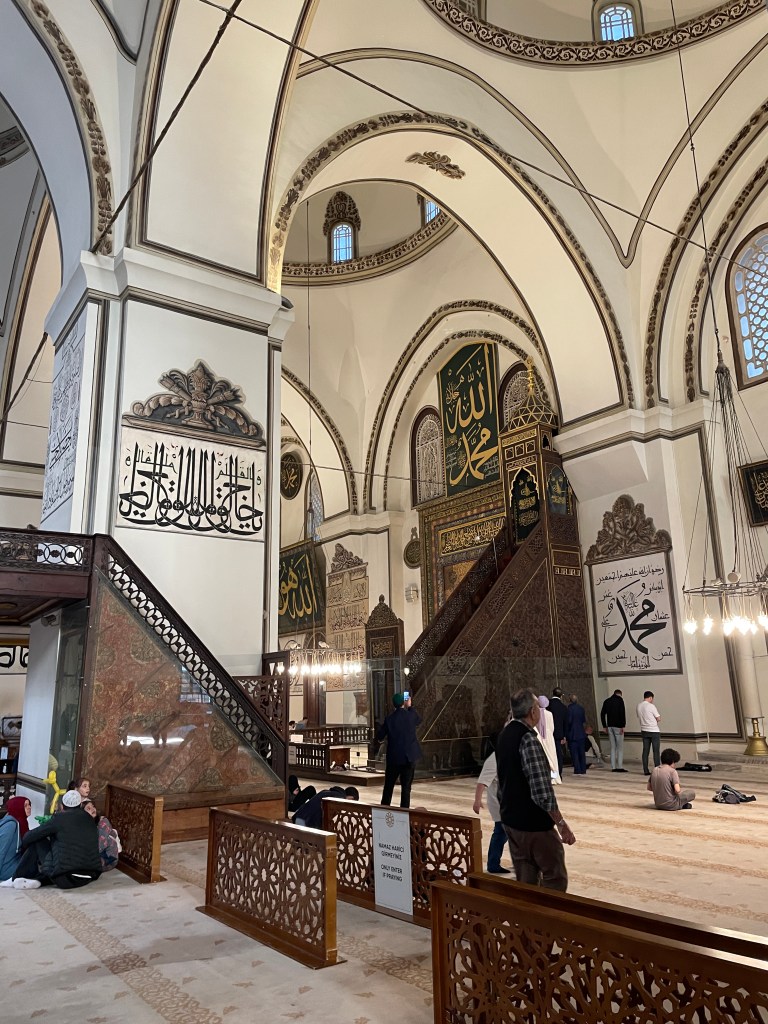
The Ulu Cami was built in the historic Ottoman Era but reads very contemporary. Reminiscient of the Eski Cami in Edirne, the walls featured calligraphic graffiti inside of the mosque (above, left). The effect was stunning. Children hollered at they raced around the carpeted floors and people sat in groups talking softly. I enjoyed Bursa and would love to return someday, particularly to explore the mountains surrounding the city.
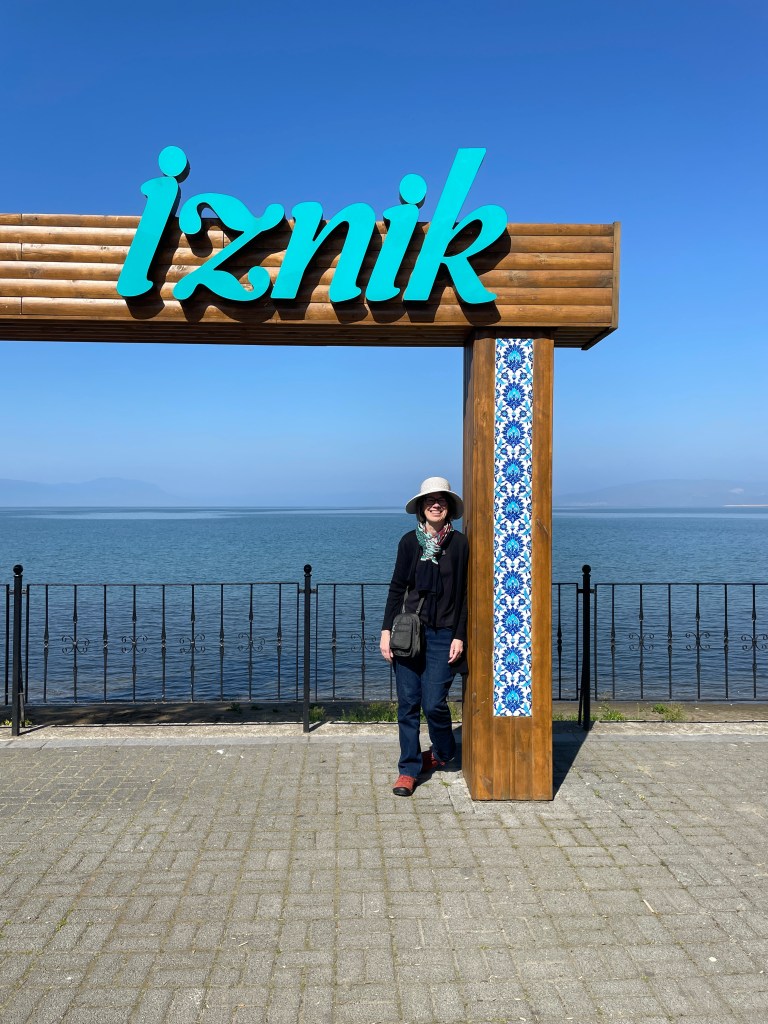
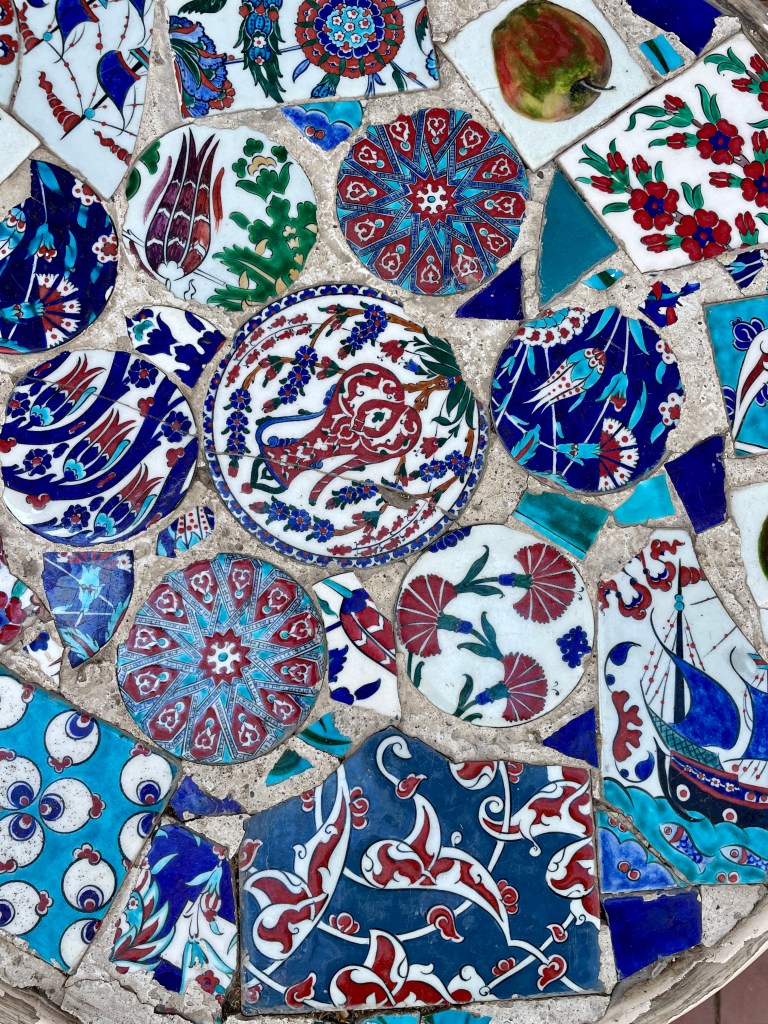
Our second stop was İznik. Once known as Nicaea, the town is known as birthplace of the Nicene Creed (325AD). The town has also long been considered to be the center of ceramics in Turkey. Known for producing the 20,000 ceramic tiles which adorn the ceiling of Istanbul’s Blue Mosque, İznik today draws tourists with its ceramic studios, mosques, and lakeside location. The vibe here is similar to that of coastal southwest Turkey with less alcohol on offer (taps seem to dry up as you move into the middle/eastern regions of the country).
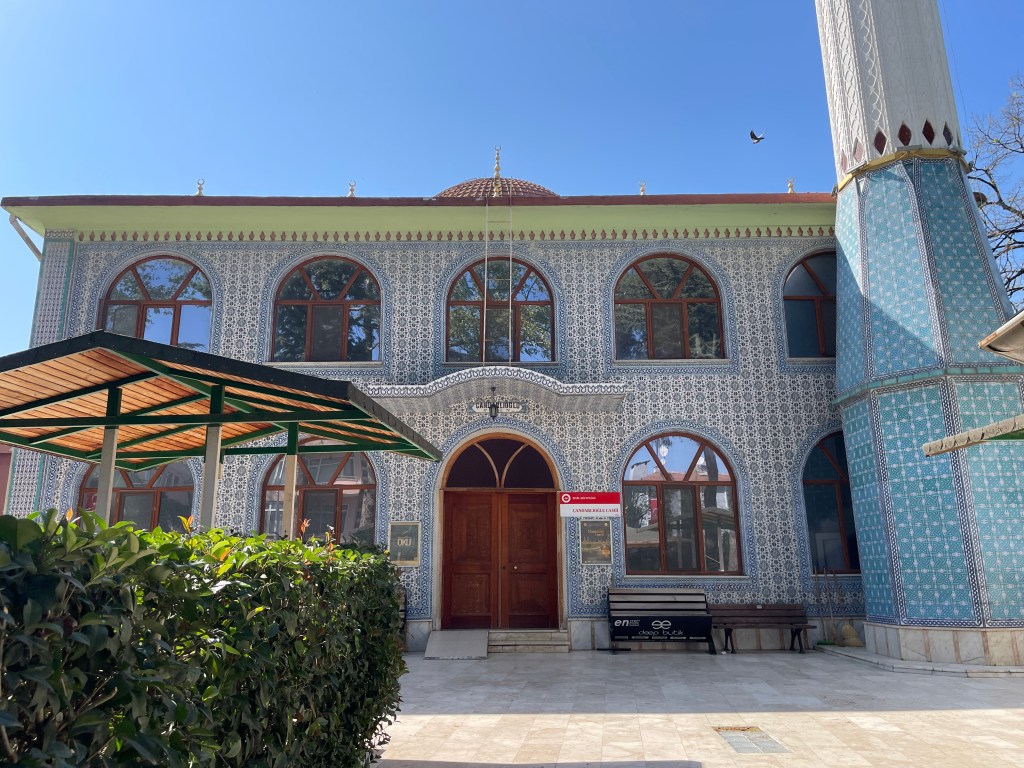
The whole town was walkable from our hotel by the waterfront. Having arrived from Bursa by Uber on the early side, the holiday mentality provided us the chance to look around before the crowds arrived.
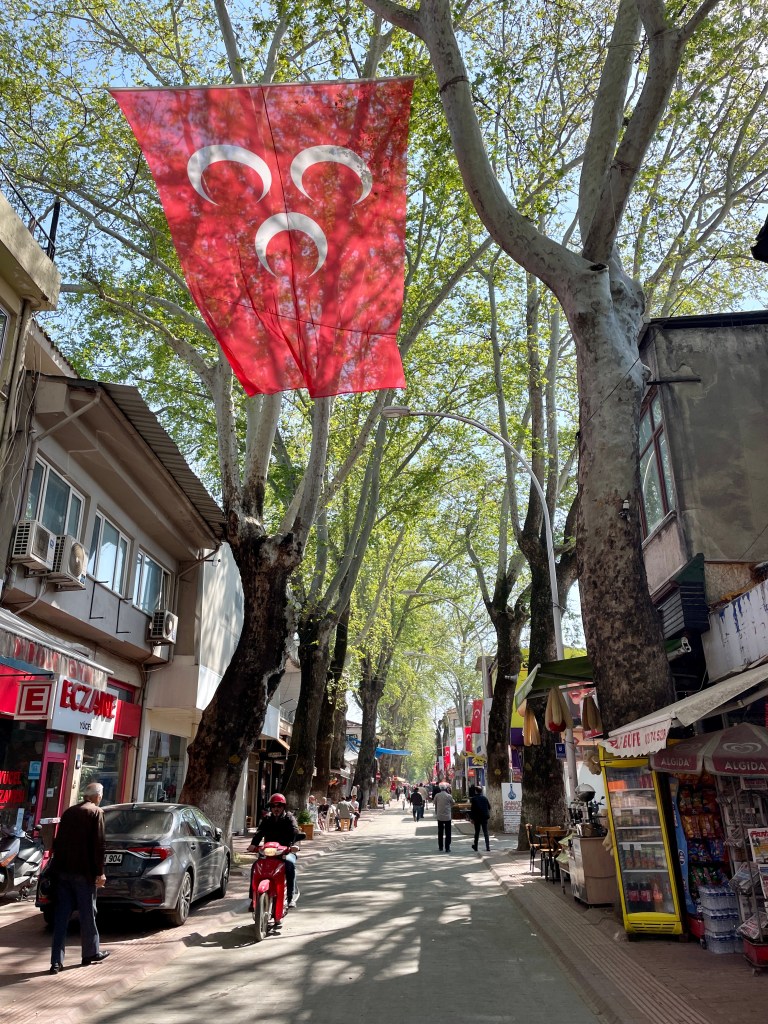
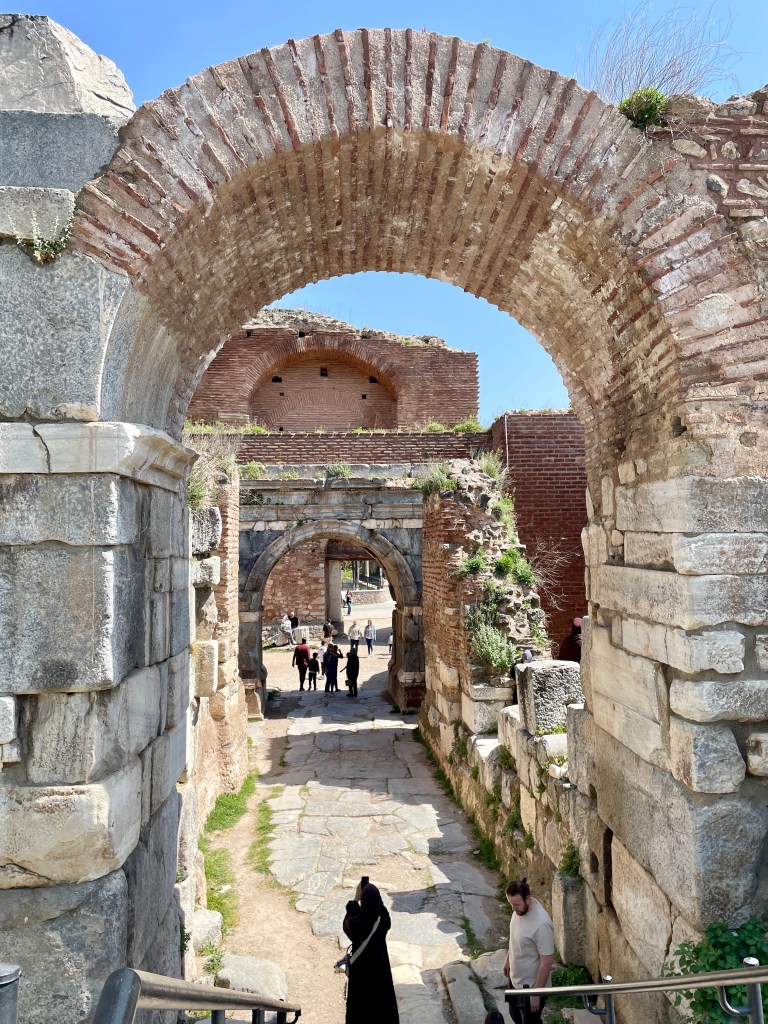
Most of the ceramic shops and studios fall along the main tree-lined street (above, left). The road caps off at the İznik Castle Walls (above, right). Many modest local homes are enmeshed within the fortress walls which ring the downtown.
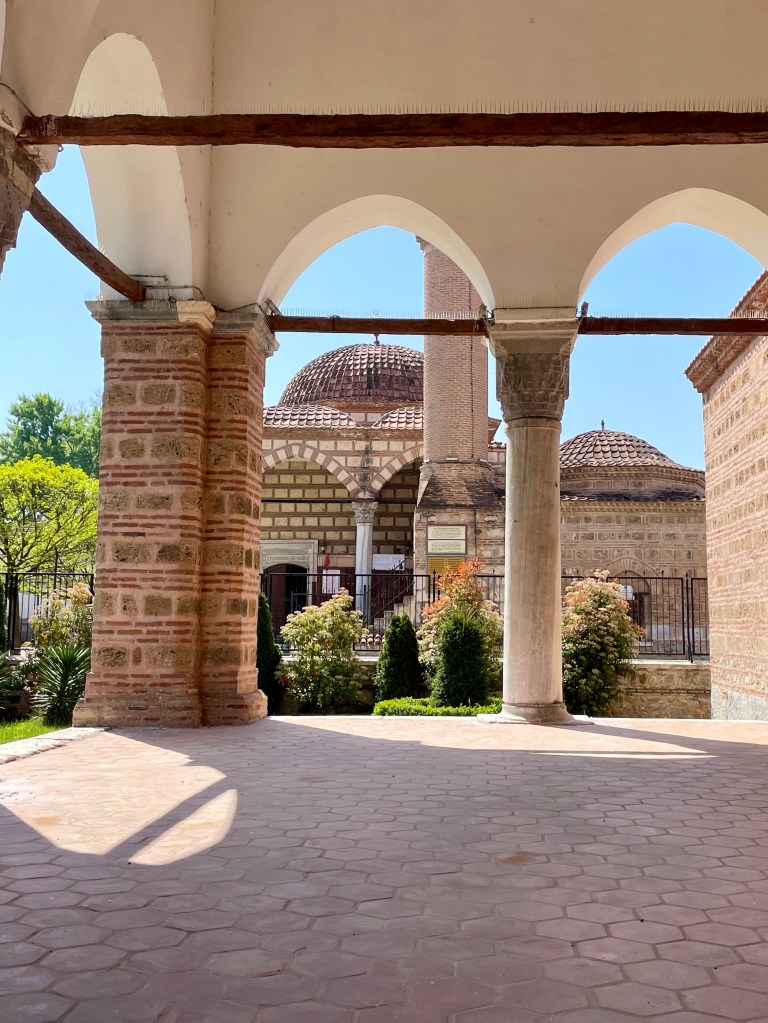
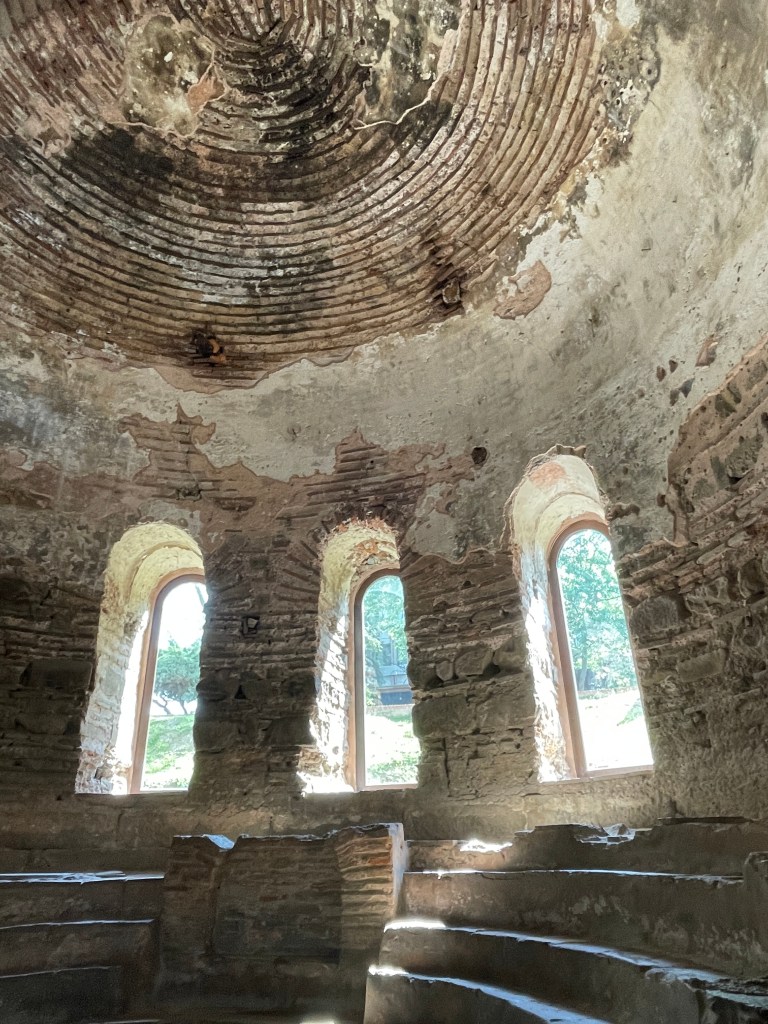
I was excited to find that the Turkish Islamic Arts Museum was open, despite the holiday. Located just across from the Green Mosque, the museum outlines the history of ceramics, textiles, and metal within the region in perfect bite-sized pieces – no more than 30 minutes needed to take it all in. İznik also features it’s own Hagia Sophia, a gorgeous Byzantine Church with origins dating back to the 4th century. The church is now a working mosque and I found the oculus and the stadium seating intriguing.
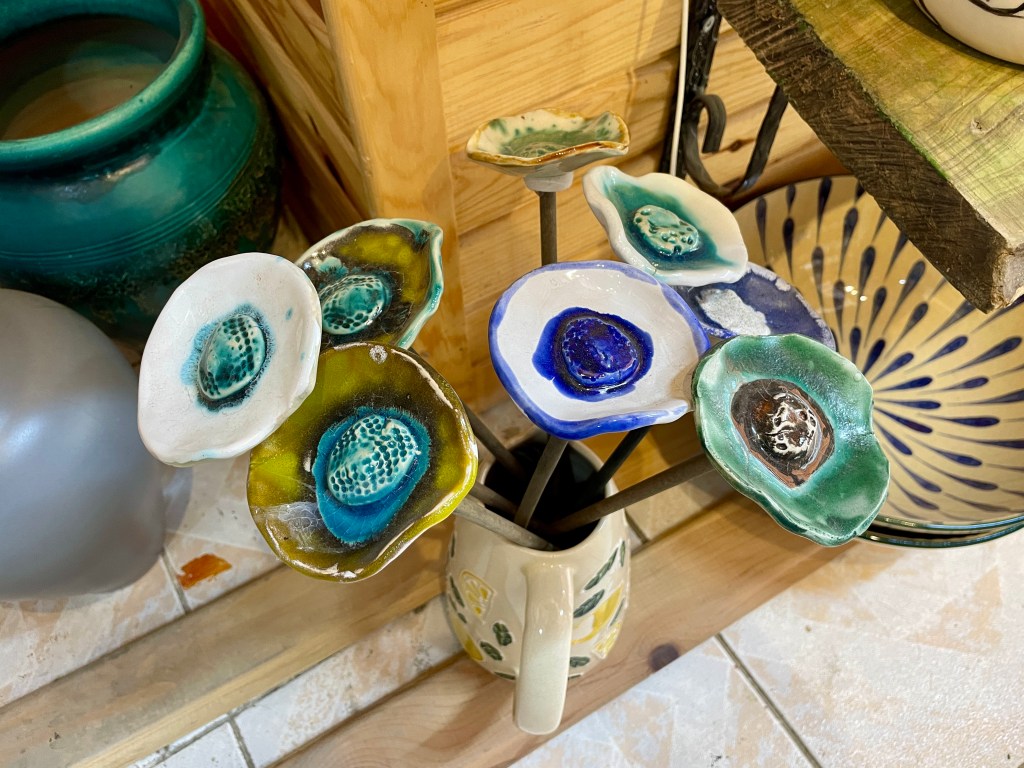
Suz and I had fun exploring the many shops featuring ceramics throughout the downtown. We happened upon a few with original ceramic designs (one working with terracotta instead of porcelain) and spoke to a few of artists themselves. Other shops featured pottery made from molds, which could be equally charming.
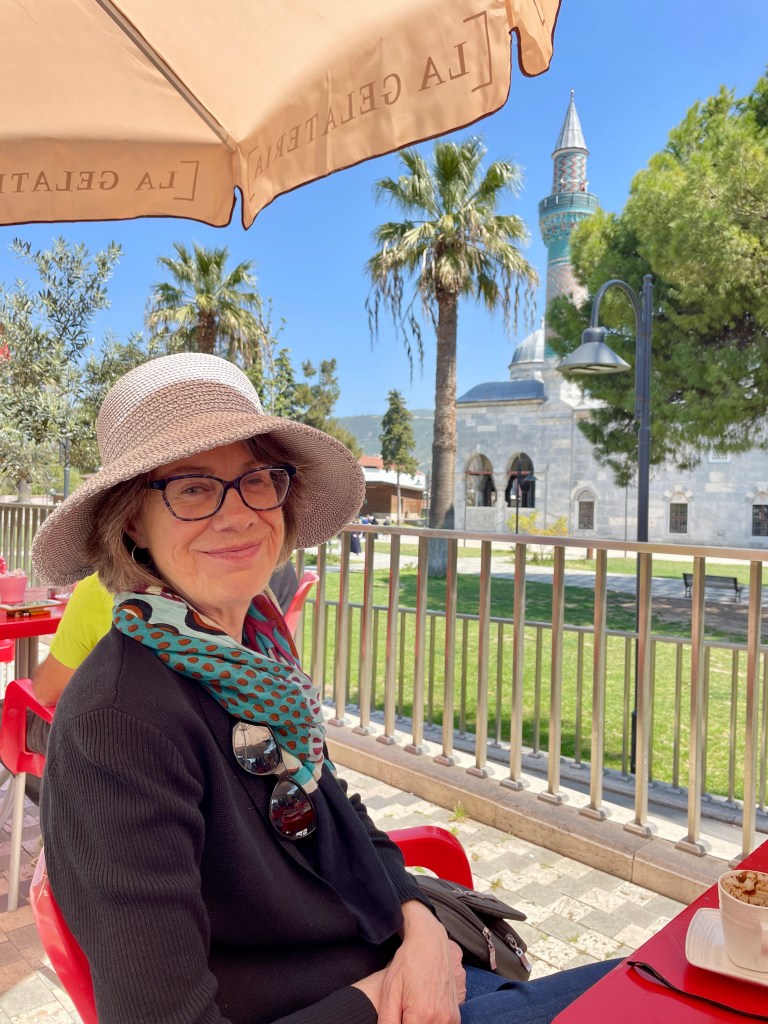
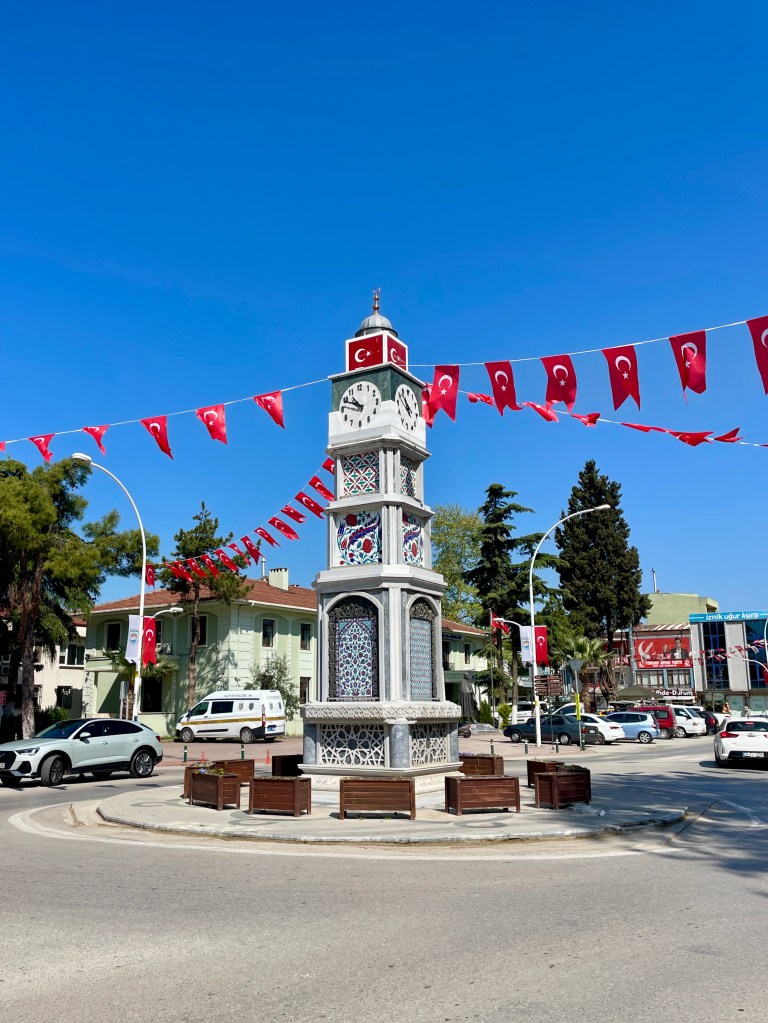
Before we knew it, the time had come to return to Istanbul. Soon Suz was back in Maine with her beloved pups and I returned to school to finish my final semester in Turkey. I’m so glad we could have this time together and explore more of what Turkey has to offer, outside the big city of Istanbul. As always, our days by the lake went too fast 🙂
Selçuk

Happy New Year! Hope that your 2023 is off to a good start, healthy and happy. I’ve just returned from a fantastic trip to the States. Wasn’t too hampered by the deep freeze in the northeast, spent lots of time walking in the woods with friends and family, really enjoyed cooking for my family. Made a quick trip to Vermont to meet a new little dude named Wyatt and saw some Christmas lights with my god kids at the Roger Williams Zoo. A perfect end to 2022, couldn’t have asked for more.

Moloko, for her part, was super lucky to have the company of two amazing catsitters, Mic and Sarah (thank you, TrustedHousesitters!). They kept me in the loop with daily proof-of-life photos and showered Mol with lots of love and attention. They also spoiled me with home cooked meals as I returned from the States and support as I took off again to explore a bit more of Turkey.

Embarking on my first solo travel in country, I chose Selçuk as my destination upon the recommendation of a friend. A quick one-hour flight from Istanbul to Izmir and a one-hour drive later, I arrived at my destination. The town of Selçuk is built around the ruins of the ancient Roman port of Ephesus, once the second largest city in the Roman Empire (the largest being Rome). In its heyday (1st century BC), the city was home to a quarter of a million people.

Turkish Village Life

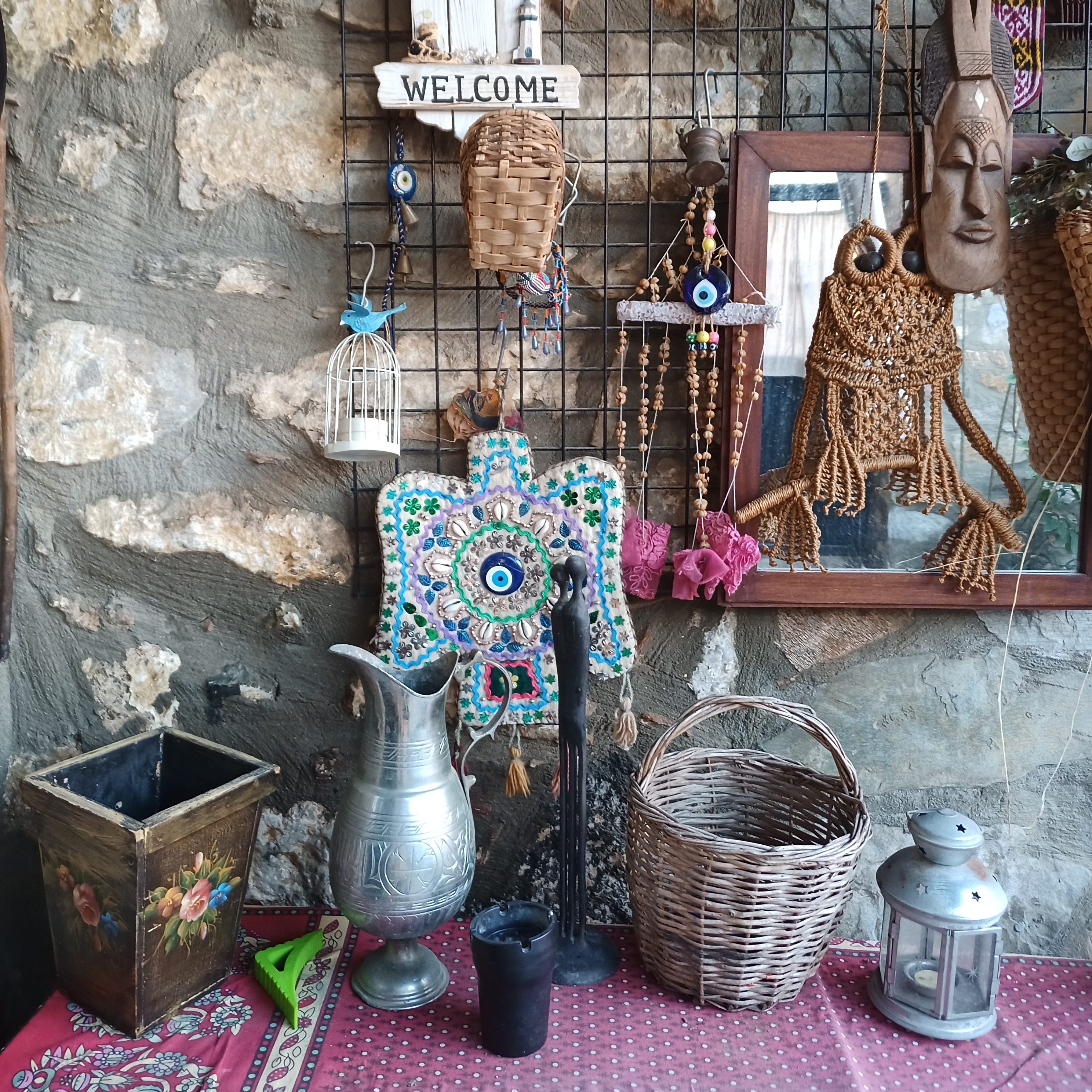
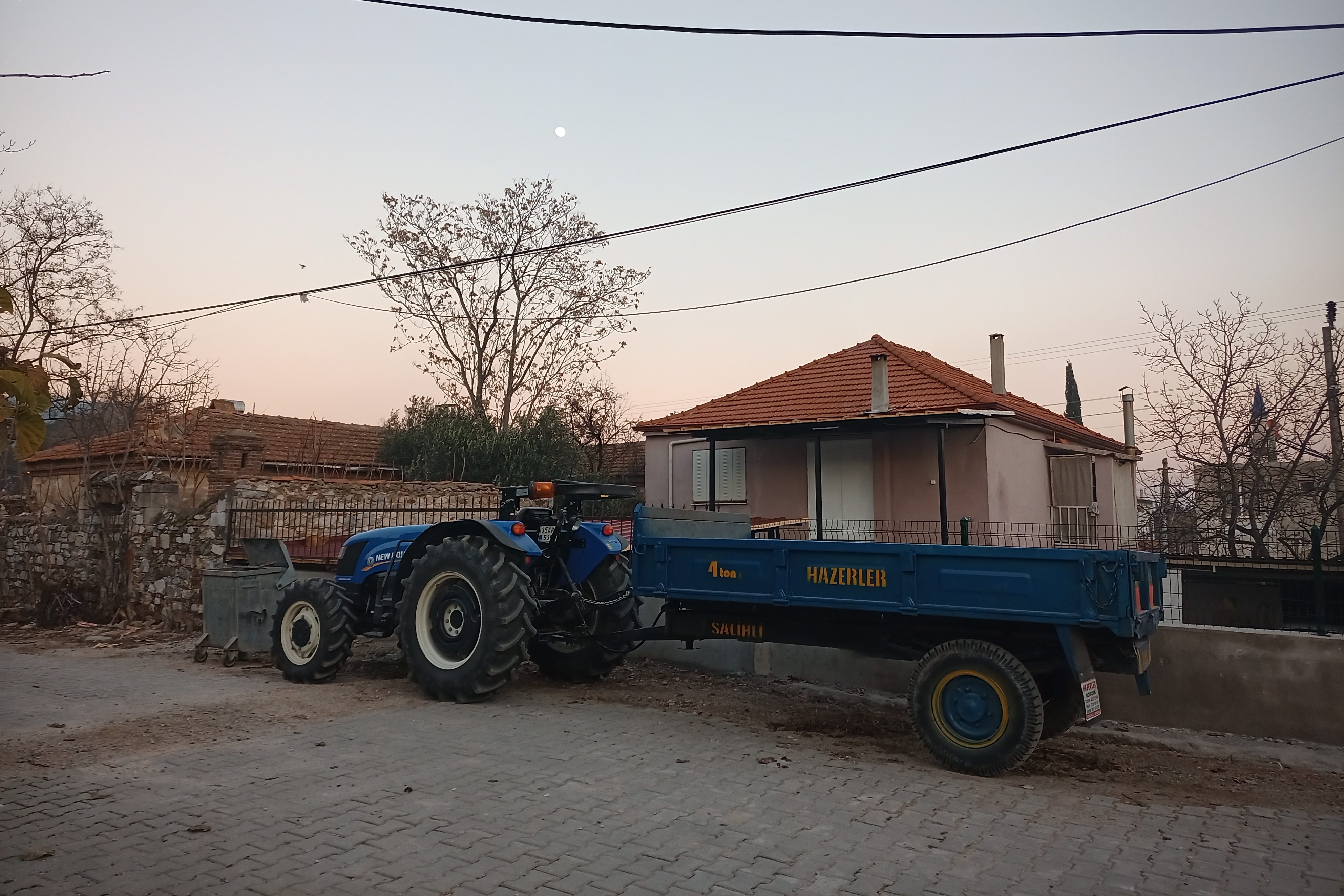
I opted to stay in an Airbnb in Çamlık, just down the road from Selçuk. Jockeying for my parking spot with tractors, village life proved perfect for a little R&R and a chance to beat my jet lag before school started. Extremely friendly villagers, roving gangs of chickens, and my hosts’ mop of a dog all welcomed me in. Life moves at a decidedly quieter pace in the village, with its inhabitants rarely getting going before mid-morning. I rose daily at 7:30am, however, as the neighborhood dog harmonized with the muezzin call from the local mosque.

Ancient Ephesus

As this was a solo trip, I had done a fair amount of research ahead of time, mapping out a detailed itinerary so I wouldn’t be caught without destination nor direction. A beautiful part of traveling alone is being able to switch gears immediately, often while en route. Weather and distance took me on a few unexpected adventures this trip but having no pressure of what I had to do was a lovely way to wind down after the winter holidays.

I started my tour of Ancient Ephesus at the Basilica of St. John. Sure-footed, I made my way up the hillside through the ruins. Vineyards and olive groves dotted the surrounding landscape, providing views similar to the landscapes of Tuscany. With a 360 degree view of the valley below, it is said that John wrote his gospel upon this very hilltop. Yes, John and Mary (Jesus’ mother) are said to have travelled to Ephesus between 30-45 AD, with John eventually dying in the city in 99 AD. Justinian erected a basilica onsite in the 6th century but, sadly, only ruins remain today as the church was destroyed by a major earthquake in the Middle Ages.

Making my way past checkpoints of local police, I next visited the site called “Efes”, or Ancient Ephesus itself. Aside from a tour group from China and a few Russian families, I had the place to myself. The weather was gorgeous and I was able to find a spot on the marble steps from which to sketch the Celsus Library (pictured above), a stunning facade against the blue sky of the day.

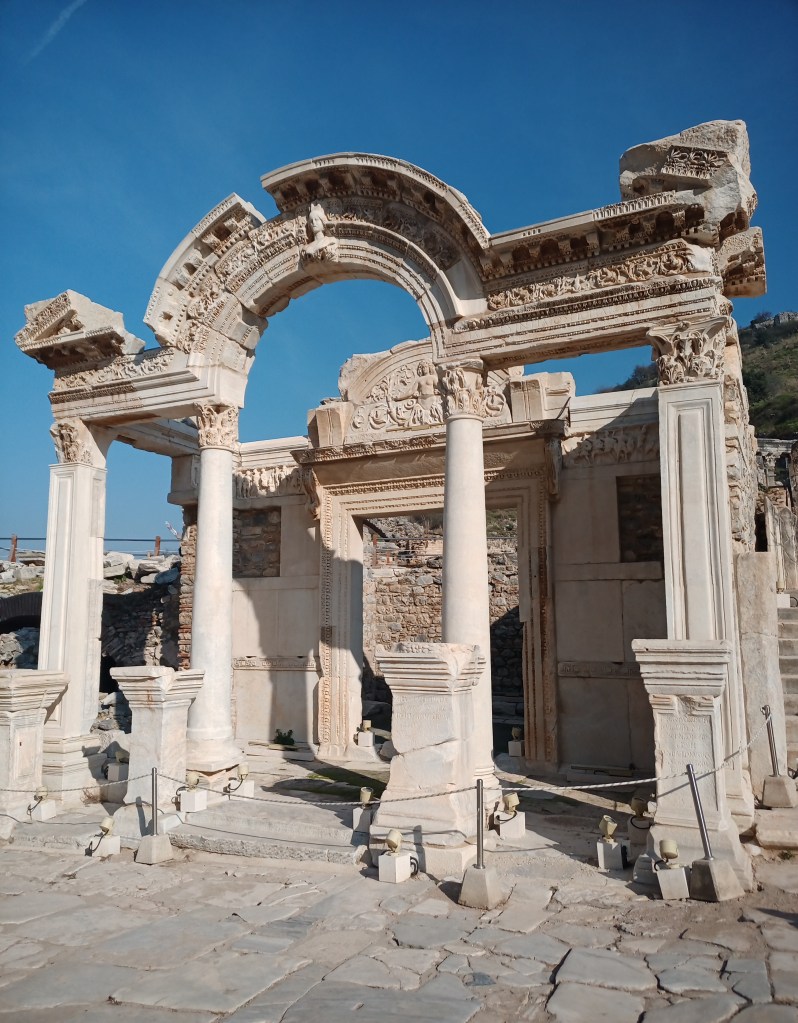
Curetes Street (above center), is bookended by the Hercules Gate at the top and the Celsus Library below. The street reminded me of Pompeii, and even parts of the Roman Forum. Turkey, however, allows tourists to get much closer to the ruins. In fact, some people even climb on them which makes this former museum educator scream on the inside. Happily, a number of local cats were posed and ready for their close up as they reposed in the sun. The facade of the Temple of Hadrian (above left) stands about halfway down Curetes Street. The foundation features Greek writing, a reminder that though the Romans built the city, the local population wrote and spoke Greek.

Renting a car gave me great flexibility and I spent one afternoon in Şirince, a hillside town known for it’s wine and markets. I enjoyed the vibe and was happy to do a little shopping before making my way down the switchbacks back to Selçuk.

Making the most of wine country, I enjoyed dinner at Mayadan Restaurant, a local vineyard with gorgeous views and delicious wine. Like many wineries in Turkey, you can also stay overnight with cottages and a luxurious hotel both available. Guests can sip local wine while enjoying gorgeous sunset views as the sun slips behind the olive groves.

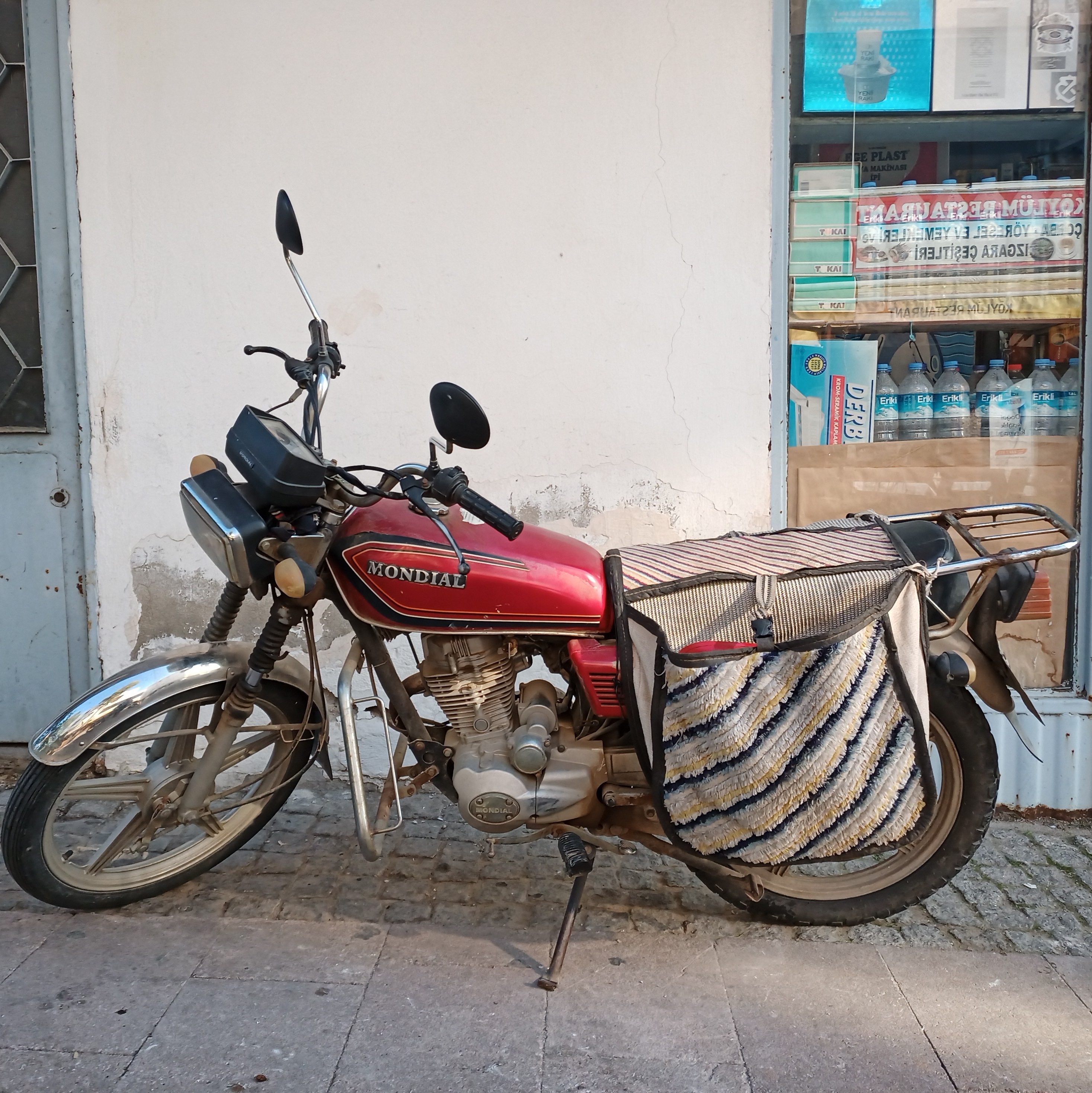
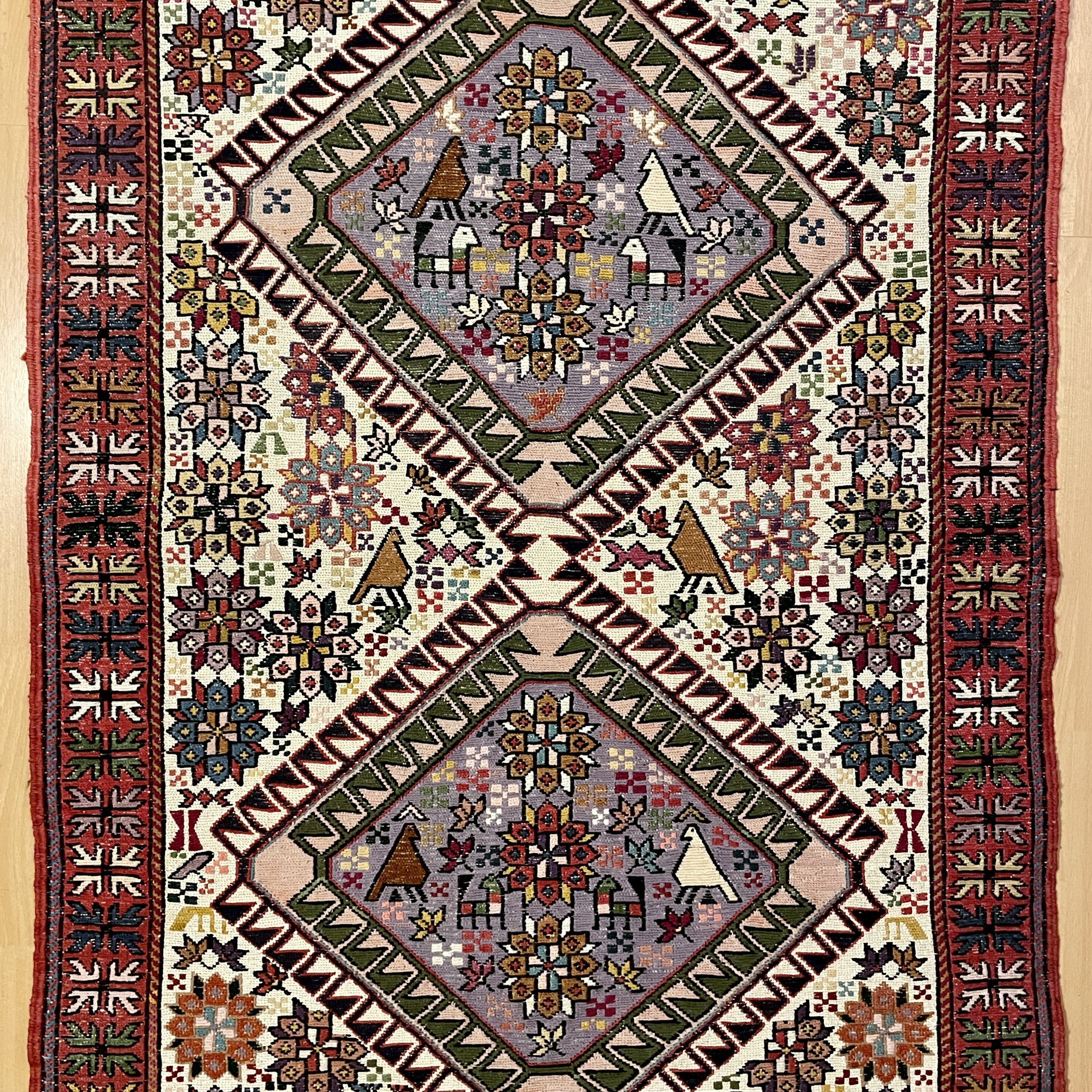
Had some fun learning about Turkish rugs while in Selçuk. Geometric patterns are the local custom. Practice dictates that a double knot is tied onto each warp or vertical string, creating a super strong rug. I bought a kilim rug runner (lower right). Kilim = flat weave, while pile = tufted. The shop wrapped my rug up so tight that I was able to fit it in my backpack for the flight home. I also learned about contemporary uses for historic Turkish textiles. For instance, motorcycles in Turkey often sport the goat hair saddlebags which were originally designed for camel transport. The waterproof goat hair protected the contents of the bags from the camel’s sweat, just as it protects the motorcycle rider’s items from the elements today.

As is often true of touristy areas, there are some sights that don’t measure up to expectation for one reason or another. In this case, I found the port of Kuşadası to be choked with people, cars, and cruise ships (though Pigeon Island proved a cool walk). Mary’s House was a bit of a letdown (there’s no proof Mary and John lived there – Rick Steves uses “alleged” to describe the site). If I were to recommend this trip to others, I would suggest a one night stay at Ayasoluk Hotel in Selçuk (lovely view and staff) followed by a stay at the vineyard in Çamlık.

For me, my stay in the Turkish village was really the icing on the cake. Welcomed by my hosts and treated to food and local wine in their home, I couldn’t have asked for a better experience. I felt very safe the entire time I was traveling. Back in Istanbul, I’ve been reunited with Moloko and have returned to a full time school schedule. Next week begins Semester 2 which means that I’m halfway through my first year teaching in Turkey. I’m looking forward to hosting visitors this spring and have a few new countries on the horizon – notably Georgia and Greece. Stay tuned!