
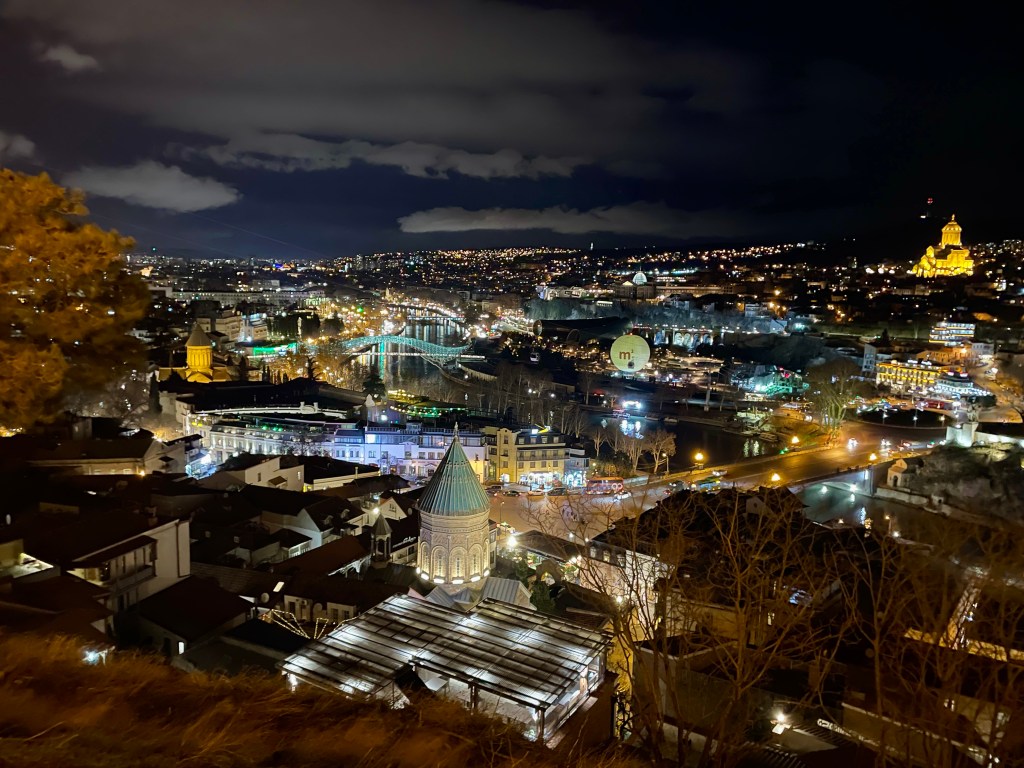
Tbilisi is the capital of Georgia. For the sake of clarity, I’ll note that I’m talking about Georgia the country, not the state in the US. Georgia (pronounced Jorgia) borders Turkey to the east, about a two hour flight. Russia sits to the north and Georgia was formerly part of the USSR its break up in 1991. Over the centuries, Georgia has also been ruled by Iran and even the Mongols back in the 1200s. It’s a very fertile land with deep cultural influences, owing in part to its position as a Silk Road outpost.
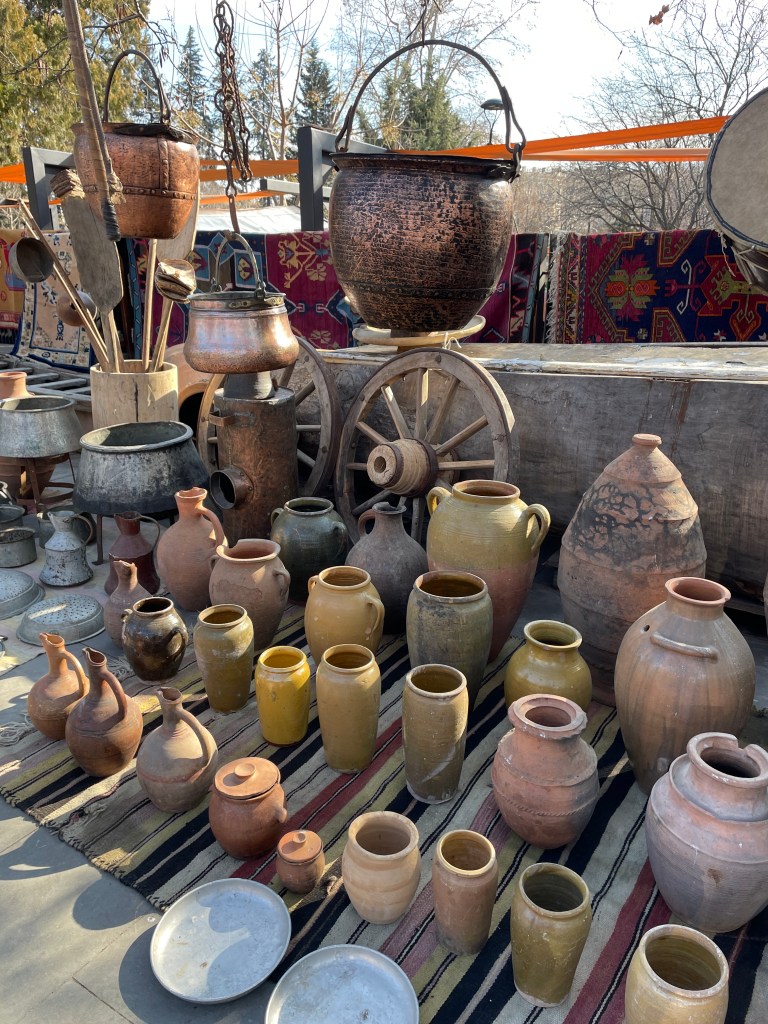
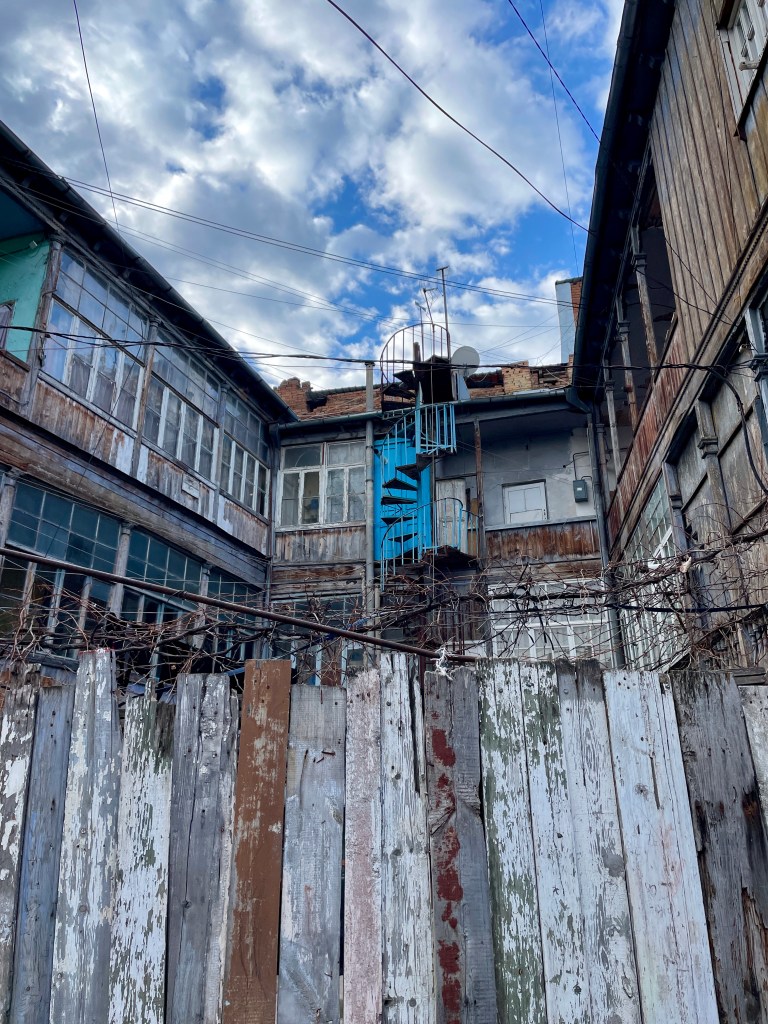
Today Georgia is known for its delicious wine and hearty fare. Bourdain visited in his heyday (check out his episode here). A mountainous region, tourists travel to Georgia for the hiking, the history, and the hospitality. Georgians are, to make a broad generalization, an extremely warm and welcoming people – big smiles, quick wits, and deeply proud of their country’s independence.

February break is always a welcome reprieve for a teacher. A little calm before the storm of spring activities, exhibitions, exams, etc. This year, I took part in another VAWAA experience (Vacation With an Artist). Five years ago I travelled to Mallorca and completed a four day residency with a textile artist. This time, I spotted a ceramics master class in Tbilisi and knew I had to sign up. My friend and fellow art teacher, Michele, opted to join me.
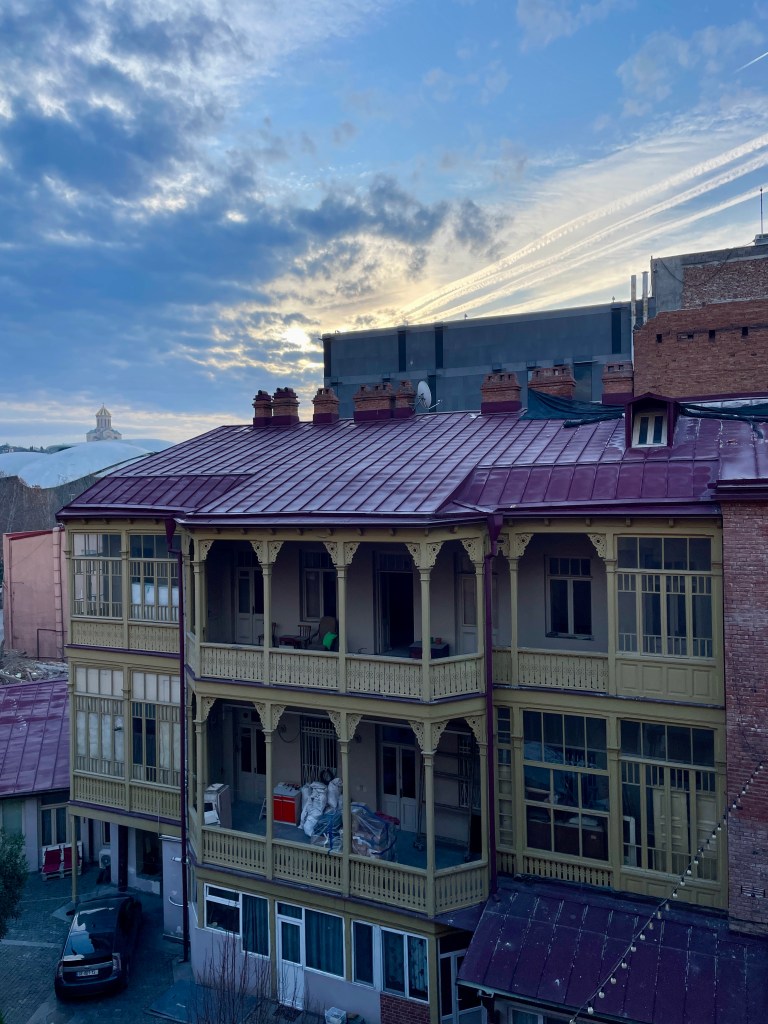
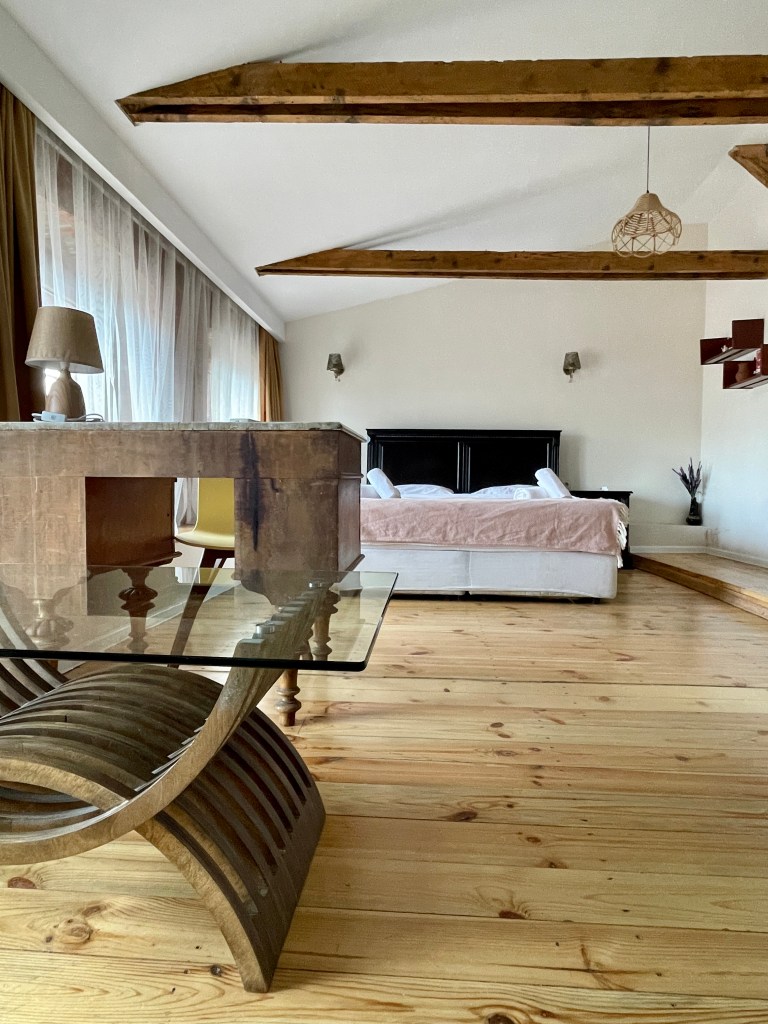
We flew into Tbilisi on a route parallel to the Caucasus Mountains, of US census fame. It’s outdated now but I recall checking “Caucasian” many a time in my school days, though I’m now keenly aware of how odd this was, having no genetic relation to this area of the world. As is the deal with VAWAA, we booked our own accommodations and flights. I opted for a renovated studio off of one of Tbilisi’s beautiful Italian-style courtyards. The balconies themselves are works of art and many are being renovated to turn into hotels. Tourism is booming in Tbilisi.
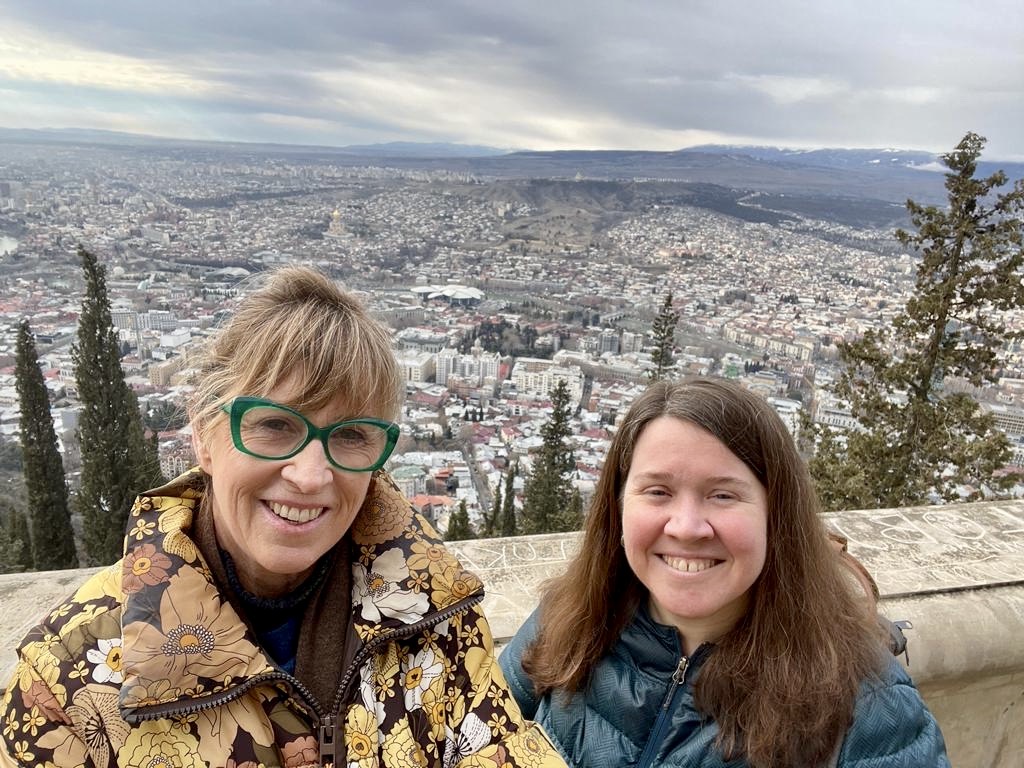
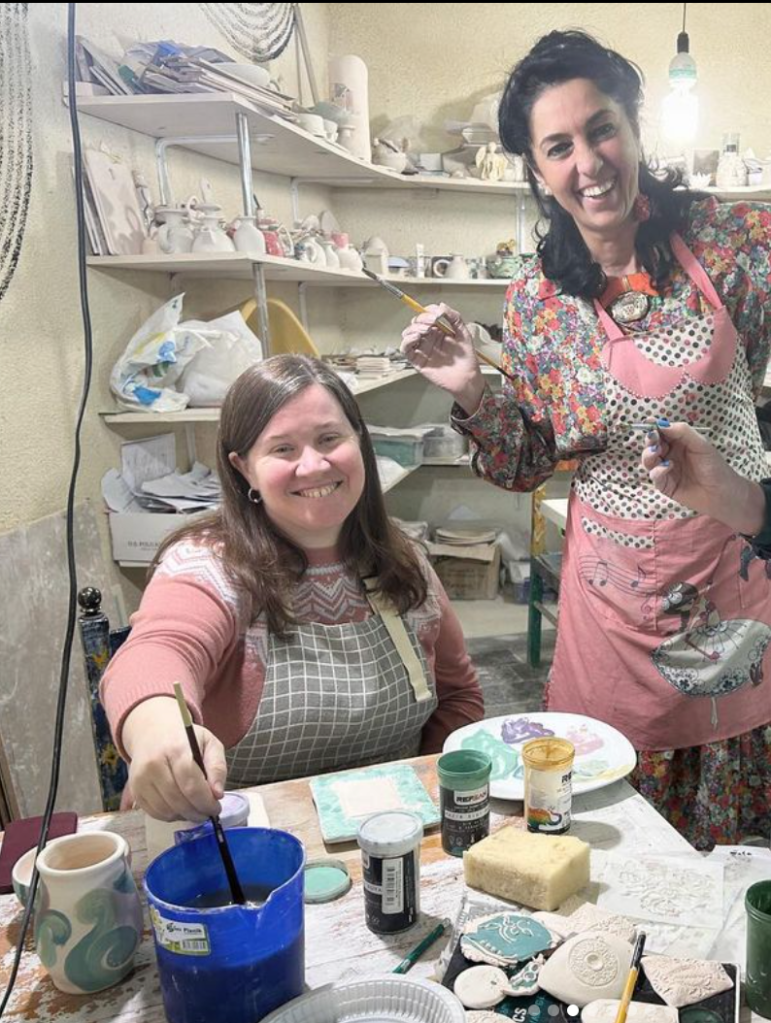
On our first day in Tbilisi, we met Nato (pronounced Nat-o, a Georgian shorthand for Natalia). To know Nato is to meet Georgian culture face-to-face. Her passion for her country, the people, and its traditions is as rich as the palette of her studio projects. She cared deeply that our stay was as dynamic as possible and we could not have asked for a better host or master teacher. Below are my friend Michele (left) and teacher Nato (right) – her personality as bold as her beautiful jacket.
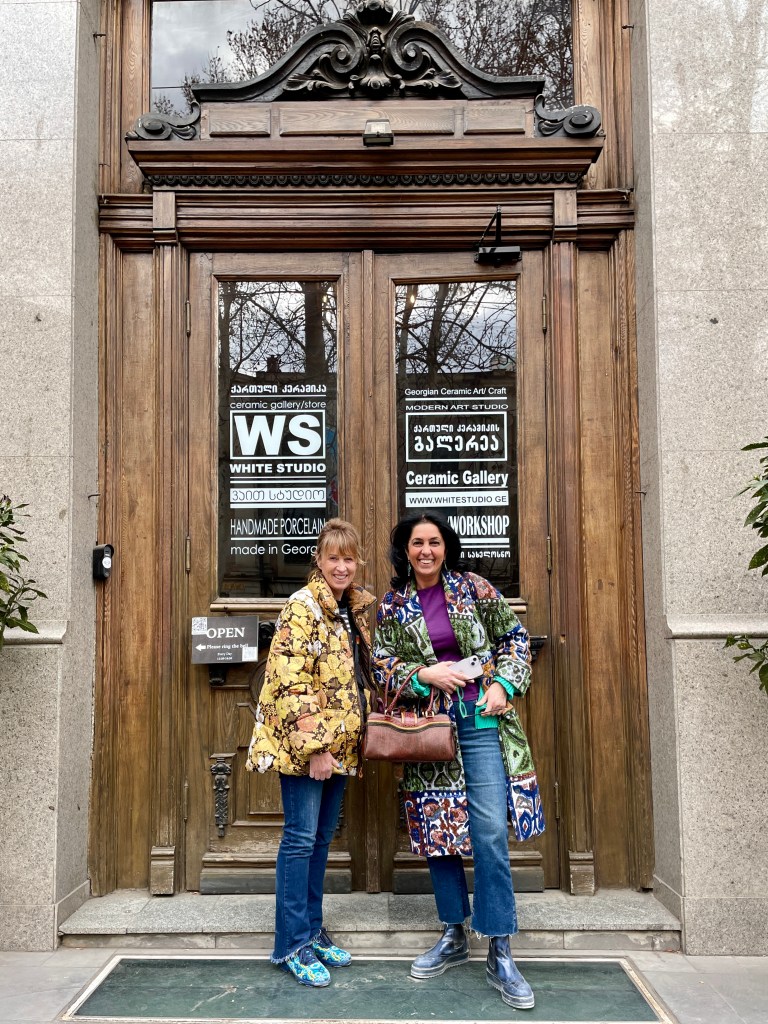
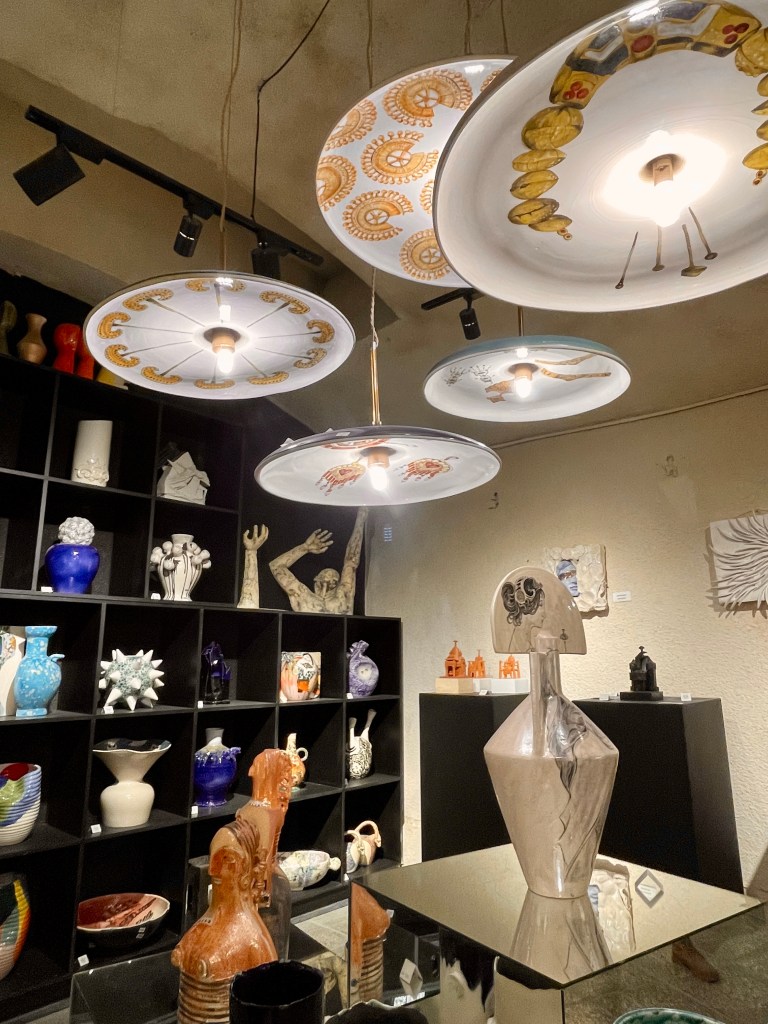
Nato’s clay studio, White Studios, is one of four studios she owns in Tbilisi, is located within the bowels of the Rustaveli National Theatre. This epic spot allowed us to hear the symphony play through the walls as we worked. On our first day, we spent time discussing what we would create, including jewelry and traditional Georgian glazing techniques. Nato was a font of knowledge, having perhaps singlehandedly resurrected the Georgian clay tradition after decades of Soviet automation. She is responsible for discovering and clarifying the white clay we used from Georgian soil.
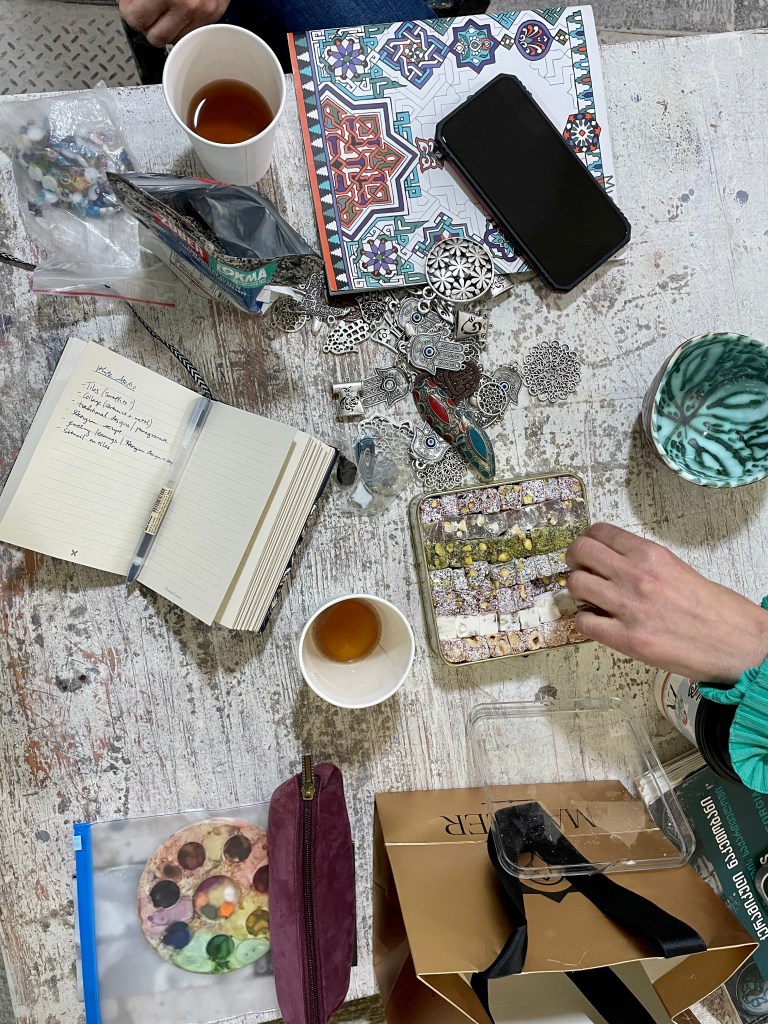
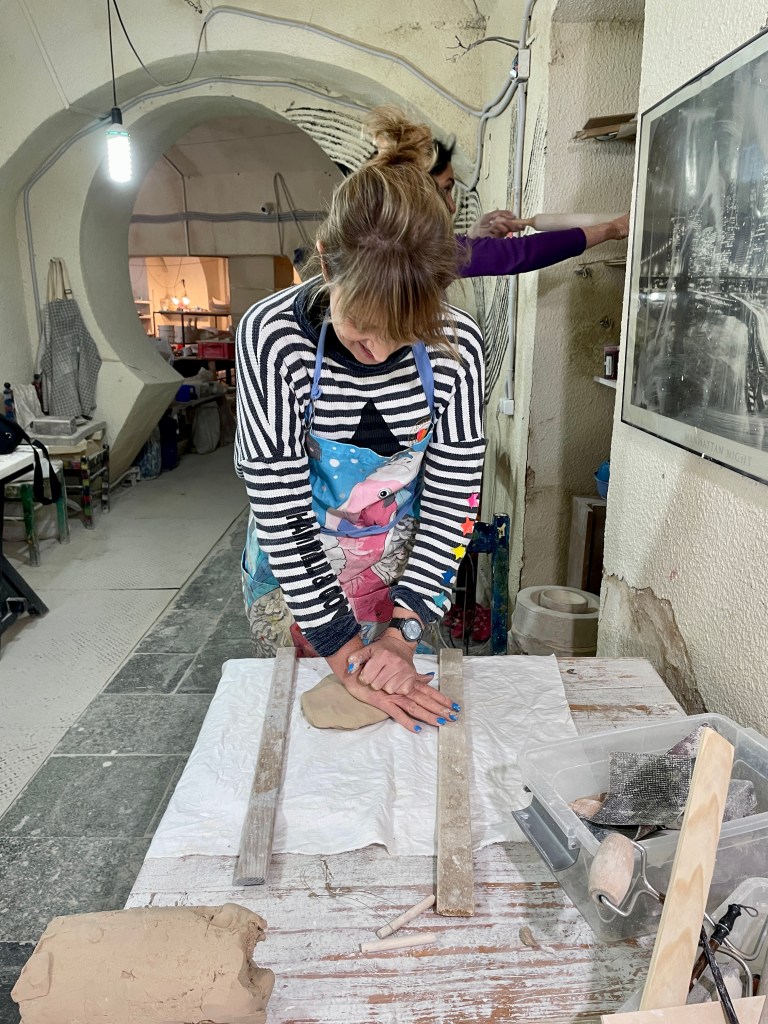
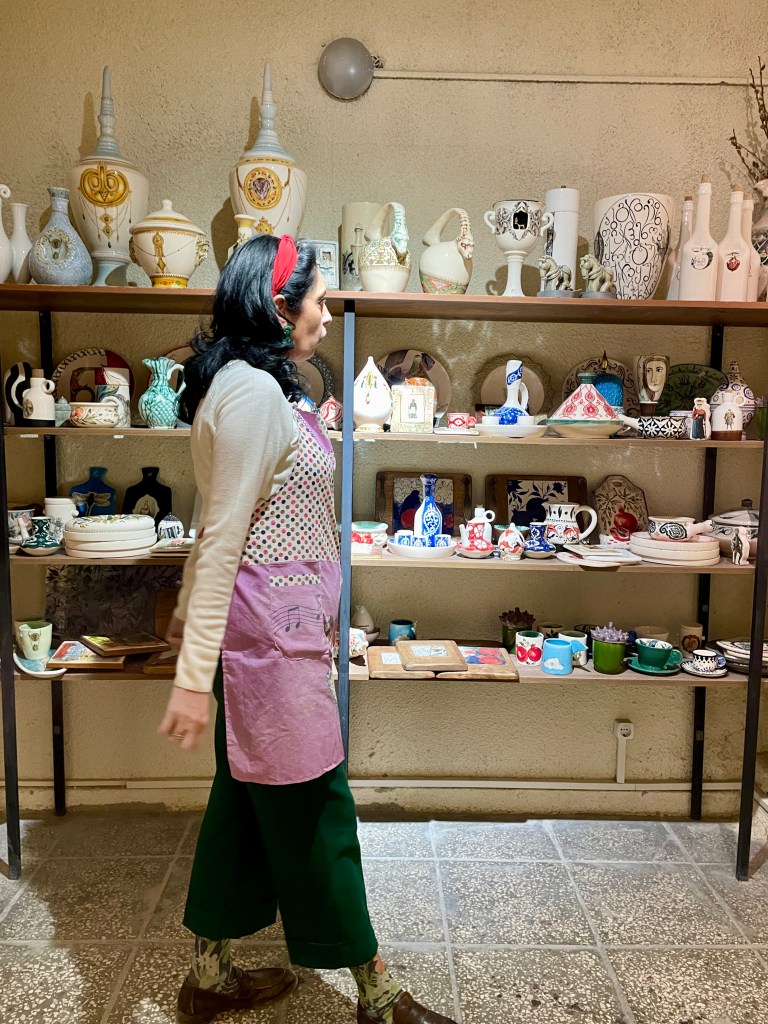
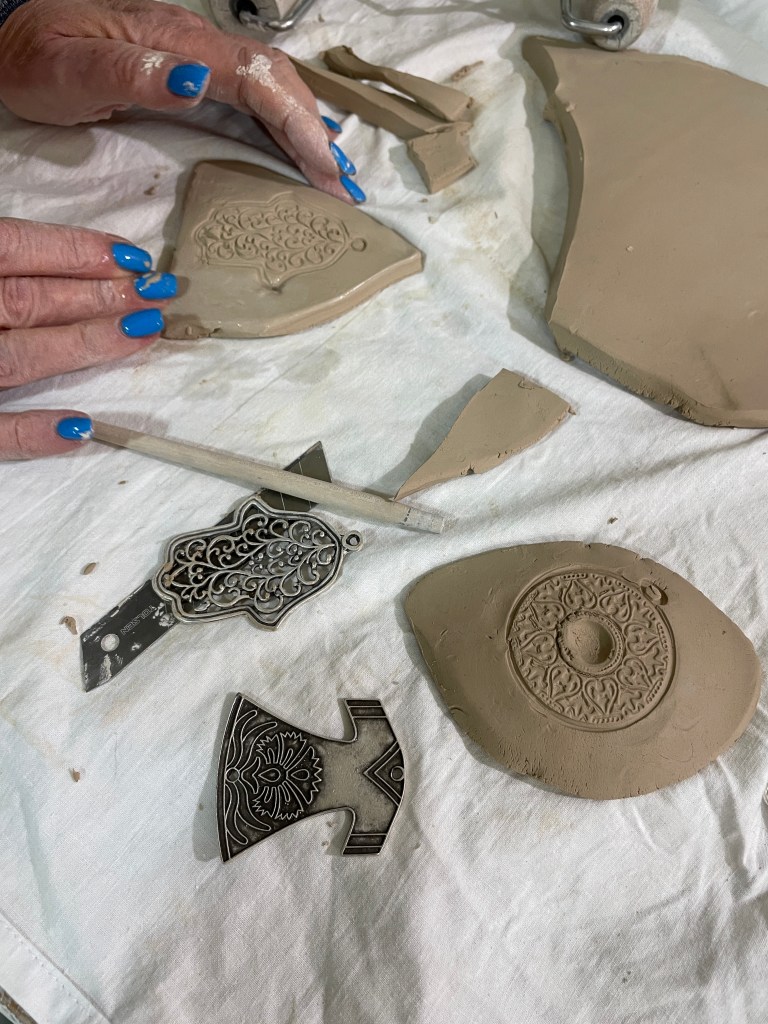
We wasted no time diving in. Michele brought items from Istanbul’s Grand Bazaar to press into her clay. I was very taken with the green copper oxide technique which originated from Iran. Lots of experimentation and some small victories.
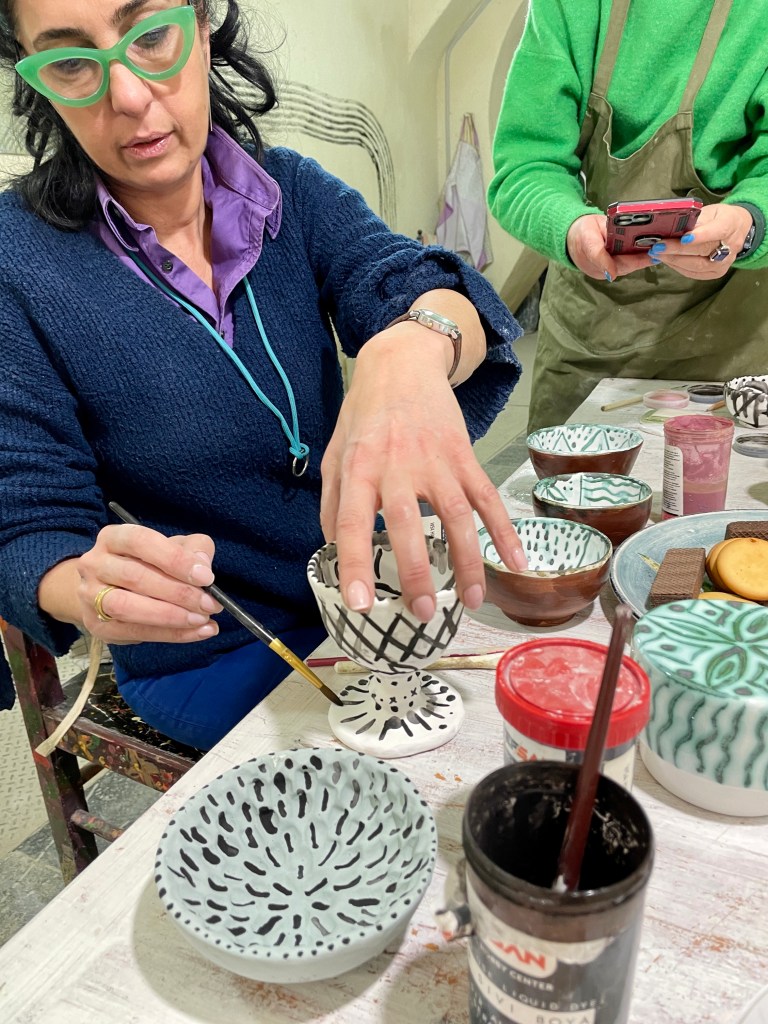
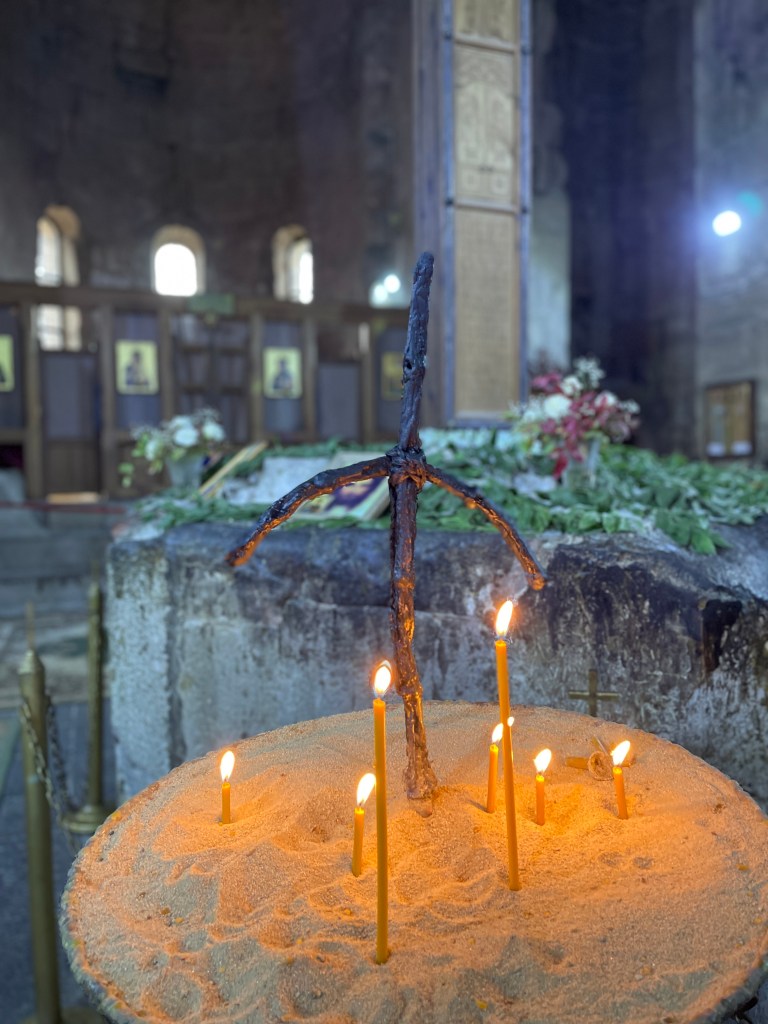
Over the course of the week, Nato treated us to Georgian food, recommended museums and other cultural must-sees, and even drove us out to Jvari Monastery, a 4th Century stone fortress commemorating Christianity’s arrival in Georgia. The country is unique in the region for its religion, surrounded by countries of Muslim practice.

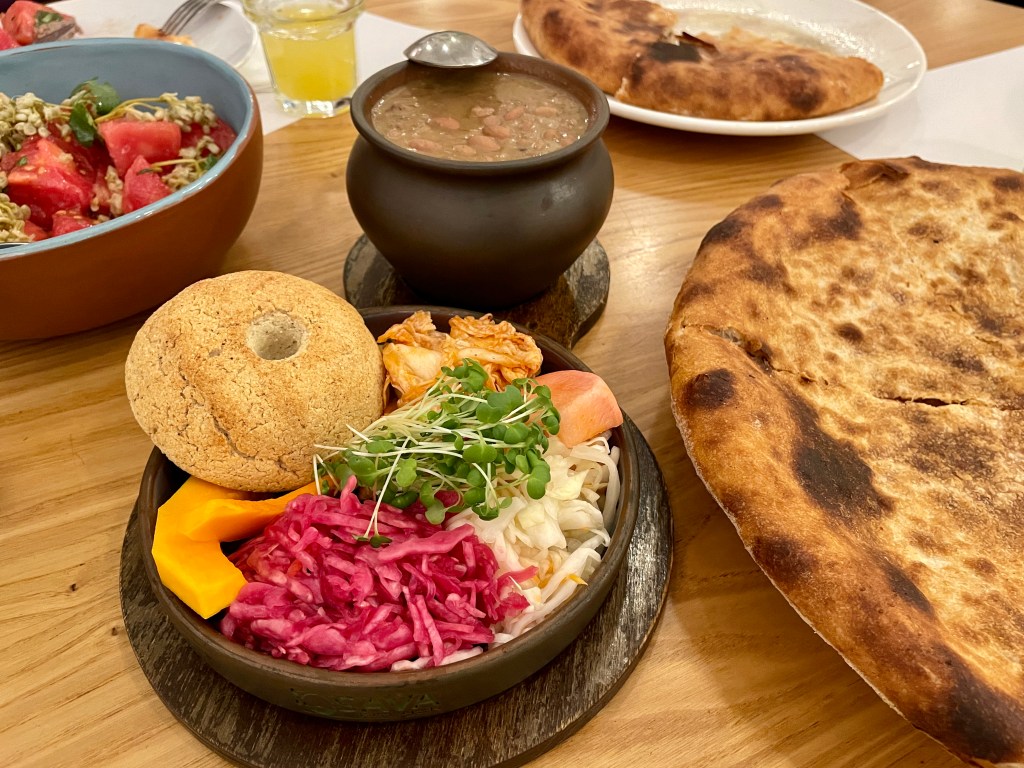
Georgian food really deserves an entire blog entry of its own. When I lived in Moscow, if we went out for dinner it was most likely for Georgian fare. Robust, the food will give you the energy to survive the long winter in the mountains. Highlights include beans, savory cornbread (shaped like a donut below), pickled everything, and khachapuri (cheese-filled bread on the bottom right).
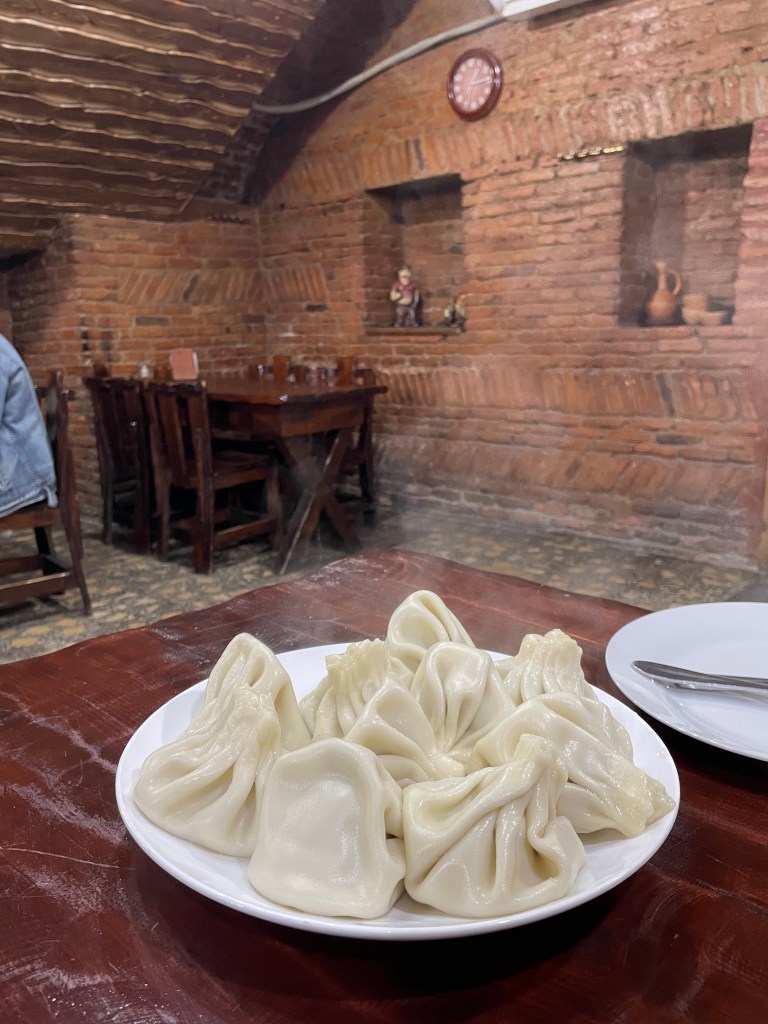
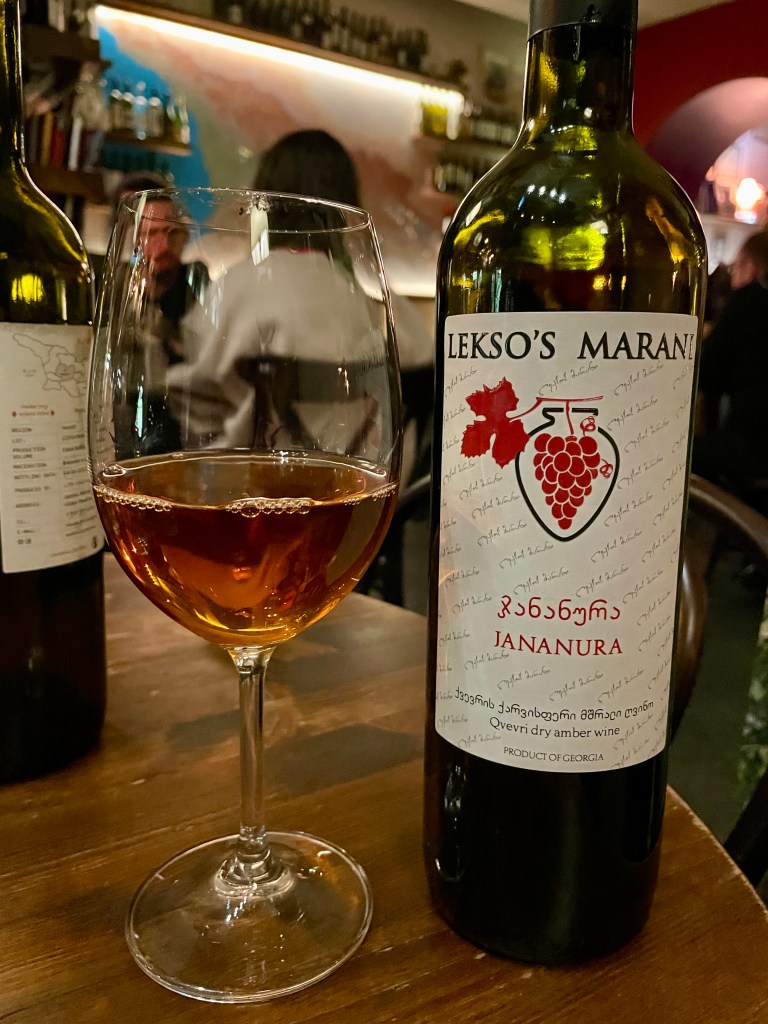
Georgia also has khinkali – essentially soup dumplings – with fillings that include beef, pork, salmon, or – my favorite – potatoes and spinach. Paired with Georgian wine (amber wines are popular right now), and you can see we clearly ate well. Georgia’s vineyards have become quite a destination as well. The country boasts over 200 commercial wineries, many of which provide accommodations and spa experiences.
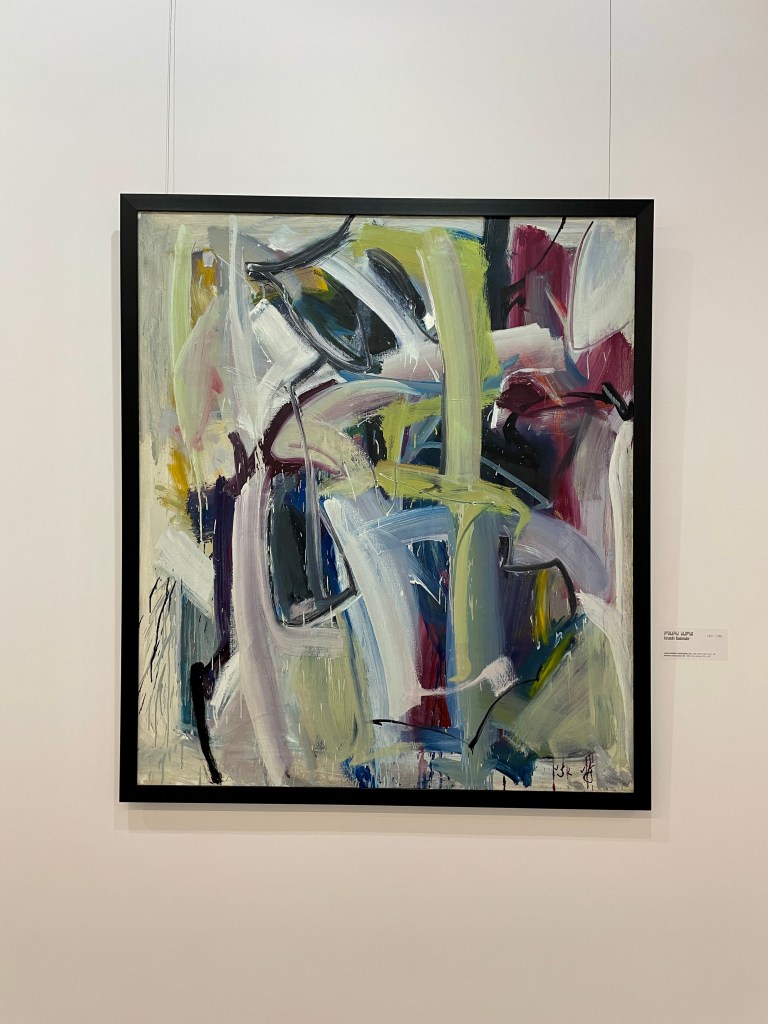
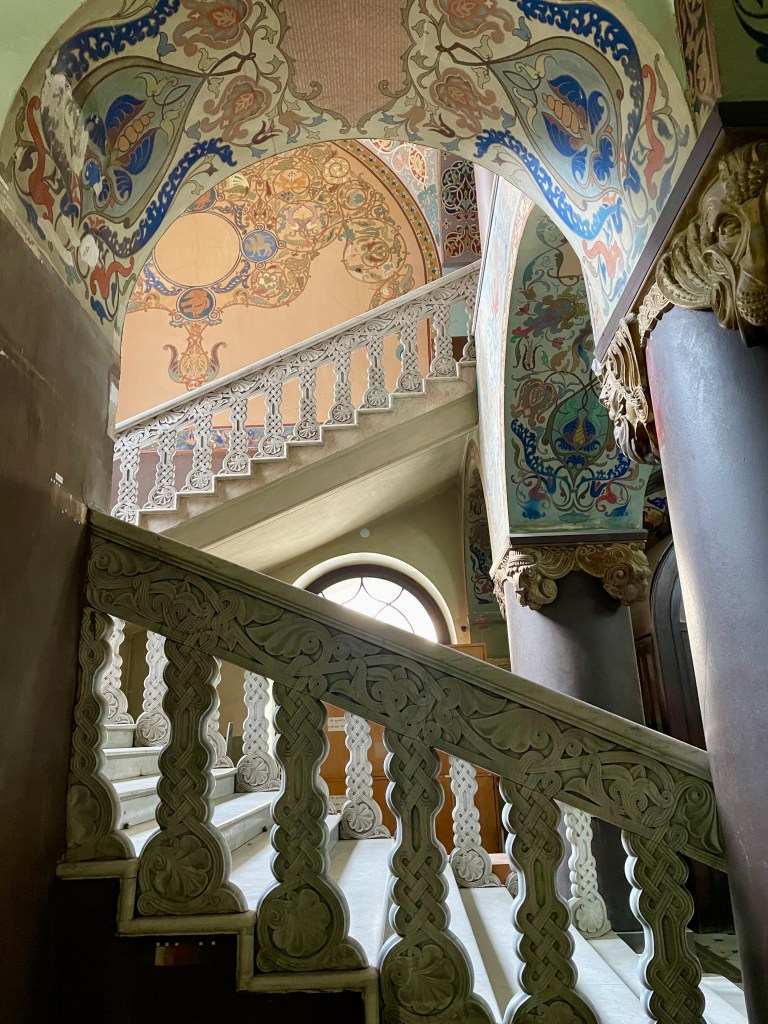
In our downtime time during Tbilisi Week, we visited the Georgian Museum of Fine Arts and the Museum of Books (respective pics below). I loved learning about the evolution of the artistic styles from the 20th to 21st centuries. And the murals on the ceiling of the Museum of Books were worth the visit (the museum was not super impressive itself, most likely because I cannot read Georgian script).
Back in the studio, we spread four days of learning over the course of the week. With clay, you need to factor in drying times and kiln firings. As an art teacher, it was a real treat to have someone else in charge of these logistics. Nato’s energy kept us excited and I tried sgraffito for the first time (bottom right). Etching into a layer of underglaze is definitely my new favorite technique and I’m looking forward to teaching my own students this practice in the fall.

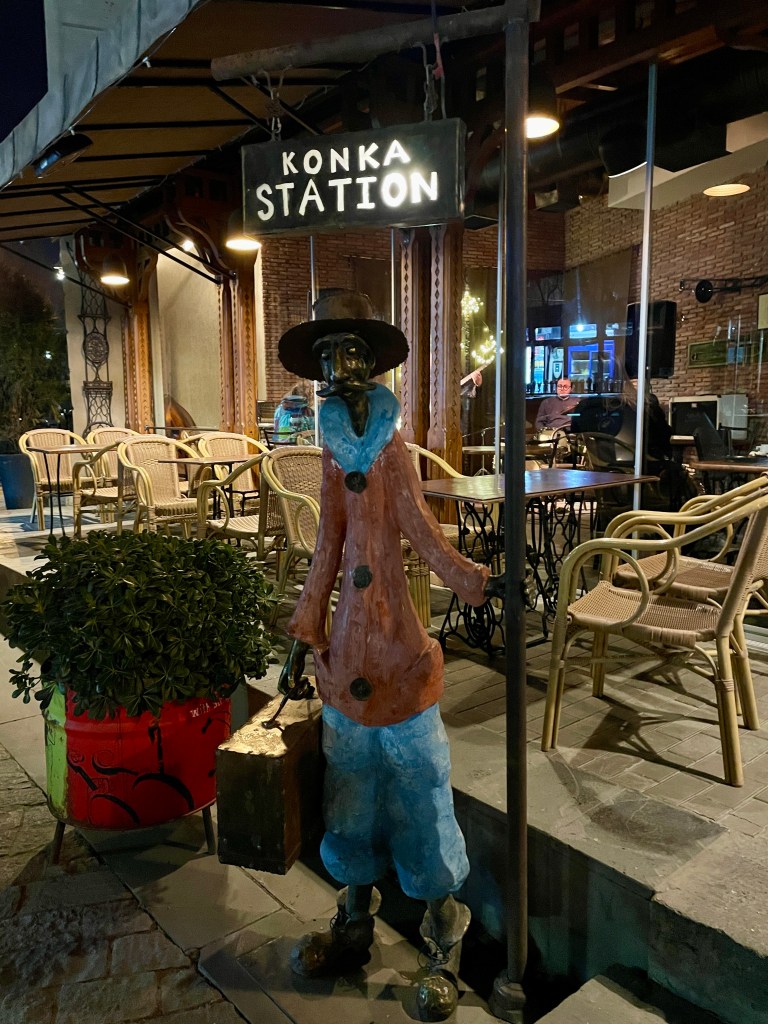
All in all, we made a quite a lot of pieces in just a few days time (my spread is below left). We celebrated with a night out at a jazz club recommended by Nato. Tbilisi has a number of great jazz clubs to choose from including Konka Station, 1984, and Jazz Club Singer. Great vibes and talented musicians.

All too quickly, my week in Tbilisi came to an end. I would love to return and visit the mountains next time. There’s a felting tradition to explore and lots of beautiful hikes to monasteries as well. If anyone is inspired to visit, I would highly recommend doing so in the next few years as the city seems poised on the edge of a tourism boom. Can’t recommend the place enough. A great experience with warm and wonderful people. Until next time!

 The Turquoise Chronicles