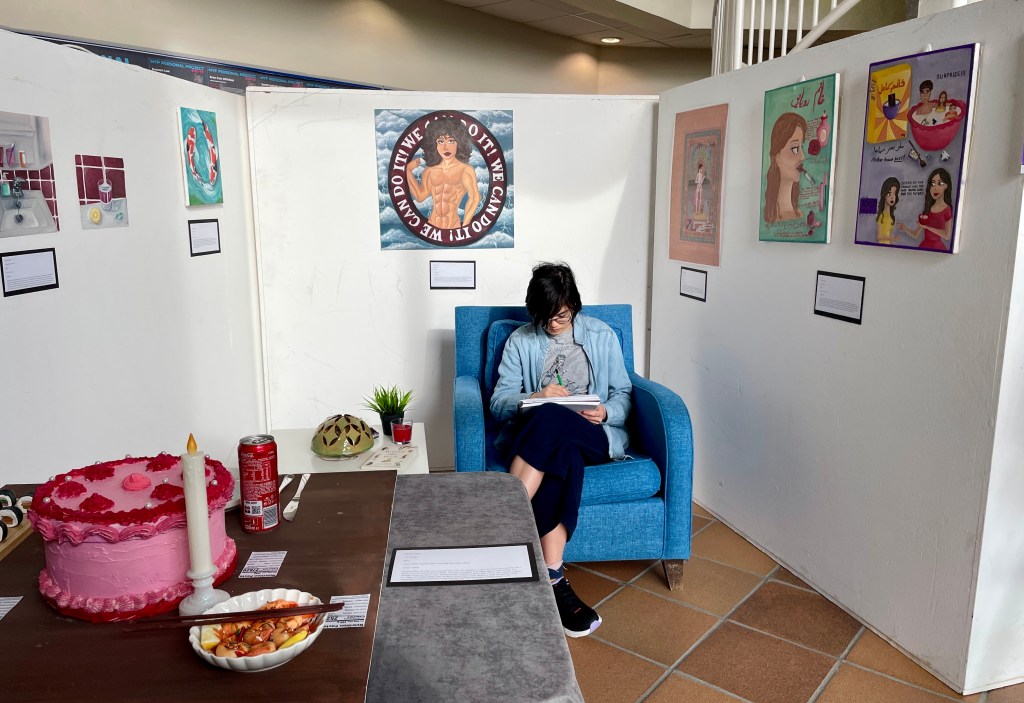
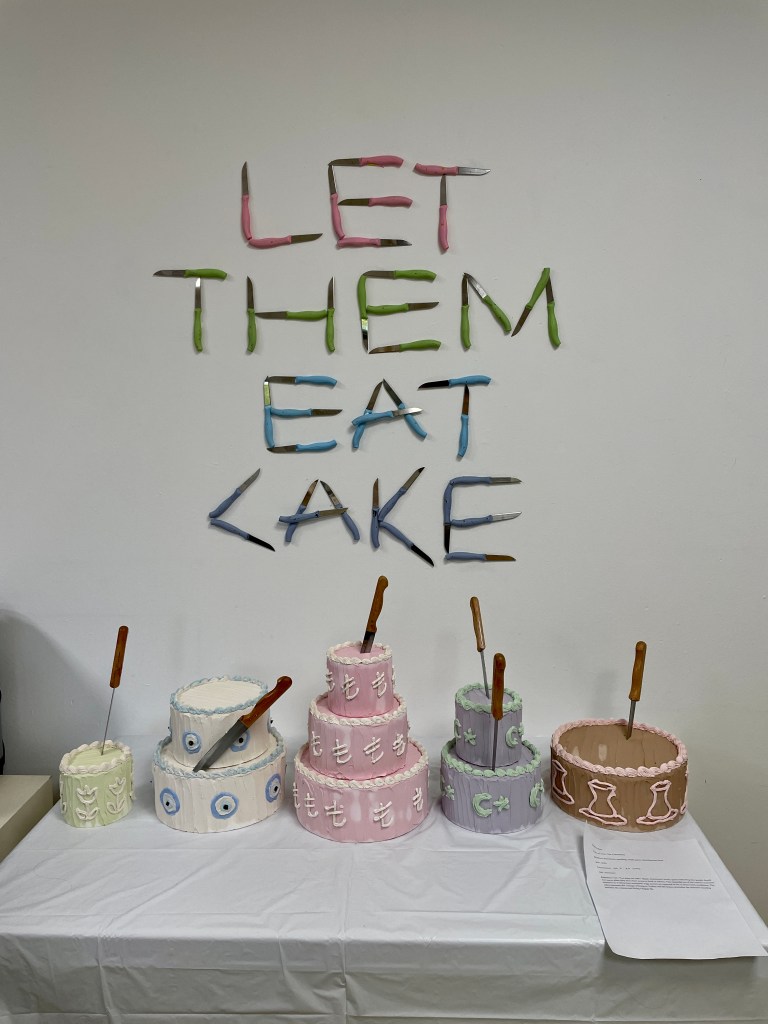
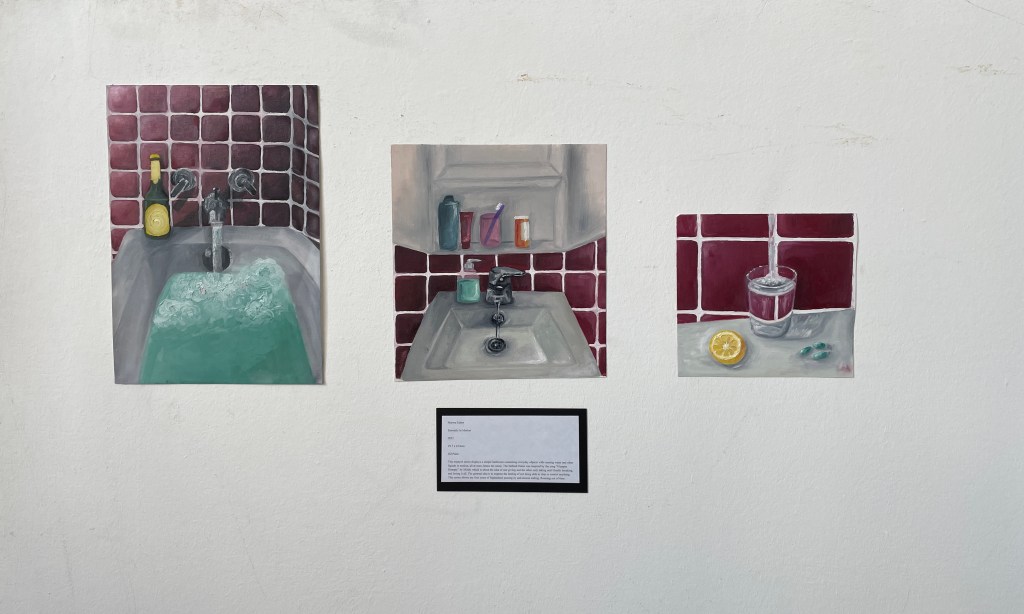
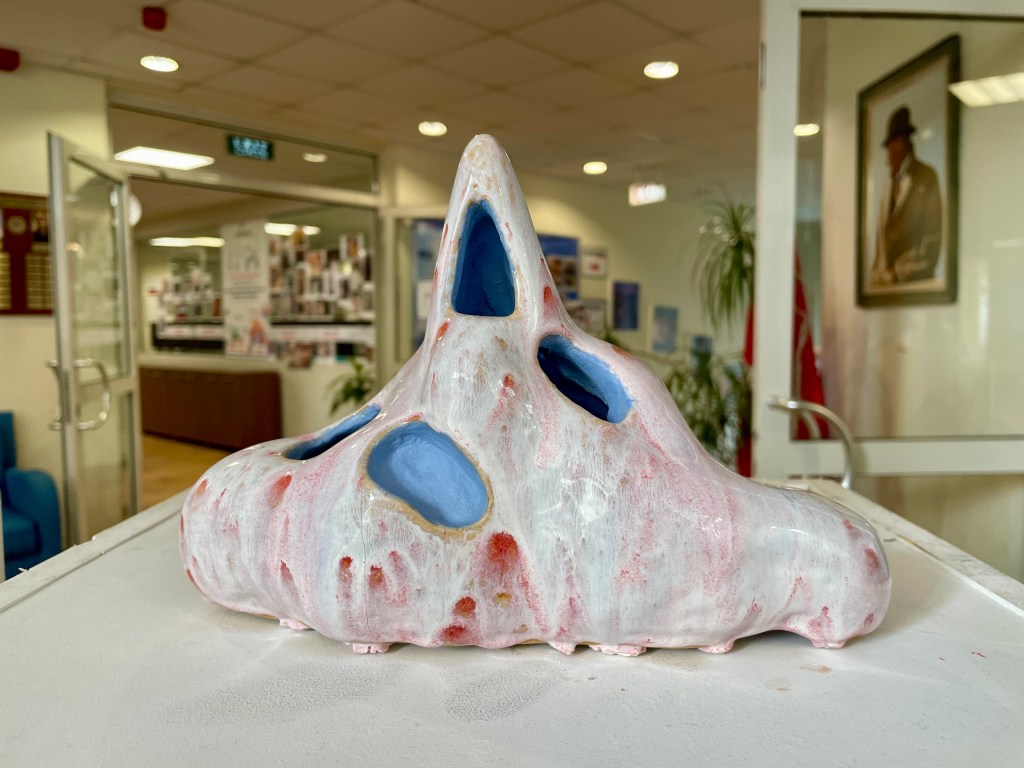
Spring is rapidly approaching and with it comes the annual Grade 12 Art Exhibition. Most of my Grade 12 students are aiming for an International Baccalaureate diploma, the Visual Arts component of which includes curating and presenting artwork from two years of focused study.
Exhibition text, curatorial rationales (artist statements), and 8-12 polished artworks are all requirements of the IB Exhibition. I also request that they create their own flier and invitations. Months of planning and preparation goes into the show. Last week we had the chance to see the fruits of that labor.
Students study printmaking, photography, and ceramics over the course of Year 1 in Visual Arts. In Year 2, they choose the media and the subject of the art they create.
With eight students showing, the exhibition took up two levels including the school foyer and the upper hallway. We expanded the event into a week-long showcase, allowing more of our PreK – Grade 12 student body to attend.
On Tuesday, we held an opening at lunchtime. Parents, teachers, and students were in attendance. My students chose representatives amongst themselves to give remarks and I said a few words celebrating their efforts. I was very pleased with the parent turnout, particularly as our school is so far out of town.
Events like this aren’t possible without the support of the school facilities team and our administrators, one of whom even stayed late on a Sunday to oversee the installation of the large boards. I am very lucky to have that kind of support.
All in all, the IB Exhibition was a great success. The students put in a lot of hard work and brought their visions to life. Only two more weeks left with this group! Lots to do before then but this was definitely a feather in their cap 🙂
On a bit of a creative streak, I sought out a traditional Turkish paper marbling class this past weekend. Ebru (ay-brew) as it’s called, translates to marbling in Turkish. Popular during the Ottoman reign, ebru was born at the same time that paper was invented.
The technique of paper marbling dates back to the 9th and 10th centuries. As with so many artistic techniques found along the Silk Road, it’s country of origin is a bit murky. Geotags include Iran, Turkestan (a region of Central Asia, not a country), Japan, and China.
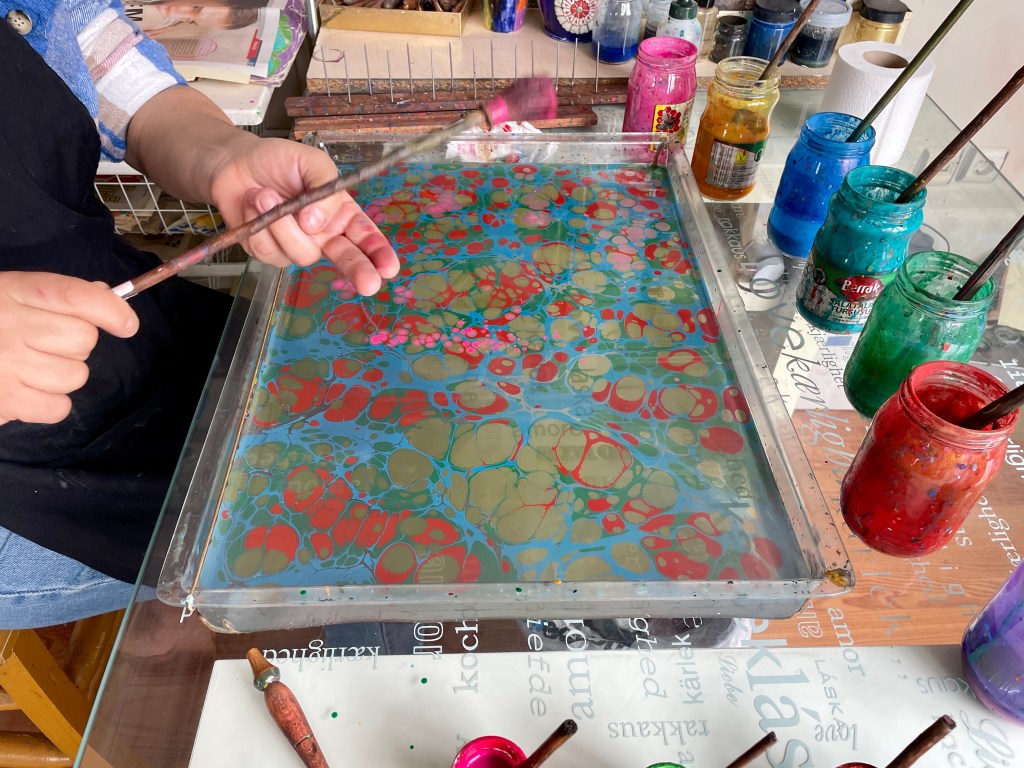
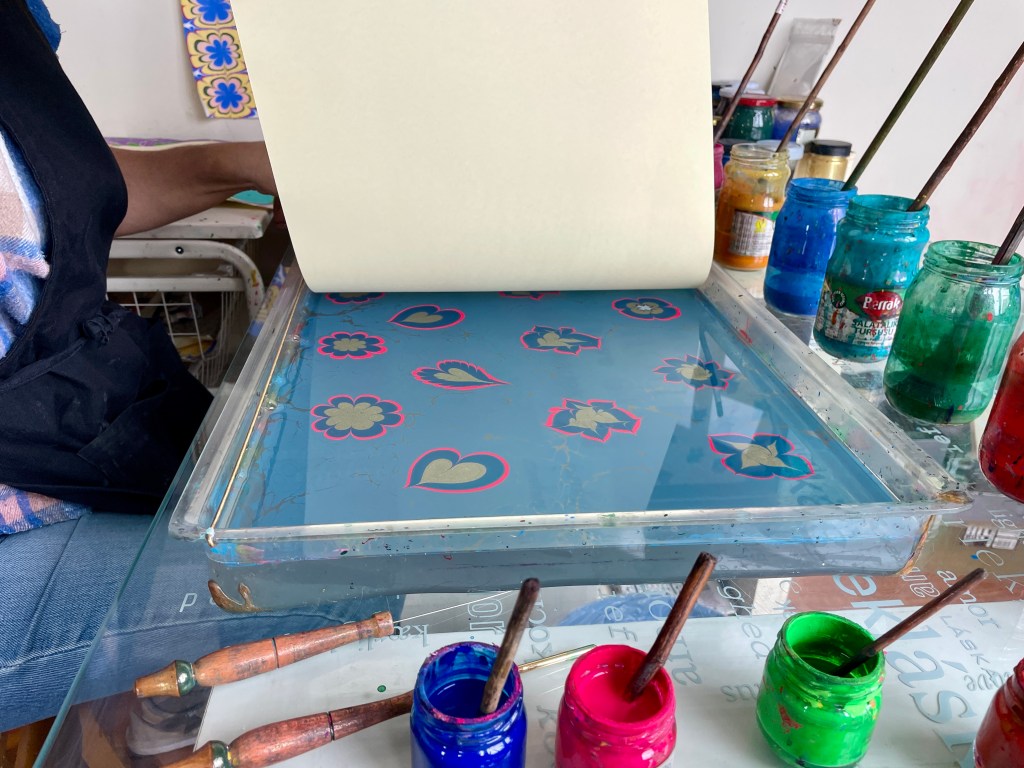
Know as اَبری (ah-bree) in Persian, the term refers to the cloud-like appearance of ink upon paper. Suspended above a bath of water mixed with gall (the substance found in an animal’s gallbladder), the inks cast colorful clouds, pushing upon each other as oil would in water. Keragin (seaweed powder) is added as a thickening agent. Today keragin is imported from the States.
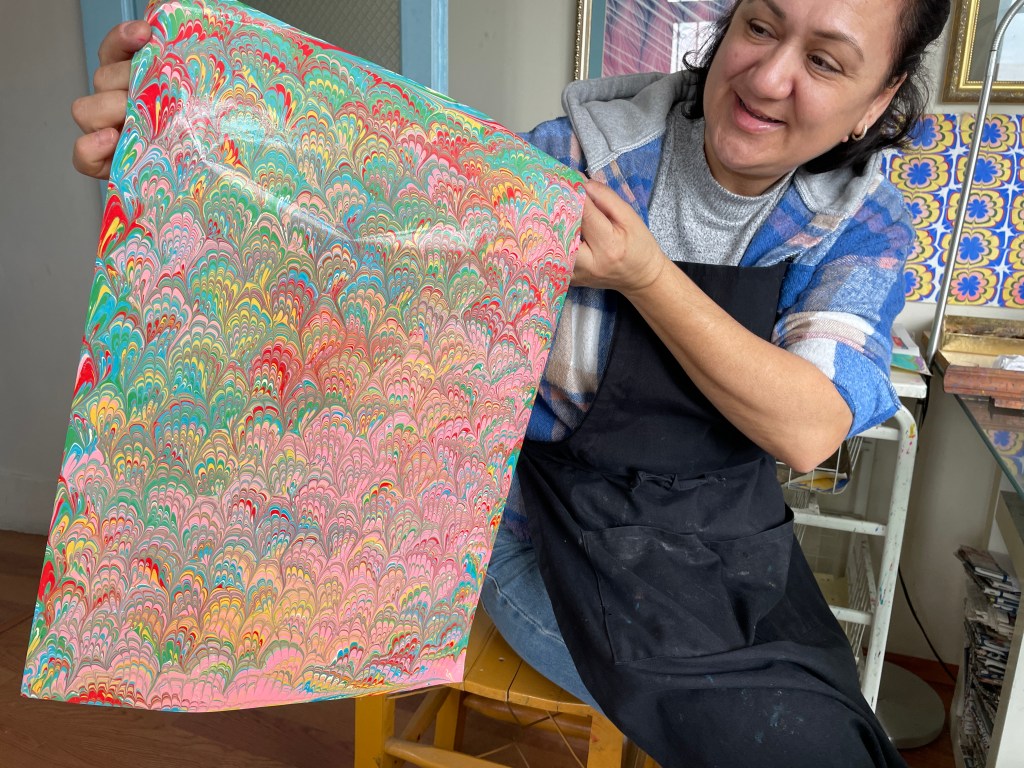
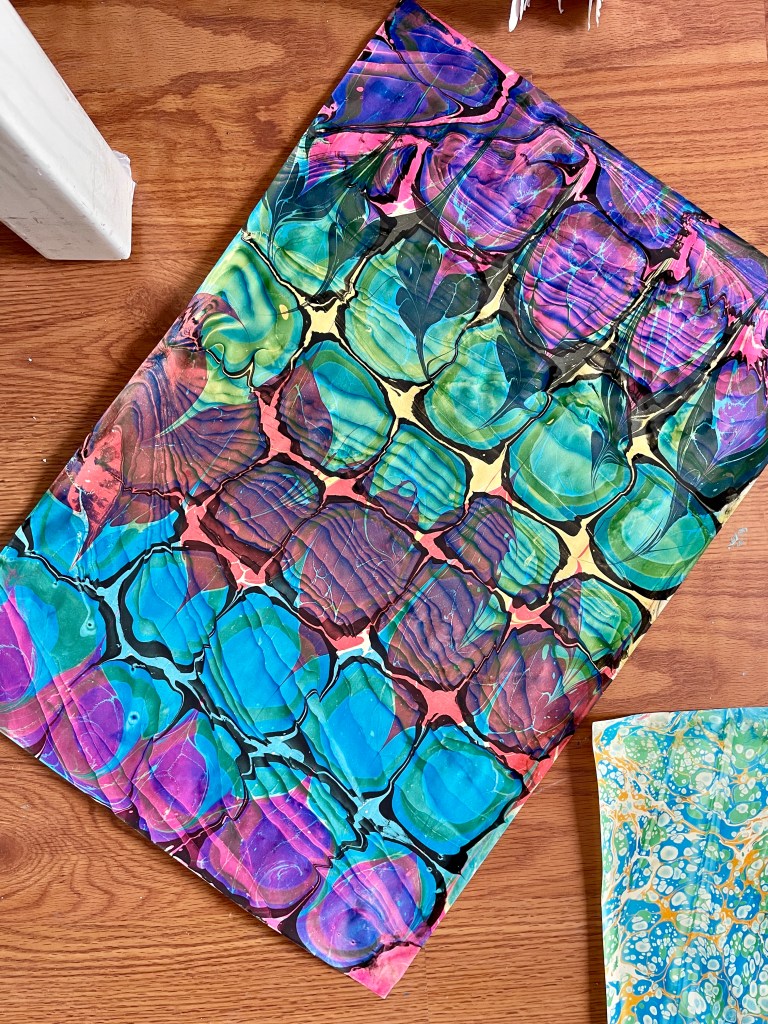
The studio, Turkish Arts, lies just a stone’s throw from the Hagia Sophia. Founded by my wonderful teacher, Betül, the workshop space is perched five stories above the street. The view of the Bosphorus Strait over the rooftops was mystical on a rainy Sunday. Betül is an incredibly accomplished artist, having studied traditional arts at Mimar Sinan Fine Art University here in Istanbul. She makes it look so easy! I was thankful for her help correcting my posture, how I held the brush, and how much ink I added before squeezing the excess. The technique below is called peacock and surprisingly easy, achieved by using a series of combs running through the ink.
I spend a few hours in the studio, trying different techniques which varied from flower creation to the more abstract, which I enjoyed the most. Just as I enjoying cooking rather than the more precise baking, I enjoy making art when I can be loose and inventive.
As I worked, the beautiful sounds of Radyo Voyage filled the studio. A Turkish radio station which plays a diverse array of music from countries worldwide, it set a mood perfectly. Available worldwide via Radyo Voyage’s app and website, I would highly recommend.
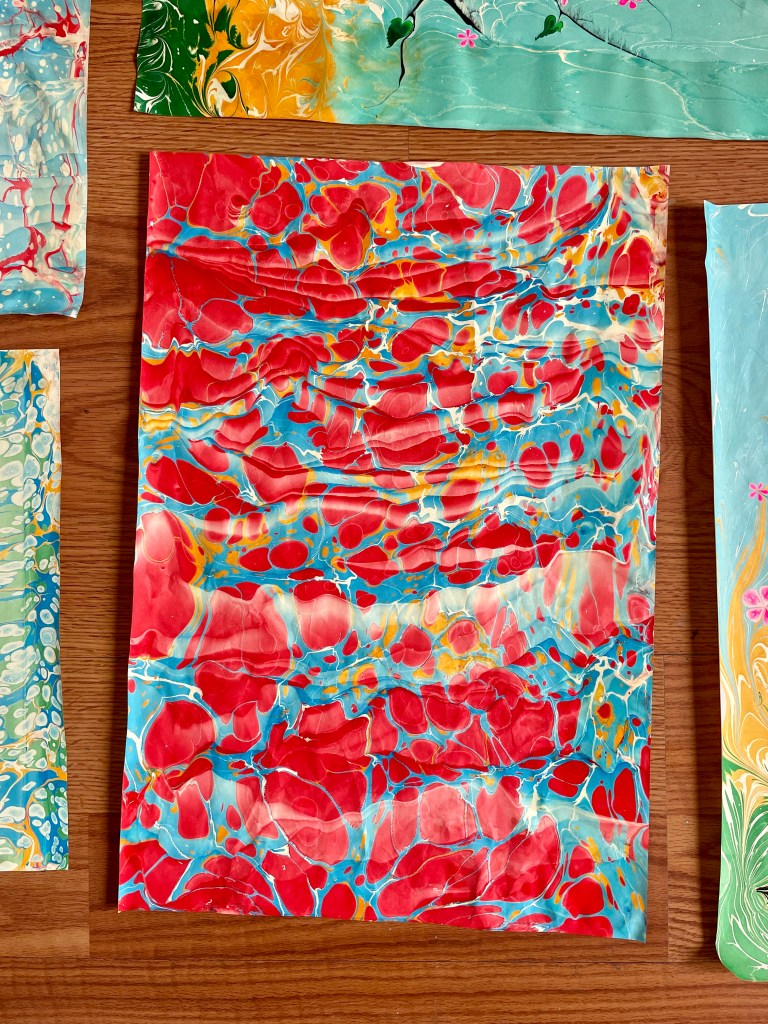
There is a contemporary marbling technique called Spanish marbling or “drunken marbling”. Likely the result of a happy accident (as we say in the art world), Spanish marbling incorporates a crumpled piece of paper which is flattened and shifted in the bath to mimic waves on the sand. The effect is really beautiful and harder then it looks to achieve!
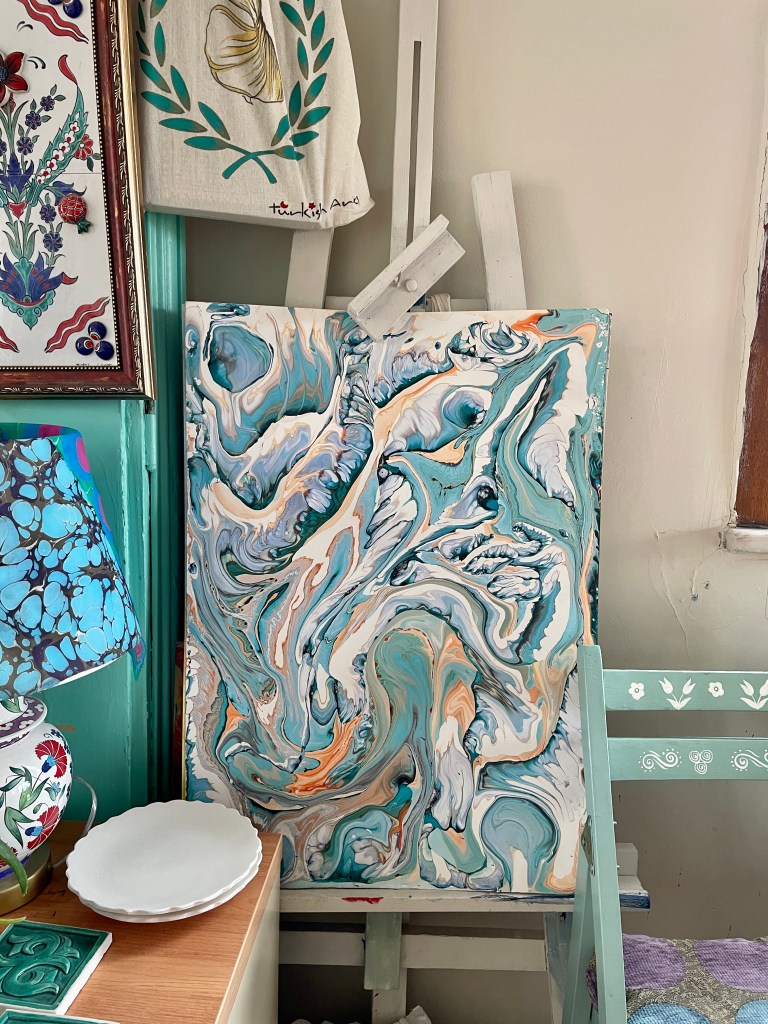
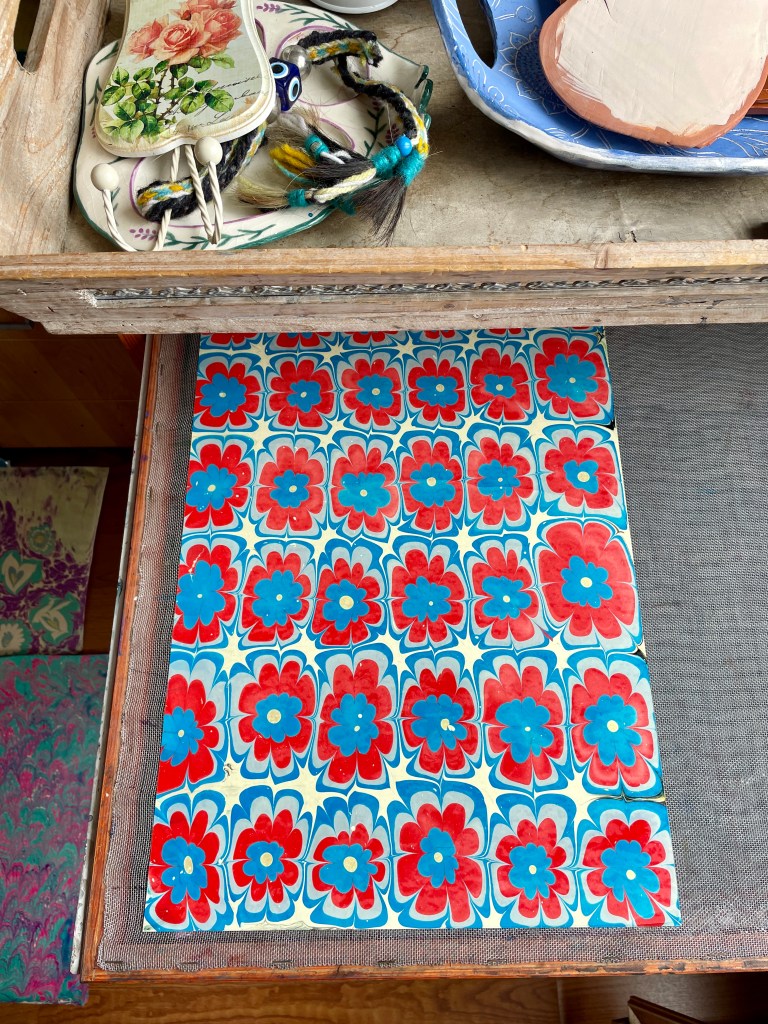
My favorite result was a twice-dipped piece (below right), the first dip made by my teacher and the second (the blobs) made by me. The colors don’t bleed in the process but the layering makes for stunning results. On the left, I applied the same technique – applying dots of ink to form circles which reduced in size. I then used a thin wire tool to push the ink towards the middle of the circle, forming petals of a flower.
As my time in the studio drew to a close, I placed each sheet of paper on a mesh drying rack. Betül turned on the heating unit above to help speed up the drying process. After lunch with the friend, I returned two hours later to pick up my finished papers. All in all, a beautiful experience I would love to share with future visitors.
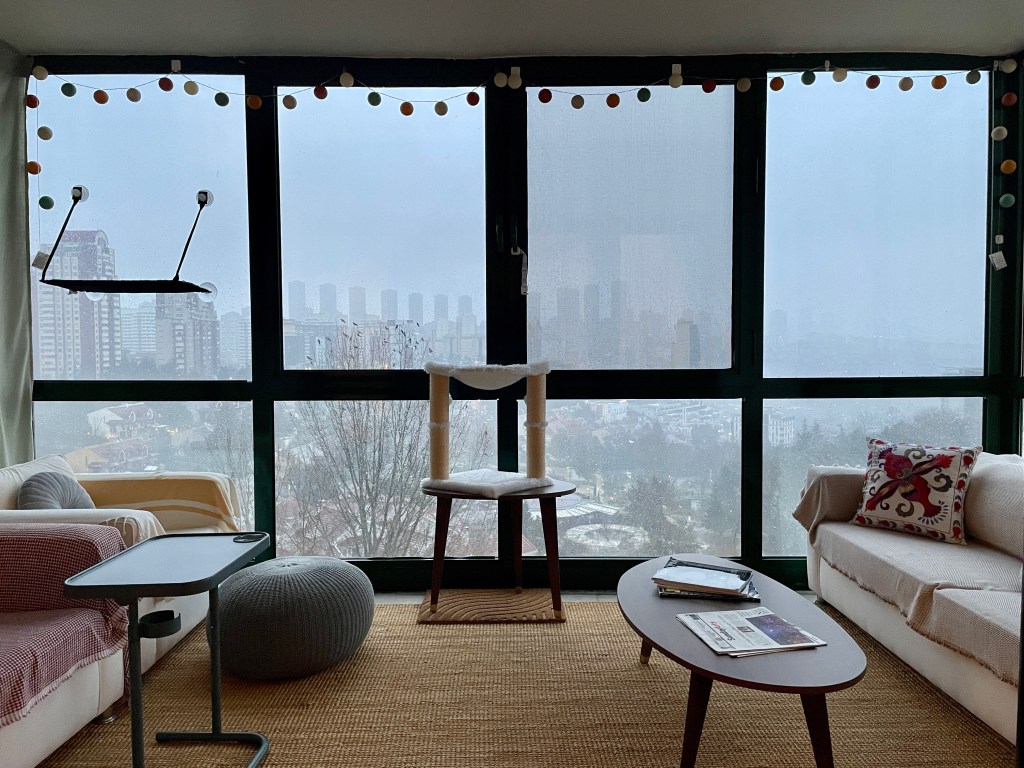
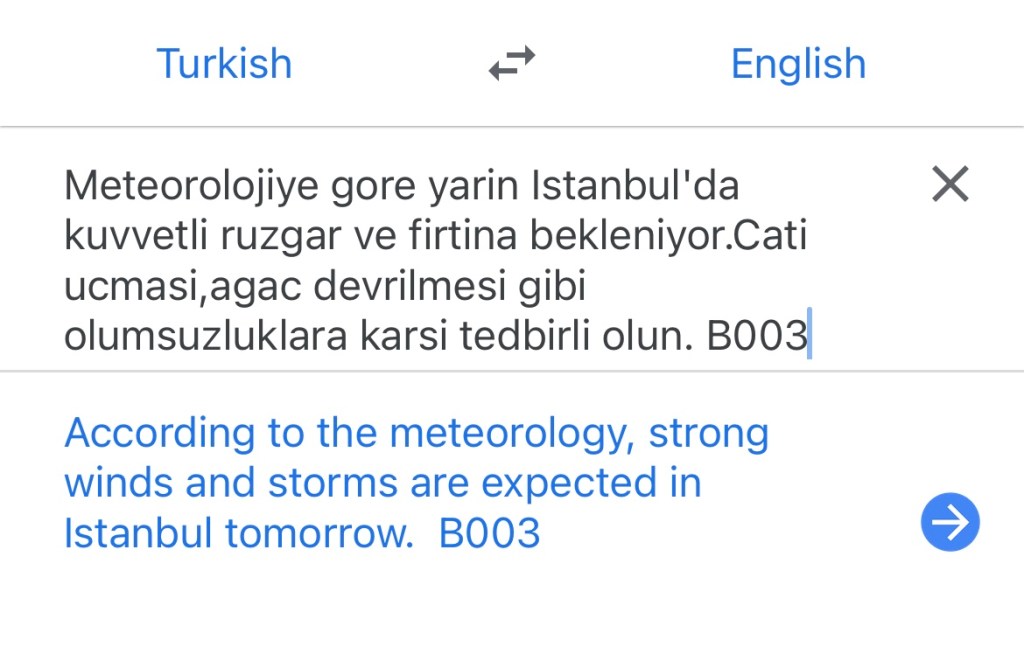
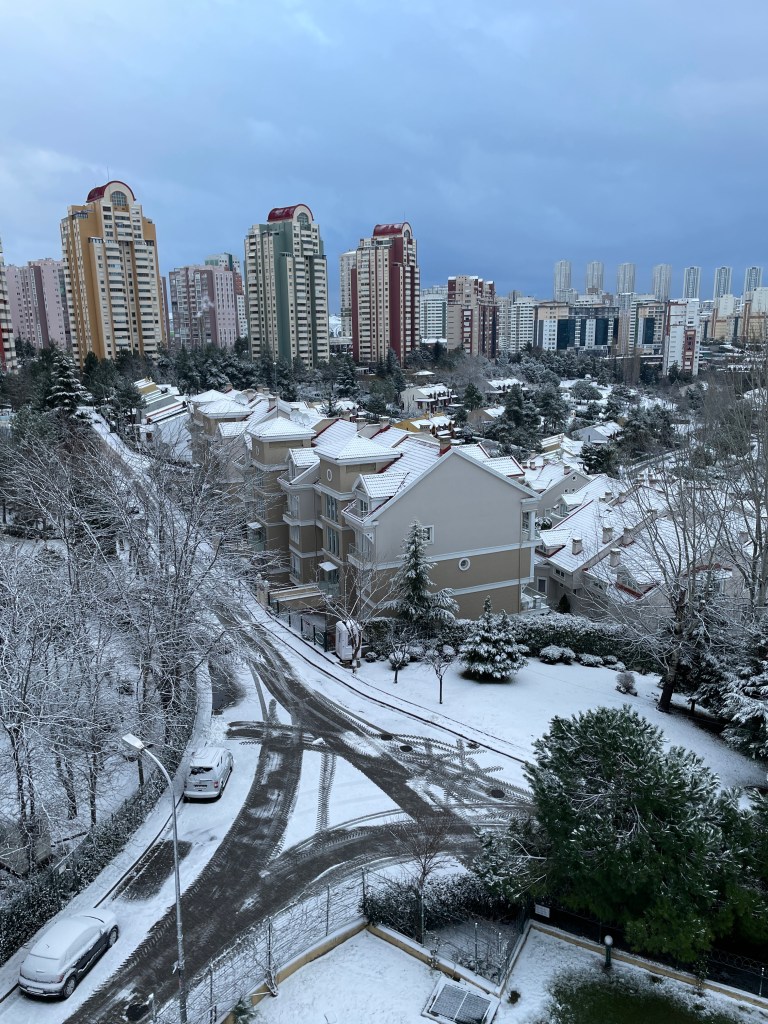
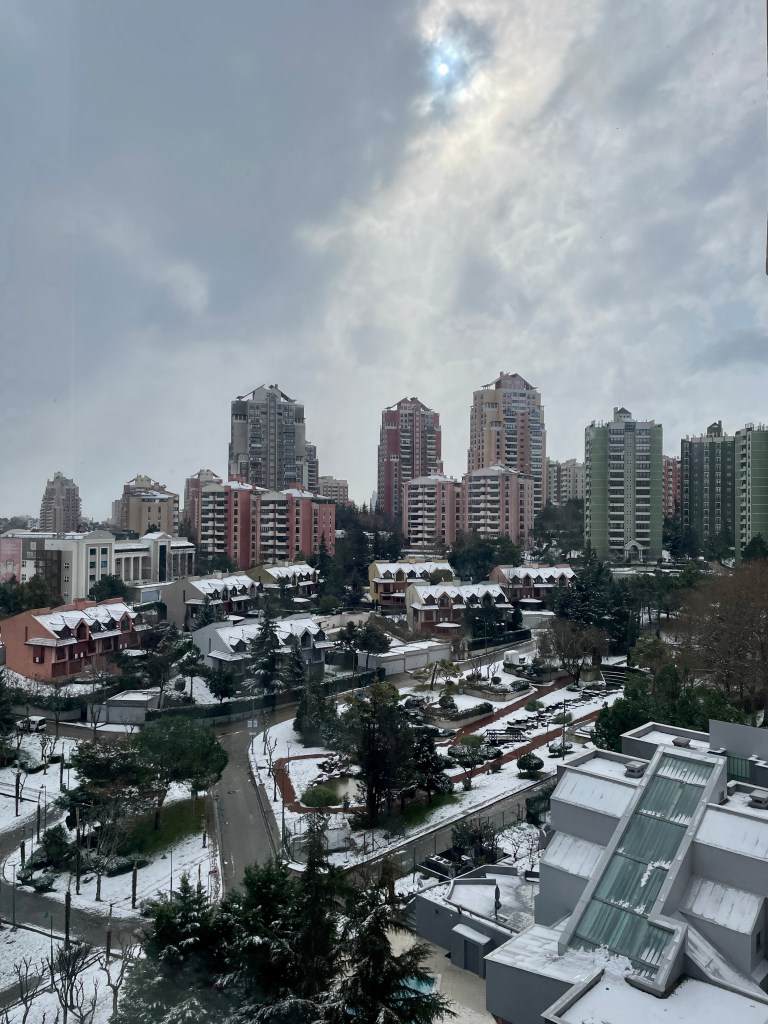
Let me start by saying that I am, once again, thankful to be safe and sound in my Istanbul apartment. We are in the middle of a storm which started on Saturday, bringing winds of over 80 miles per hour, along with rain, sleet, and snow. When extreme weather hits, the government sends out text message dispatches like the one below and I run them through Google Translate to understand (a very necessary app). Many flights and ferries have been cancelled but thankfully power lines in my suburb of Bahçeşehir are underground, ensuring that I am safe and warm.
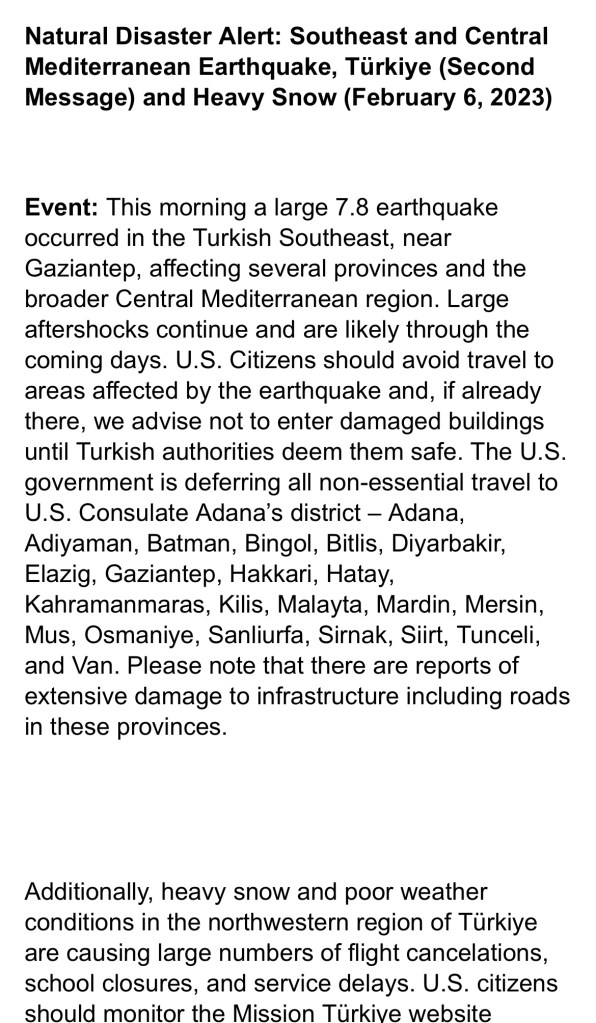
If these past few months have been indicative of anything, however, it is the fragile state of affairs in this region of the world. Both natural and manmade disasters have plagued Türkiye, most recently in the form of powerful earthquakes in the southeastern portion of the country, in an area along the Syrian border. Syria and Lebanon have experienced great damage as well. This dispatch from the US Mission in Türkiye provides a brief overview.
If anyone wishes to contribute to relief funds, AKUT Search & Rescue Association is on the frontlines. They are a quality organization and accept donations in the form of USD, Euros, and Turkish lira.
As a result of these terrible events, Türkiye has entered a week-long period of mourning. My school is operating online and we will not return to the classroom until Monday. Various stores are closed and few cars are on the road. Considering that victims of the quakes are being brought to Istanbul hospitals, it is for the best that everyone stay home and let medical professionals do their important work.
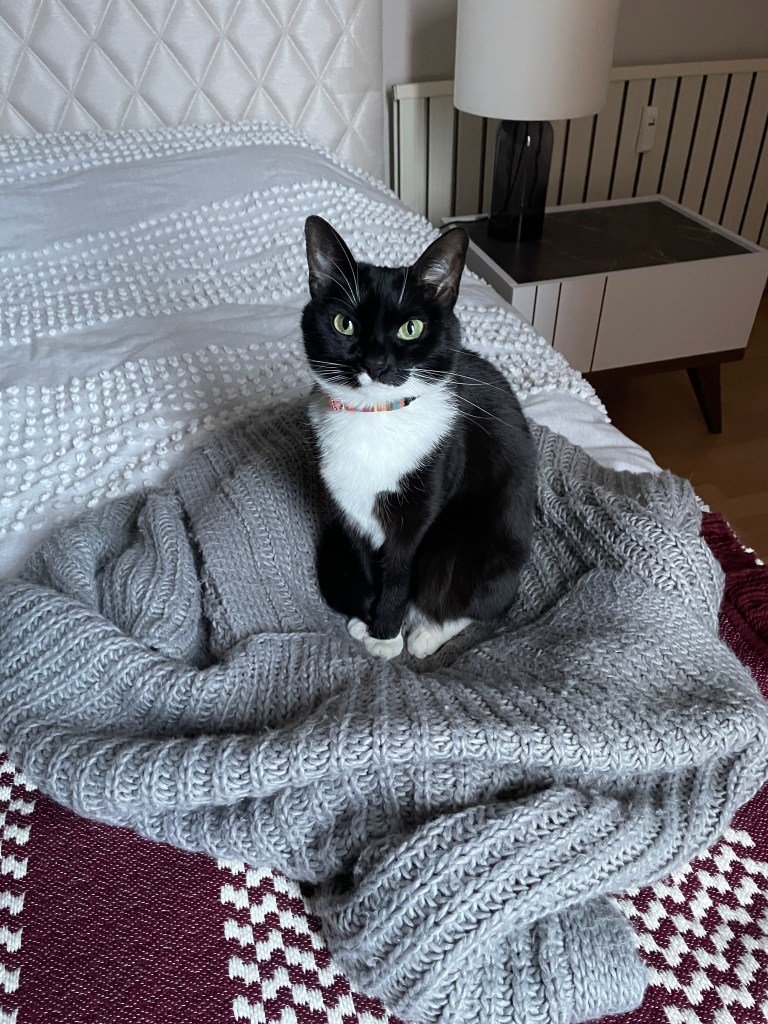
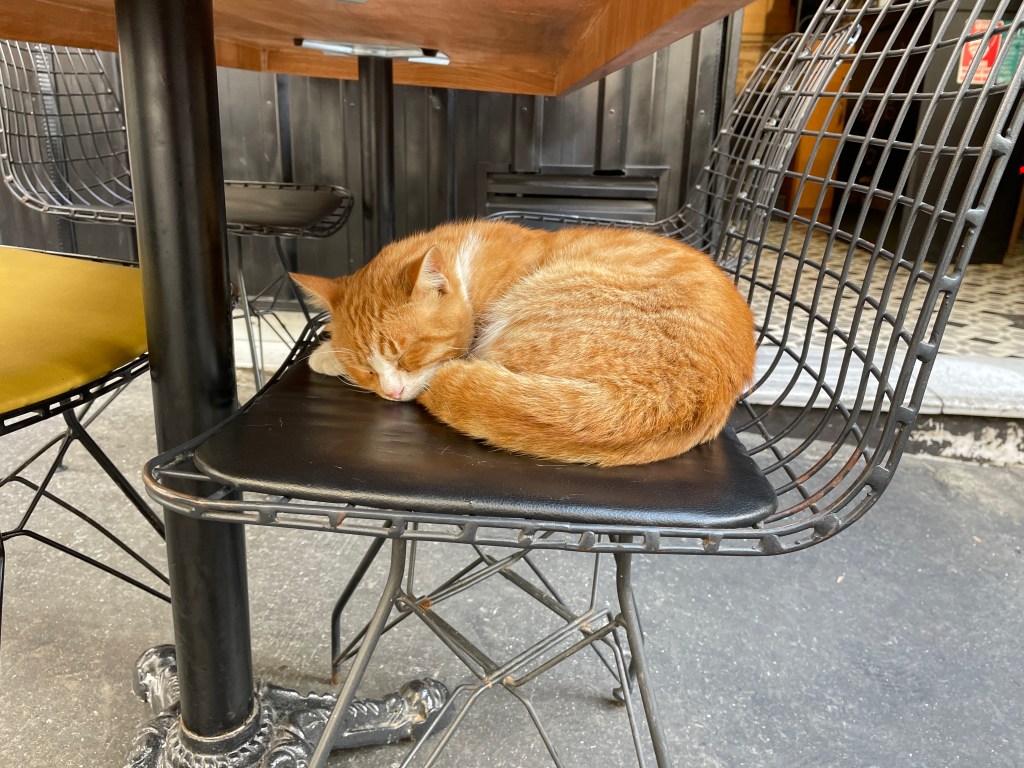
Thankfully, I have friends and neighbors around me and we check in regularly. My furry companion is quite pleased to have daytime company, having created a little nest at the foot of my bed.
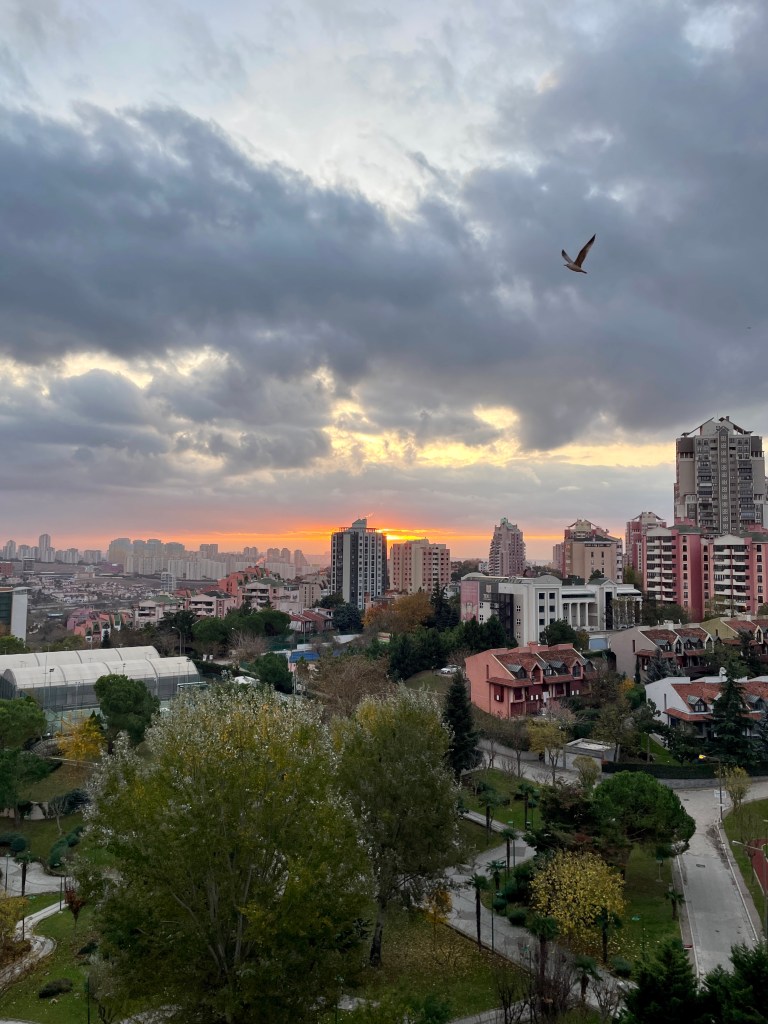
This morning has brought some glorious sunshine peaking through the clouds. It’s a bit startling, the beauty of the sun, knowing there is so much loss and pain a mere 500 miles to the southeast. It’s a grave reminder to be thankful for health and safety, and appreciate the little things. I certainly appreciate you for taking the time to check in and wish you a safe and peaceful week ahead.
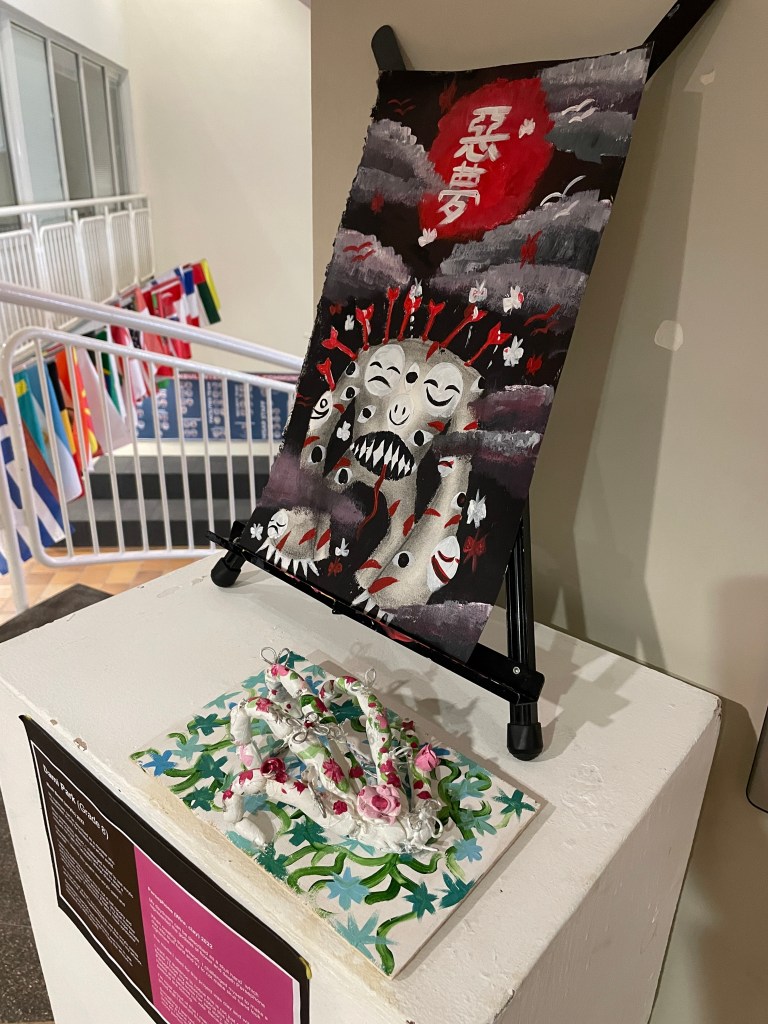
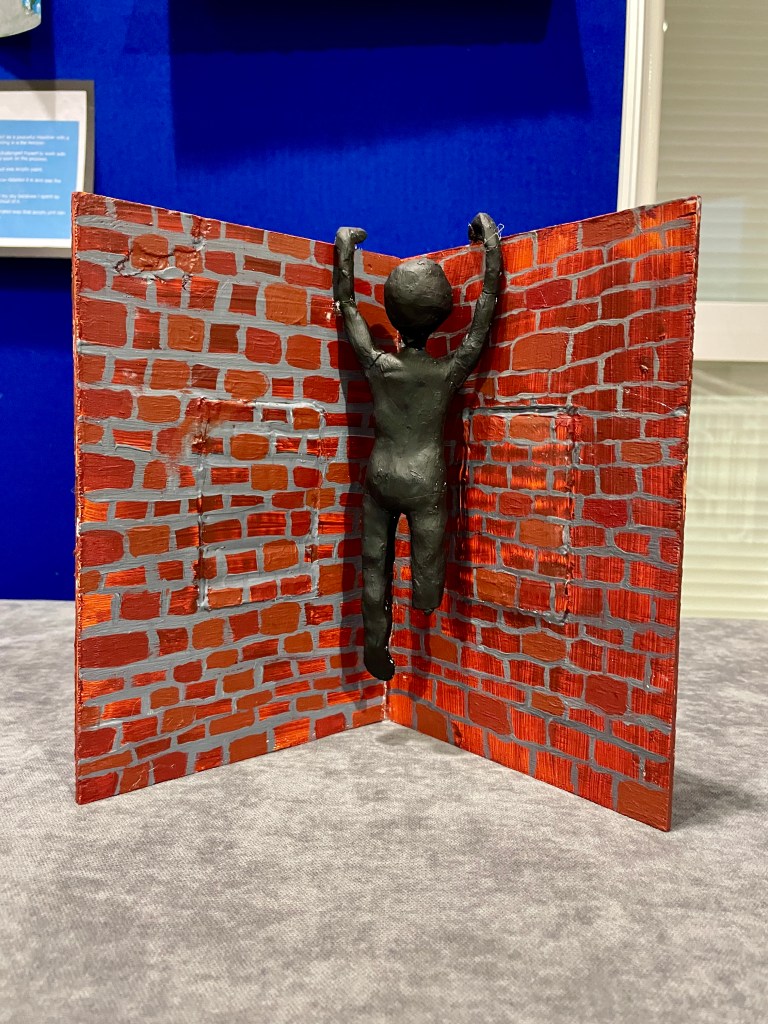
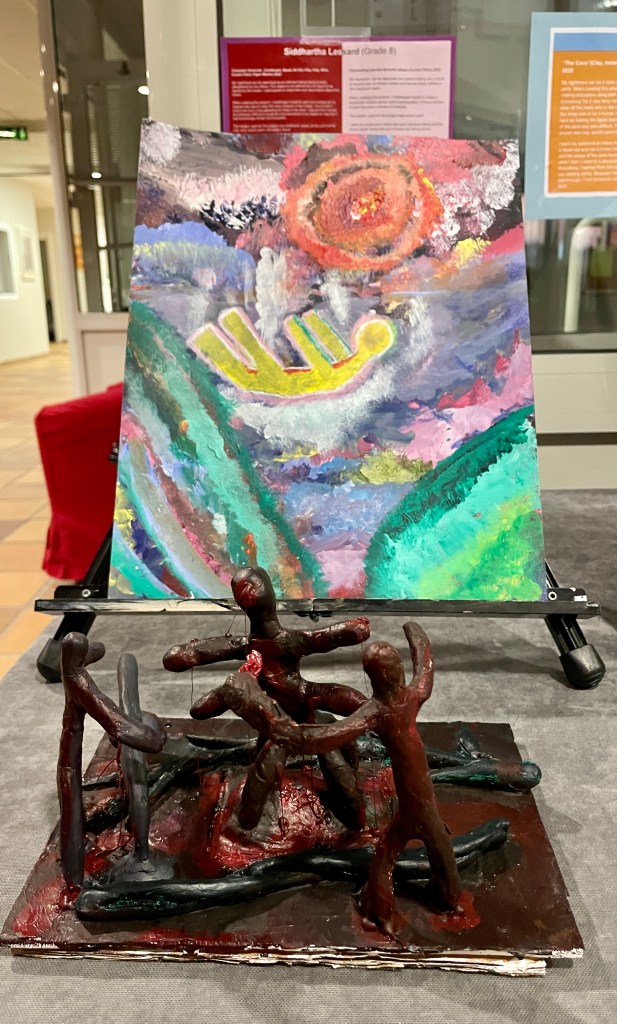
This past week, my Grade 7 and 8 students mounted a showcase of their artwork from the past semester. The theme of their art was nightmares and daydreams with each student creating a 2D work (paintings, drawings) and a 3D form (sculpture).
The content of the show was driven by inquiry, a major aspect of the MYP Visual Arts curriculum. Prioritizing student voice and choice assists with this goal – from the media my students create with, to the shared responsibility for the upkeep of our studio space, to preparation efforts surrounding the art exhibition.
In this case, I asked the students to choose how they would contribute to the showcase. We had a facilities team, art handlers, curators, and exhibition designers. They took their roles very seriously and had the showcase installed in under 30 minutes! One student rain around with a clipboard and my layout diagram, noting every display table and translating our needs to the Turkish speaking facilities staff. Awesome to see a 14 year old step up like that.
When it came to the actual artmaking, my students’ choice of media (artmaking materials) and their personal interpretations of the theme (dreams/nightmares) made this exhibition truly unique. It’s dark, expressive, and full of energy. I can see their growth as artists and the beautiful artwork speaks for itself.
Hope you enjoyed this glimpse into my first student showcase here in Istanbul. I will miss this crew but I’m already looking forward to meeting my next group for Semester 2 in a week.
It has been another eventful week here in Turkey. On Tuesday morning, just after 4am, I awoke to my bed shaking and my Thai chimes ringing in the living room. My chimes were slamming against the wall so it only took about two seconds to realize we were having an earthquake.
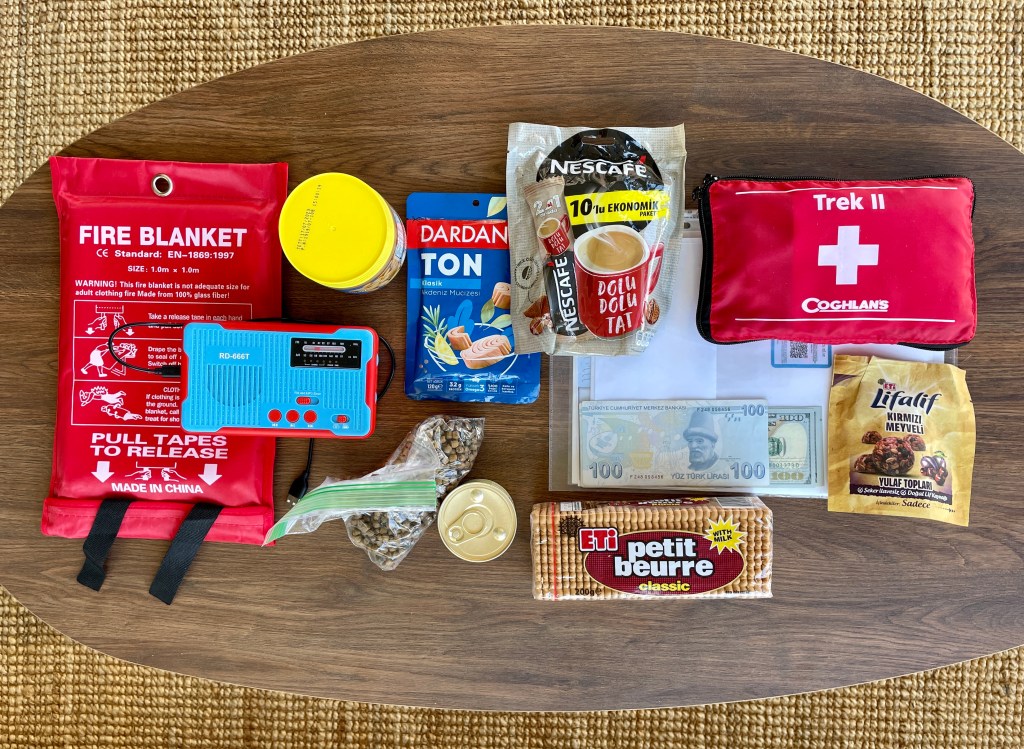
Thankfully I had been warned about earthquakes when I first arrived so I was prepared. I paid a carpenter to “earthquake-proof” my apartment, drilling into the concrete bedroom walls to prevent the heavy wardrobes from tipping over. I purchased a stockpile of water (enough for three days was the recommendation) to keep in my apartment, should I be stuck inside. I also packed a “go-bag”, a practice I had put into place during some of the more tense moments in Moscow, when I had to anticipate possibly leaving the country suddenly. The items below are part of the contents of my go-bag.
Thankfully, this earthquake was fairly benign. Centered 250 km due east in Duzce, it registered a 6.0 but was thankfully shallow. While that region experienced a number of aftershocks in the hours and days which followed, life went on as usual here. The chatter on my morning bus ride to school was more excited than usual. Most of my students seem to have slept through it, according to my informal classroom polls. Unlike the bombing the week prior, my school didn’t feel the need to issue any community statement. CNN didn’t even carry the story due to a lack of injuries (thankfully) compared to a fatal Indonesian earthquake only days before. And though my toaster has twice blown the electricity in my entire apartment, there were no further issues following this event. Here’s hoping that this is the last exciting event for a while. Pictured below, a slightly shell-shocked kitten in the early morning hours, not thrilled to have experienced her first earthquake.
On a lighter note, World Cup fever has gripped our community. With 60+ countries represented in our student body, the kids are passionate about watching the matches and talking constant smack in class. We’re streaming Iran vs. Wales in study hall and national jerseys are worn with pride daily. Football is life in Europe and Turkey is no exception. The last time I enjoyed the World Cup in Europe was at TASIS when we let the campers stay up to watch Spain beat the Netherlands in 2010. Waka waka.
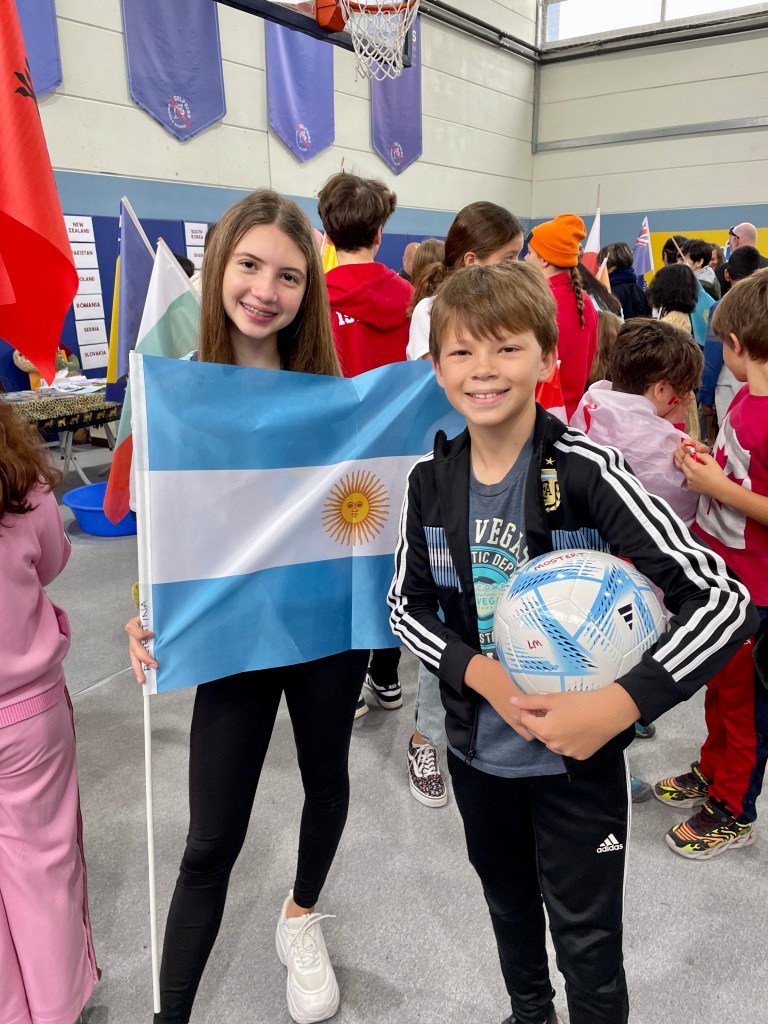
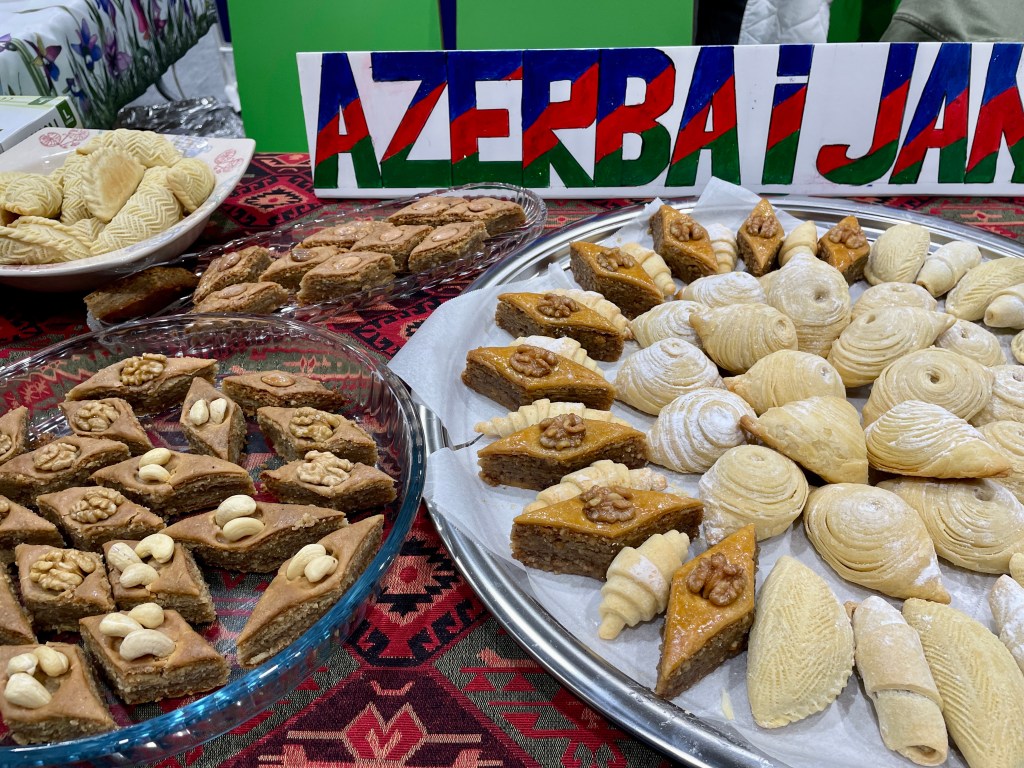
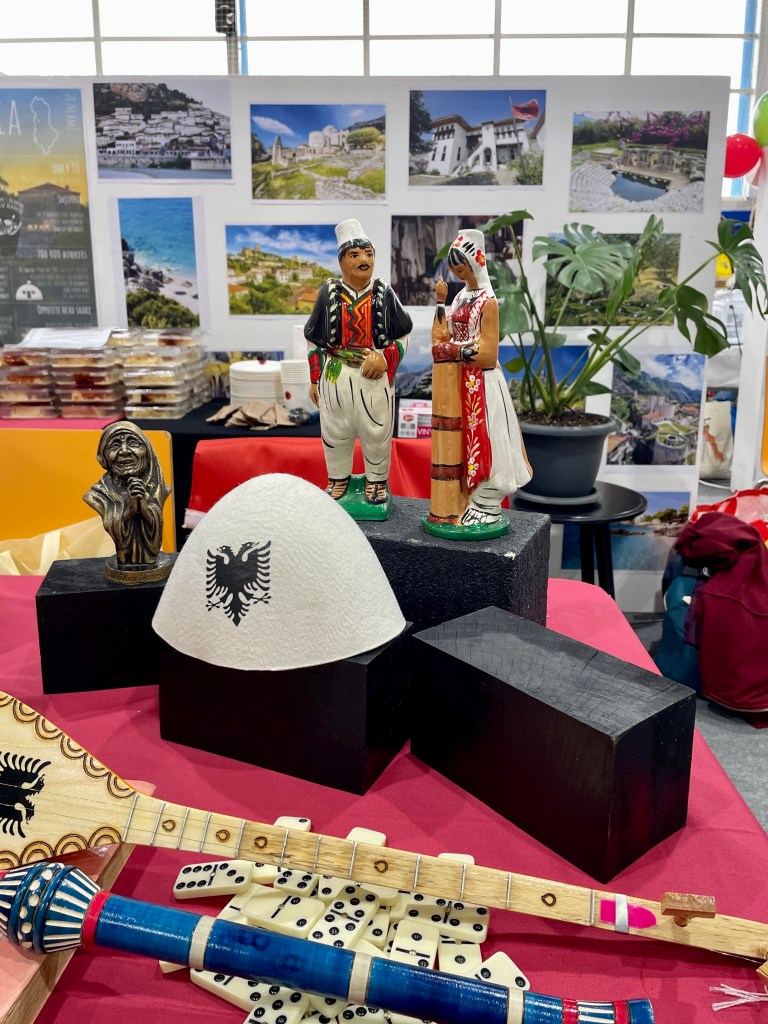
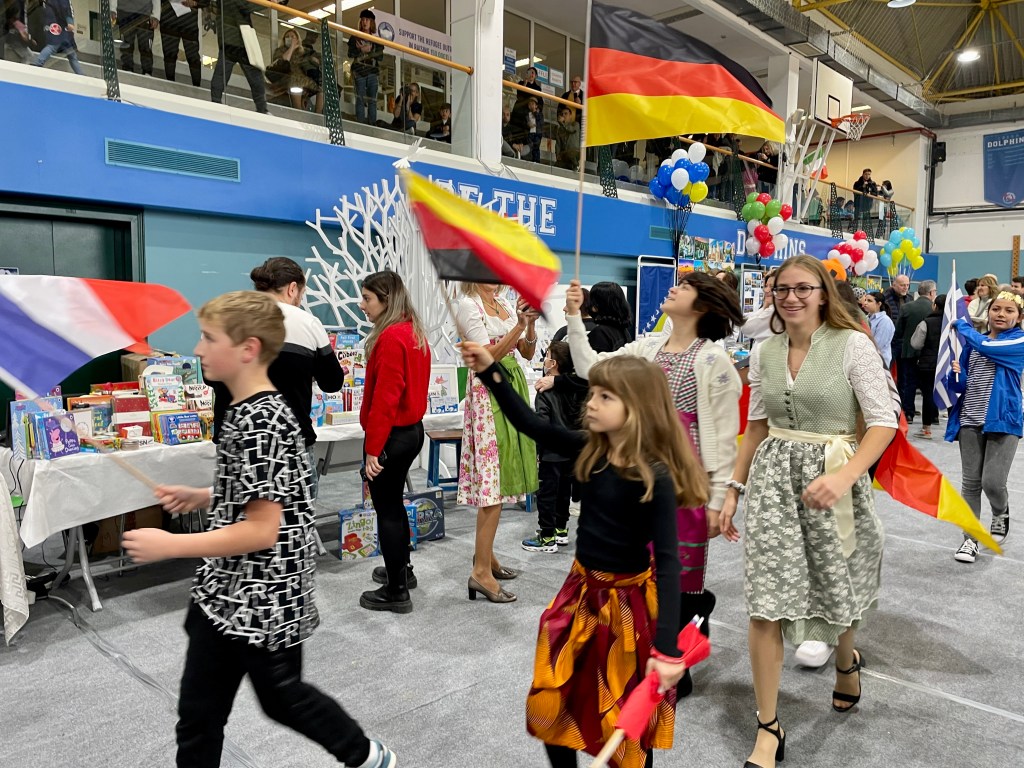
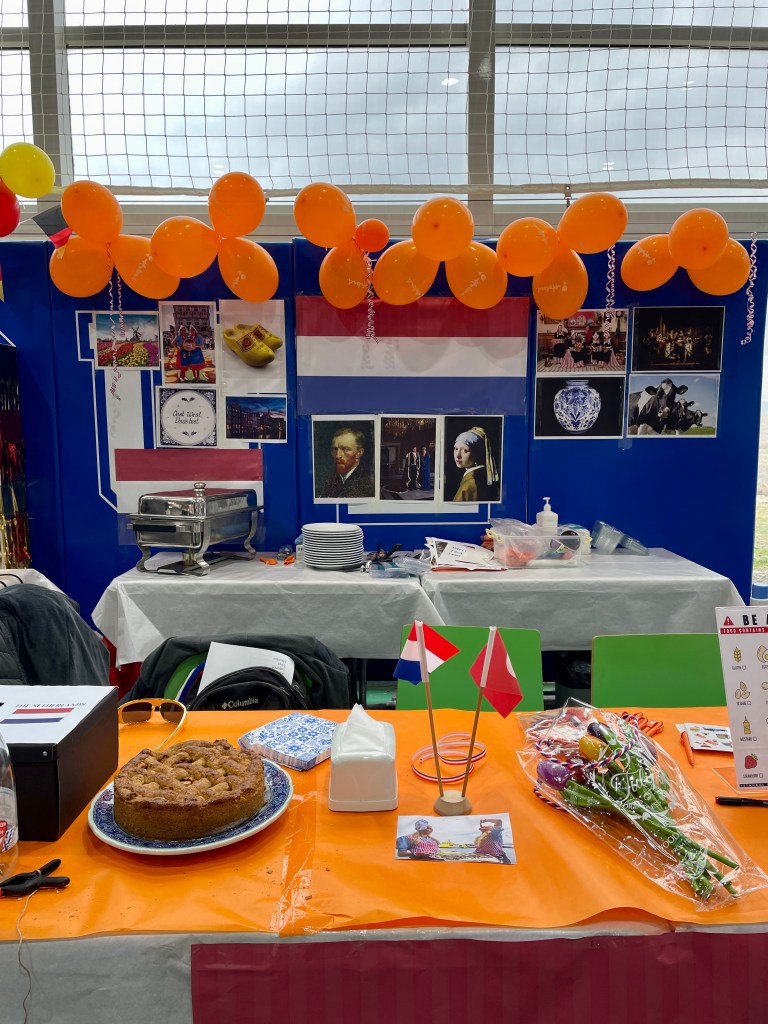
Piggy-backing on all that national pride, my school celebrated International Day on Saturday. A flag parade was announced and a lot of delicious food was served. Students who don’t normally engage were happy to help their parents out at their national booths. The event, like the World Cup, spurred a lot of conversation entry points with my students, and I heard about family moves to Turkey from Ethiopia, Morocco, and Iran in recent days. The majority of my students are very privileged to have made this jump and be attending a private international school.
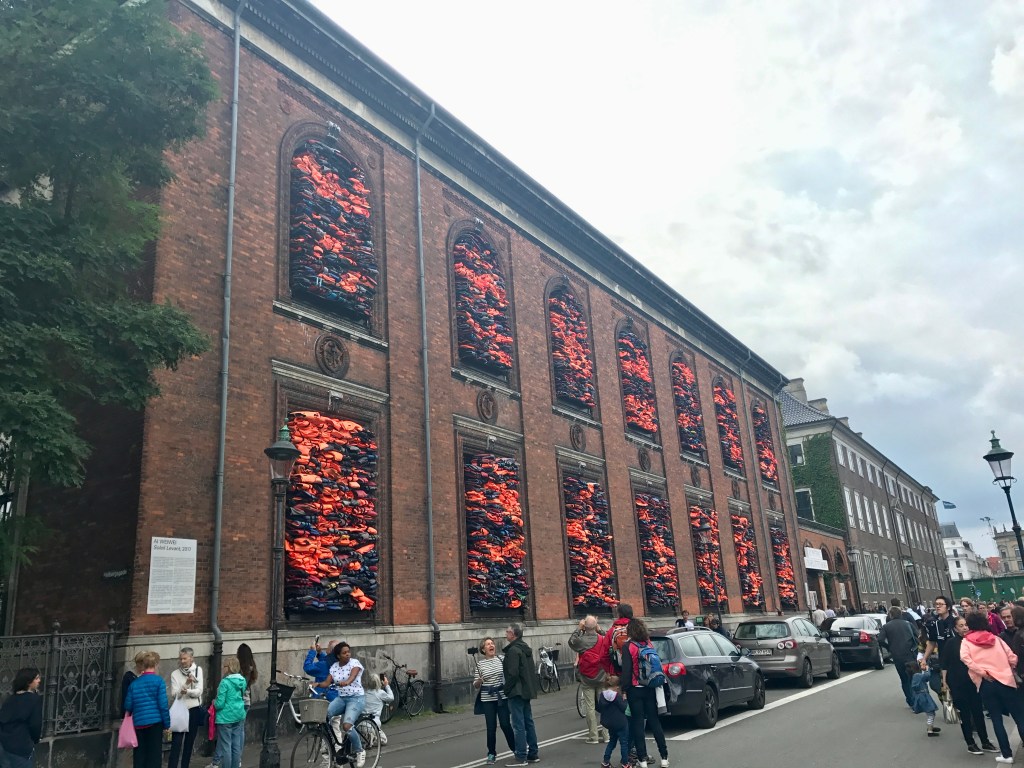
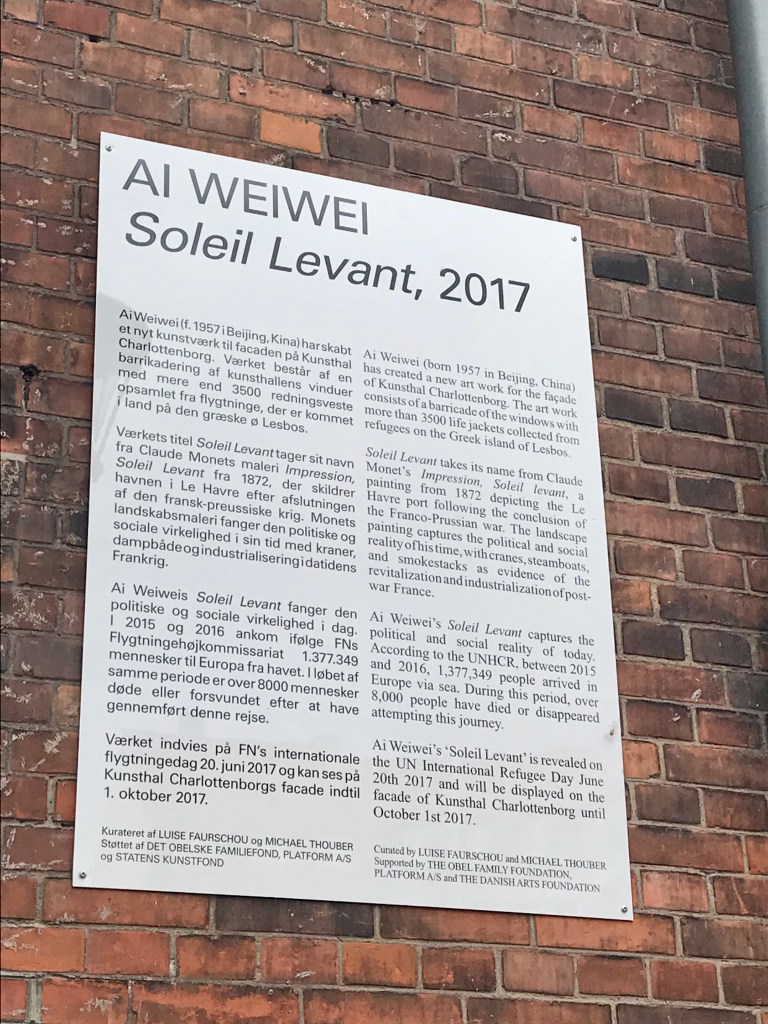
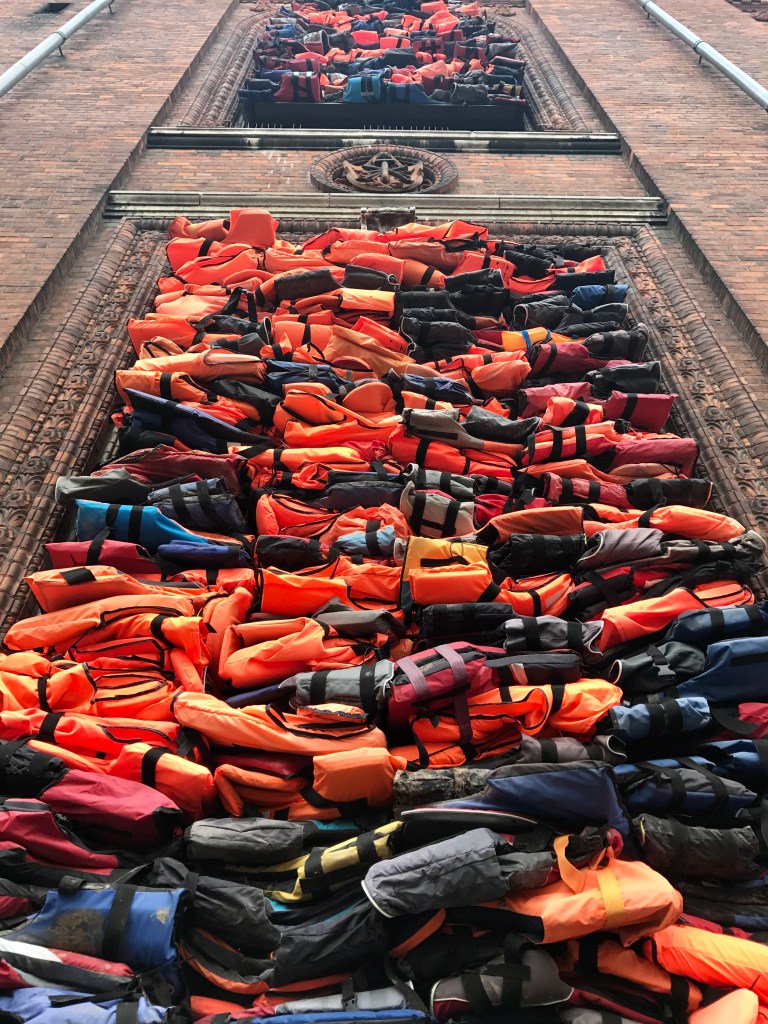
Capping off International Day, I watched a new film on Netflix called The Swimmers. Premiering just this weekend, the film details the harrowing journey of two sisters from Damascus, Syria, through Istanbul and onto mainland Europe (Greece) by boat. We hear about refugees arriving on Greek islands in the news, Ai Weiwei creates art installations from the hundreds of thousands of life preservers abandoned on the beaches, but to observe this film, based on the true story of Olympian Yusra Mardini (Rio 2016), is wild. The pics below are my own taken from Ai Weiwei’s installation in Copenhagen in 2017.
“It could never happen here”, a phrase uttered all too often in this tumultuous world should be a warning to us all. As a US citizen, with only two countries bordering my own and vast oceans protecting me from international invasions, I will admit to being very naive of my privilege. This movie breaks down those walls, painting a picture to how quickly people can be forced into refugee situations and in my own backyard here in Turkey.
Today I’m headed down to Fatih, the neighborhood which encompasses Istanbul’s Grand Bazaar. It’s hard to believe but I’m on the hunt for Christmas presents, my flight home being less than three weeks away. Always fun to share the treats of a new place with those back home. As always, thanks for reading and I wish you all a safe and healthy start to December.
Greetings from Istanbul. The mood is decidedly despondent after yesterday’s tragic events. If you have not yet heard, there was an explosion on a very popular shopping street downtown. Six people were killed and nearly 80 others wounded. It was a picture perfect fall day with shoppers and families out enjoying the surprising November warmth. The events of yesterday brought back the not-so-distant memory of the Boston Marathon bombing in 2013. Another glorious day ripped apart by an act of senseless violence.
Before this terrible event unfolded, I took a little weekend adventure on the other side of the Bosphorus Strait. Istanbul is one of the only cities in the world that spans two continents and I hadn’t yet made it to the Asian side. With that in mind, I made a last minute AirBnB booking and Googled ferry departures.
There is a ferry terminal is located just off my main bus line, making for an easy transit. The ferry ride itself cost all of 80 cents and I was treated to a few stops on opposing sides of the canal before we moved into the open channel of the Bosphorus.
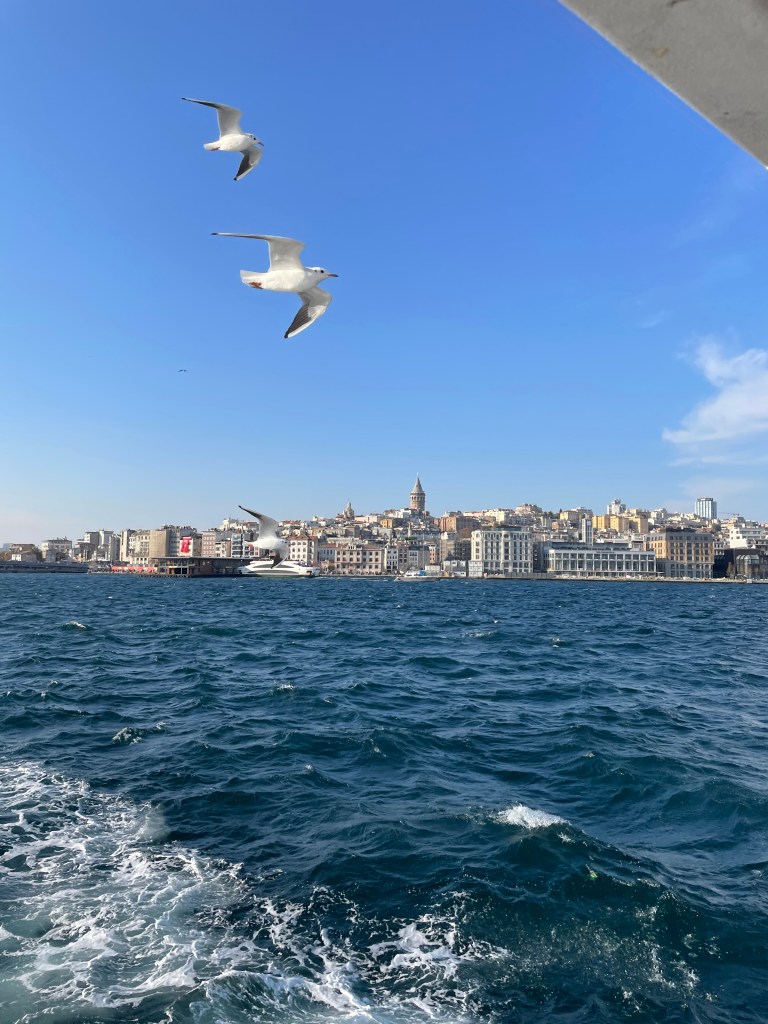
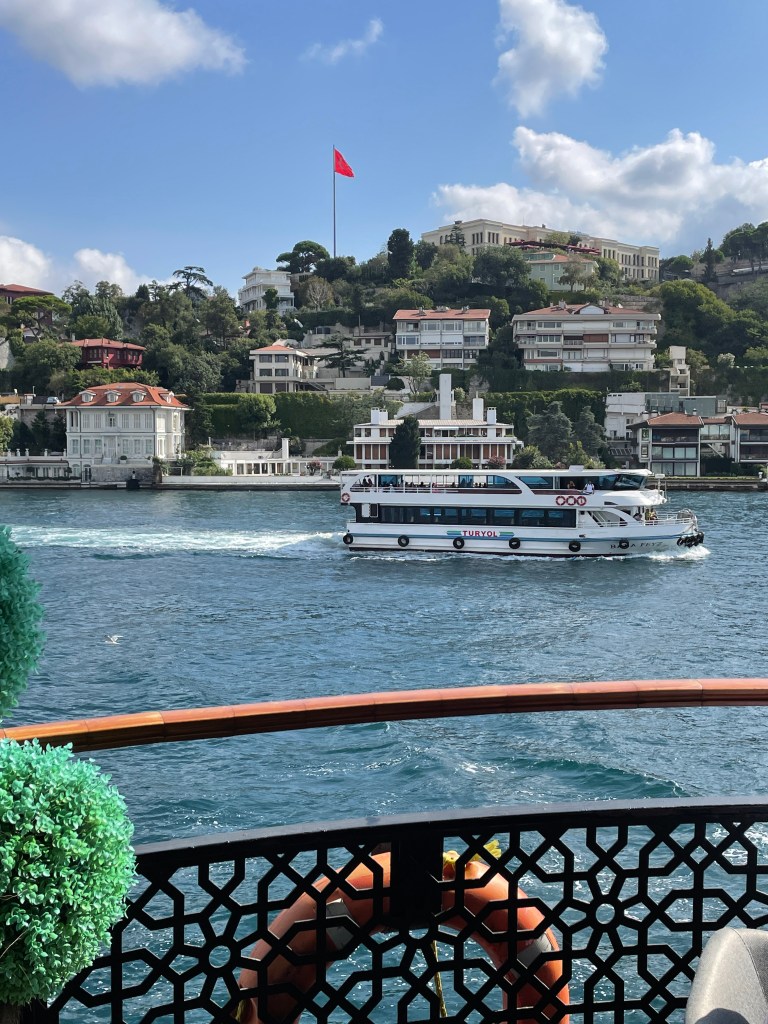
The Bosphorus Strait is over two miles wide at parts, giving the illusion of the open ocean at times. There was light chop on the water as the seagulls drafted our wake. Wooden benches lined the top deck and vendors rolled through, deftly brandishing tea in traditional glass cups, their sea legs the result of thousands of crossings over their lifetime.
We steamed for Kadıköy, a popular port neighborhood once home to prehistoric settlements of civilization. Today it’s a hot spot for nightlife, hipsters, and rich retirees – though they have mostly moved over to Moda, the calmer neighbor to the south. I found my sixth floor walk up and set up to enjoy the sunset from the rooftop.
I could hear the roar of the crowd from the football (soccer) stadium just over the hill. Day drinkers were hitting their stride and restaurants were beginning to set up on the streets below.
Kadikoy has a vibe all its own – very free spirited and relaxed. I checked out a record store and a few bookshops before meeting up with some friends from school who took a water taxi over from downtown. The restaurant scene appears to be pretty fabulous in Kadıköy, where you can find anything from Italian to Ottoman.
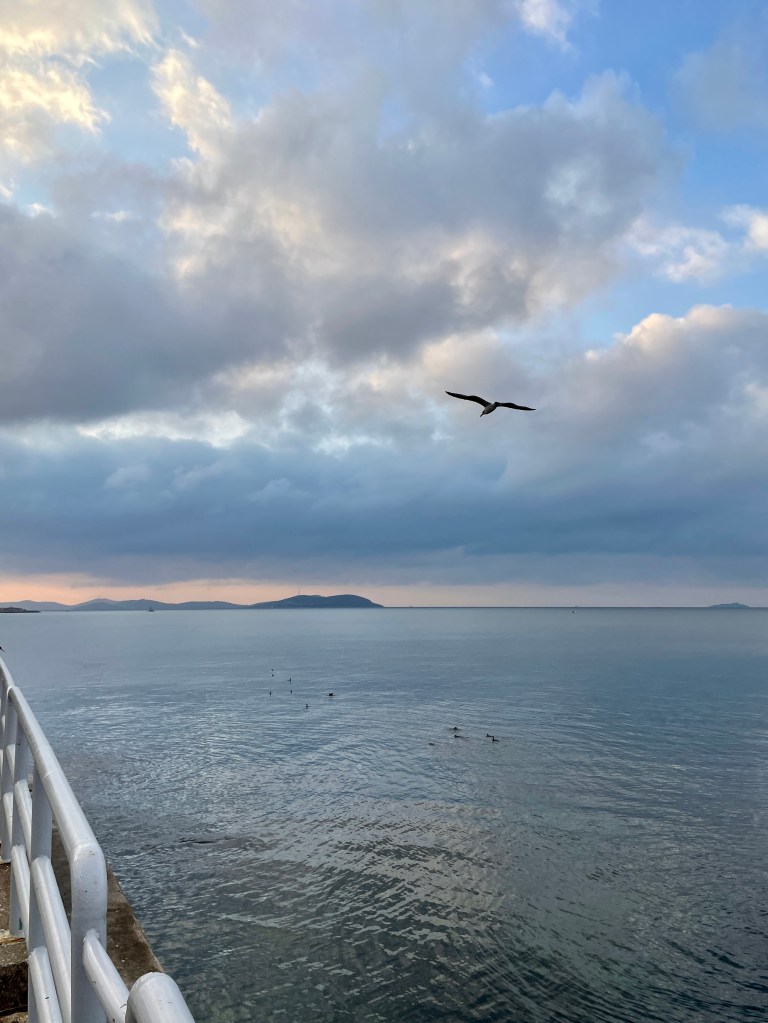
On Sunday, I awoke early to explore the neighborhood of Moda. With the bars only recently shuttered, I had the sunrise all to myself. Just me and the sea gulls.
Walking the perimeter of Moda, I met many a cat living in the rocks of the breakwater and watched the massive tankers on maneuvers out in the strait. Making my way back to Kadikoy’s ferry terminal, I boarded a boat bound for Karikoy to meet friends for brunch.
The morning couldn’t have been more glorious and my sweater was plenty warm despite the mid-November date. The gulls bobbed and weaved, occasionally flying between the posts on top deck while matching course and speed.
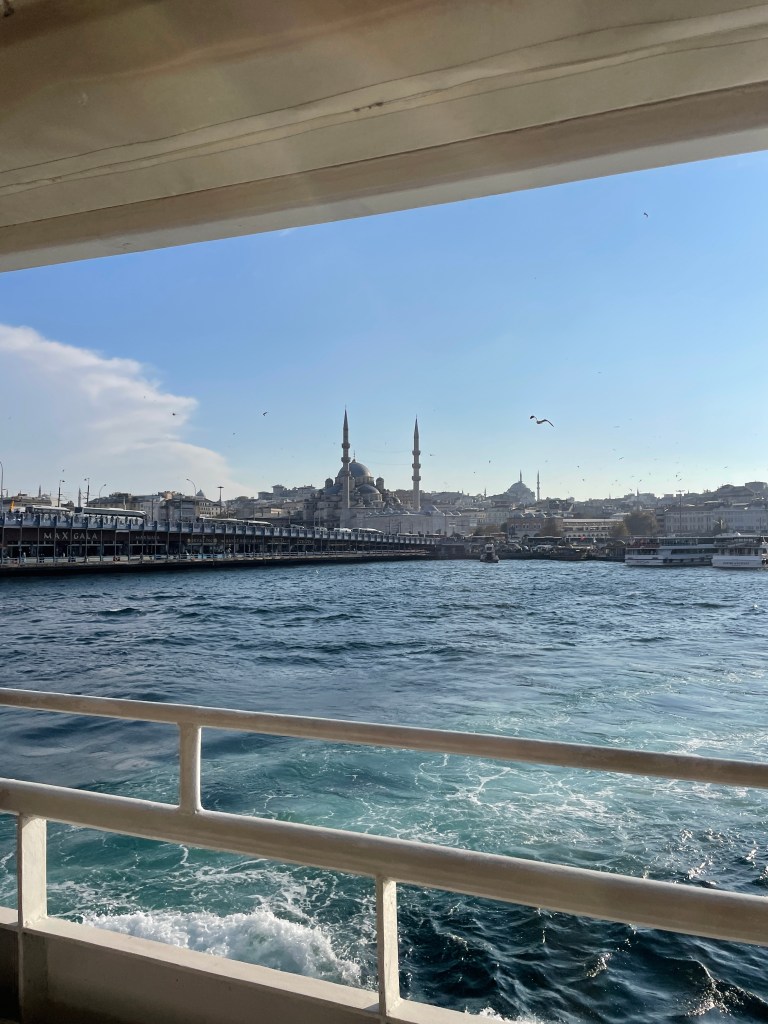
We sailed past the Hagia Sophia and the Blue Mosque, each lit up by single beams of sunlight as if on a movie set. I reveled in Istanbul’s beauty, on full display against the backdrop of a true blue autumn sky.
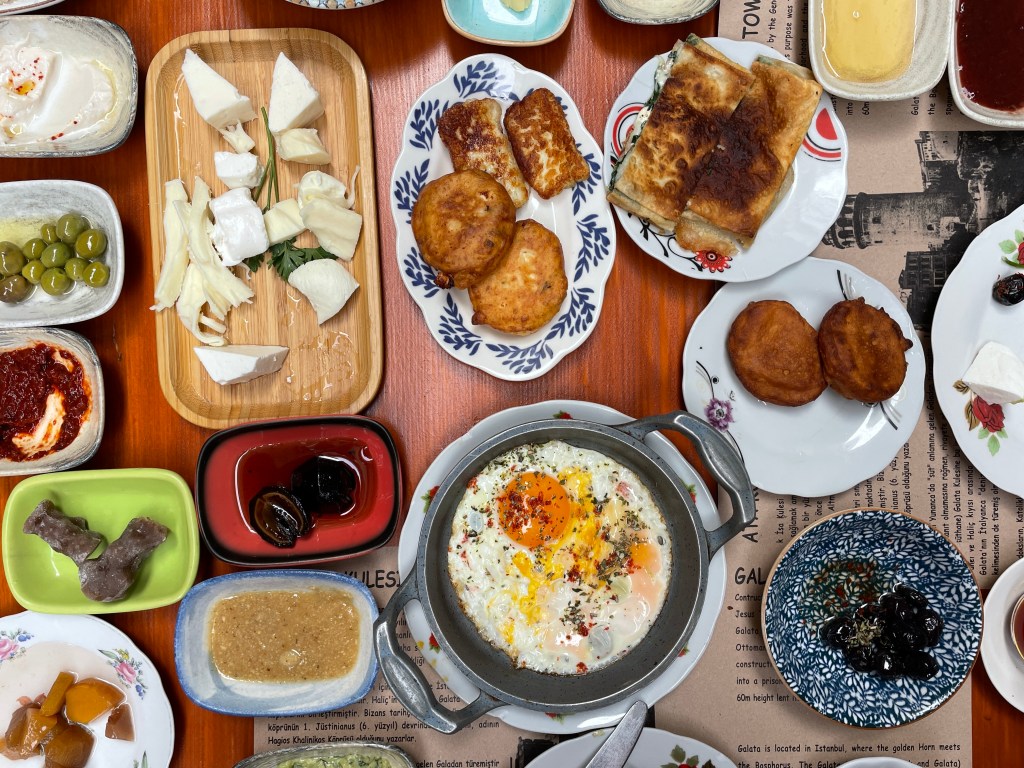
After docking, I made my way up to Galata Tower to enjoyed brunch with some new friends. We happily swapped stories of our respective weekends and enjoyed yet another delicious Turkish breakfast.
My thoughts are with the loved ones of those lost yesterday. Those who commit acts of terror wish to sow fear, to fracture relations and turn us against one another. But they will not keep me from exploring this city which I am growing to know, this culture I am only beginning to understand.
Sofia rises with the sun – as do I – and a good cup of coffee is on offer early. I had my pick between Urban Embassy Specialty Coffee and The Expressionist Coffee Company. After enjoying a latte and watching the trams run past, I got on with my favorite way to explore a new city – a graffiti art tour.
Since I travel on a budget, I love AirBnB Experiences because they put you in touch with local guides who are passionate about their city’s history and culture. I also find other like-minded who interested in similar topics. Sometimes we even all go out for a beer afterwards. Graffiti art tours can take you to unusual parts of town or even to the back of the Sofia Opera House (below).
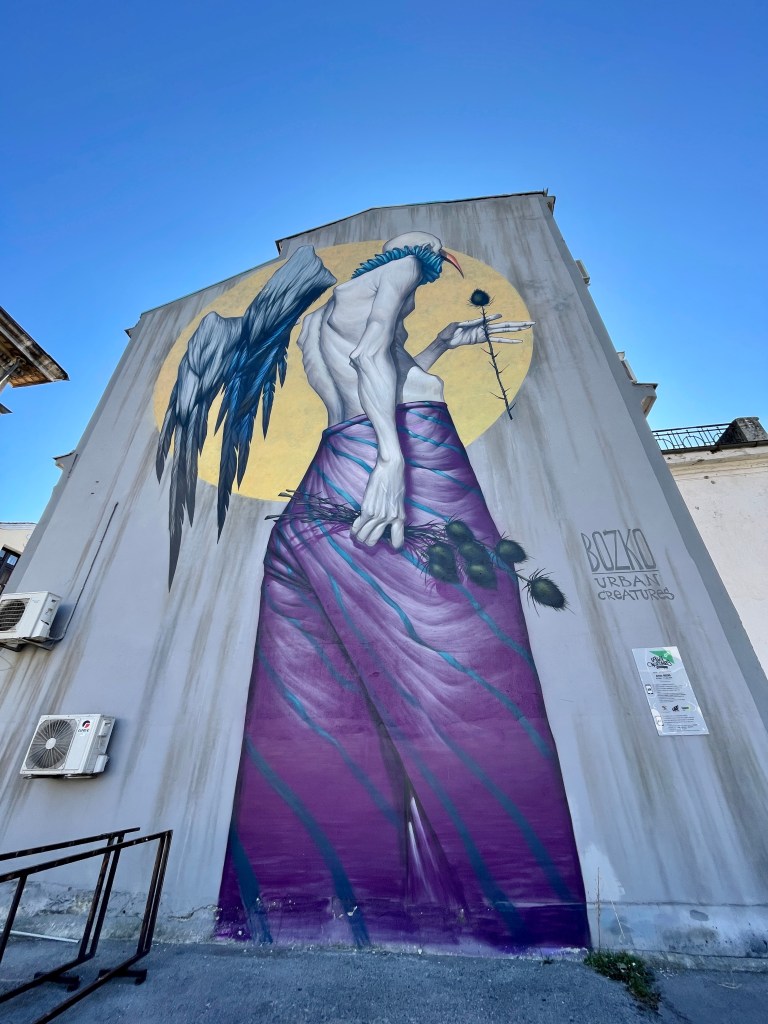
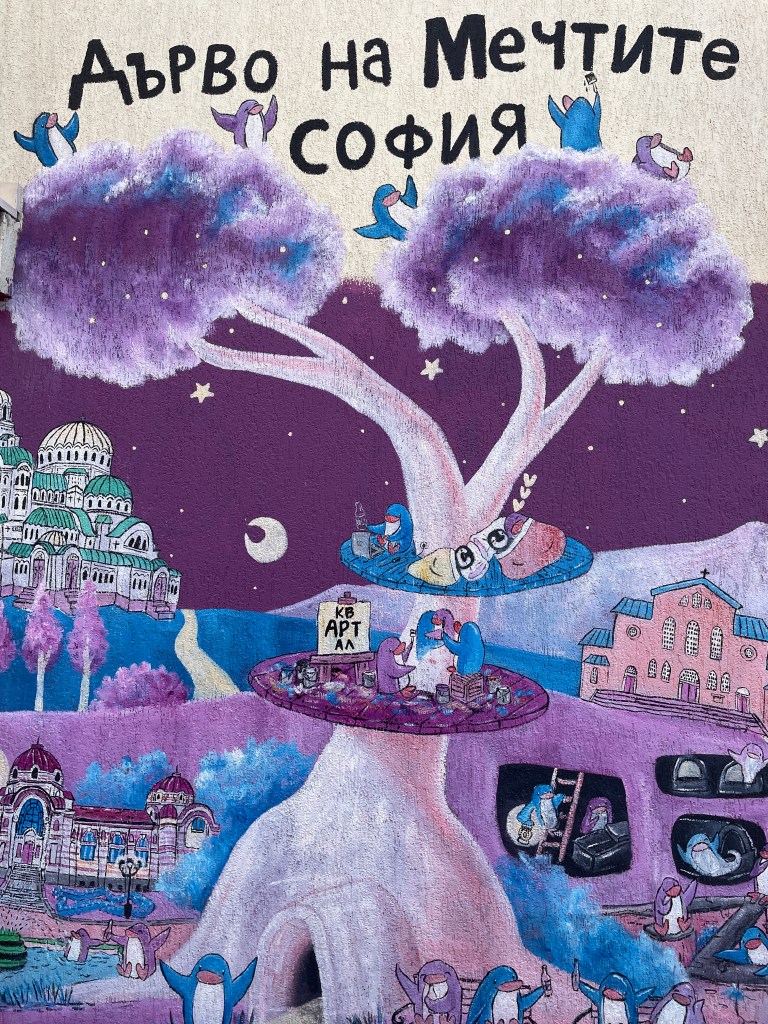
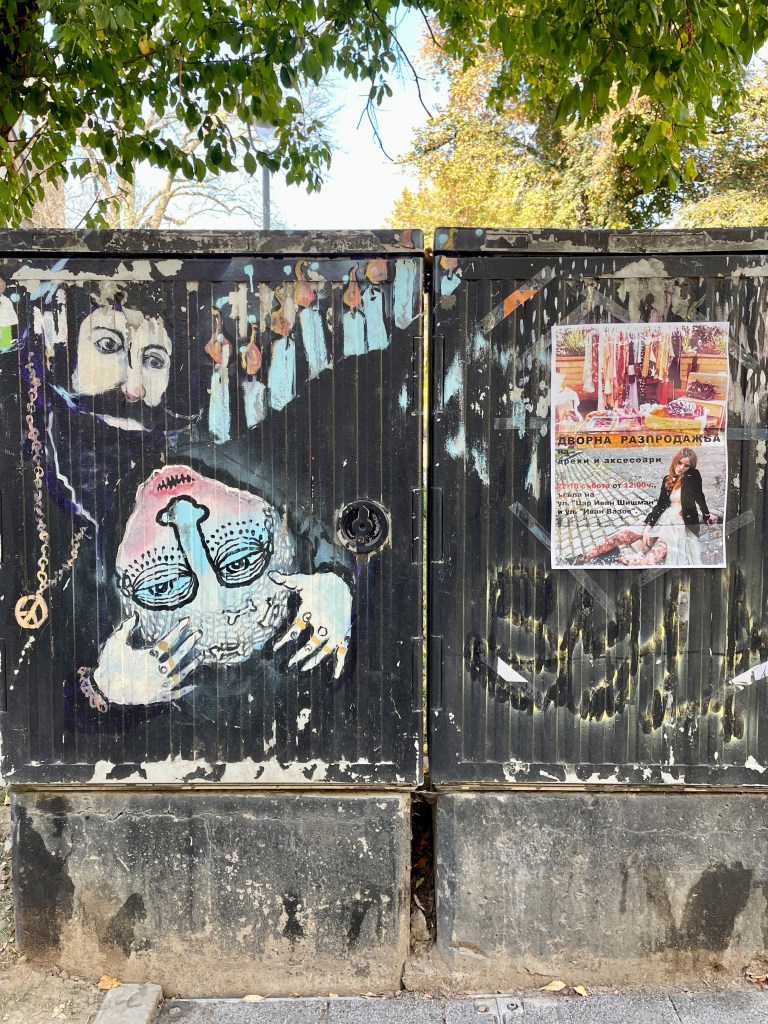
Sofia is covered in graffiti, and though this art form is not appreciated by everyone, it is so embedded in the fabric of the city that it stands as an example of tolerance and a voice of the people. The city was blanketed in the stuff which included a lot of political messages and large murals created by talented artists such as Bozko (above) and Mary Ann Loo (below).
I had also signed up for a Communist History Tour but couldn’t convince myself to concentrate for another few hours. Instead, I opted for The Red Flat, a family apartment preserved from the Communist Era (mid-80s, in this case). It was particularly cool to compare to other flats of the time from Moscow. This Bulgarian family had a father who worked overseas and were privy to a commissary stocked with special novelties (ie. Johnnie Walker Red Label) as result. Visitors can grab tour tickets for The Red Flat at GIFTED, a fantastic shop which supports local Bulgarian artists and poets. Горичката (“House of Flowers”), an artist collective nearby, is also not to be missed.
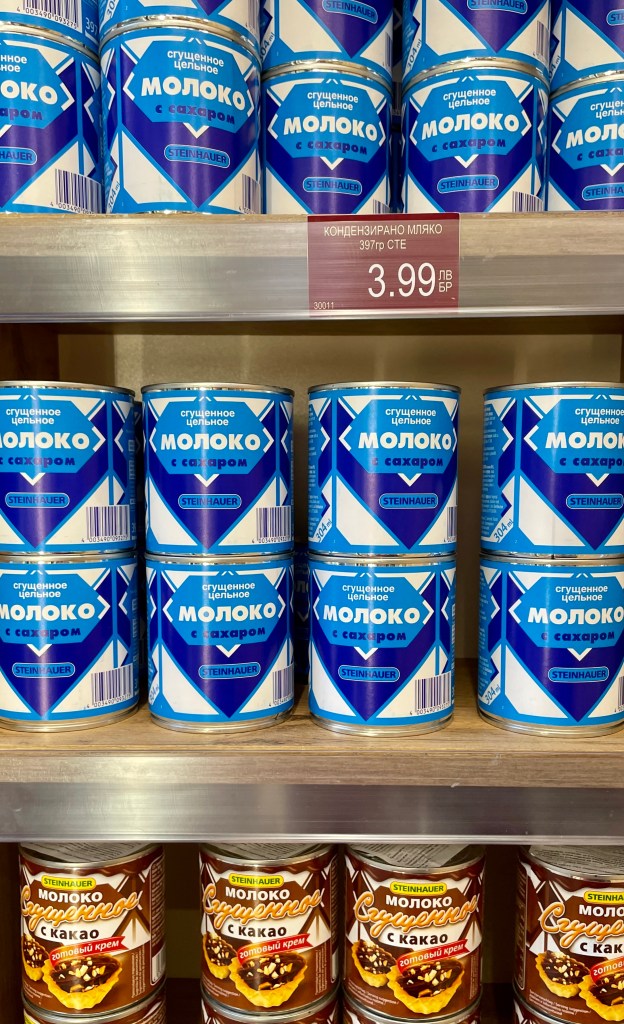
It was fun to find stores with Russian products, like the condensed milk below (for which my sweet kitten is named). Blueberries are also popular (haven’t seen those anywhere outside the States before) and, of course, Bulgaria is proud of its own honey (a common export of eastern Europe). One slight bummer was how prevalent cigarette smoke is in Sofia. I was pretty surprised to find 420-friendly stores around the city as well (ie. weed dispensaries). The times, they are a-changin’.
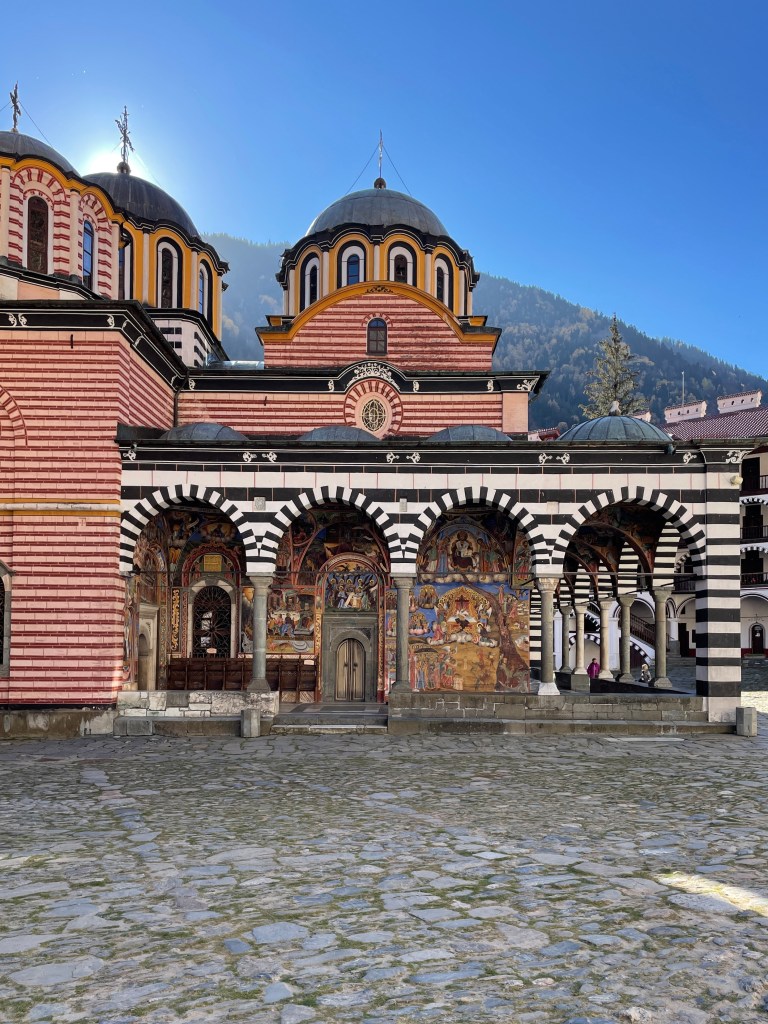
The highlight of my time in Bulgaria, however, was getting up into the mountains. I took a day trip up to the Rila Monastery, about a 2-hour drive from downtown. The ribbed decor represents the colors of the Bulgarian flag – red, white, and deep green (reads as black) and the monastery was founded over 1,000 years ago.
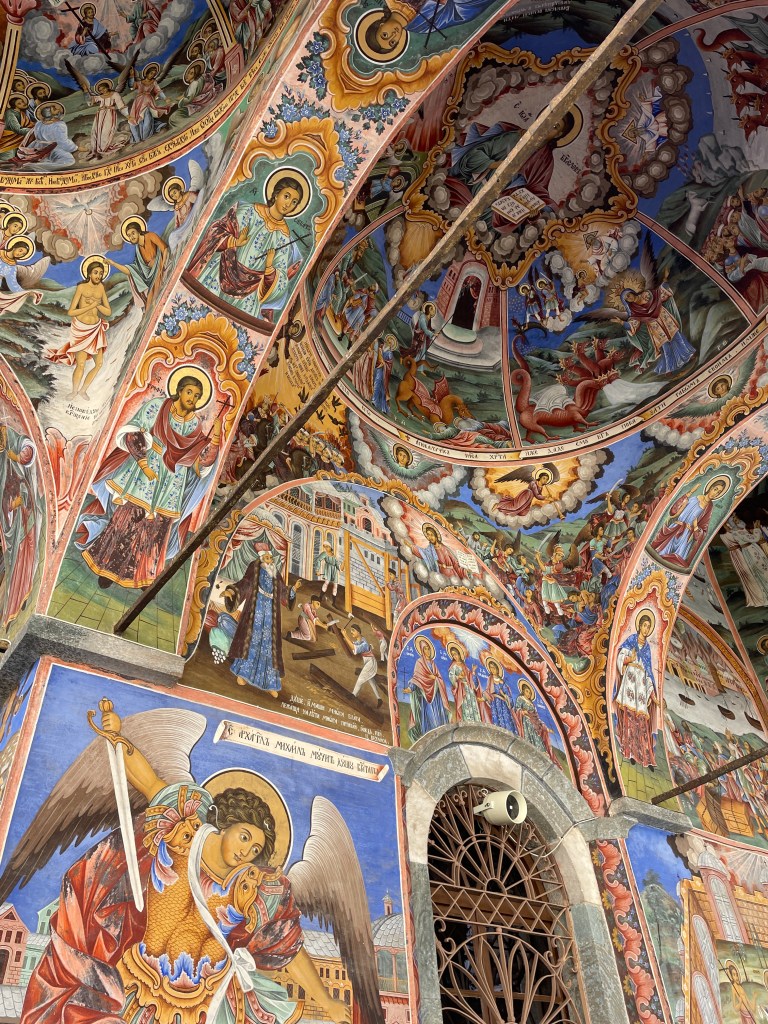
Wish I had stayed the night (book a room for $15USD/night) but I enjoyed a few hours soaking in the gorgeous frescoes and mosaics inside the church. How those paintings stay so well preserved while open to the elements is beyond me.
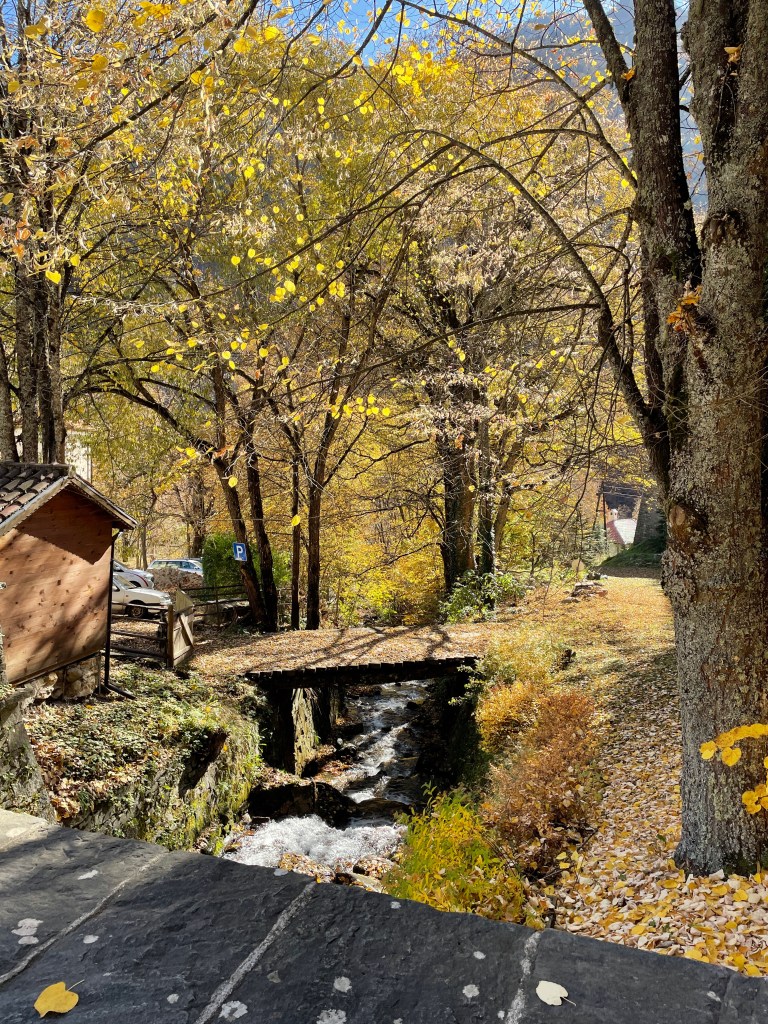
The foliage was beginning to pop and I had some time to paint up on the mountain. A babbling brook ran alongside the monastery walls.
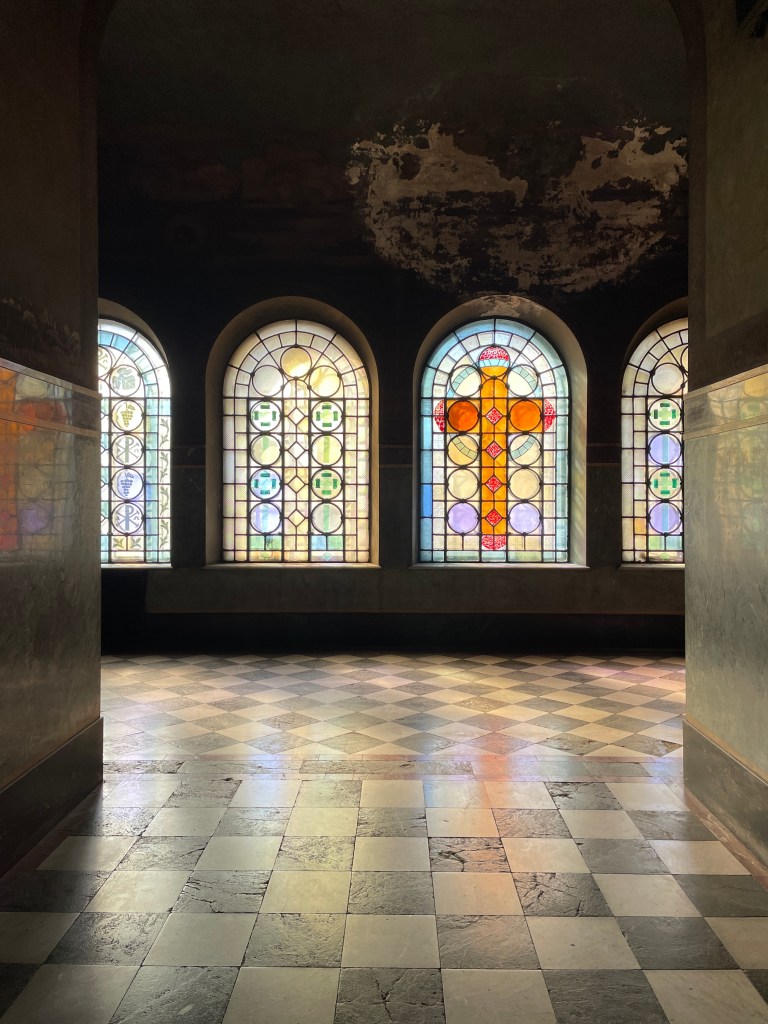
Off the main vestibule, stained glass provided a beautiful moment for peace and reflection.
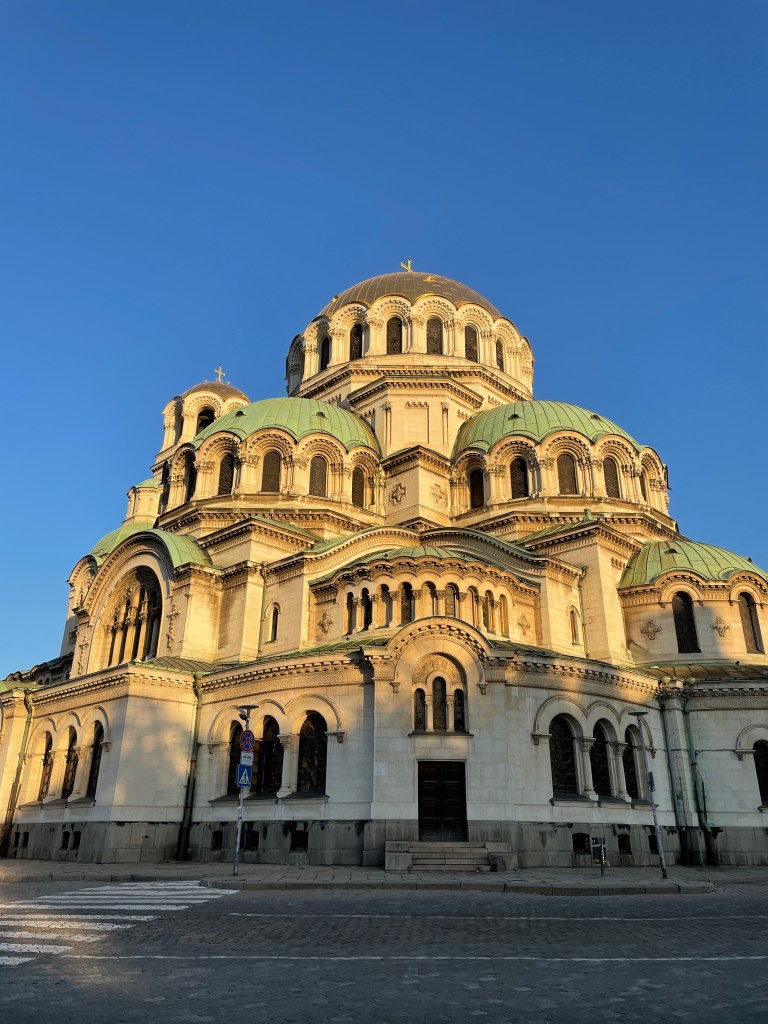
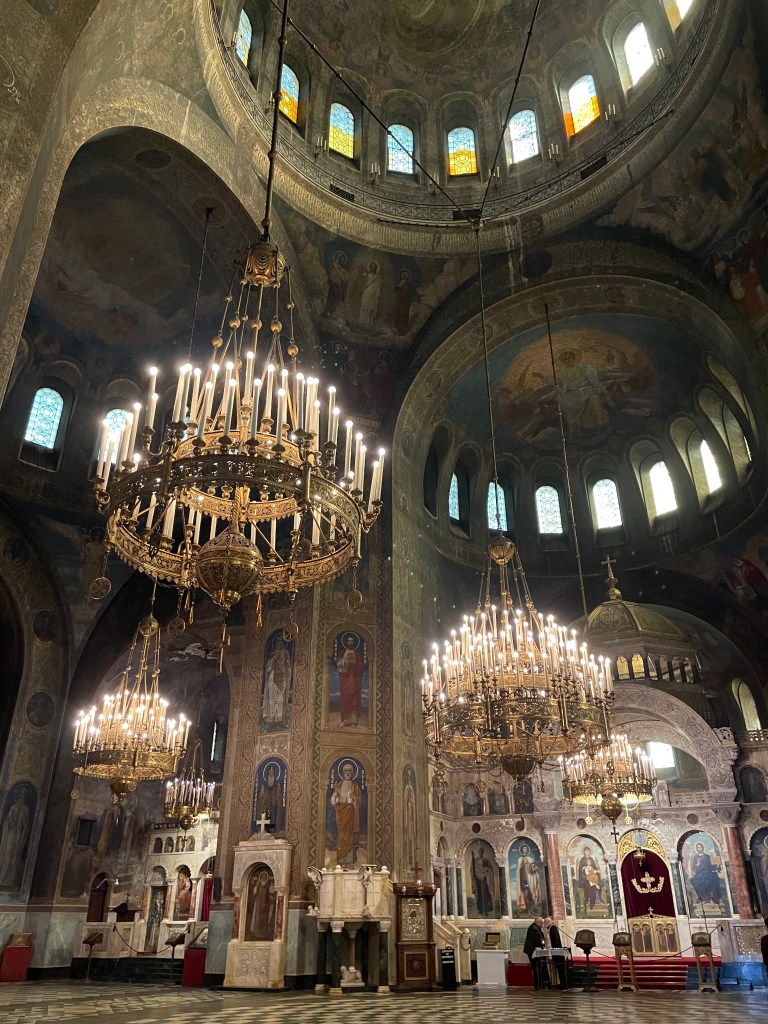
The stunning inner chamber reminded me of St. Isaac’s Cathedral in St. Petersburg and it was comforting to be surrounded by Orthodox churches and onion domes once again.
All too soon it time to say goodbye to Sofia. Made in Blue was a great spot to sketch and spend my last few hours in the city before heading to the train. Such a kind staff! The farm-to-table movement has definitely arrived in Bulgaria and I was so appreciative of all the delicious and fresh offerings. Amazing how different a food scene can be, only 500 kilometers and a border away.
Sofia certainly ranks among my favorite cities ever visited. Easy to explore with plenty to do and very friendly locals – I couldn’t have asked for more. Now it’s back to Istanbul to enjoy the Biennale and autumn in Turkey. Hard to believe the winter holidays are only five weeks away. Loving this sunshine!
Back in early September, as I began to brainstorm fall break destinations, Bulgaria sat firmly atop my list. I’d long heard that Sofia, the capital city, would be my kind of town – slightly rough around the edges with a good art scene, cafe culture, and plenty of green space. Bulgaria borders Turkey, Greece, and Romania, all colorful countries in their own right. I knew it was a former Communist Bloc state and the purported home of Viktor Krum. My new neighbor to the north beckoned and I accepted.
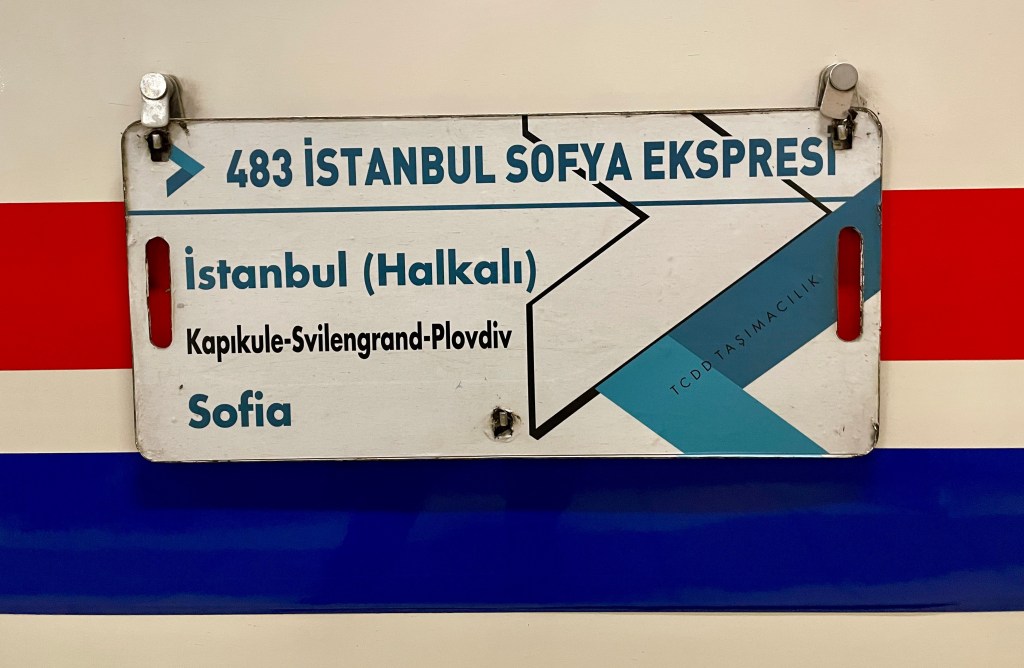
Having been landlocked in South Korea and restricted from exiting Russia by rail, I was eager to find a train which ran in between Istanbul and Sofia. Following a thin trail of websites, travel blogs and YouTube vlogs, I discovered the Sofia Express. The overnight journey would take roughly 12 hours and I was warned to bring my own food – there would be no dining car. There are two ways to purchase tickets for the Sofia Express and both involved in-person purchases at train station ticket windows. For anyone interested, you can find the details at the end of this blog.
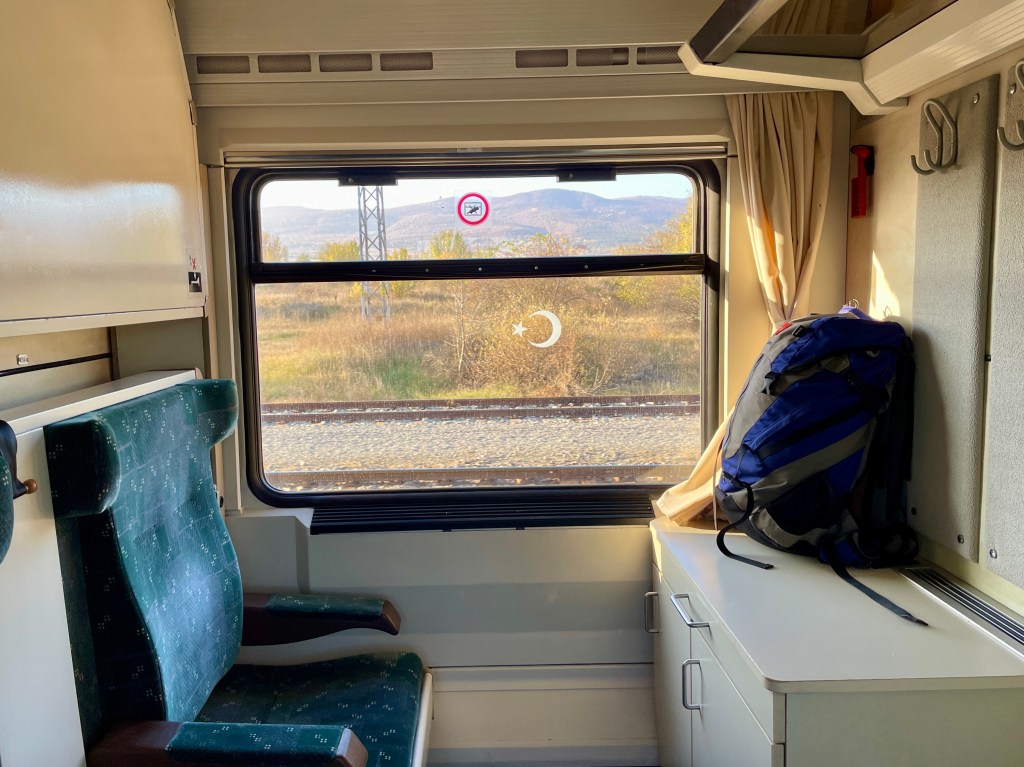
Fall break arrived and I boarded the Sofia Express at Istanbul’s Halkalı railway station for a 8:40pm departure. I had opted to purchase a full sleeper cabin for myself for security reasons and the cost totaled to $128 for the roundtrip journey. Pulling down the seats to create my bed, I made up the lower bunk as we got underway. Sailing past my school on the outskirts of town, we headed due west towards Bulgaria.
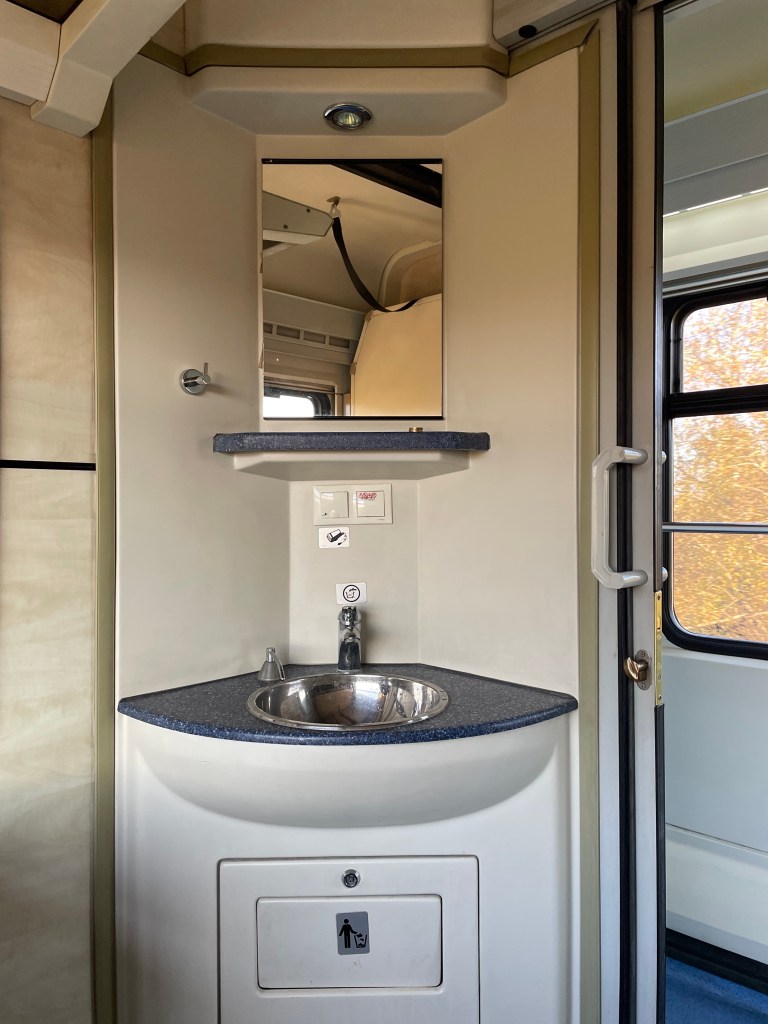
The Bulgaria-Turkish border intersects at the town of Edirne, which just narrowly skirts the edge of eastern Greece. Disembarking at the first border crossing, you are stamped out of Turkey by passport control around 1am. After settling back into your train berth about an hour later, the train rolls on for few kilometers and then begin the knocks from the Bulgarian border guards. These guys kindly take your passport away to stamp it and return it to you about an hour later. The whole procedure takes nearly three hours in total – not a smooth night of sleep, I’m afraid. But it could have been – the cabin beds were comfortable (for someone of my shorter stature) and very clean. The private sink and tiny fridge were nice features as well.
After a few hours of sleep, I awoke to the golden glow of the Bulgarian countryside. Mountains wrapped in orange ringed the edge of my horizon and fall was in full effect. We rolled past harvested fields but otherwise there was little trace of humanity beyond our train tracks.
As we approached a number of small towns on the outskirts of Sofia, the homes reminded me of the dachas (country homes) outside of Moscow. The graffiti soon appeared, tags upon tags blanketing bridges and the side of the tracks. Cyrillic text took me right back to Russia.
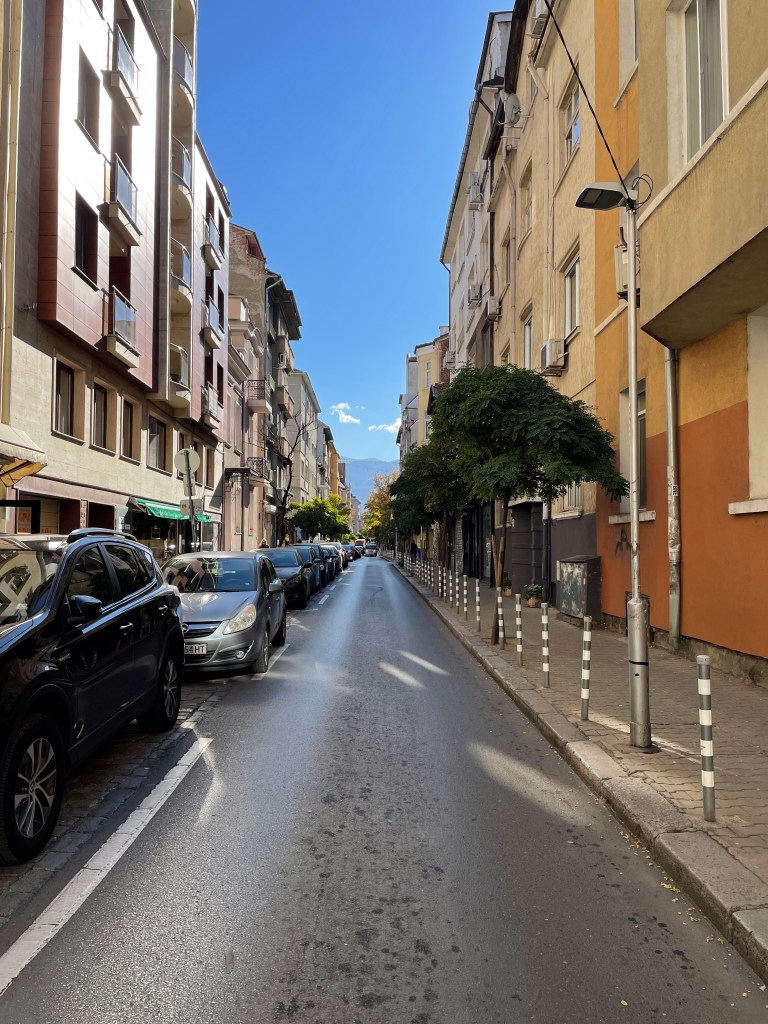
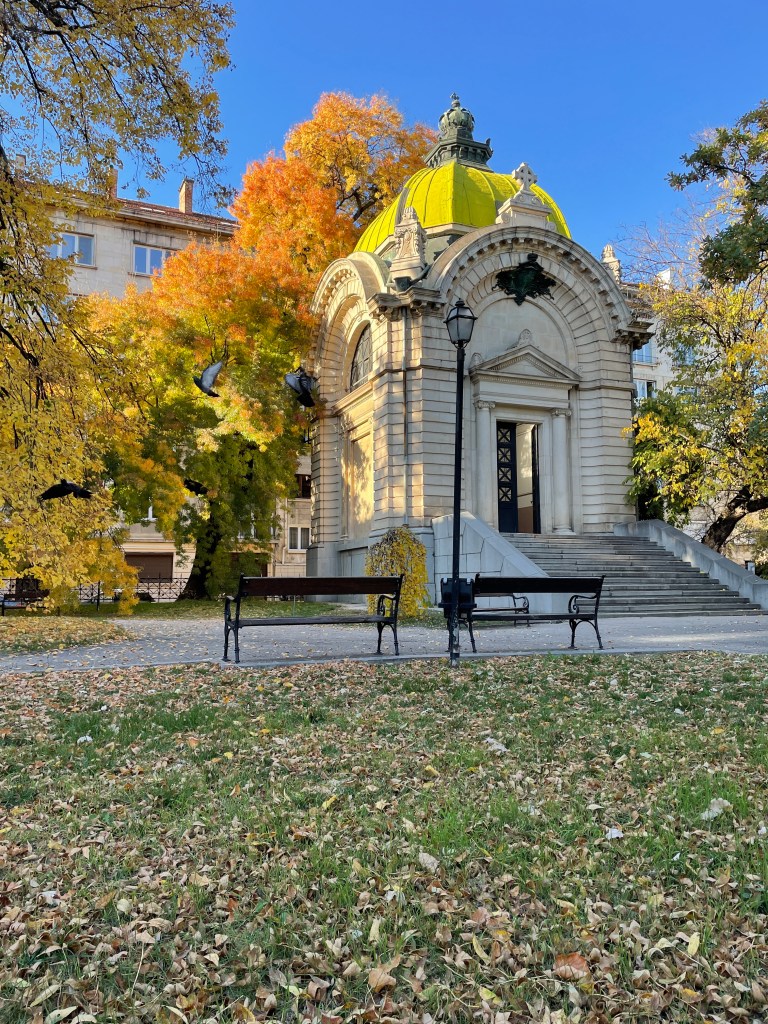
We rolled into Sofia’s Central Station around 10am and I set off on foot for downtown. Having no Bulgarian lev (local currency) and hours until my AirBnB was available, I made the most of the fairly flat walk, soaking in the beautiful foliage among the classical buildings.
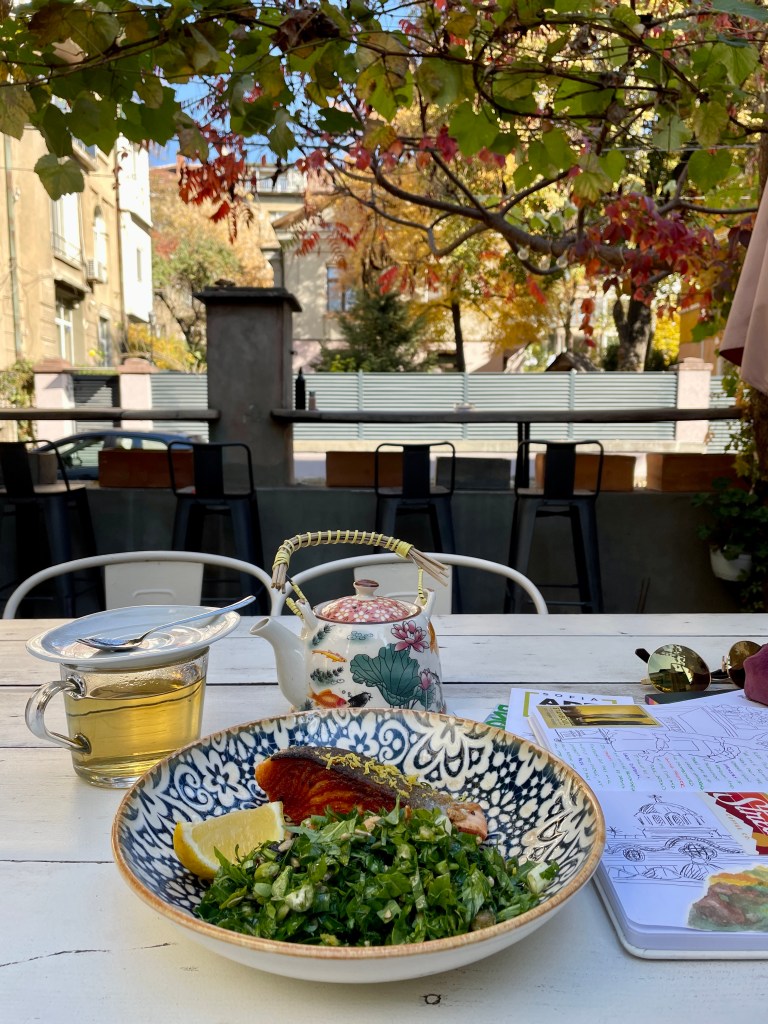
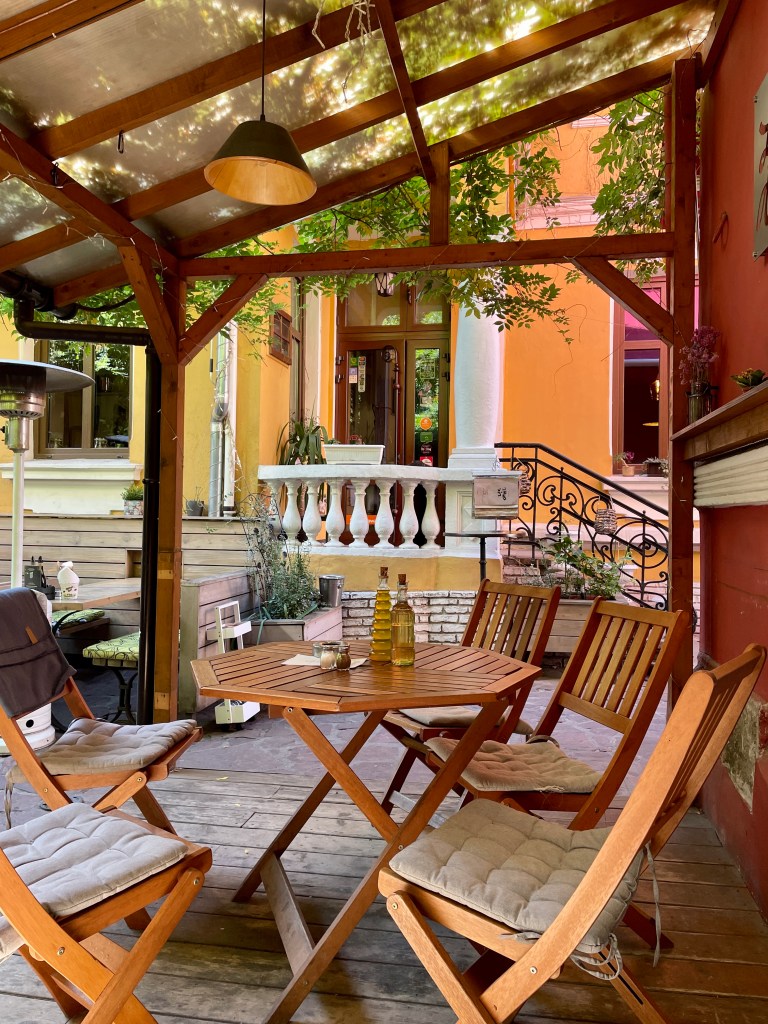
With no visa required for Americans, my travel preparations consisted of downloading the Google map of Sofia (a helpful thing to do when you don’t have wifi). I make sure to bookmark local cafes, bookstores, and art shops. These spots are great not only for my own hobbies but also for getting recommendations from friendly shopkeepers. My Sofia bookmarks included: Altruist (cafe with a patio out back), Slanchogled Sofia (art store), and The Elephant Bookstore (English titles). At the latter, the owner recommended The Little Things (pictured below), a sweet courtyard cafe where I found a cup of tea and lunch to get my trip started right.
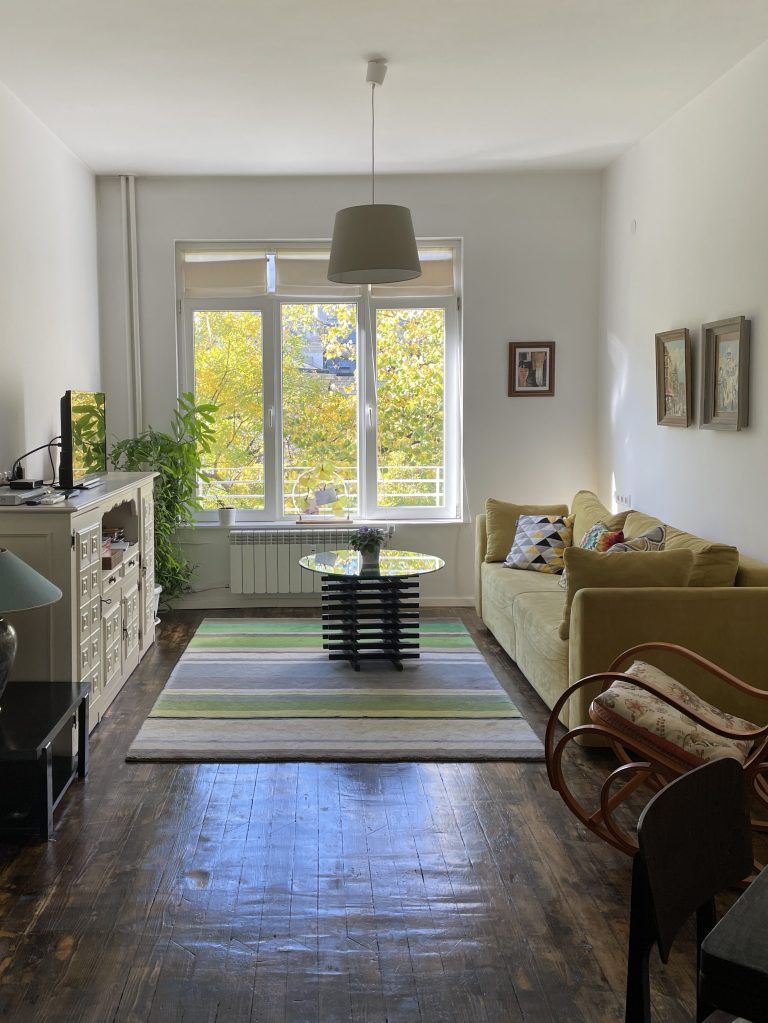
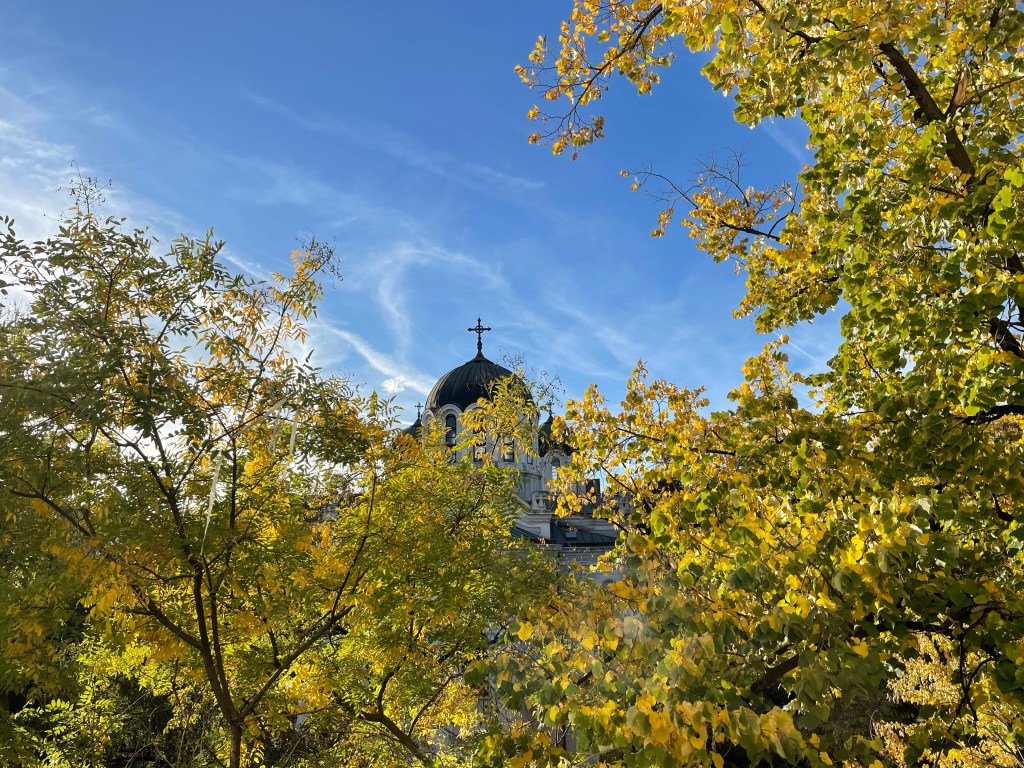
Sold by the views of St. George’s Orthodox Church, my AirBnb was located in a residential neighborhood just off a main thoroughfare. The graffiti that blankets the city can give off an initially nefarious vibe, but I quickly realized that this was a cozy spot, with residents walking their dogs in the evenings and a wine bar just around the corner. I awakened to the ringing of church bells each morning.
I met up with my friend Linda soon after checking in. A Canadian who is married to a Bulgarian, Linda has lived in Sofia for over 20 years. Our paths have crossed at a number of conferences over the years and we caught up over dinner and drinks, having not seen each other since before the pandemic began. She approved of the walking tours I had lined up and recommended a bunch of great restaurants to check out. Nothing like advice from a local!
I’m going to stop here for now. I really loved Sofia and there’s just too much to share in one post. Thanks for reading and look for Part 2 in a few days 🙂
Purchasing Tickets for the Sofia Express in Istanbul:
Option 1: Go to Halkalı railway station, which is located 17 km from the city center on the Marmaray train line. Halkalı is the departure station for the Sofia Express. You can buy tickets from the ticket window at the top of the escalator.
Option 2: Sirkeci Railway Station or İstanbul Garı (located in Istanbul’s Fatih neighborhood). Directions told me to go to Ticket Window #4. I never saw Ticket Window #4 but I did find the ticket window labelled “International Trains” and was helped by a kind cashier who spoke plenty of English. My paper tickets in hand, I emerged victorious into Fatih and took my bus back to the ‘burbs.
Advice for the journey: Try to get to sleep soon after departure as you’ll be awake at the border from approximately 1am – 4am. Prepare for cabin knocks from border guards, line-ups at passport windows, and generally no attempt to make haste whatsoever. Both trains arrived 1-2 hours late, in my experience, so be careful when booking connections at your destination. Do bring your own food and some extra toilet paper wouldn’t hurt.
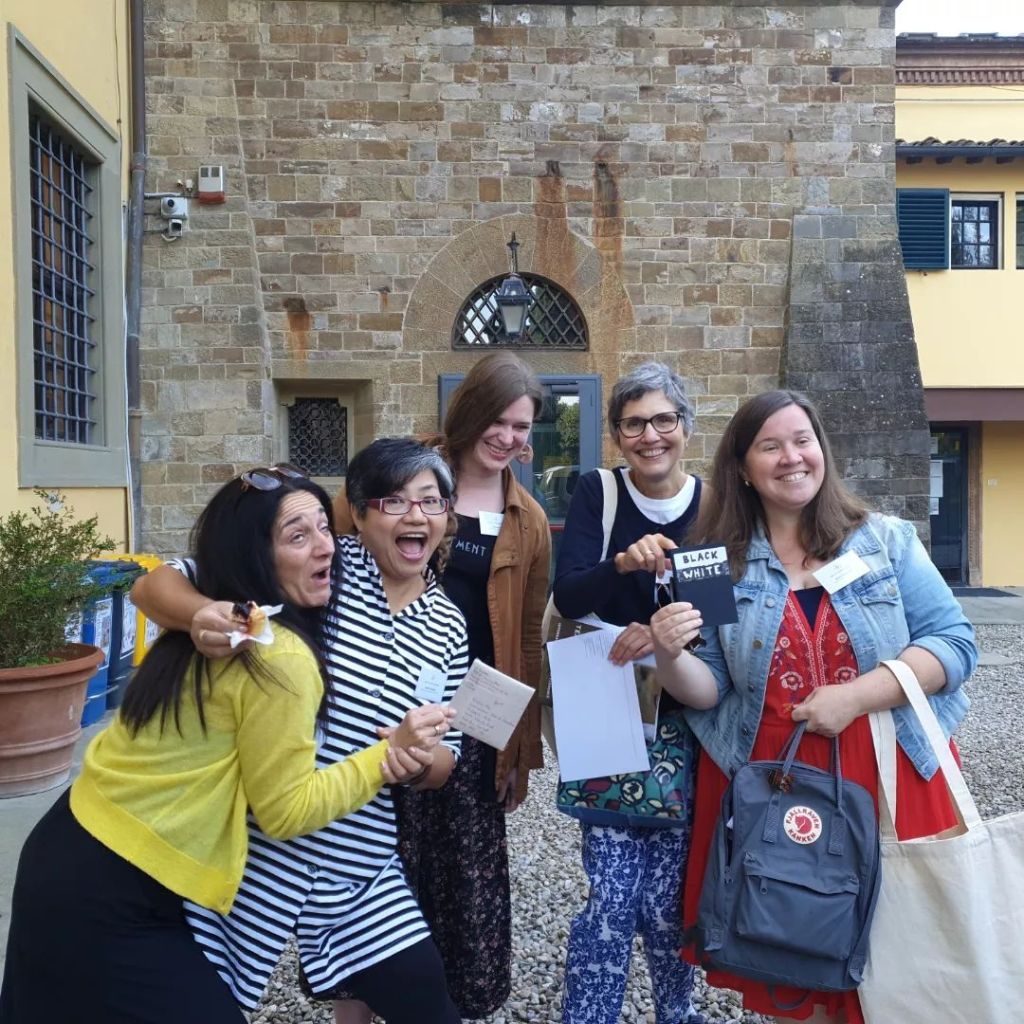
This past weekend, I had the chance to attend a conference in Florence, Italy (rough life, I know). I’m member of the Global Art Teachers Exchange (GATE), a group of art teachers who put on workshops for each other. Makes for amazing professional development as teacher conferences don’t often serve subjects outside the core subjects. We’d planned on meeting in Florence for 2020 but COVID of course intervened. Here it is 2022 – two schools and two countries later for me – and it finally came to be.
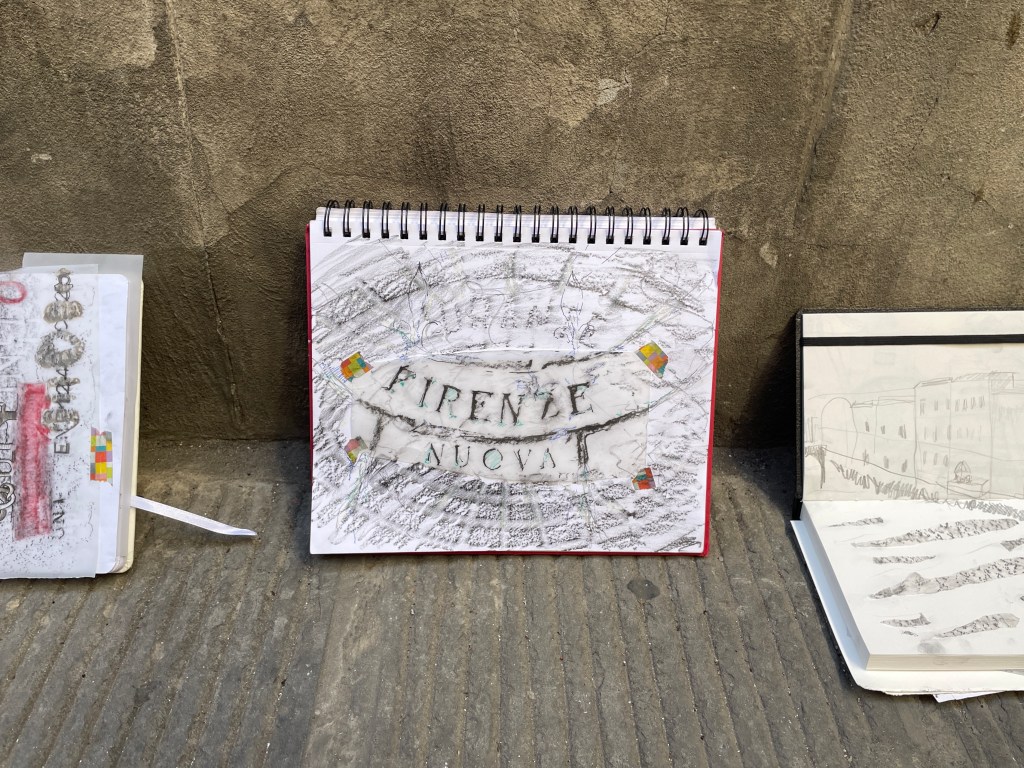
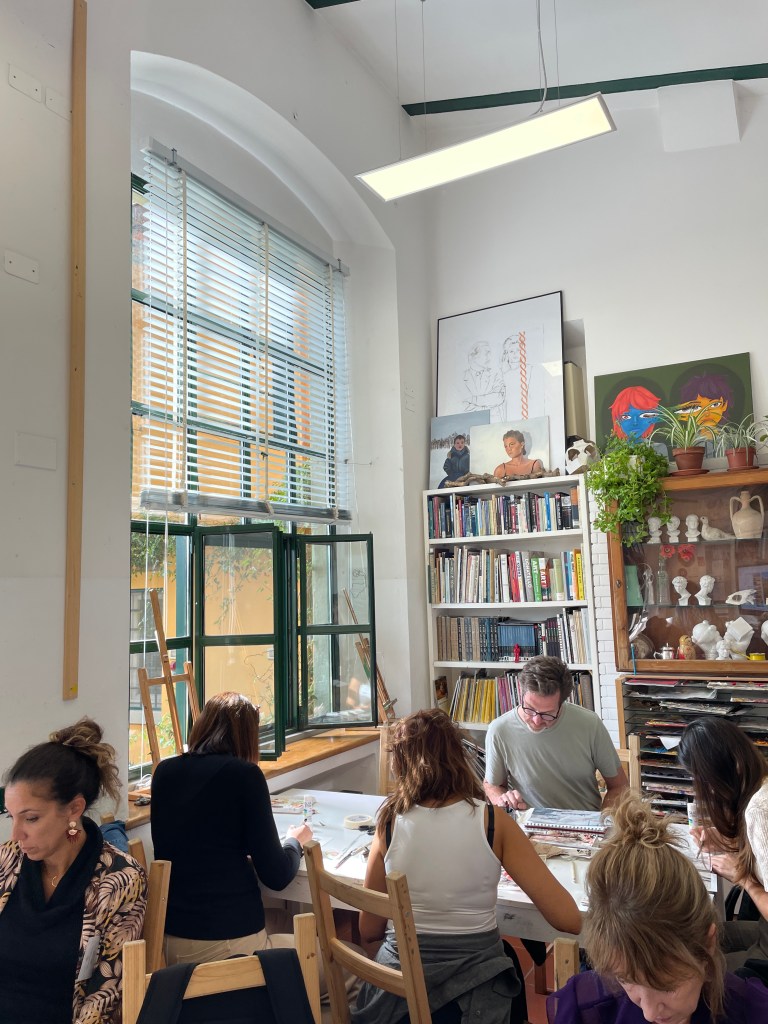
The exchange was a reunion for my art teacher friends, most of whom are scattered all over Europe. I’ve known the group since 2017 when we first met in Luxembourg. Aberdeen followed in 2018 and London in 2019. For the past three years we’ve taken part in a monthly sketchbook exchange, and that’s what we’re doing in the picture above.
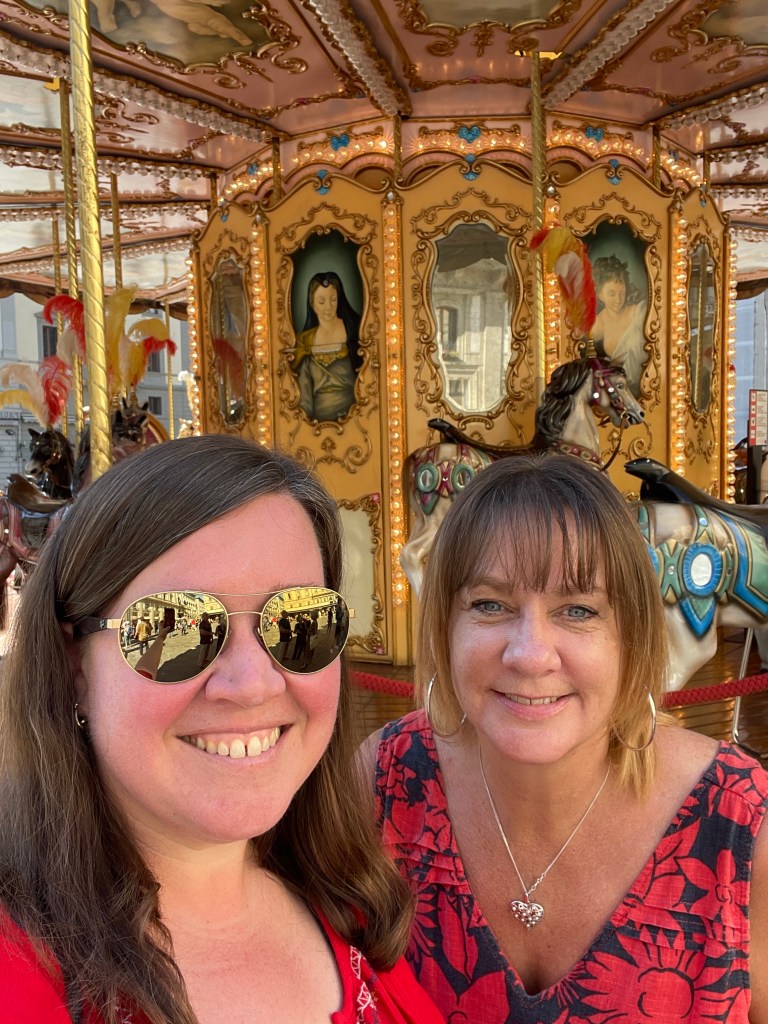
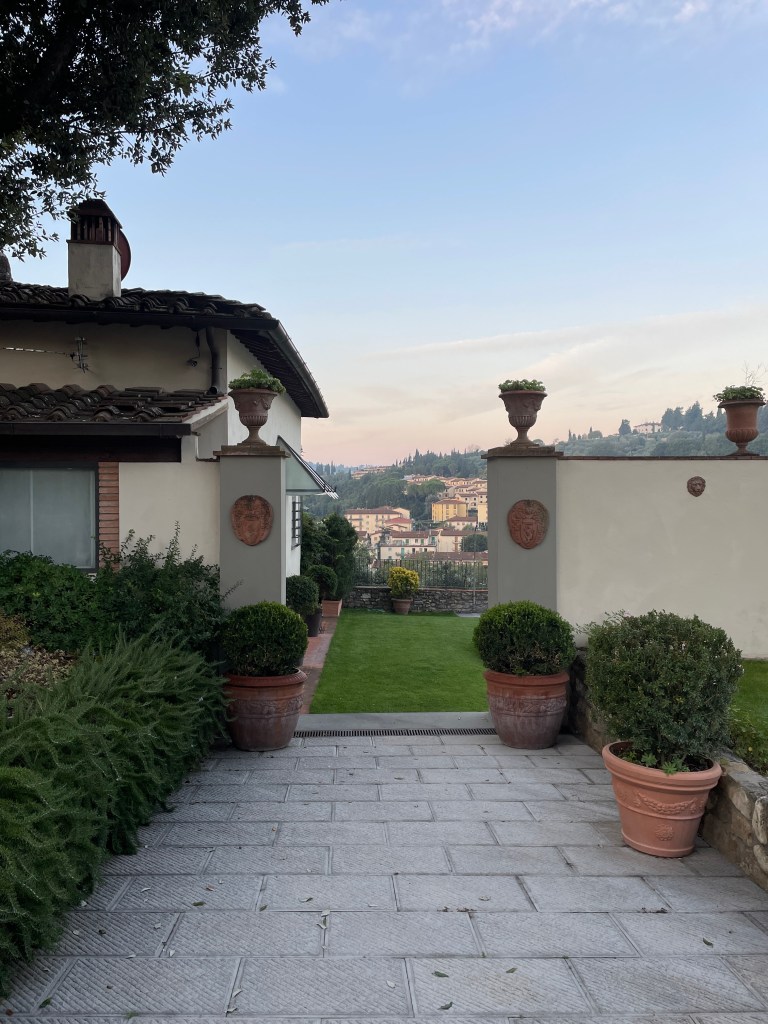
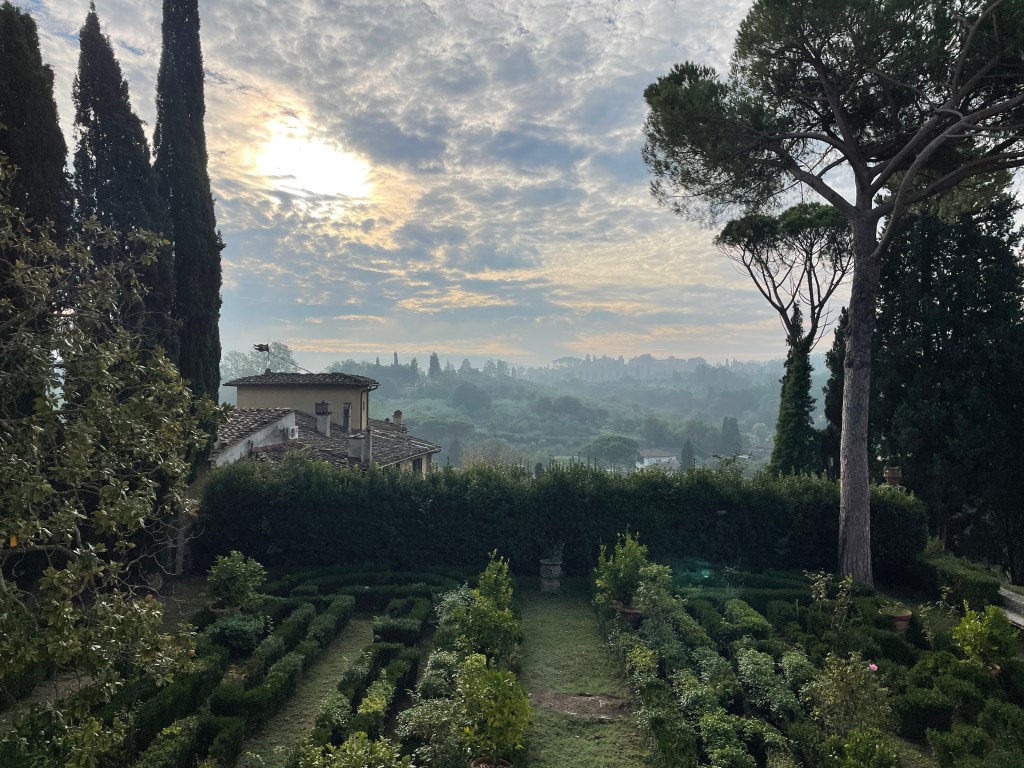
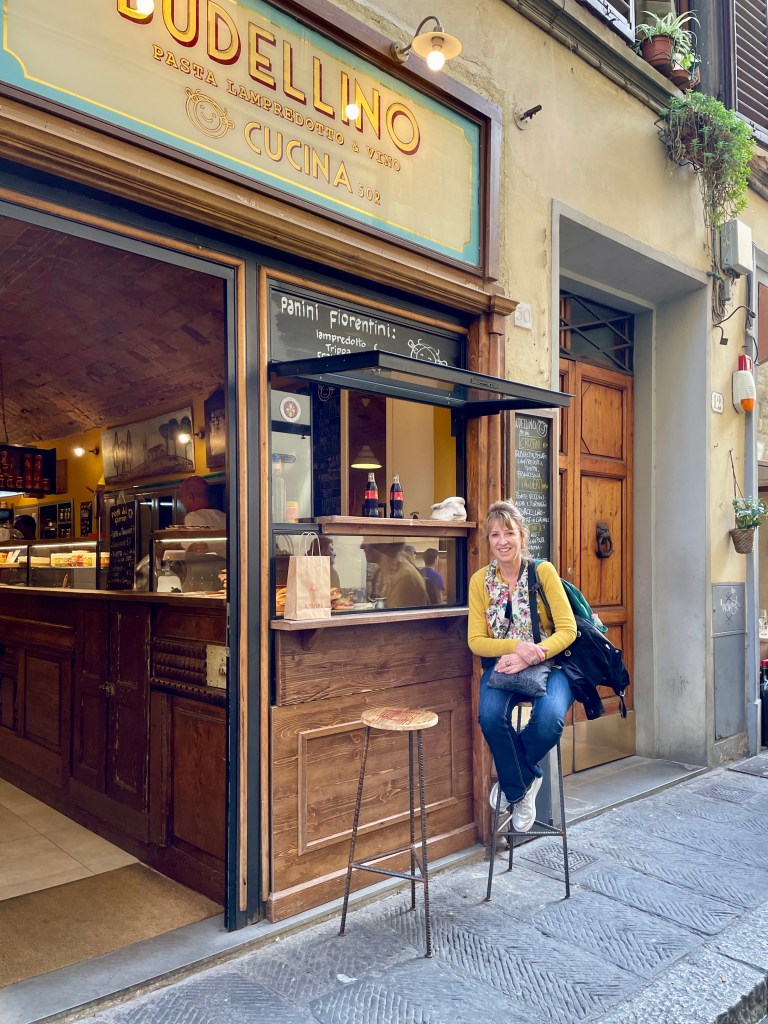
It goes without saying that Florence is an extraordinary city. The gelato is superb and the pasta is even better. My colleagues Saleshni and Michele joined me (Australian, both) and we flew into Bologna, direct from Istanbul. We stayed at a gorgeous villa up in the hills behind town, a spot called Bagno di Rivoli. Chilly mornings with beautiful views – no complaints here.
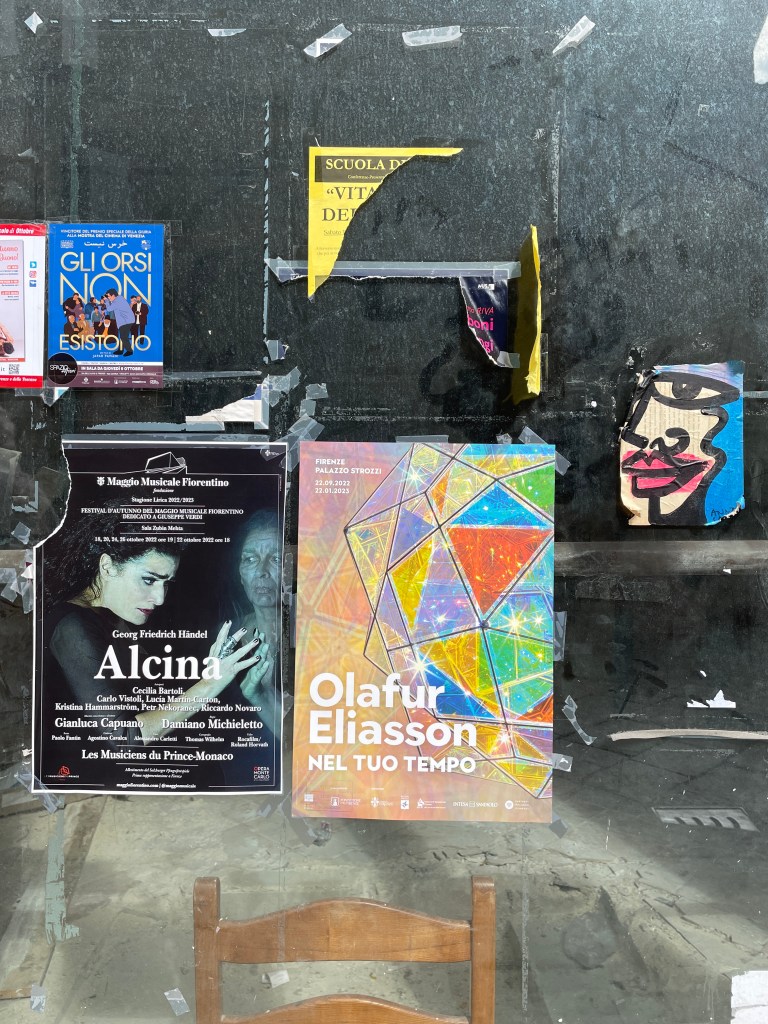
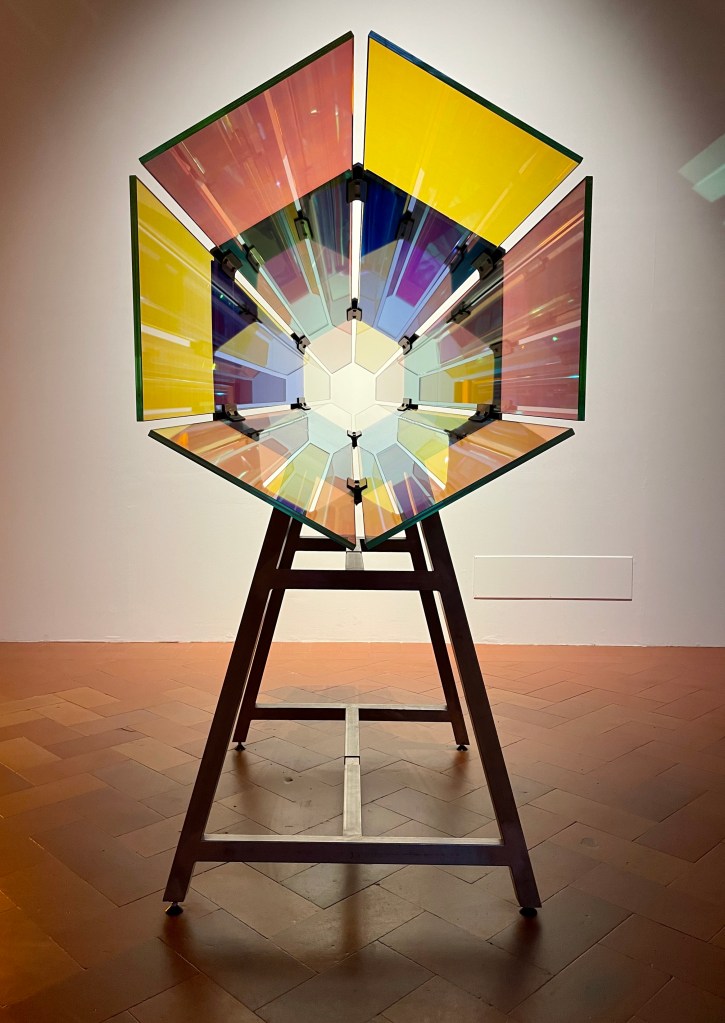
Our first day was spent enjoying the galleries downtown, including a wonderful exhibition of Olafur Eliasson’s work at the Palazzo Strozzi. Danish-Icelandic, his contemporary installations include light and other natural elements such as water and wind. At the Palazzo, he projected light and sound using the Renaissance architecture of the building, transforming the historic space using contemporary materials. The results were powerful and eye-catching.
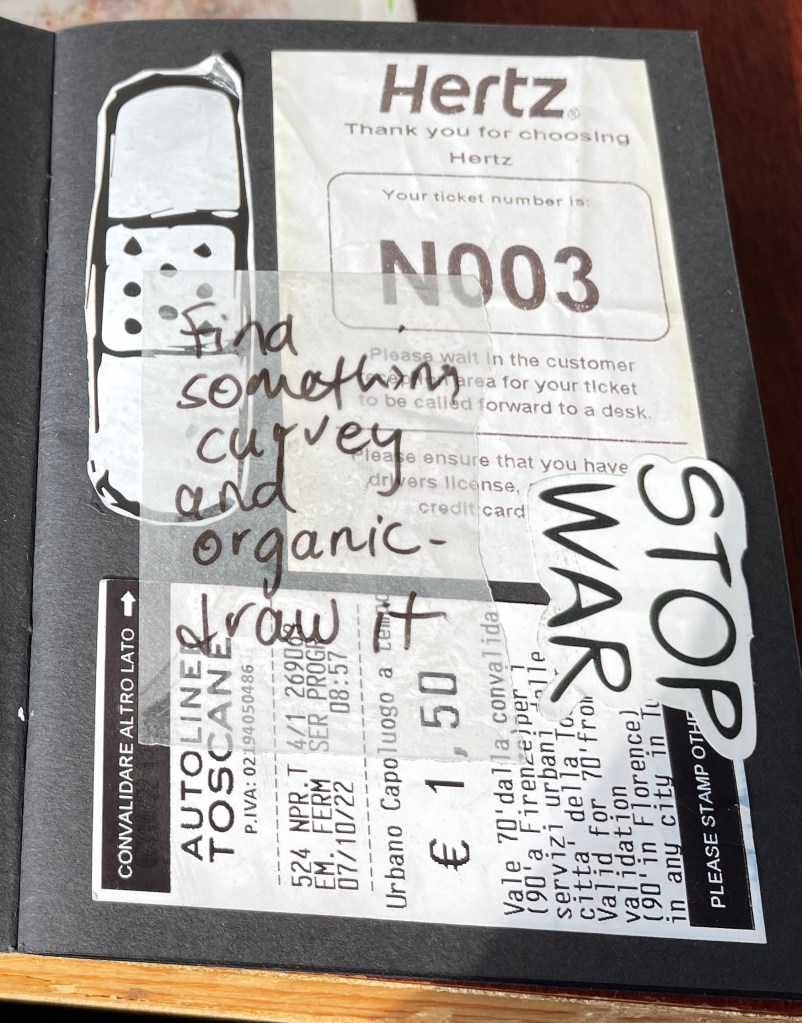
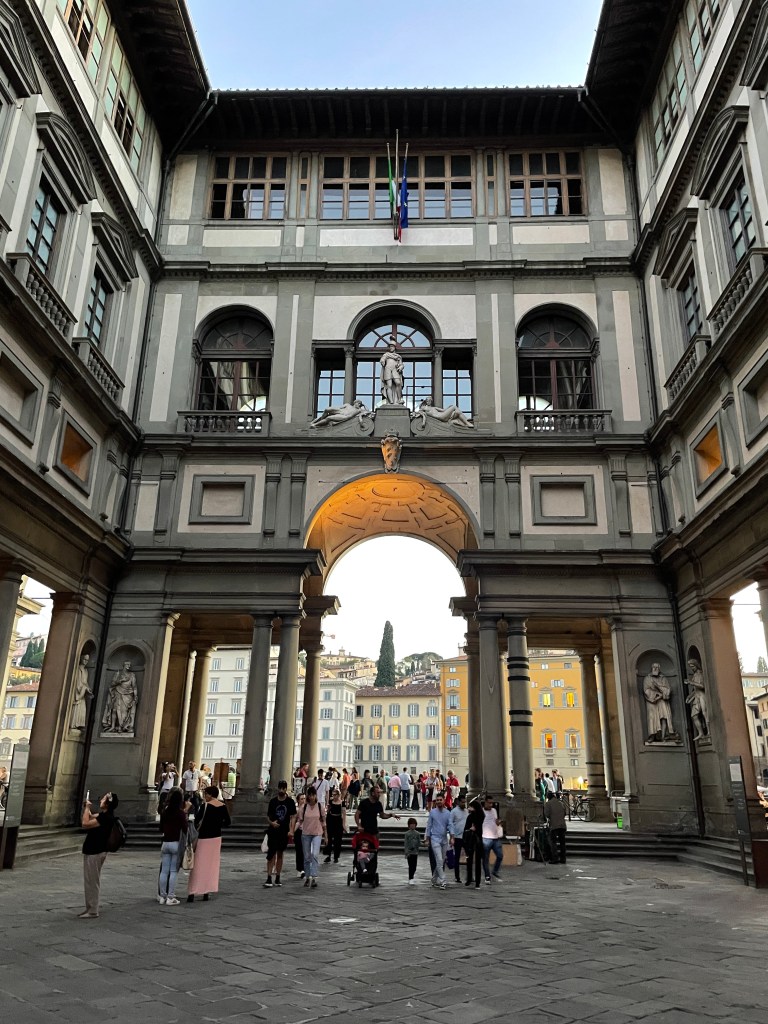
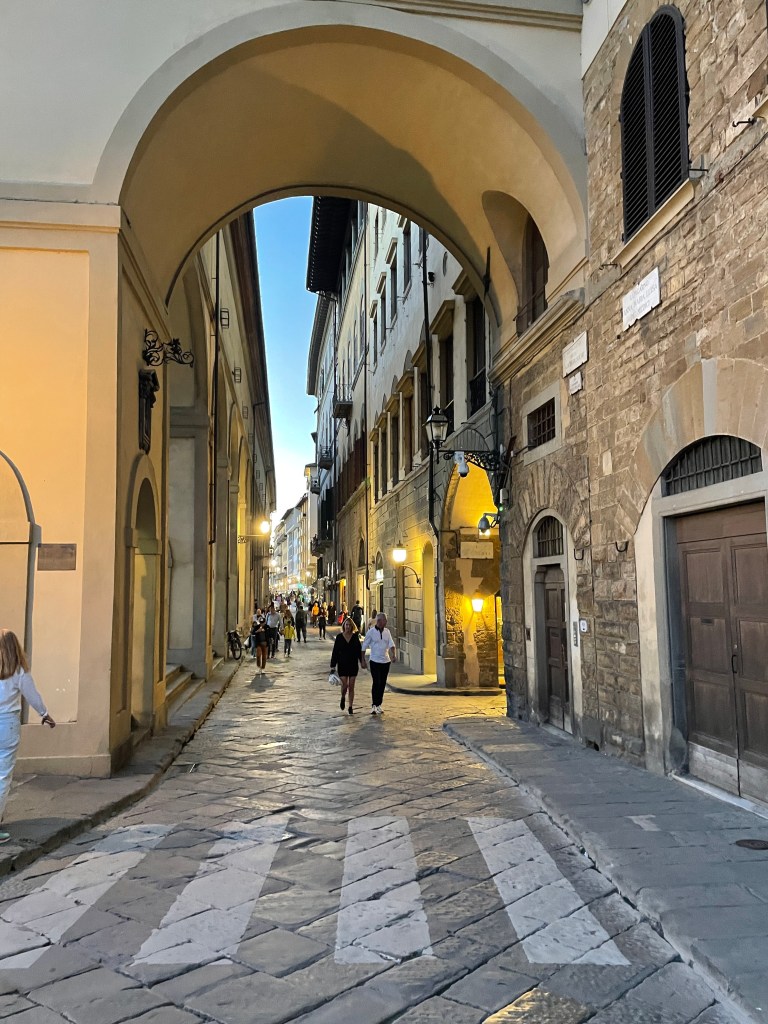
After the musuem, we did some made some art in the streets near the Ponte Vecchio. I had making something out of nothing in my friend Ryan’s sketchbook, creating a collage of all white items sourced from a single street corner. A Hertz receipt, ticket stub, and a couple of stickers all dropped from the pockets of tourists in the five minutes we sat on the sidewalk nearby. One man’s trash…
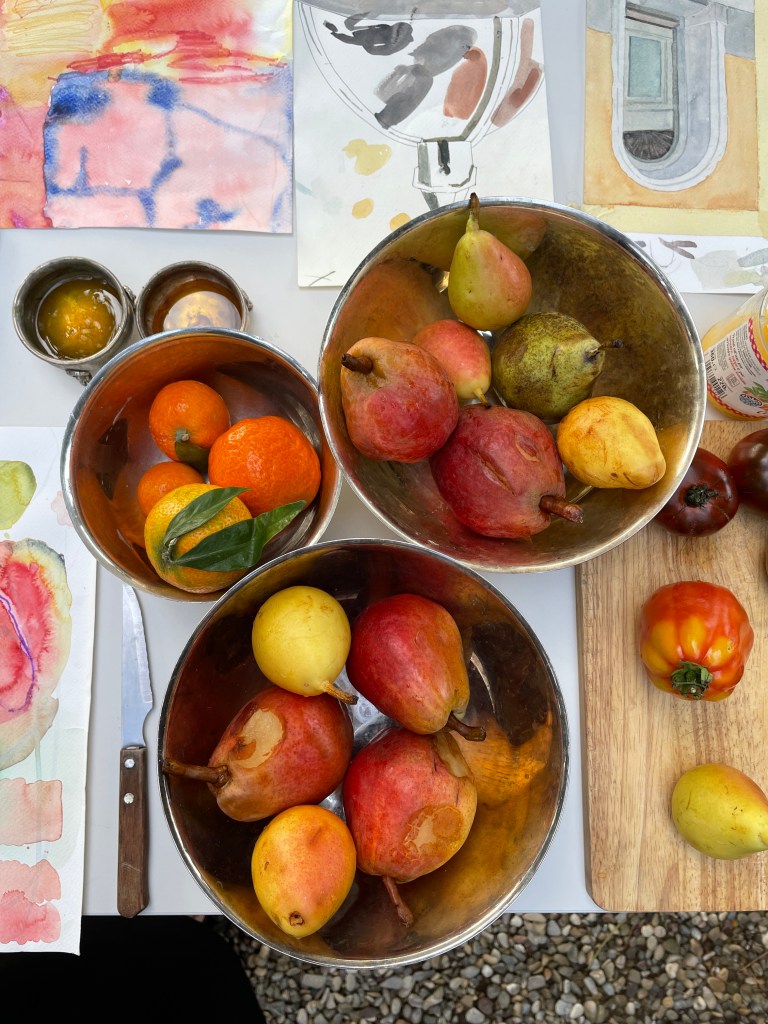
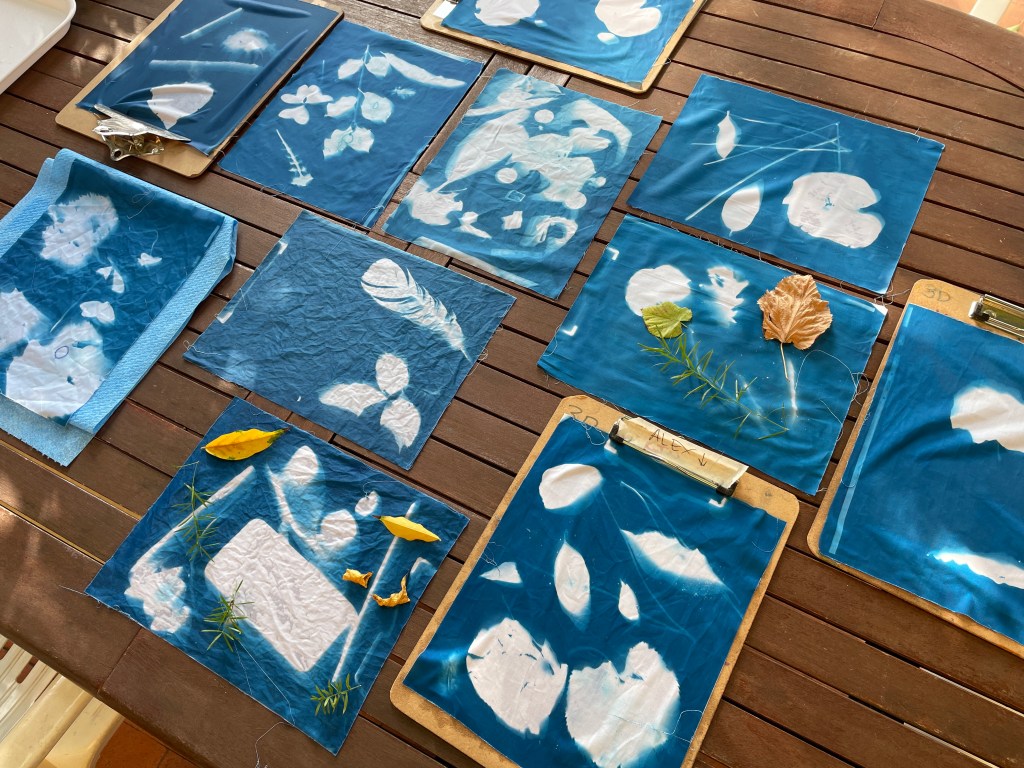
Back at the International School of Florence, we soaked in the view and made more art. The stunning views from their school cafeteria paint a truly Tuscan scene including two castles on the hillsides surrounding. I took a watercolor painting workshop and a cyanotype printing class. Both were loads of fun.
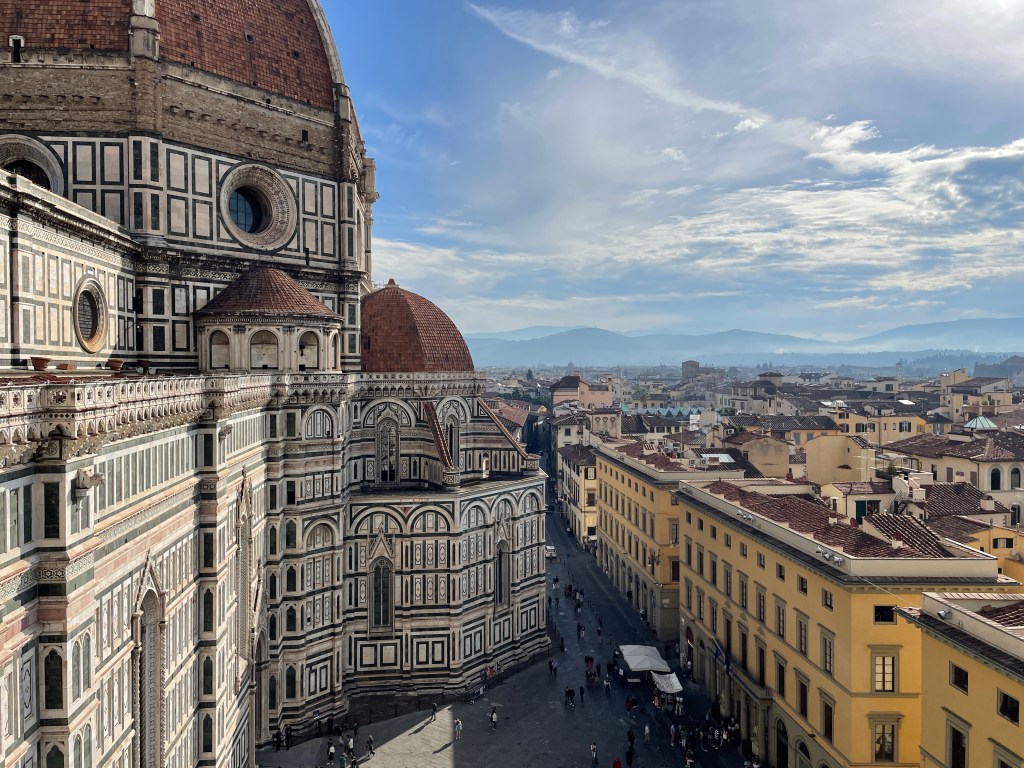
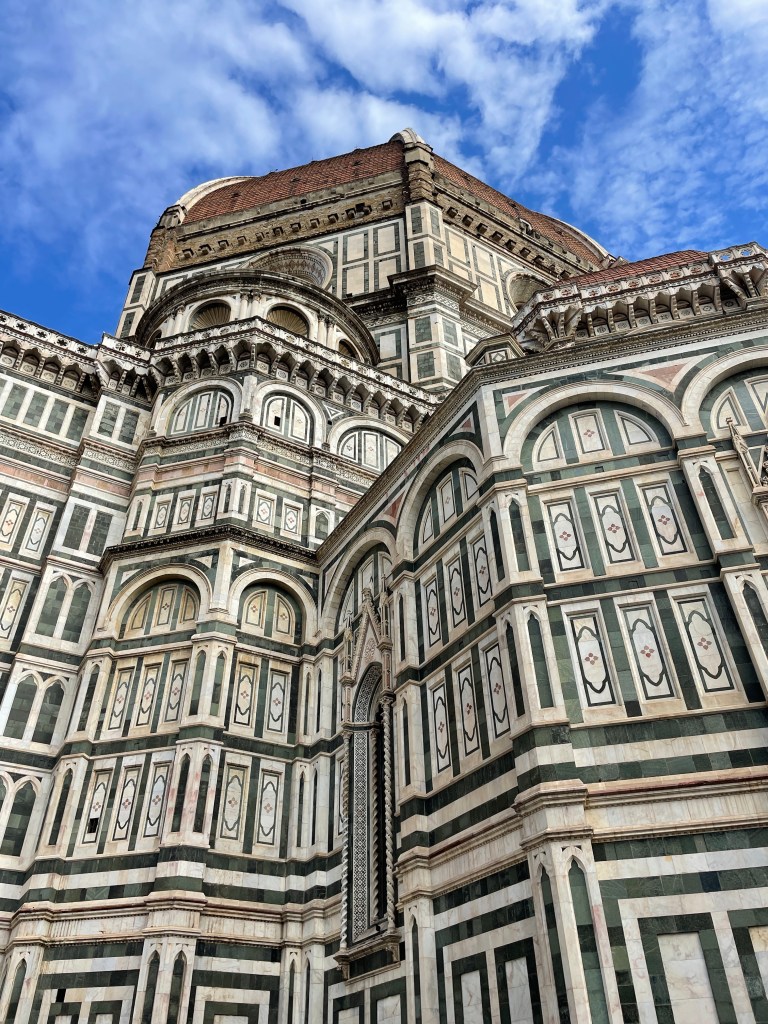
Making the most of our time, my colleague Michele and I climbed both the Duomo dome and the bell tower. 450 steps apiece! The sunset views from the dome were worth it.
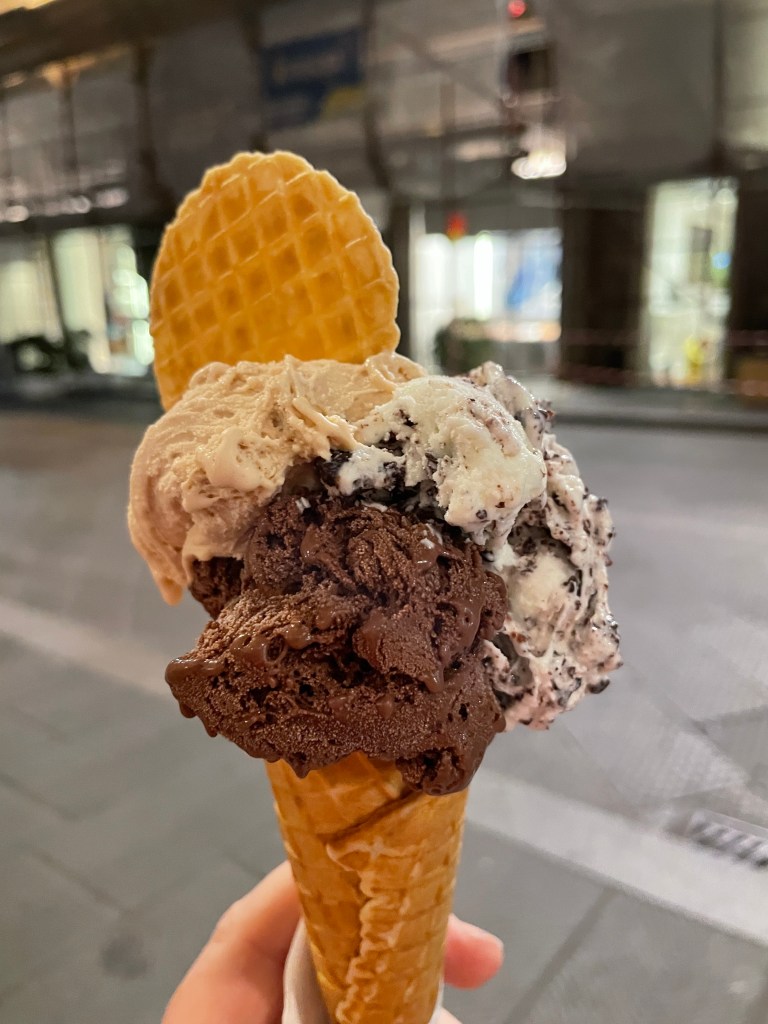
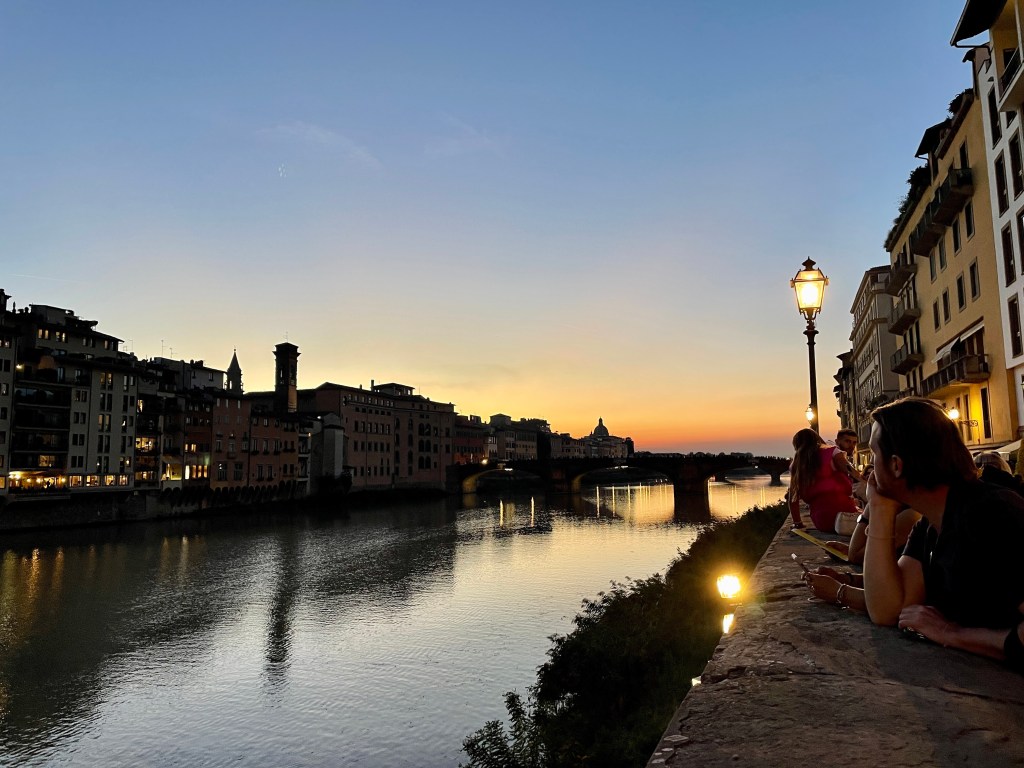
Nothing like sunset and gelato at the Ponte Vecchio. Florence is stunner for sure.
Back home in Istanbul for the next few weeks. Hard to believe I’ve already been here for two months. Now we’re into the nitty gritty of the school year with parent/teacher/student conference next week. Soon enough it will be fall break and I am headed to Sofia, Bulgaria. My adventure on an overnight train awaits!
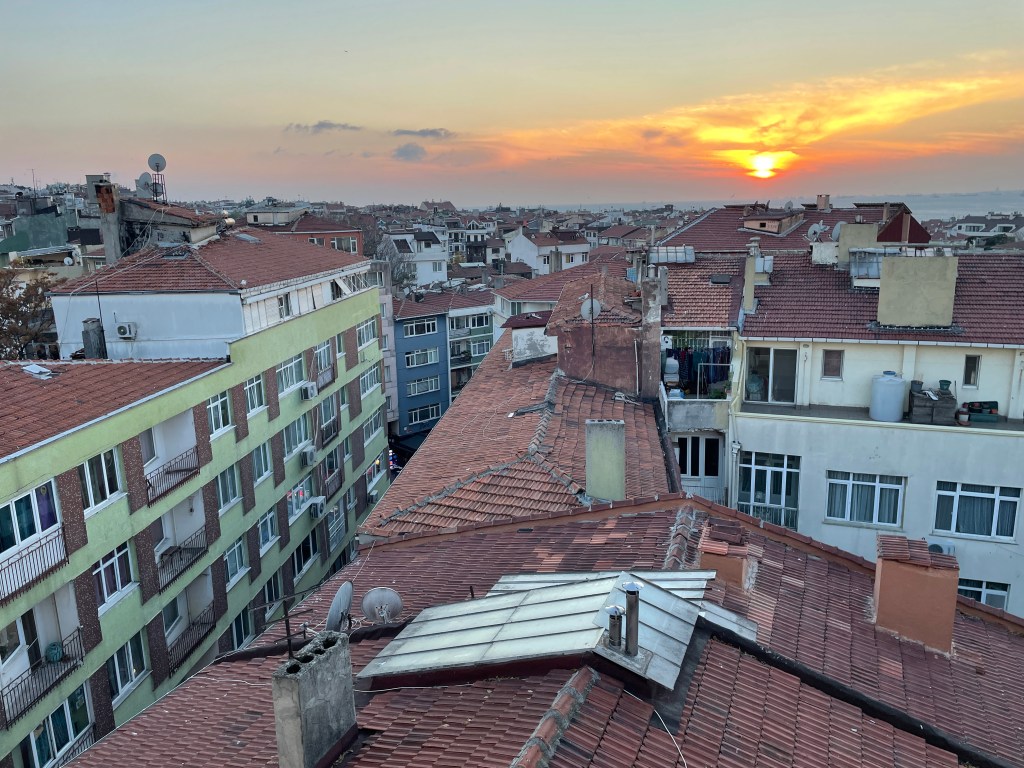
After nearly a month in Turkey, I’ve begun to settle in. I’ve got my little two-wheeled grocery cart, rearranged my apartment, and I’ve finished two successful weeks of classes with my students. The honeymoon period has ended and I am facing the day-to-day challenges of life as an expat in a foreign country. I celebrate every success (water delivery!) and try not to dwell when things don’t well (a wild goose hunt at the Turkish Immigration Office). This week I began coaching middle school tennis – which is incredibly fun – and also hosted friends for drinks on my sun porch. Both are wins.
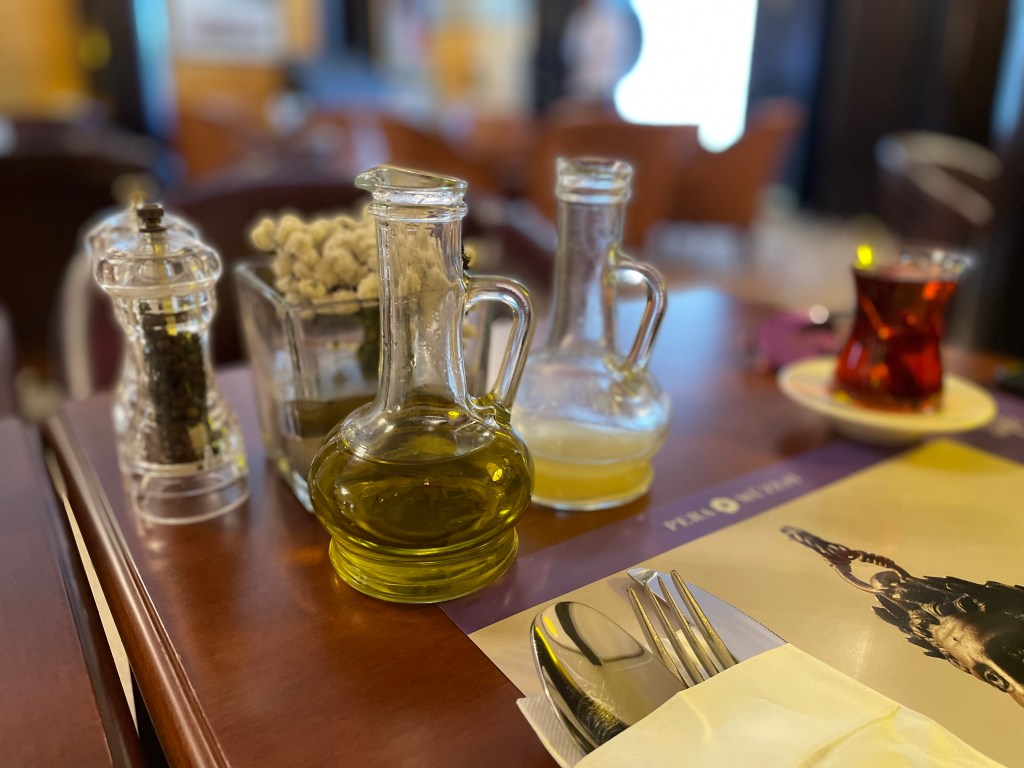
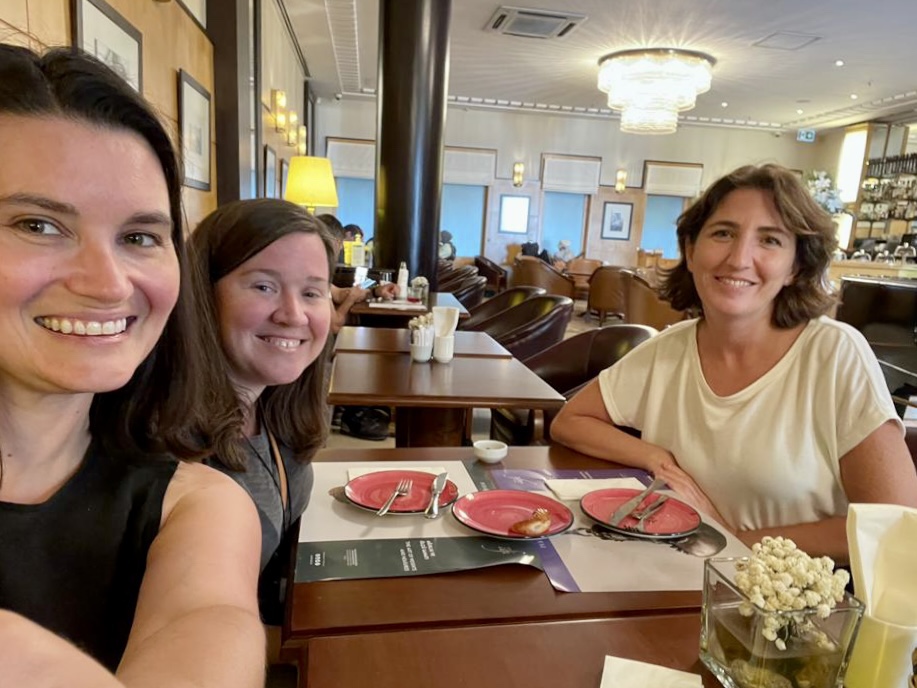
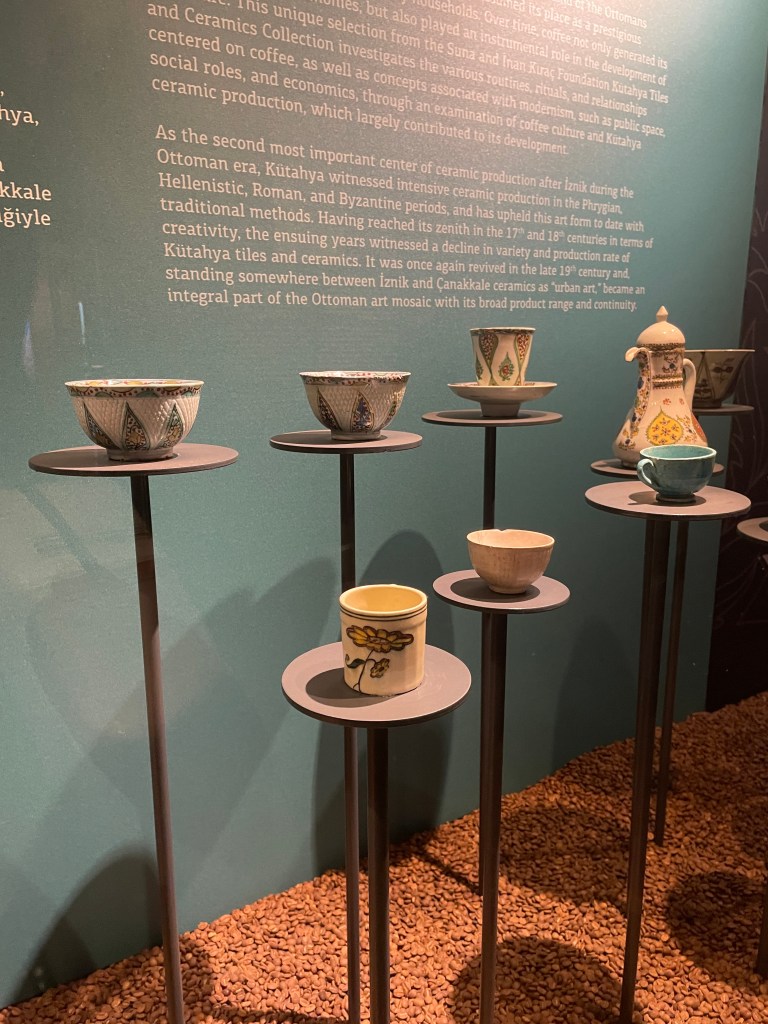
I shuttled in and out of downtown Istanbul twice this past weekend. On Saturday, Ali and I met a Turkish friend from Moscow, Arzu, at the Pera Museum. We had a lovely lunch, drank in Arzu’s generous advice about Istanbul’s sights and traditions, and enjoyed the museum galleries.
The exhibitions taught me a great deal about the technological and mathematical discoveries that have taken place in the region since the time of Mesopotamia (remember the Fertile Crescent from history class?). Most impressive were tools of measurement such as the compass and the brass aerial balance, both of which had great impact upon Islamic art, geometry, and other engineering domains. I also learned about Osman Hamdi Bey, a 19th Century Turkish statesman who was a pioneer of art education and a revered painter.
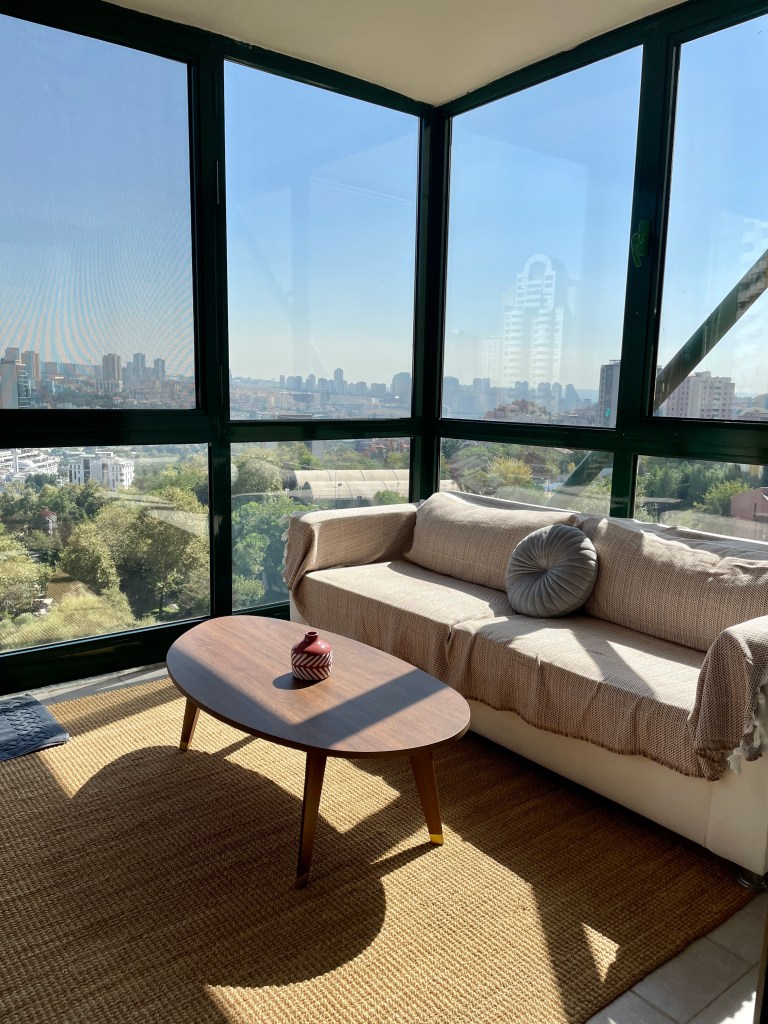
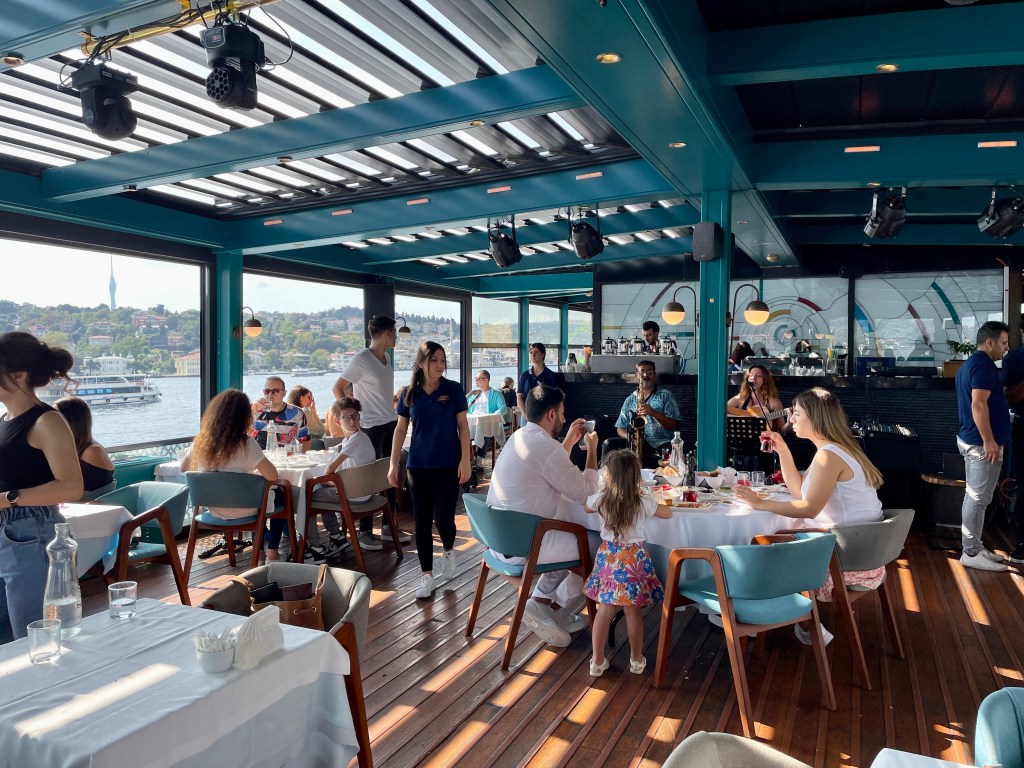
Sunday morning dawned bright and early as Moloko and I watched the sunrise against the Bahçeşehir skyline. Wonderful coworkers had organized a brunch boat trip on the Bosphorous Strait. After catching the tried and true city bus from Bahçeşehir to downtown, we walked the last mile to the pier and boarded Le Vapeur Magique for a 2-hour cruise.
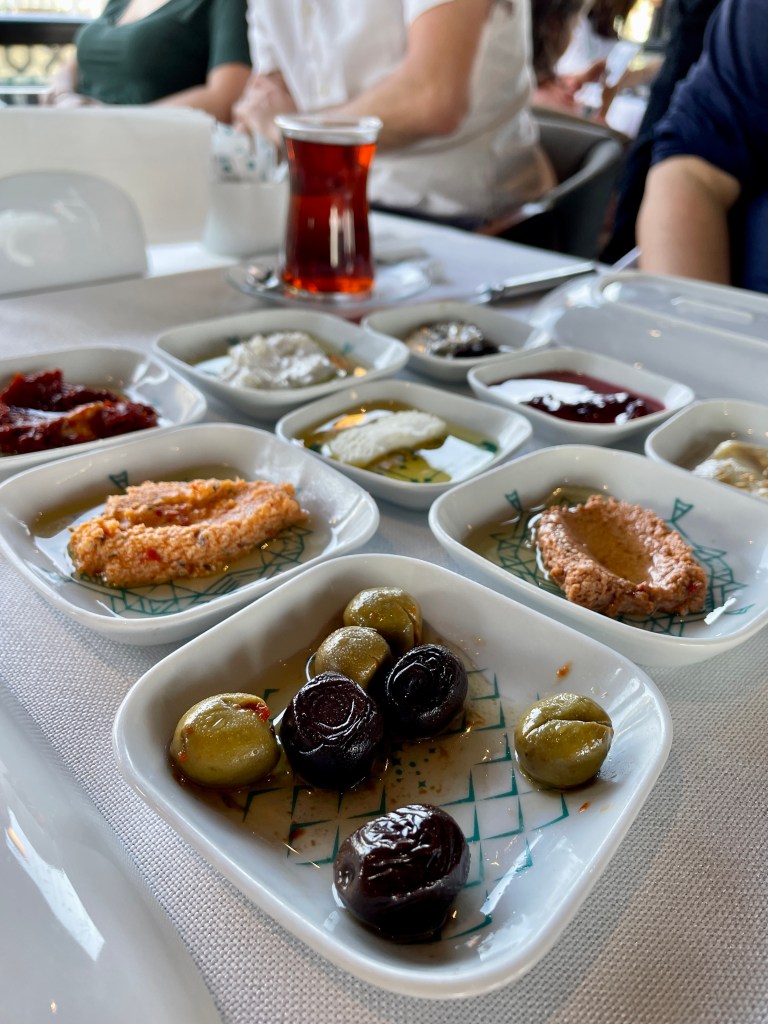
There seems to be something especially kind about individuals who end up in Istanbul. Multiple coworkers had offered for me to stay at their apartment the evening before but the commute in was no problem. Sitting atop a double decker bus as the world wakes up, on a ride costing 80 cents, I have zero complaints. Both the company and the Turkish breakfast were wonderful, to say the least.
Finding one’s place in a new country is a bit of an art form. Not everything about this move has been easy and some days are certainly better than others. At this point, I’m striving for acceptance – acceptance of the choice I’ve made to move here, respect for the traditions and trappings of the local culture surrounding me, and the wisdom of knowing how to reset when things get heavy (my current meditation is found swimming laps). I’m open to what Istanbul and Türkiye have to offer and really pleased with what I’ve discovered so far.
Sanat(n., Ottoman-Turkish origin) art, artistry, museum, culture, music, creative. The methods used in the narration of a sensation, design or beauty, or the superior creativity that emerges as a result of this narrative. A narrative created in accordance with the metrics of pleasure of a particular civilization or community.



























 The Turquoise Chronicles