On a bit of a creative streak, I sought out a traditional Turkish paper marbling class this past weekend. Ebru (ay-brew) as it’s called, translates to marbling in Turkish. Popular during the Ottoman reign, ebru was born at the same time that paper was invented.
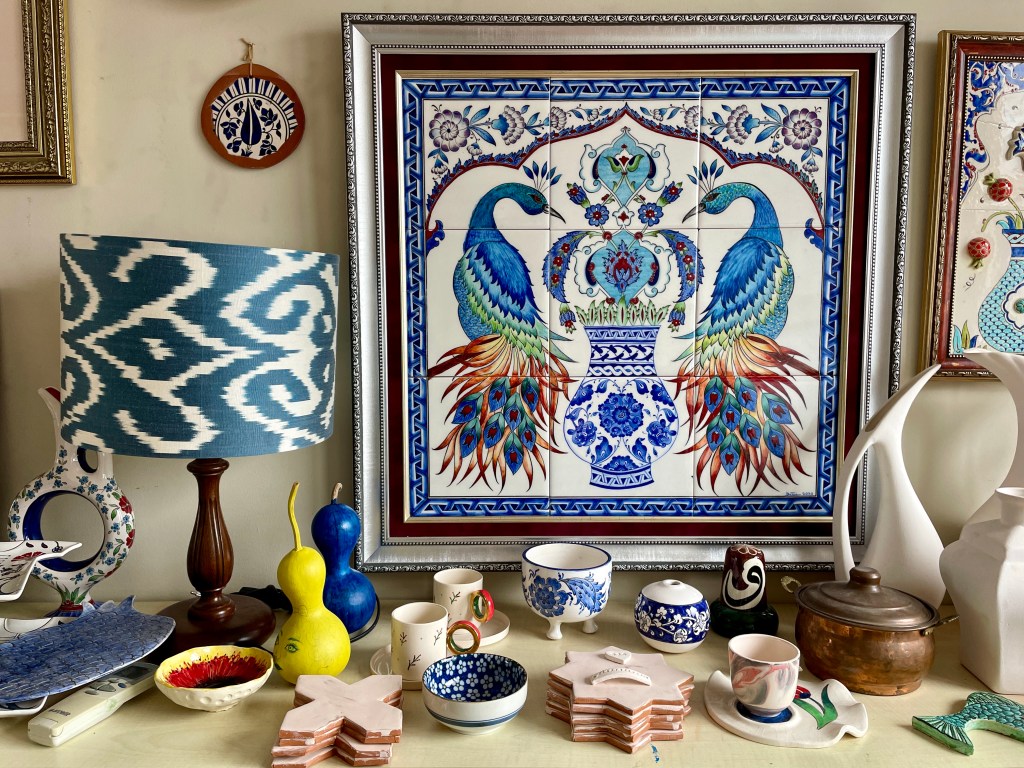
The technique of paper marbling dates back to the 9th and 10th centuries. As with so many artistic techniques found along the Silk Road, it’s country of origin is a bit murky. Geotags include Iran, Turkestan (a region of Central Asia, not a country), Japan, and China.
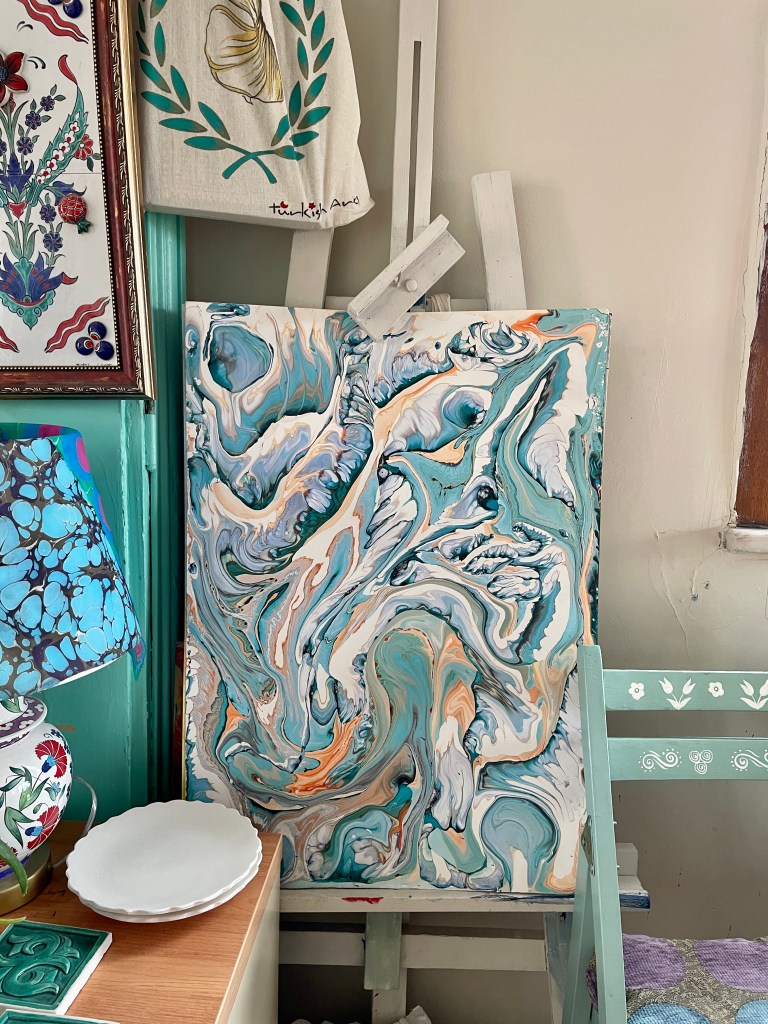
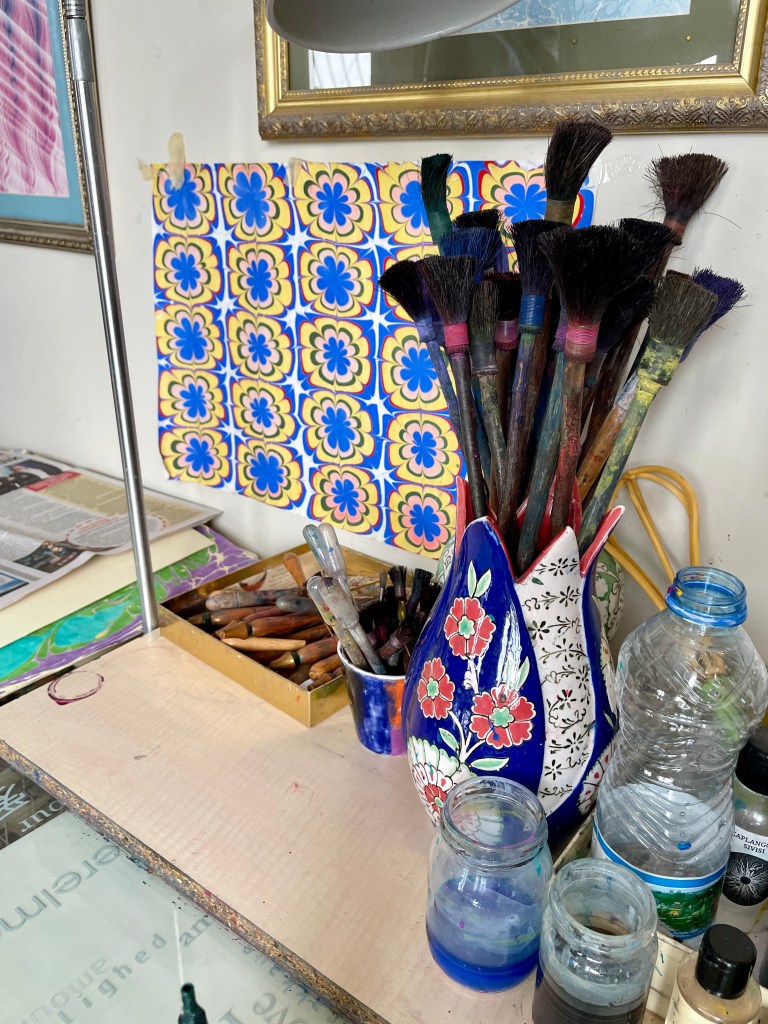
Know as اَبری (ah-bree) in Persian, the term refers to the cloud-like appearance of ink upon paper. Suspended above a bath of water mixed with gall (the substance found in an animal’s gallbladder), the inks cast colorful clouds, pushing upon each other as oil would in water. Keragin (seaweed powder) is added as a thickening agent. Today keragin is imported from the States.
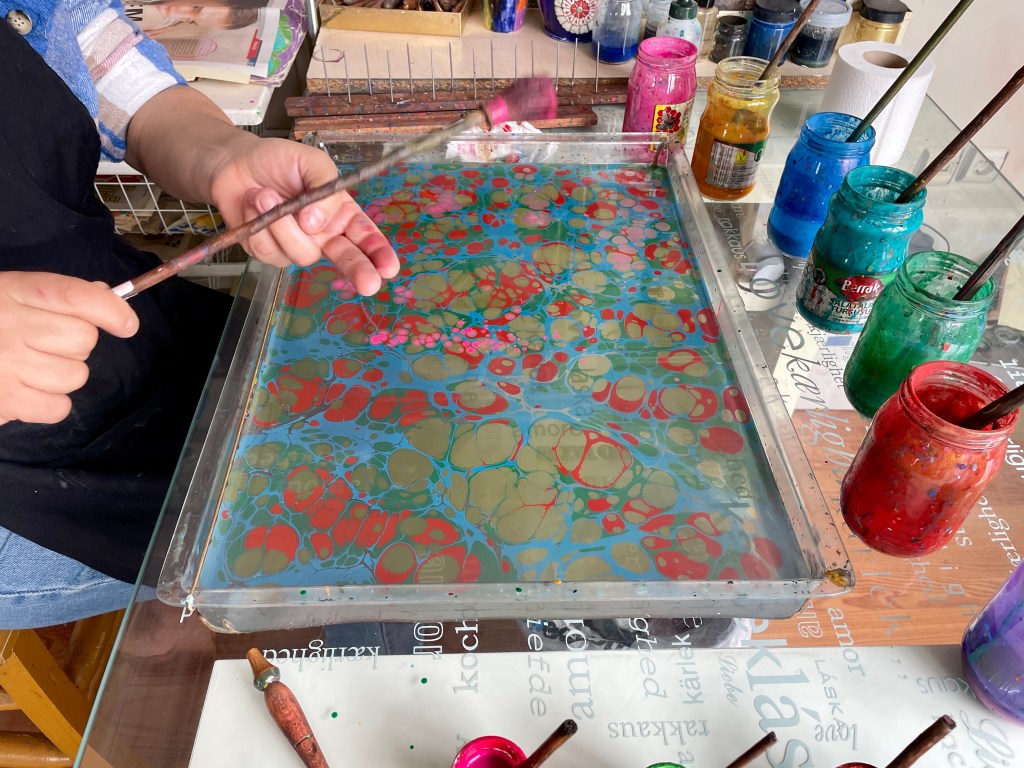
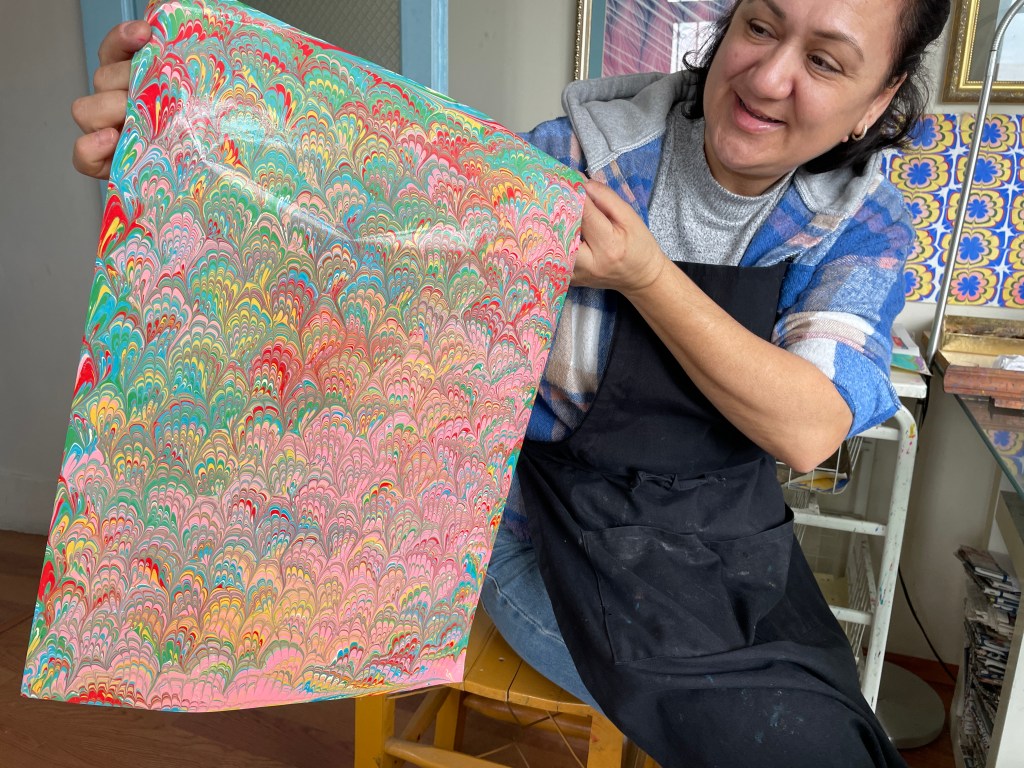
The studio, Turkish Arts, lies just a stone’s throw from the Hagia Sophia. Founded by my wonderful teacher, Betül, the workshop space is perched five stories above the street. The view of the Bosphorus Strait over the rooftops was mystical on a rainy Sunday. Betül is an incredibly accomplished artist, having studied traditional arts at Mimar Sinan Fine Art University here in Istanbul. She makes it look so easy! I was thankful for her help correcting my posture, how I held the brush, and how much ink I added before squeezing the excess. The technique below is called peacock and surprisingly easy, achieved by using a series of combs running through the ink.
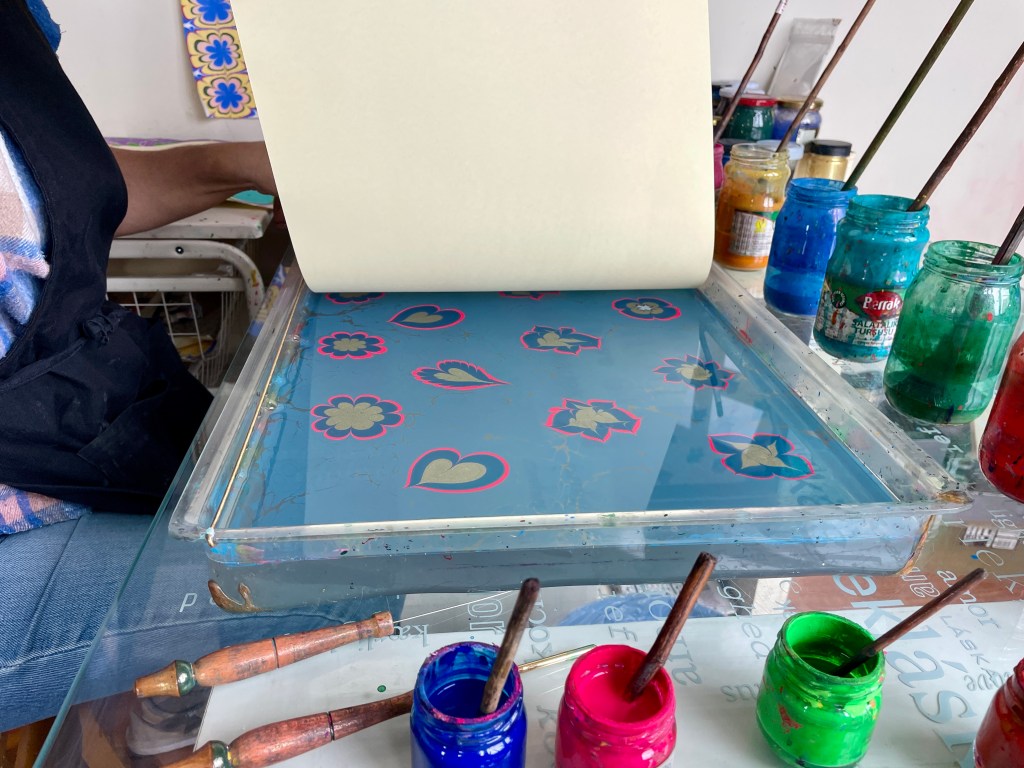
I spend a few hours in the studio, trying different techniques which varied from flower creation to the more abstract, which I enjoyed the most. Just as I enjoying cooking rather than the more precise baking, I enjoy making art when I can be loose and inventive.
As I worked, the beautiful sounds of Radyo Voyage filled the studio. A Turkish radio station which plays a diverse array of music from countries worldwide, it set a mood perfectly. Available worldwide via Radyo Voyage’s app and website, I would highly recommend.

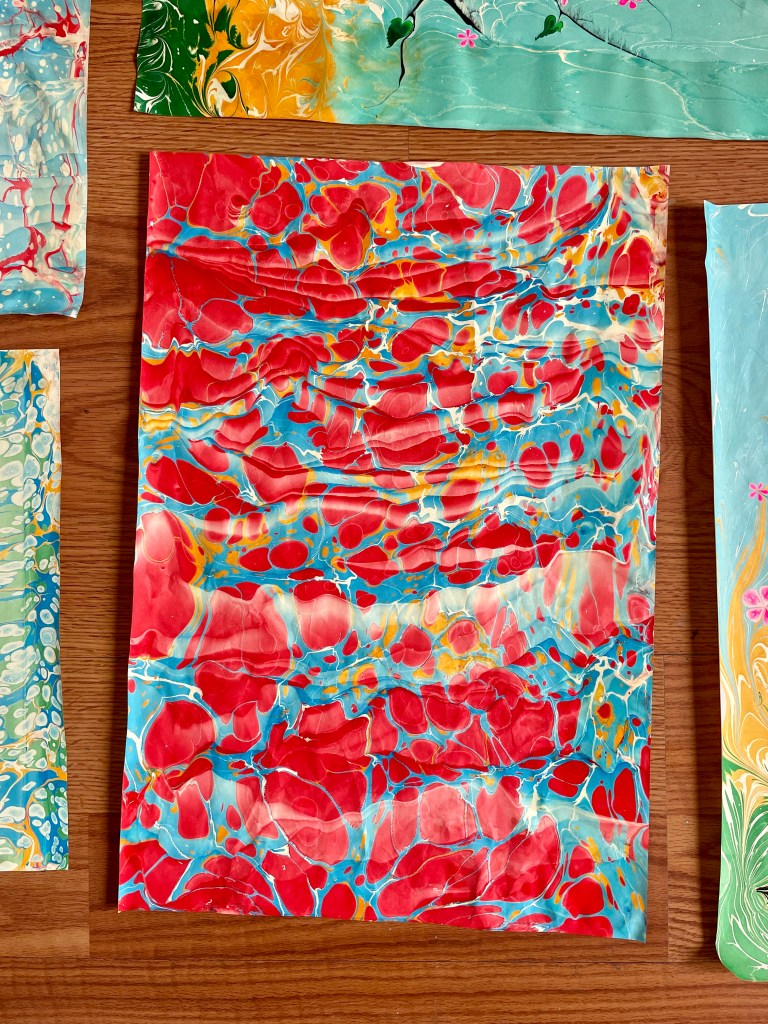
There is a contemporary marbling technique called Spanish marbling or “drunken marbling”. Likely the result of a happy accident (as we say in the art world), Spanish marbling incorporates a crumpled piece of paper which is flattened and shifted in the bath to mimic waves on the sand. The effect is really beautiful and harder then it looks to achieve!

My favorite result was a twice-dipped piece (below right), the first dip made by my teacher and the second (the blobs) made by me. The colors don’t bleed in the process but the layering makes for stunning results. On the left, I applied the same technique – applying dots of ink to form circles which reduced in size. I then used a thin wire tool to push the ink towards the middle of the circle, forming petals of a flower.
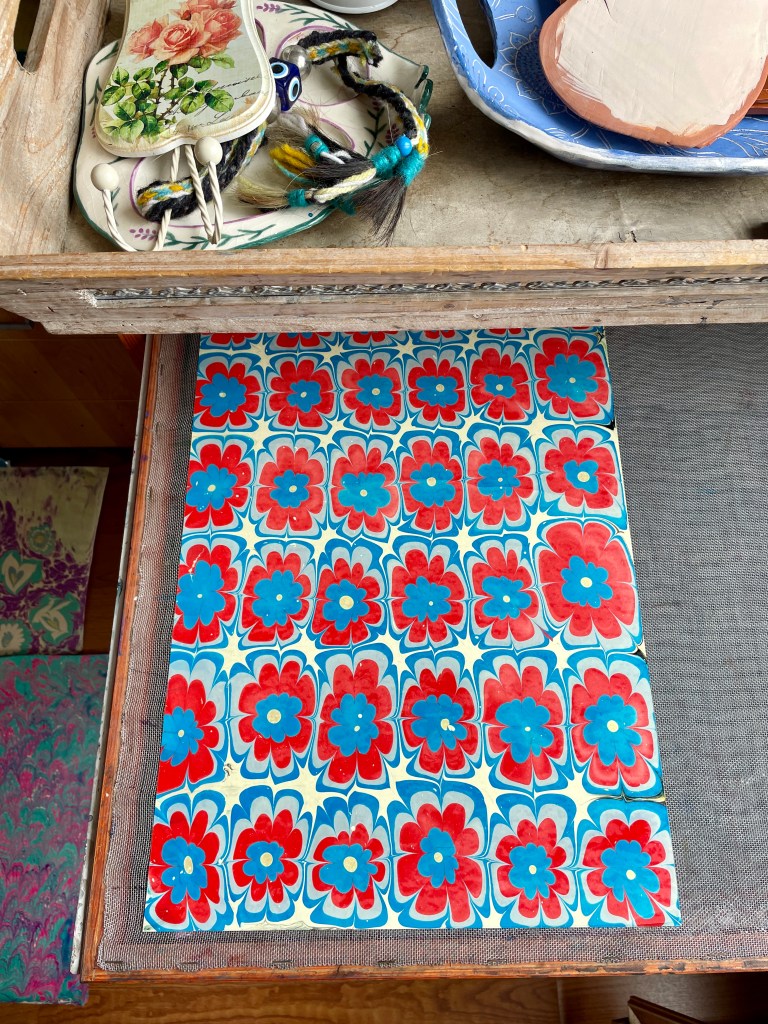
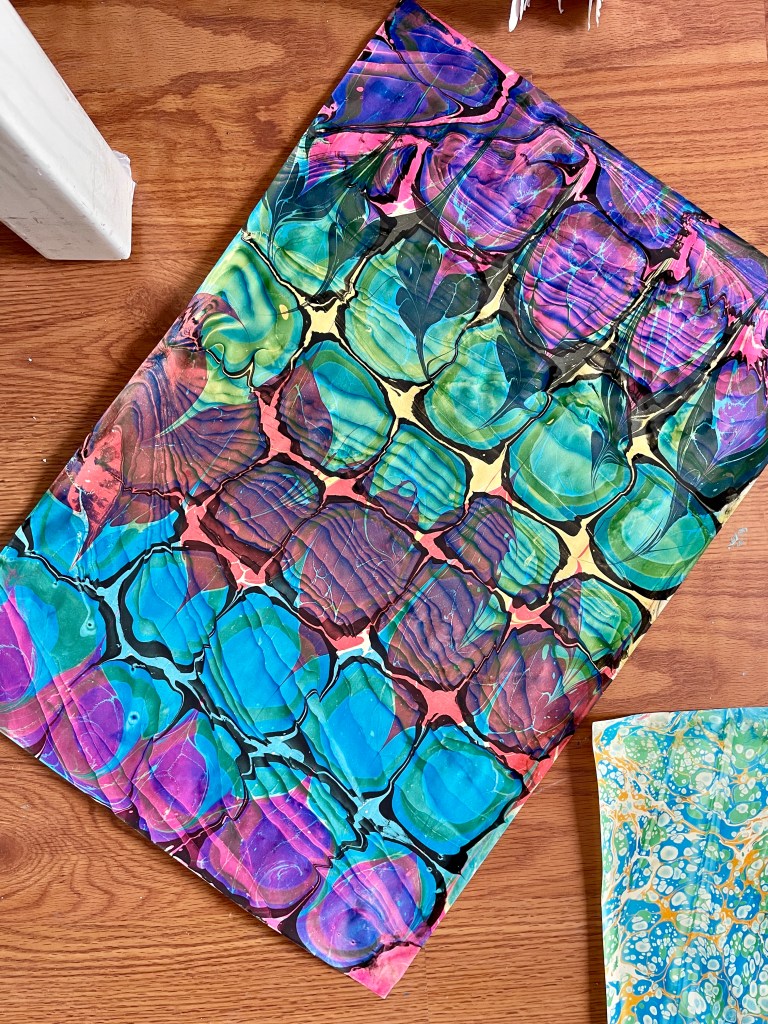
As my time in the studio drew to a close, I placed each sheet of paper on a mesh drying rack. Betül turned on the heating unit above to help speed up the drying process. After lunch with the friend, I returned two hours later to pick up my finished papers. All in all, a beautiful experience I would love to share with future visitors.

 The Turquoise Chronicles